


Need a full custom project? See the options below.
Need a full custom project? See the options below.
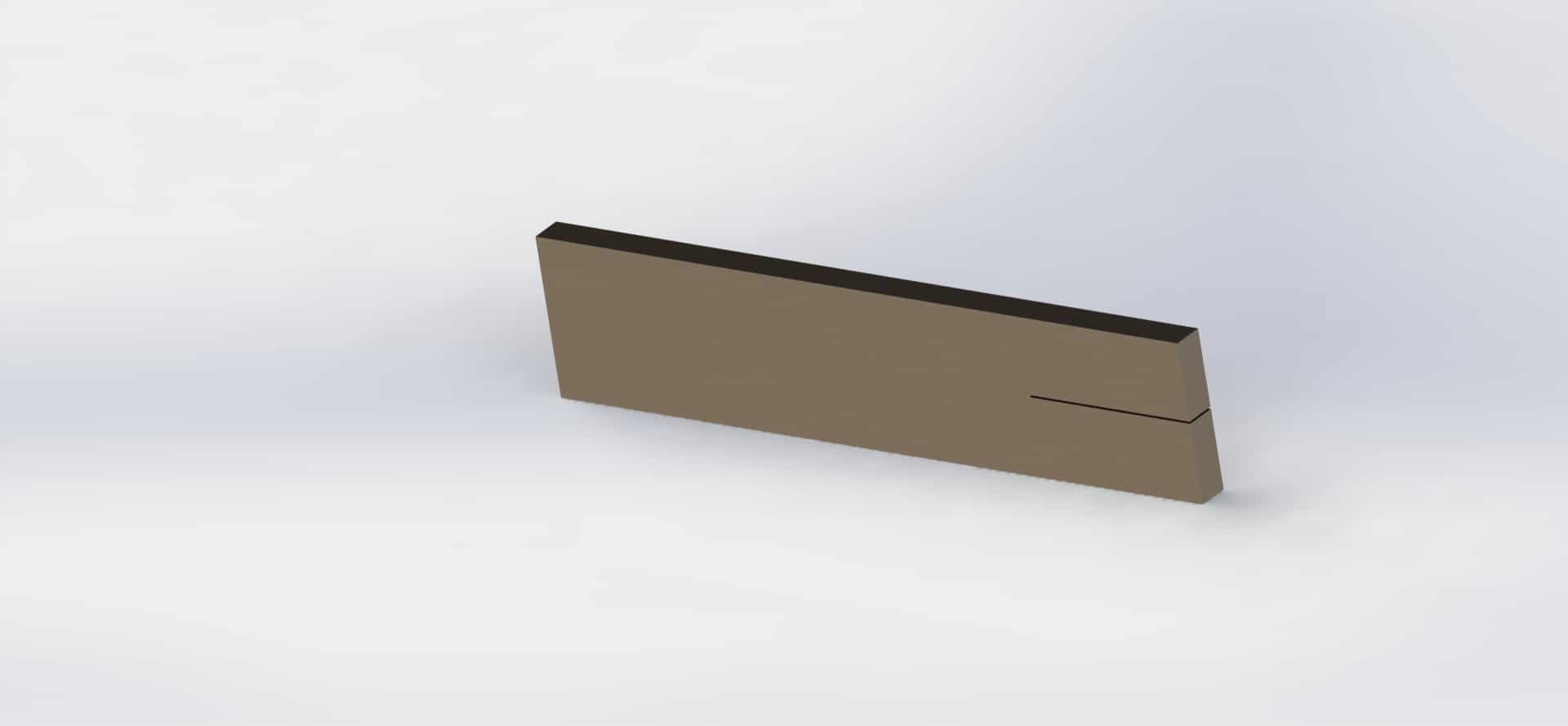
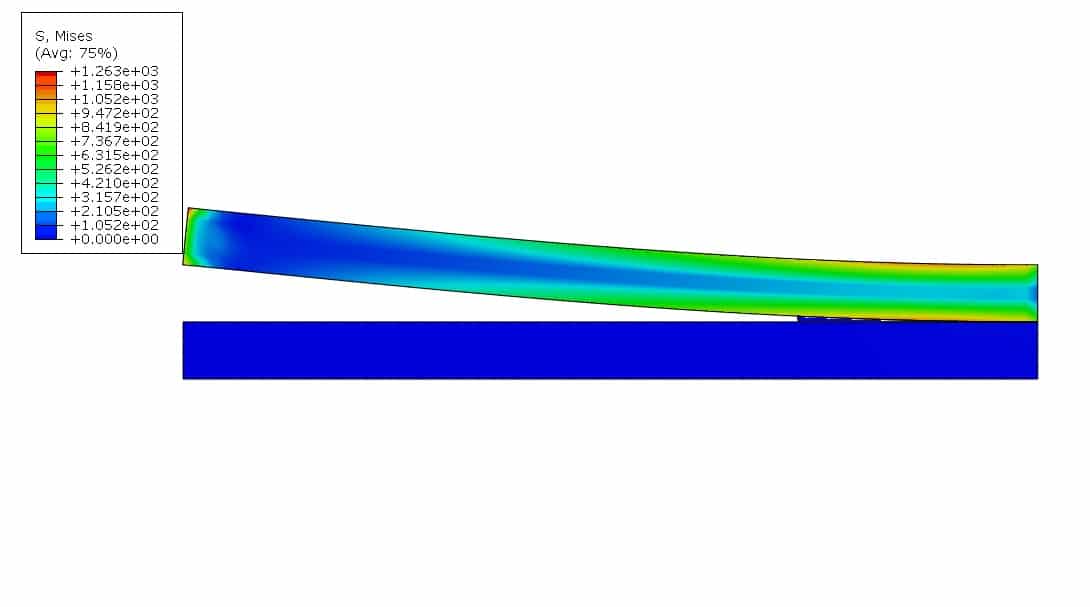
The Cohesive Zone Model (CZM) is one of the most important developments in fracture mechanics. It’s widely used to simulate how cracks start and grow in solid materials. Unlike traditional methods, CZM treats fracture as a gradual process, where the surfaces slowly separate across a small zone called the cohesive zone. This zone resists separation through cohesive forces, which are modeled using special elements placed between regular (bulk) elements. These cohesive elements don’t represent physical material they represent the forces that hold the material together as it starts to break apart.
CZM offers key advantages over conventional fracture methods like Linear Elastic Fracture Mechanics (LEFM) and Crack Tip Opening Displacement (CTOD). It can be used even when there’s no initial crack, and it’s suitable for modeling blunt notches and complex interface behaviors. It also allows for more realistic simulations where the size of the nonlinear zone near the crack tip matters something other methods often ignore.
In this short video (under 11 minutes), you’ll learn how to build a simple CZM model in Abaqus to simulate crack propagation. The approach is fast and works well even for large-scale models. The tutorial includes both the simulation output and the Abaqus CAE file, and it’s designed to be straightforward focused on practical use rather than deep theory.
Need more than the files?
There are two ways we can help. Book a one hour online consultation if you want to talk a problem through with a CAE engineer, using the checkbox in the order box. Order a project if you need a full simulation built for you, delivered to an agreed scope, price and deadline under a written contract.
We work on FEA and CFD for engineers, researchers and companies. Order your project, or message us on WhatsApp for a quick reply.
Other packages engineers working on this topic also download.
 2D and Axisymmetric pull-out test analysis of a steel fiber
 Analysis of Masonry Wall under Seismic, Shear, and Compressive Loads
 Accurate simulation of delamination growth under mixed-mode loading using cohesive elements: Definition of interlaminar strengths and elastic stiffness
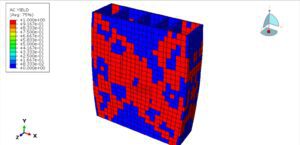 Analysis of the new concrete masonry block under compression load in Abaqus
 Composite Transverse Fracture in Abaqus: AS4/8552 R-Curve and Homogenized Cohesive Softening Laws (Herráez et al. 2018)€179,00
 Composite Transverse Fracture in Ansys: AS4/8552 R-Curve and Homogenized Cohesive Softening Laws (Herráez et al. 2018)€179,00
 Crack propagation by XFEM
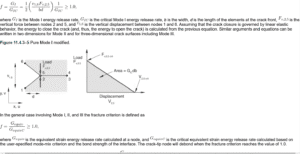 VCCT method to simulate the crack in Abaqus

Need a full custom project? See the options below.

€129,00
€179,00

€149,00

€119,00

€129,00

€149,00
See more
Want to receive push notifications for all major on-site activities?