Welding Simulation Package in Abaqus (14 Models with DFLUX)

€219,00 €480,00
Optional extras

Need a full custom project? See the options below.

€219,00 €480,00
Optional extras

Need a full custom project? See the options below.

27 people watching this product now!

Material Includes

  • 1- Abaqus files+Codes+Subroutine
  • 2- Tutorial videos
  • 3- Related references

Audience

  • 1- Materials Engineering
  • 2- Mechanical Engineering
  • 3- Aerospace Engineering
  • 4- Manufacturing Engineering

What You Will Learn?

  • You will learn various welding simulation techniques, including friction stir welding with ABS, aluminum, and steel materials, spot welding simulations, water jet impact modeling, pipe welding using DFLUX subroutine, arc, and fusion using DFLUX subroutines, and explosive welding in Abaqus.
  • This package covers everything that you need to understand all welding methods in Abaqus.

About Course

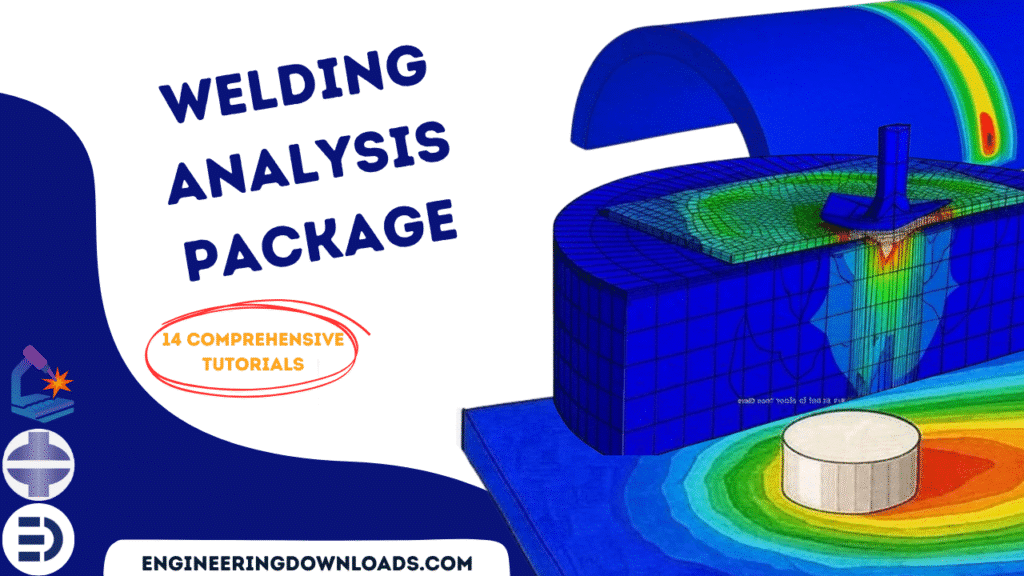
This is a complete welding simulation package in Abaqus: 14 ready-to-run models covering fusion and arc welding, friction stir welding, spot welding, impact welding and explosive welding. You get the Abaqus files, the DFLUX subroutine codes, a video tutorial for every example and the related references.

The package shows every major way to model welding in Abaqus, from moving heat sources with DFLUX for thermal and residual stress analysis, to CEL, SPH and ALE for solid-state processes like friction stir welding, to explicit models for high-speed impact and explosive welding.

The problem this package solves

Welding creates intense local heating, fast cooling and permanent residual stress and distortion. To predict these in Abaqus, you need a moving heat source, temperature-dependent material data and a correct link between the thermal and mechanical analysis. Solid-state processes like friction stir welding are different again: the material flows around a rotating tool, so a standard Lagrangian mesh quickly distorts and the analysis stops.

Most engineers only learn one of these approaches, and it takes a long time to get it working. This package gives you working models for each process, so you can see which method suits which type of weld and start your own model from a setup that already runs.

What is inside: 14 Abaqus welding models

Fusion and arc welding with DFLUX

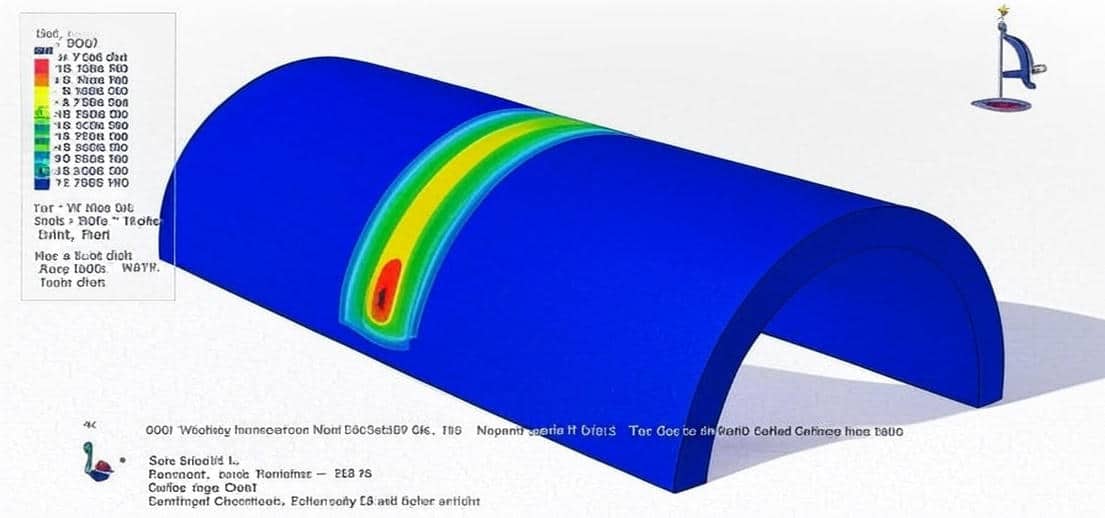
  • Thermal stress analysis of arc welding between two pipes
  • Fusion welding of pipes, with residual stress during the process
  • Temperature analysis of arc welding on a steel pipe
  • Arc welding of a steel plate using the DFLUX code
  • Fusion welding of a steel plate

Friction stir welding

  • Friction stir welding with the Coupled Eulerian–Lagrangian (CEL) method
  • Friction stir welding with the SPH method
  • Friction stir spot welding with the ALE method
  • Friction stir welding of ABS polymer

Spot, impact and explosive welding

  • Water jet spot welding of aluminium plates, plus a simplified water jet impact spot welding model
  • Impact welding with a Lagrangian approach
  • Explosive welding between titanium and steel pipes
  • Explosive welding between copper and aluminium pipes

Abaqus techniques you will practise

  • Writing and using a DFLUX subroutine for a moving welding heat source
  • Heat transfer analysis with temperature-dependent material properties
  • Sequential thermal–mechanical analysis to get residual stress and distortion
  • CEL, SPH and ALE methods for large material flow in friction stir welding
  • Johnson–Cook plasticity and high strain rate contact for impact and explosive welding

What you will learn

  • How to choose the right modelling method for fusion, friction stir, spot and explosive welding
  • How to define and move a welding heat source with DFLUX
  • How to predict temperature history, residual stress and distortion
  • How to model material flow around a rotating tool without mesh failure
  • How to model high-velocity collision and bonding in impact and explosive welding

What is included

  • Abaqus model files for all 14 examples
  • DFLUX subroutine codes for the fusion and arc welding examples
  • Video tutorials for every example
  • Related references and documents for most examples
  • Lifetime access and downloadable files
  • Certificate of completion

Who this is for

  • Mechanical, materials and manufacturing students working on a welding thesis
  • Researchers studying residual stress, friction stir welding or dissimilar joints
  • Engineers in pipelines, pressure equipment, automotive and shipbuilding who need to predict weld distortion and residual stress
  • Abaqus users who want to learn subroutine-based heat sources and advanced meshing methods

Software used

Abaqus/CAE with Abaqus/Standard for heat transfer and residual stress, and Abaqus/Explicit for friction stir, impact and explosive welding. The DFLUX examples need Abaqus linked with a Fortran compiler.

Related welding models

For more advanced residual stress work, these models go further:

Frequently asked questions

Which welding processes are covered?

Arc and fusion welding, friction stir welding, friction stir spot welding, water jet spot welding, impact welding and explosive welding.

Do I need to write the DFLUX subroutine myself?

No. The DFLUX codes are included and explained in the tutorials. You can run them as they are, then change the heat input, speed and path for your own weld.

Can I get residual stress from these models?

Yes. The fusion welding examples cover the thermal analysis and the stress analysis, so you can see the temperature history and the residual stress it leaves behind.

Why are CEL, SPH and ALE used for friction stir welding?

In friction stir welding the material flows around the rotating tool. These methods handle that large flow without the mesh distortion that stops a normal Lagrangian model.

What if I get stuck running a model?

Contact us and we will help you get it running, including compiler setup for the DFLUX examples. If you need a weld model built for your own joint, you can also talk to one of our engineers.

Need more than the files?

There are two ways we can help. Book a one hour online consultation if you want to talk a problem through with a CAE engineer, using the checkbox in the order box. Order a project if you need a full simulation built for you, delivered to an agreed scope, price and deadline under a written contract.

We work on FEA and CFD for engineers, researchers and companies. Order your project, or message us on WhatsApp for a quick reply.

Course Content

Example 1: Modeling of the friction stir welding of acrylonitrile butadiene styrene(ABS) polymer
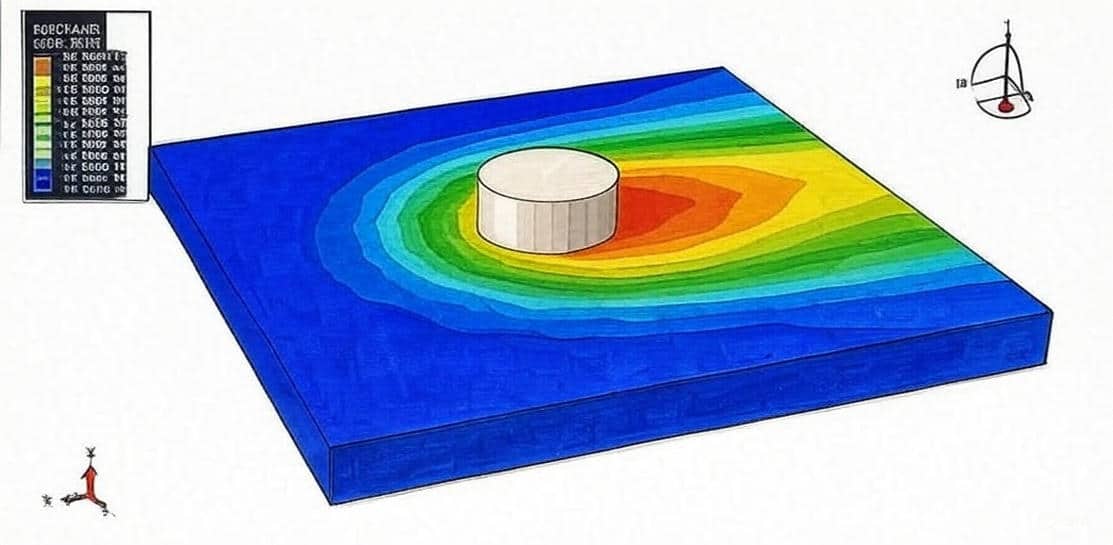
In this tutorial, the Simulation of the friction stir welding of acrylonitrile butadiene styrene polymer in Abaqus has been investigated. Polymer materials have seen their growth in leaps and bounds, setting their foot in almost all manufacturing industries due to their excellent strength-to-weight ratio with enhanced toughness and low cost. Polymer joints are extensively used for automobile applications. One example is automotive tail-lights and indicators, in which a clear or tinted PC part is joined to an opaque ABS body. Polymers have different rheological properties, especially in terms of melt viscosity, and thus, the flow behaviour is also different from metals, which may be the main reason for the diversity of process parameters in FSW. Polymers which having higher melt temperature and viscosity require a higher tool rotational speed and a lower tool traverse speed to obtain adequate heat and finally, high joint efficiency. It is very challenging to join dissimilar polymers owing to the differences in their mechanical, chemical, thermal, metallurgical, and physical properties; however, similar material exhibits good material compatibility, which leads to more efficient joining. The ABS part is modeled as a three-dimensional Eulerian part. The tool is modeled as a three-dimensional solid part. To model tool behavior, steel material with elastic-plastic data and thermal parameters is used. To model ABS material, elastic data, and Johnson-Cook plasticity with thermal conductivity, specific heat, and… is used. The dynamic temp explicit step is appropriate for this type of analysis. The friction coefficient with the heat generation parameter is used to define the contact property. The rigid body constraint is implied for the tool to reduce the calculation volume during the FSW process. The fixed boundary condition is assigned to the sides of the Eulerian part, and axial and rotational velocity to the tool. The uniform material assignment is used to model the Eulerian material location.

  • Abaqus files
  • Video
    20:06
  • Documents

Example 2: Analysis of Friction Stir Spot welding by using the ALE method
In this lesson, the analysis of Friction Stir Spot welding by using the ALE method is studied. In this simulation, friction stir spot welding using the Arbitrary Lagrangian-Eulerian method has been investigated. Aluminium alloy is used as the base material, and the tool is modeled as a rigid body. A dynamic explicit step, modified to consider the temperature variable, has been used. available to join aluminum: tungsten inert gas (TIG), metal arc welding (MIG), and resistance spot welding (RSW), to name a few. All the above methods require heating/melting of the aluminum alloy base metal. Other methods that do not require the melting of aluminum alloy base metal are self-piercing riveting (SPR), clinching, and bonding with structural adhesives, to name a few. Spot friction stir welding (SFW), also known as friction stir spot welding (FSSW), is a novel variant of the“linear” friction stir welding (FSW) process developed by Mazda Corporation and Kawasaki Heavy Industries in 2003 as a solid-state joining technique to join aluminum alloys. FSW, which was invented by The Welding Institute (TWI) in 1991, and SFW are promising joining processes that have shown potential practical applications for welding aluminum alloys in the automotive industry. FSW and SFW have been successfully used to produce high-quality joints, and these methods also make it possible to join high-strength aluminum alloys on the basis of tensile strength, process time, and cost (equipment and running cost). Aluminum alloy sheets having a wide range of thicknesses were joined using the above three methods. It was concluded that the lap-shear strength of joints produced by the SFW process was comparable to that produced by RSW or SPR; however, the process time required to join the sheets using SFW increased monotonically with increasing thickness. SFW process advantages are lower power consumption than RSW and lower running costs. Furthermore, unlike RSW, no weld spatter occurs during the SFW process, resulting in a better work environment. Other merits of the SFW process include long tool life, high productivity, and high reliability.

Example 3: Simulating a Water Jet Impact: Simplified Spot Welding Process

Example 4: Simulation of the thermal stress analysis of arc welding between two pipes by using the DFLUX subroutine
In this section, the simulation of the thermal stress analysis of arc welding between two pipes by using the DFLUX subroutine is investigated through a comprehensive tutorial. Arc welding is one of several fusion processes for joining metals. By applying intense heat, metal at the joint between two parts is melted and caused to intermix – directly, or more commonly, with an intermediate molten filler metal. Upon cooling and solidification, a metallurgical bond is created. Since the joining is an intermixture of metals, the final weldment potentially has the same strength properties as the metal of the parts. This is in sharp contrast to non-fusion processes of joining (i.e., soldering, brazing, etc.) in which the mechanical and physical properties of the base materials cannot be duplicated at the joint. In this tutorial, steel material for pipes and the DFLUX subroutine to create non-uniform heat distribution have been used. All material data depend on temperature, and for the analysis weld process Displacement Couple with Temperature step was used.

Example 5: Friction Stir Welding Process Using the Coupled Eulerian Lagrangian Method
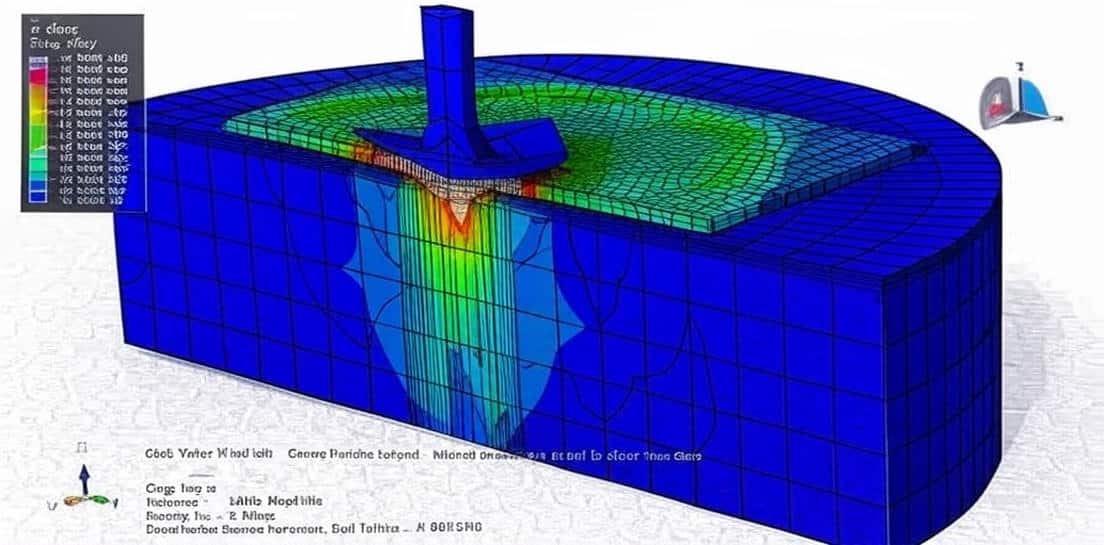
In this case, the friction Stir Welding Process Using the coupled Eulerian-Lagrangian Method in Abaqus is considered. Friction Stir Welding (FSW) is a solid-state joining process that relies on frictional heating and plastic deformation realized at the interaction between a non-consumable welding tool that rotates on the contact surfaces of the combined parts. The experiments are often time-consuming and costly. To overcome these problems, numerical analysis has frequently been used in recent years. Several simplified numerical models were designed to elucidate various aspects of the complex thermo-mechanical phenomena associated with FSW. This video investigates a thermo-mechanical finite element model based on the Coupled Eulerian Lagrangian method to simulate the friction stir welding of the AA 6082-T6 alloy. Abaqus/cae software is used in order to simulate the welding stage of the Friction Stir Welding process. This video presents the steps of the numerical simulation using the finite elements method, in order to evaluate the boundary conditions of the model and the geometry of the tools by using the Coupled Eulerian Lagrangian method. During the simulation rotation of the tool causes a huge amount of heat and increased aluminium temperature. This simulation was made in three steps, and a dynamic temperature explicit has been applied.

Example 6: Analysis of the fusion pipe welding using the DFLUX subroutine
In this lesson, the analysis of the fusion welding and investigation of residual stress during the process is conducted by using the DFLUX subroutine in Abaqus. Fusion welding has been a key factor in the creation of modern civilization due to its key role in construction practices. Besides bolts and rivets, there are no other practical methods for joining pieces of metal securely. Fusion welding is used in the manufacture of many everyday items, including airplanes, cars, and structures. A large community uses both arc and flame contact welding to create artwork. To model non-uniform heat distribution DFLUX subroutine on the circular pass over a steel pipe has been implemented. During the process, residual stress was created by moving heat.

Example 7: Arc welding process of steel pipe by usingthe DFLUX subroutine-Temperature analysis
In this section, the arc welding process of steel pipe by using the DFLUX subroutine-Temperature analysis is investigated. Fusion welding is a joining process in which the coalescence of metals is achieved by fusion. This form of welding is widely employed in fabricating structures such as ships, offshore structures, steel bridges, and pressure vessels. In this study, the heat from the moving welding arc was applied as a volumetric heat source with a double ellipsoidal distribution proposed by the Goldak model. The moving heat source was modeled by ABAQUS user subroutine DFLUX in the ABAQUS code. As for the boundary conditions applied to the thermal model, convection and radiation were both used as interactions.

Example 8: Friction Stir Welding-SPH method
In this lesson, the analysis of the friction stir welding by using the SPH method is done through a practical tutorial. The friction stir welding (FSW) process is quickly becoming the joining method of choice for aluminum alloys. The solid-state process is able to form high-fidelity welds at excellent throughput rates. Because of the solid-state nature of the method, many types of defects are avoided that are associated with melting and solidification in conventional fusion welding processes. Nevertheless, depending on the process parameters, FSW joints can have volumetric defects that are detrimental to the ultimate strength of the joint. In this video, Simulation Friction Stir Welding by using the SPH method in Abaqus-Thermal analysis has been investigated. Abaqus doesn’t support SPH element coupled with temperature degree, ie, PC3DT element, so by changing some points, temperature has been applied to this type of element. This analysis contains three steps, and during each step, stress and temperature changed.

Example 9: Water Jet Spot Welding Model of aluminum plates
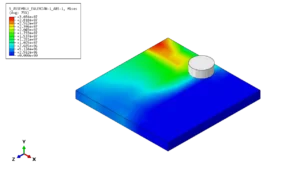
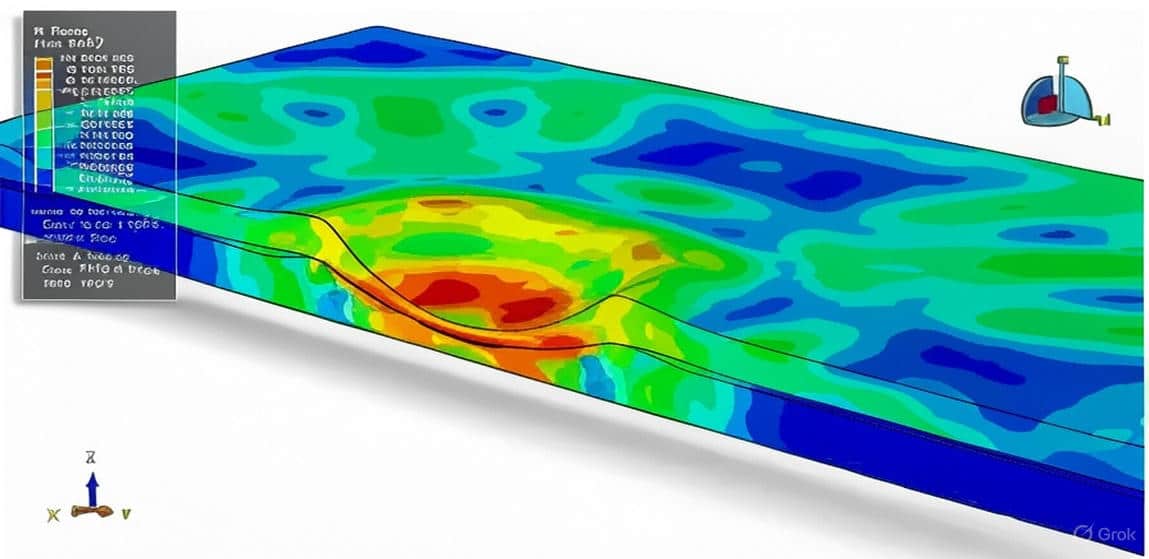
In this lesson, the water jet spot welding model of the aluminum plates is studied during a practical tutorial. To gain an understanding of the mechanism of material damage and removal during high-speed liquid impact and to understand the magnitude and spatial distribution of the transient pressures caused by such an impact on a solid surface would be helpful. The water jet spot welding tests were performed using the Abaqus software. This consisted essentially of a water column and a 4.2mm diameter nozzle. Target blocks of aluminium, polished 50mm×50mm×1mm cladding plates of aluminium were used in the tests. The separation distance between the target and flyer plate varied between 0.5 . All parts are modeled as three-dimensional and deformable. To model water behavior Us-Up equation and the Lagrangian method have been applied. The Johnson-Cook material model is used to define aluminium plate material. Dynamic-Temp Explicit is appropriate for this analysis, and proper boundary and interaction have been implemented. During water jet impact, the flyer plate moved toward the base plate, and after contact small joint was created between the two plates.

Example 10: Analysis of the impact welding process-Lagrangian approach
In this section, the analysis of the impact welding process-Lagrangian approach in Abaqus software, is done through a comprehensive tutorial. Today, major innovations suggest the use of dissimilar material combinations to meet new design criteria such as mass light weighting, structural reinforcements, or other specific fictionalization. The development of functional material combinations has seen a growing interest in several engineering fields. Solutions can, however, be limited by the capability of the bulk materials to be joined together. In this video impact welding process in Abaqus by using the Lagrangian approach has been investigated. This simulation aims to monitor residual stress that occurs in the process. Dynamic Explicit procedure is appropriate for this analysis, but for thermal analysis, Dynamic-Temp-Explicit with a very small mesh is needed for observing the temperature field.

Example 11: Simulation of the arc welding process of a steel plate using the DFLUX code
In this case, the simulation of the arc welding process of a steel plate using the DFLUX code is investigated. Arc welding is a fusion welding process where heat is generated by an electric arc formed between an electrode and the workpiece. The intense heat of the arc (up to ~6000 °C) melts the base material and, if used, a filler material, forming a strong joint upon solidification. Arc welding introduces a moving localized heat source. In Abaqus, this can be implemented using the DFLUX user subroutine, which defines the heat flux distribution as a function of space, time, and process parameters. A widely used model is Goldak’s double-ellipsoidal heat source, which captures the front and rear distribution of the arc heat input. DFLUX Subroutine: Defines heat flux distribution at each integration point. Moves the heat source with a time-dependent welding speed.

Example 12: Simulation fusion welding of a steel plate
In this lesson, the fusion welding of a steel plate in Abaqus is studied through a practical tutorial. Arc welding is a fusion welding process where heat is generated by an electric arc formed between an electrode and the workpiece. The intense heat of the arc (up to ~6000 °C) melts the base material and, if used, a filler material, forming a strong joint upon solidification. Main Types of Arc Welding: Shielded Metal Arc Welding (SMAW / Stick Welding): Uses a flux-coated consumable electrode. Gas Metal Arc Welding (GMAW / MIG): Uses a wire electrode and shielding gas.Gas Tungsten Arc Welding (GTAW / TIG): Uses a non-consumable tungsten electrode with inert gas shielding. Flux-Cored Arc Welding (FCAW): Similar to MIG but uses a tubular wire filled with flux. Submerged Arc Welding (SAW): Arc submerged under a layer of granular flux.

Example 13: Explosive Welding Between Titanium and Steel Pipes
In this section, the explosive welding between titanium and steel pipes is done in Abaqus. What is Explosive Welding (EXW)? Explosive welding is a solid-state welding process that uses a controlled detonation of explosives to accelerate one metal plate (flyer) against another (base) at very high velocity. Unlike arc or fusion welding, EXW does not melt the metals. Instead, the high-velocity impact causes plastic deformation at the interface, producing a wavy, metallurgical bond. In simulation (Abaqus/Explicit), explosive welding is modeled using shock physics, material plasticity, and contact algorithms to predict the flyer velocity, jetting, and interface bonding mechanism.

Example 14: Explosive Welding Between Copper and Aluminum Pipes
In this lesson, the simulation of the Explosive Welding Between Copper and Aluminum Pipes is investigated through a tutorial video. In simulation (Abaqus/Explicit), explosive welding is modeled using shock physics, material plasticity, and contact algorithms to predict the flyer velocity, jetting, and interface bonding mechanism. Two pipes have been modeled as axisymmetric parts and TNT-like them. For modeling TNT behavior JWL equation of state has been used. Today, major innovations suggest the use of dissimilar material combinations to meet new design criteria such as mass light weighting, structural reinforcements, or other specific functionalization. The development of functional material combinations has seen a growing interest in several engineering fields. Solutions can, however, be limited by the capability of the bulk materials to be joined together. This is the case of metals assembly with different melting temperatures when a conventional welding process is used. During the process copper pipe moves like a flyer pipe toward the aluminium pipe. TNT created huge pressure on the flyer pipe and caused a joint as a weld between the interference surfaces of two pipes.

Reviews

No Review Yet
No Review Yet
€219,00 €480,00
Optional extras

Need a full custom project? See the options below.

27 people watching this product now!

Material Includes

  • 1- Abaqus files+Codes+Subroutine
  • 2- Tutorial videos
  • 3- Related references

Audience

  • 1- Materials Engineering
  • 2- Mechanical Engineering
  • 3- Aerospace Engineering
  • 4- Manufacturing Engineering

Related  Products

See more

Want to receive push notifications for all major on-site activities?

✕