Need a full custom project? See the options below.
Need a full custom project? See the options below.
Concrete masonry blocks are among the most widely used construction materials due to their cost-effectiveness, durability, and ease of production. Their structural performance, particularly under compressive loading, plays a critical role in determining the load-bearing capacity and overall stability of masonry structures. With the development of new block geometries and material compositions aimed at improving strength, weight reduction, and thermal efficiency, it has become essential to evaluate their mechanical behavior through advanced analytical and numerical methods.
Experimental testing of masonry units and prisms provides valuable insight; however, it is often time-consuming, costly, and limited in capturing detailed stress–strain distribution and damage evolution. Finite Element Analysis (FEA) offers an efficient alternative for predicting structural response, enabling detailed investigation of nonlinear material behavior, cracking patterns, and failure mechanisms.
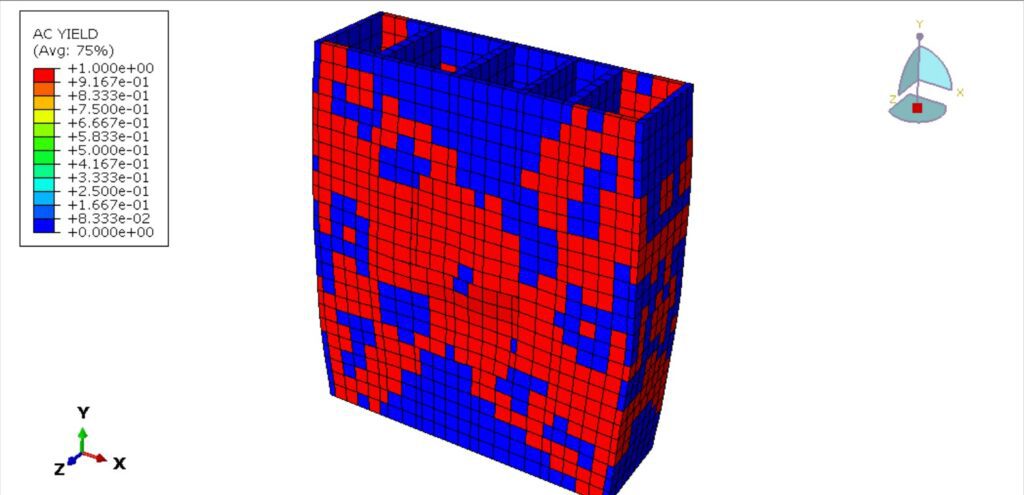
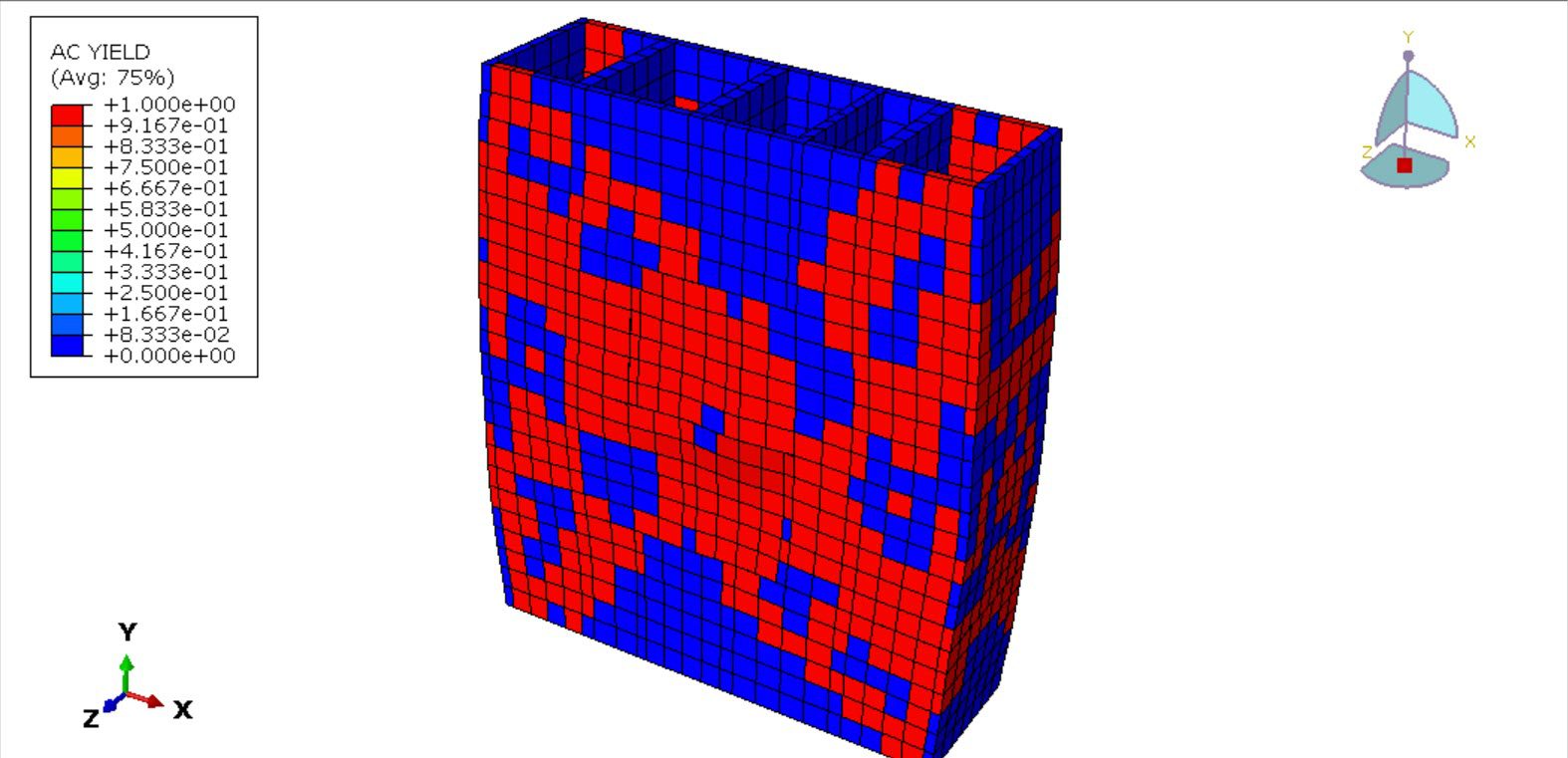
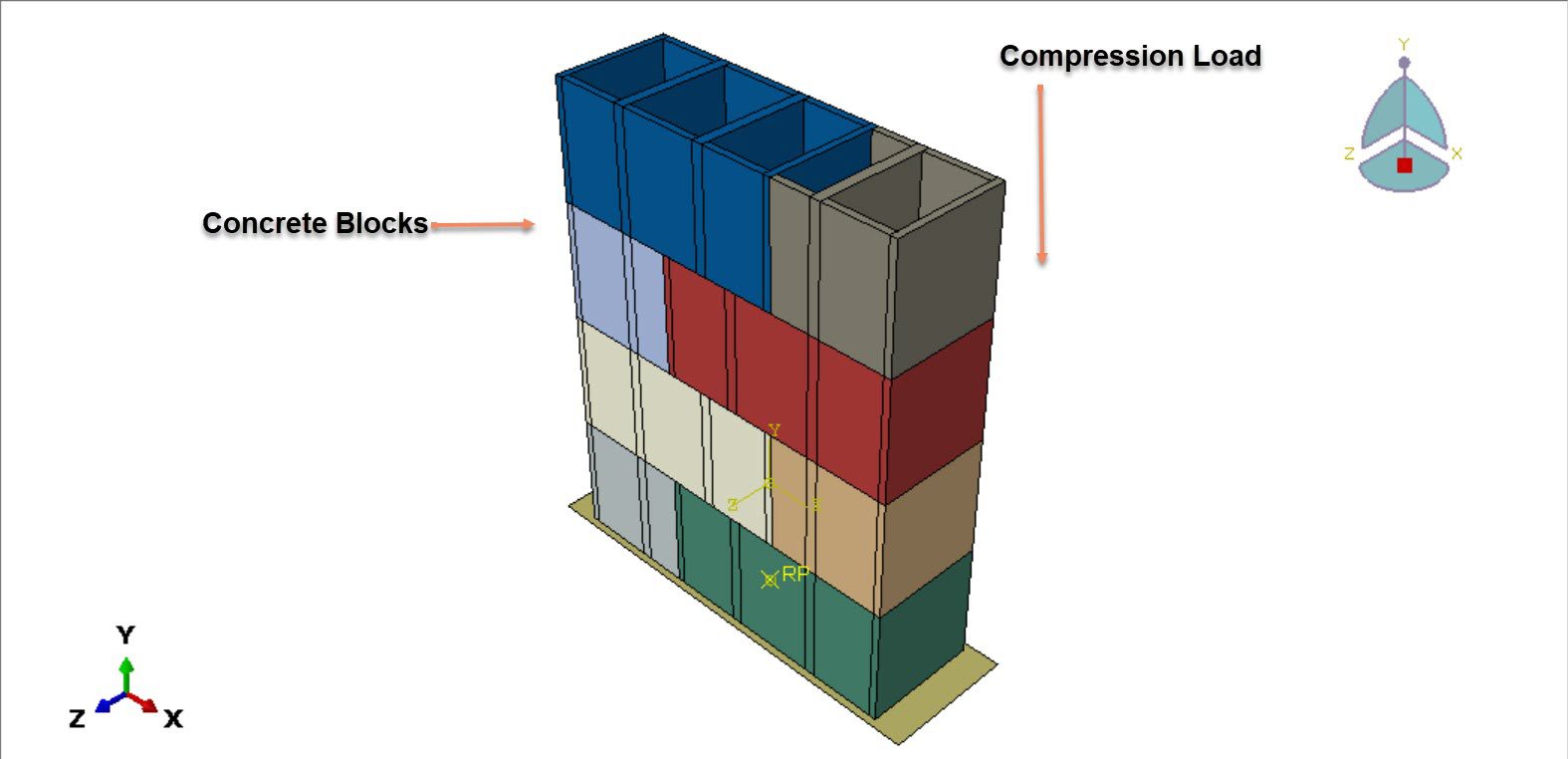
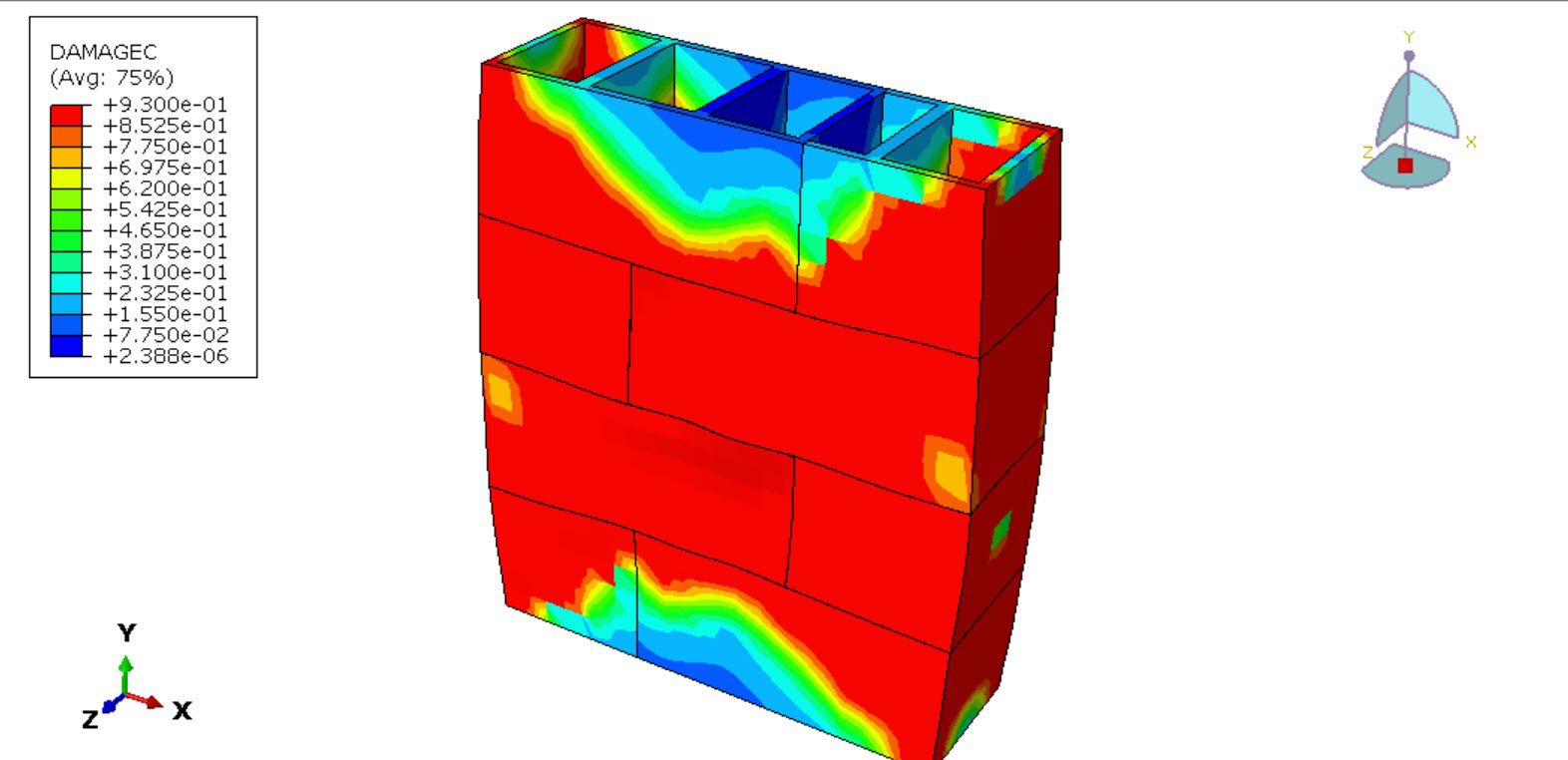
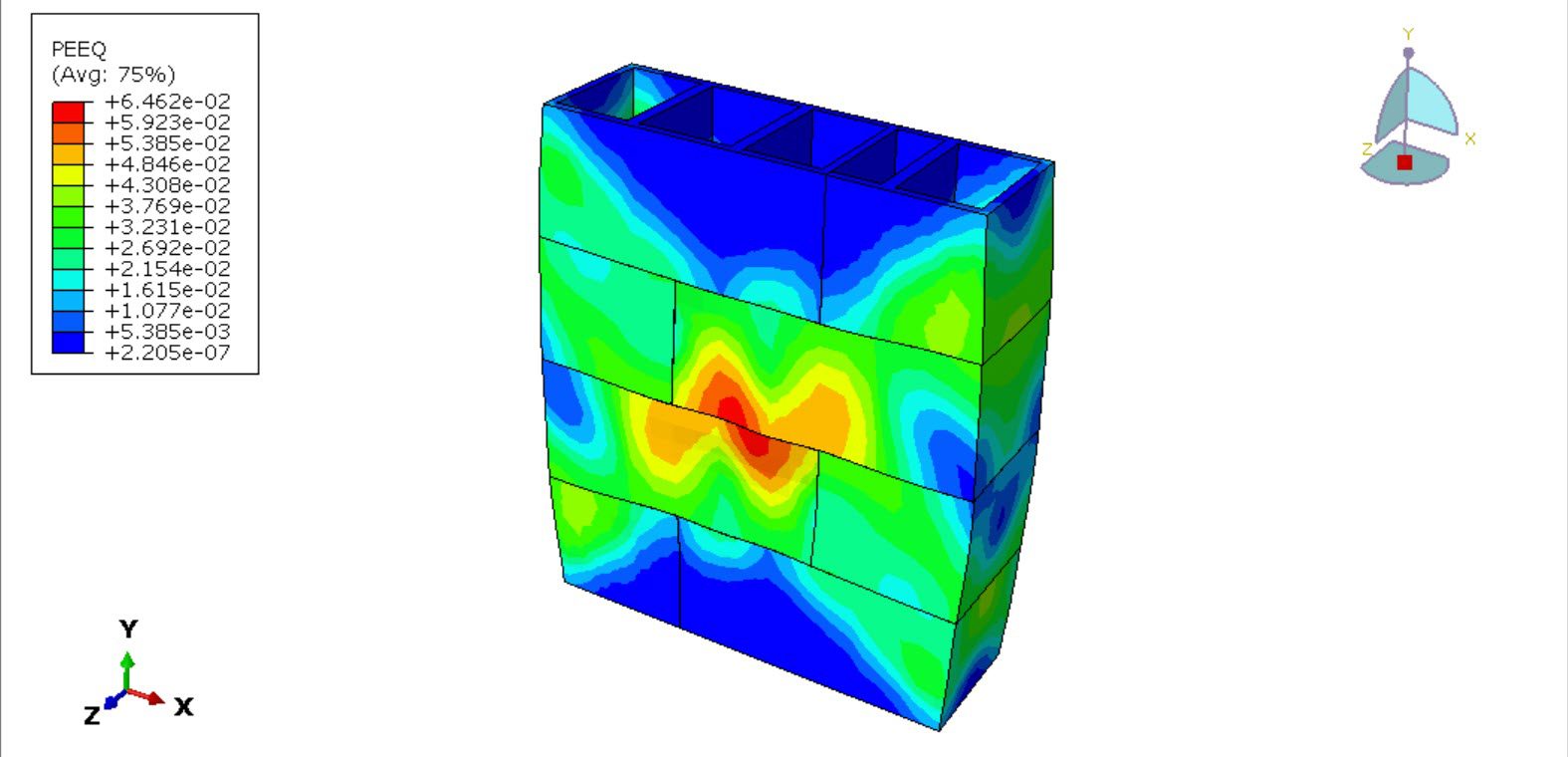
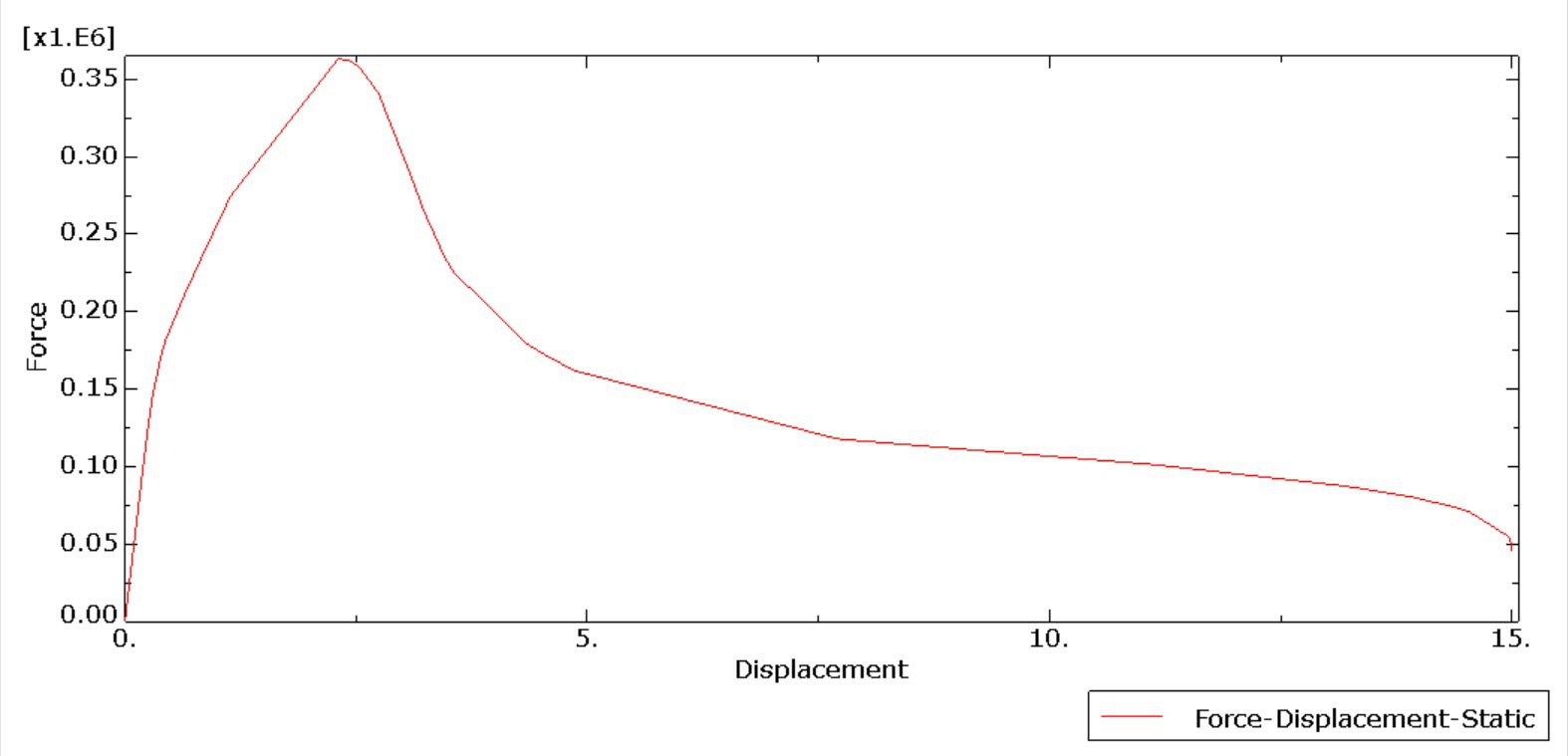
In this study, a newly developed concrete masonry block is analyzed under axial compression using the finite element software Abaqus. The nonlinear behavior of concrete is simulated using the Concrete Damaged Plasticity (CDP) model, which is capable of representing stiffness degradation, tensile cracking, and compressive crushing. A general static step solver is employed to capture the quasi-static response of the block up to failure.
To realistically represent the masonry assembly, the mortar joints are explicitly modeled and connected to the concrete block units’ cohesive interaction properties. This approach allows simulation of interface debonding, slip, and crack initiation along the mortar–block interface, which are critical to the overall compressive performance of masonry systems.
The objective of this analysis is to evaluate the load-bearing capacity, stress distribution, deformation characteristics, and damage progression of the proposed block configuration. The numerical results provide insight into the structural efficiency of the new masonry unit and establish a basis for comparison with conventional block systems, supporting its potential application in structural masonry construction.
Need more than the files?
There are two ways we can help. Book a one hour online consultation if you want to talk a problem through with a CAE engineer, using the checkbox in the order box. Order a project if you need a full simulation built for you, delivered to an agreed scope, price and deadline under a written contract.
We work on FEA and CFD for engineers, researchers and companies. Order your project, or message us on WhatsApp for a quick reply.
Other packages engineers working on this topic also download.
 Analysis of the new empty masonry block under shear and compressive loads
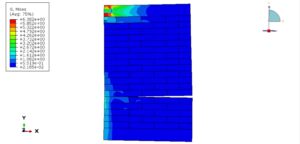 Analysis of Masonry Wall under Seismic, Shear, and Compressive Loads
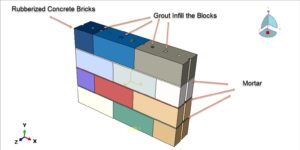 Analysis of Rubberized Concrete Interlocking Masonry under Vertical Loading
 Masonry Wall Analysis Package in Abaqus
 2D and Axisymmetric pull-out test analysis of a steel fiber
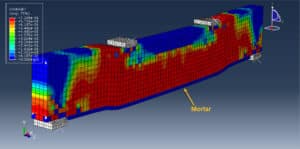 Flexural analysis of RC beam strengthened with mortar layer Load capacity model
 Static and dynamic compression test of a square cold-formed UHPC-filled dual steel stiffened slender column
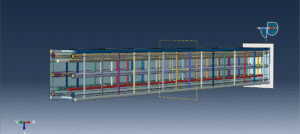 Simulation of the concrete-encased CFST box stub columns under axial compression in Abaqus

Need a full custom project? See the options below.

€129,00

€179,00

€149,00

€119,00

€129,00
See more
Want to receive push notifications for all major on-site activities?