

Need a full custom project? See the options below.
Need a full custom project? See the options below.
A surface crack on the outside of a girth weld in a 20-inch pipe, loaded by pressure, dead-weight bending and a through-wall weld residual stress. The published API 579-2 Example 9.7 assesses it at Level 2 at the deepest point, the surface points and φ = 45°. This Abaqus package rebuilds the example from API 579-1 and checks every stress-intensity factor in a 3D crack model (CAE + INP for each load term), including the weld residual stress, with a PDF tutorial that compares each result with the book.
Source: API 579-2/ASME PTB-14 Example 9.7 (with the pipe and residual-stress data of Example 9.6), assessed to API 579-1/ASME FFS-1 (2021) Part 9. NPS 20 Sch 20 SA-106 B pipe, OD 508 mm, t = 9.53 mm, 4.4 MPa and a dead-weight moment of 36.8 kN·m at 20 °C. Outside-surface circumferential crack a = 4.0 mm, 2c = 15.0 mm in a non-PWHT girth weld with the Annex 9D.8 residual-stress profile.
| Item | This package |
|---|---|
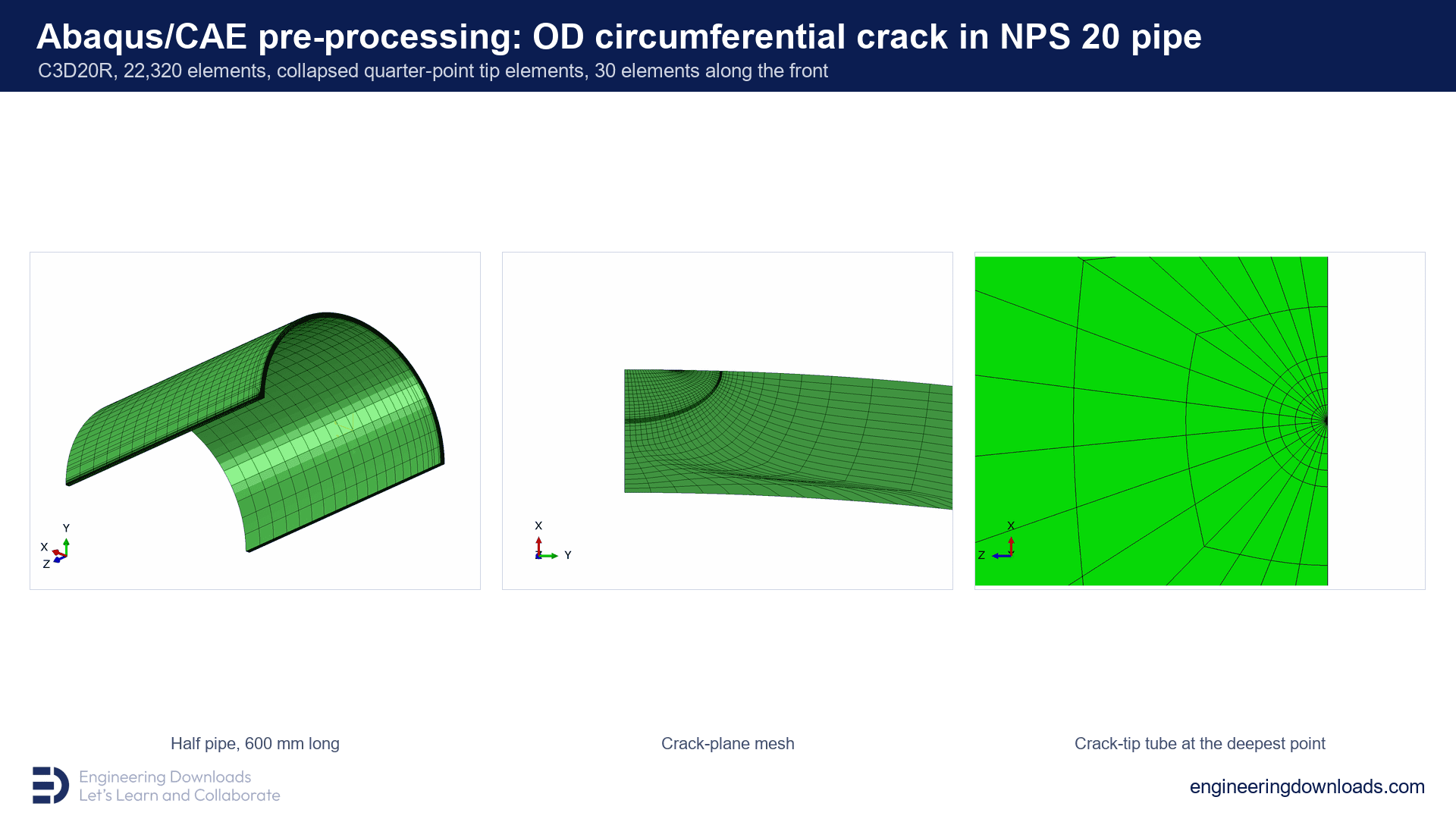
| Geometry | Half circumference × 600 mm of pipe; far end coupled to a reference node that carries the closed-end force and the moment |
| Crack | Semi-elliptical outside-surface circumferential crack, a = 4.0 mm, 2c = 15.0 mm (a/c = 0.533, a/t = 0.420) |
| Mesh | 22,320 C3D20R/C3D15 elements, 30 along the front, collapsed quarter-point tip elements |
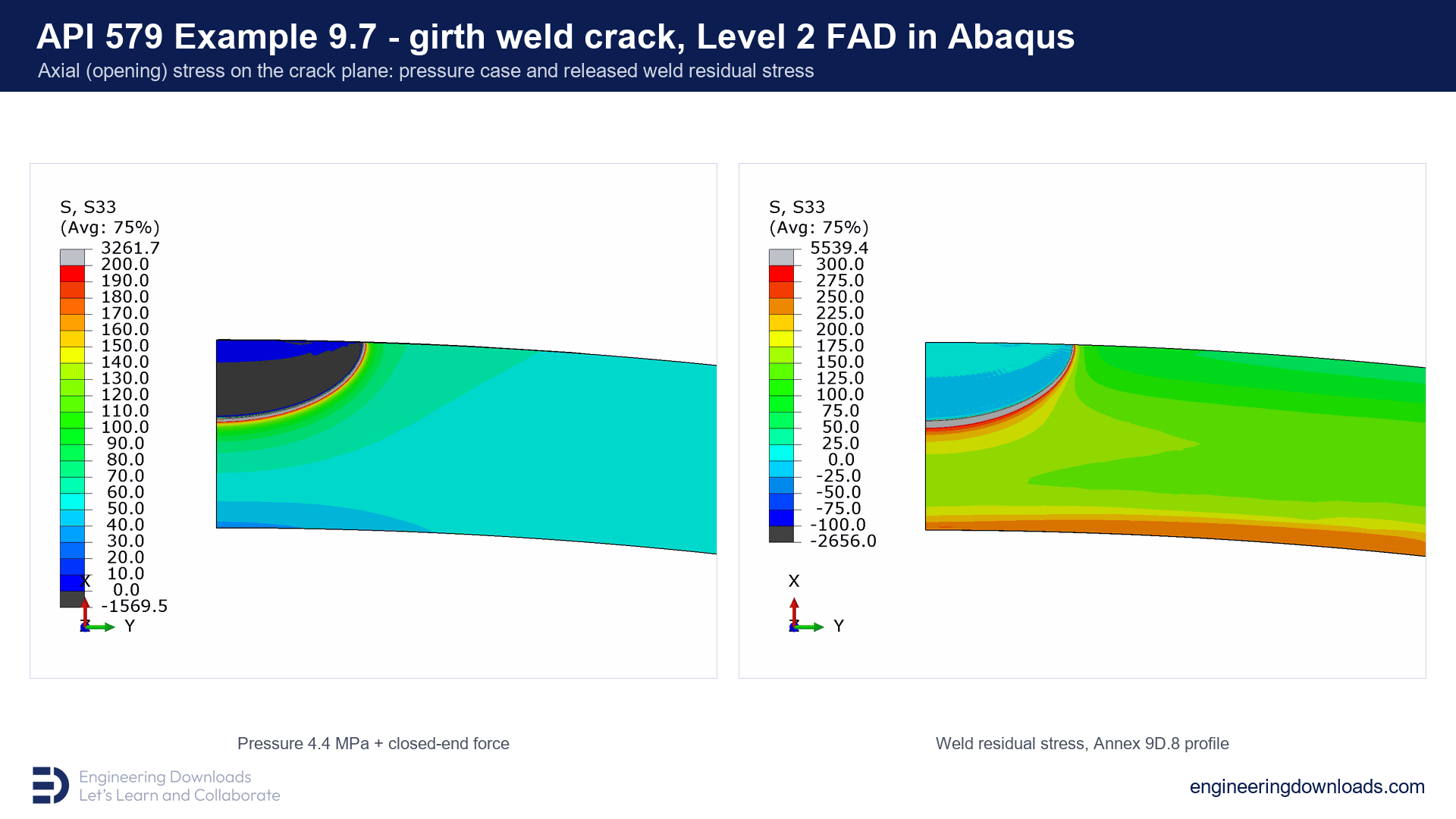
| Load cases | P: pressure + closed-end force. B: bending 36.8 kN·m. RI: weld residual stress as an initial stress field. UI: 100 MPa method check |
| Fracture output | *CONTOUR INTEGRAL, K factors, 10 contours at every front node |
| Assessment | Level 2 FAD at 90°, 0° and 45°: Table 9B.15, Annex 9B.14 weight functions, RCSCCE2 reference stress, Table 9.3, Eq. 9.22 |
| Software | Abaqus/CAE and Abaqus/Standard 2024; Python 3 (numpy, scipy, matplotlib) |
| Quantity | Example | This package |
|---|---|---|
| LrP | 0.5080 | 0.5080 |
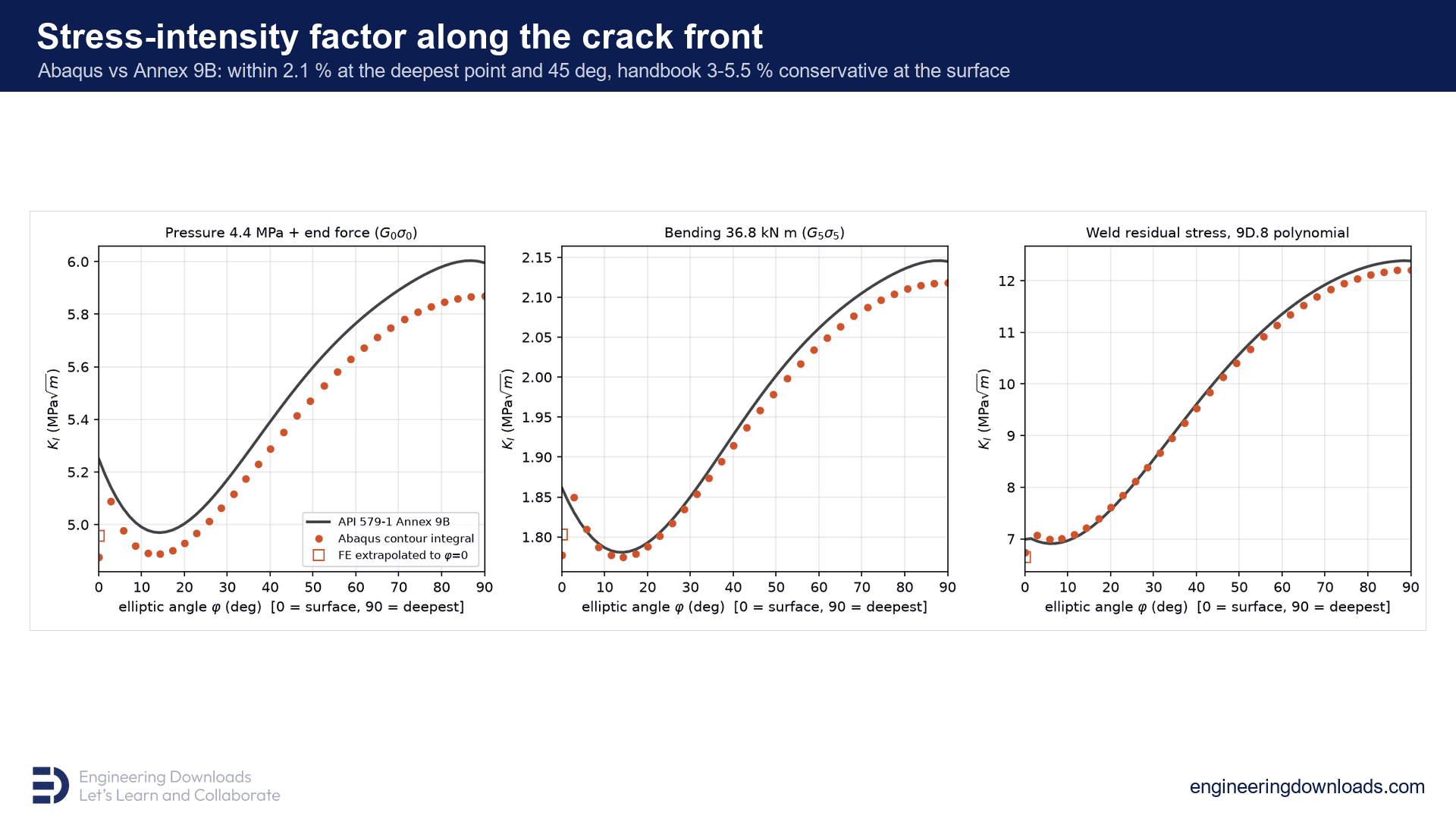
| KP deepest / 45° / surface (MPa√m) | 8.140 / 7.465 / 7.112 | identical (hand); 7.986 / 7.339 / 6.761 (Abaqus) |
| KSR deepest / 45° / surface (MPa√m) | 12.380 / 10.108 / 6.992 | identical (hand); 12.211 / 10.011 / 6.648 (Abaqus) |
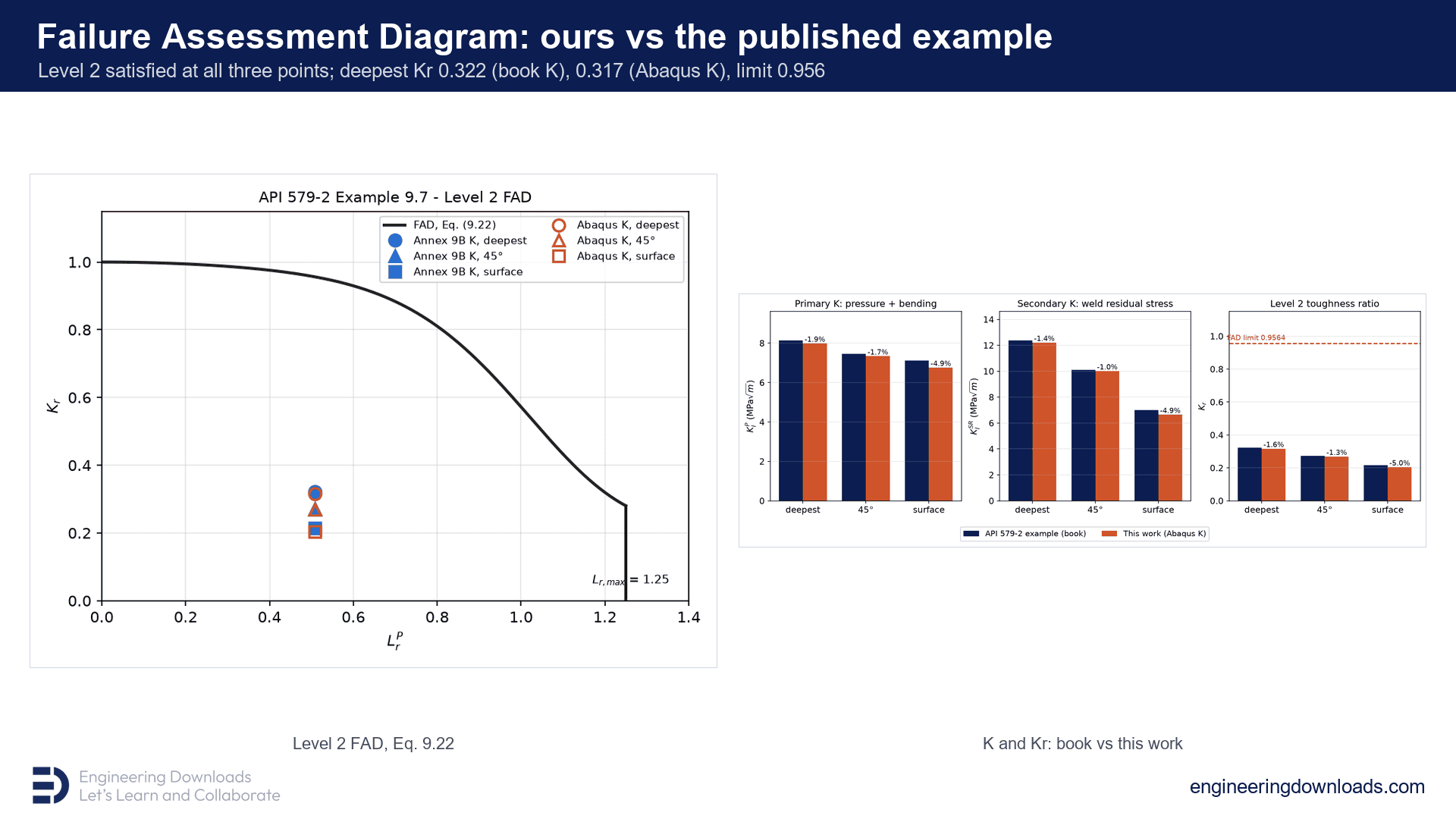
| Kr deepest / 45° / surface | 0.3217 / 0.2721 / 0.2154 | identical (hand); 0.3166 / 0.2687 / 0.2047 (Abaqus K) |
| FAD limit at LrP | 0.9564 | 0.9564 |
| Level 2 verdict | Acceptable | Acceptable with either set of K |
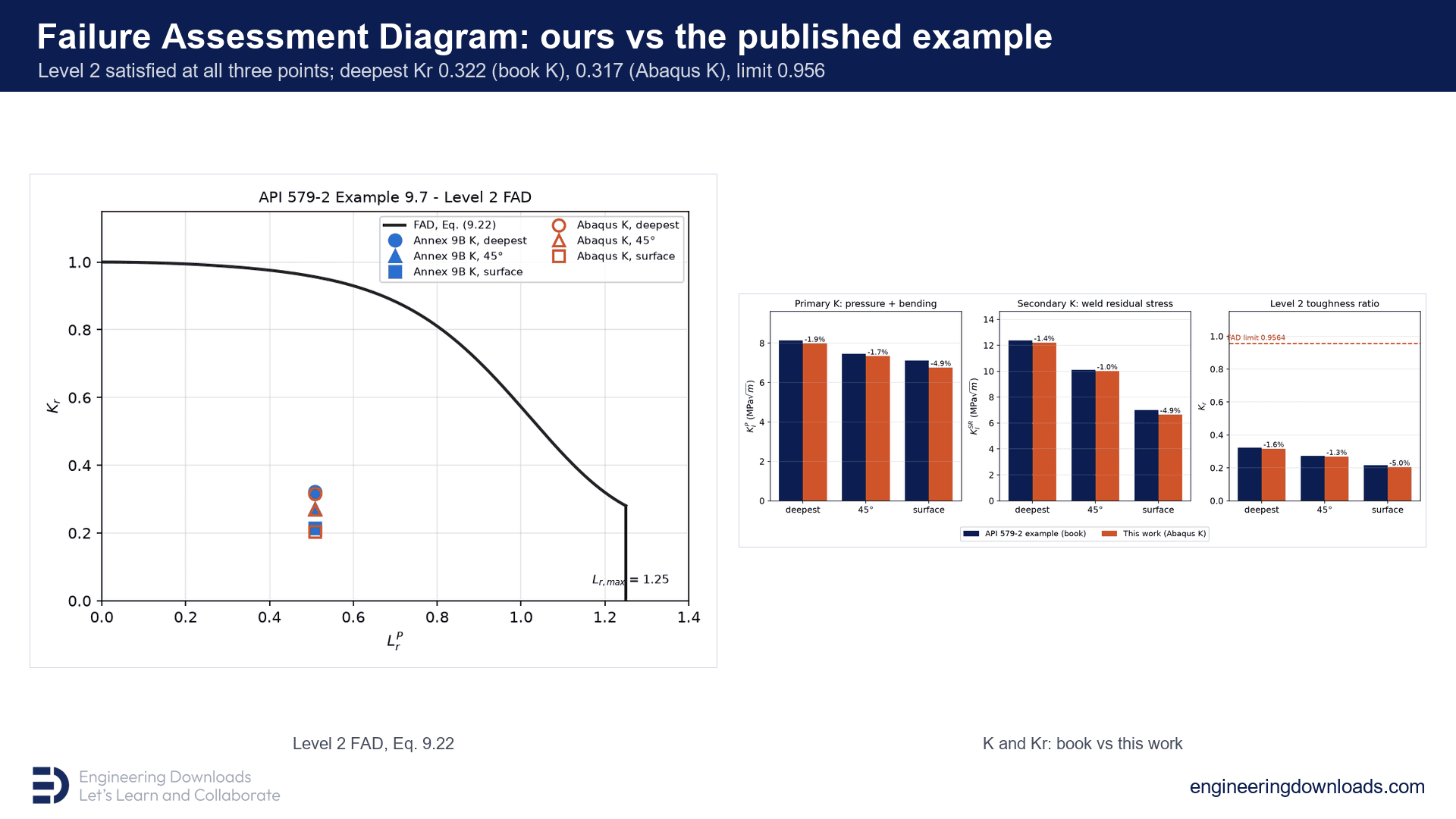
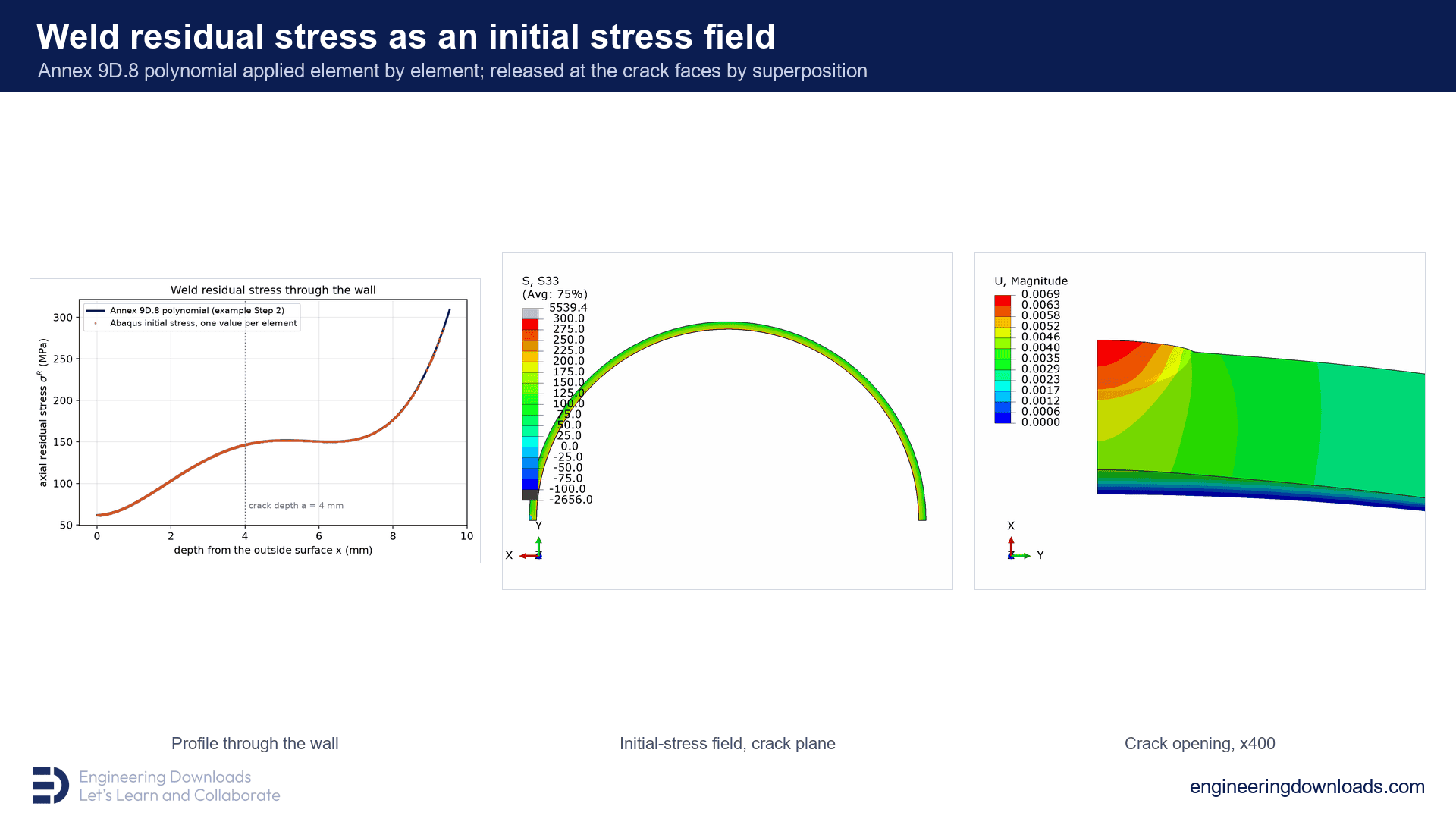
The Python engine reproduces 72 quantities of the example within 0.054 % and finds two harmless misprints in the book. The 3D Abaqus model agrees with the handbook K within 2.1 % at the deepest point and at 45° for pressure, bending and weld residual stress; at the surface points the handbook is 3 to 5.5 % conservative. Applying the residual stress as crack-face pressure makes the Abaqus contour integral fail at this front, so the package shows the working alternative: the residual stress as an initial stress field, checked against the pressure case to 0.07 %.
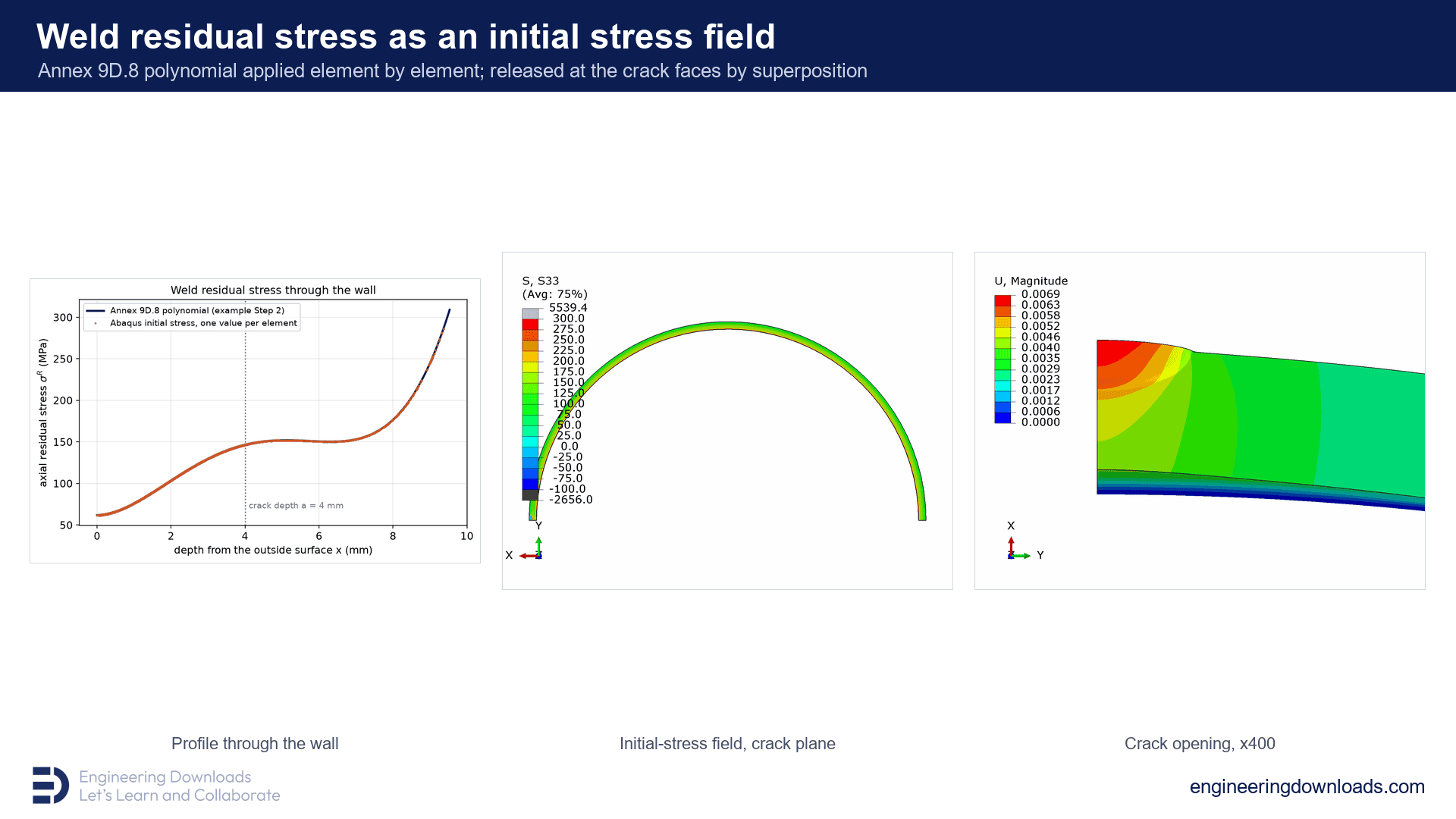
Mesh, crack-tip tube, loads and boundary conditions come straight from Abaqus/CAE; stress and displacement contours come from the ODBs. The scripts that export them are included.
Pipeline and piping integrity engineers who assess girth-weld flaws to API 579 Part 9, FEA engineers who need weld residual stress in an Abaqus fracture model, and students learning weight-function stress-intensity solutions. Change the pipe, crack, loads or residual-stress profile and the generator writes new Abaqus decks for your case.
What does this package calculate? The complete API 579-2 Example 9.7: the Level 2 FAD of an outside-surface girth-weld crack under pressure, dead-weight bending and a fourth-order weld residual stress at the deepest point, the surface points and 45 degrees, plus a 3D Abaqus check of every K term and the FAD repeated with the Abaqus K.
Does it reproduce the API 579 example? Yes. 72 quantities match the book within 0.054 %, including the weight-function coefficients and Kr at all three points, and the Level 2 verdict agrees. Abaqus K is within 2.1 % of the handbook at the deepest point and 45 degrees; at the surface points the handbook is 3 to 5.5 % conservative.
How is the weld residual stress put into Abaqus? As an initial axial stress field that follows the Annex 9D.8 polynomial through the wall. Releasing it at the crack faces is, by superposition, the crack-face traction problem. A uniform 100 MPa case reproduces the pressure case to 0.07 %, which checks the method. Crack-face pressure loading makes the Abaqus contour integral fail at this front; the tutorial explains why.
Can I use it for my own pipe? Yes. Pipe size, crack size, pressure, moment and the residual-stress coefficients are inputs of the Python engine and of the mesh generator, which writes new Abaqus decks for your case.
Are the images real Abaqus results? Yes. Every mesh, load and contour image is an unedited PNG written by Abaqus/CAE 2024 from the included models and their results; only a title bar, the logo and the web address are added around them. The image scripts are included so you can regenerate them. Charts are drawn by the included Python scripts, with the example's values as reference markers.
Are the API coefficient tables included? No. API 579-1 is copyrighted, so the package ships the parser scripts that read the influence-coefficient tables from your own licensed PDF of API 579-1 (2021) into JSON. Everything else runs as delivered.
Which Abaqus version do I need? Abaqus/CAE and Abaqus/Standard 2024 or newer for the CAE files and scripts; the INP files also run in older releases. ODB files are not included: each job runs in about a minute on 6 cores.
What if the package is not what I expected? Write to us. Engineering Downloads refunds clients who are not satisfied with a delivered product.
Is this an API publication or a certified assessment? No. It is an independent worked benchmark and training package. It does not reproduce API figures and does not replace a fitness-for-service assessment by a qualified engineer.
This is an independent worked benchmark for training. It is not an API publication, reproduces no API tables or figures and does not replace an assessment by a qualified engineer. You need your own copy of API 579-1/ASME FFS-1 and API 579-2.
Need more than the files?
There are two ways we can help. Book a one hour online consultation if you want to talk a problem through with a CAE engineer, using the checkbox in the order box. Order a project if you need a full simulation built for you, delivered to an agreed scope, price and deadline under a written contract.
We work on FEA and CFD for engineers, researchers and companies. Order your project, or message us on WhatsApp for a quick reply.
Other packages engineers working on this topic also download.
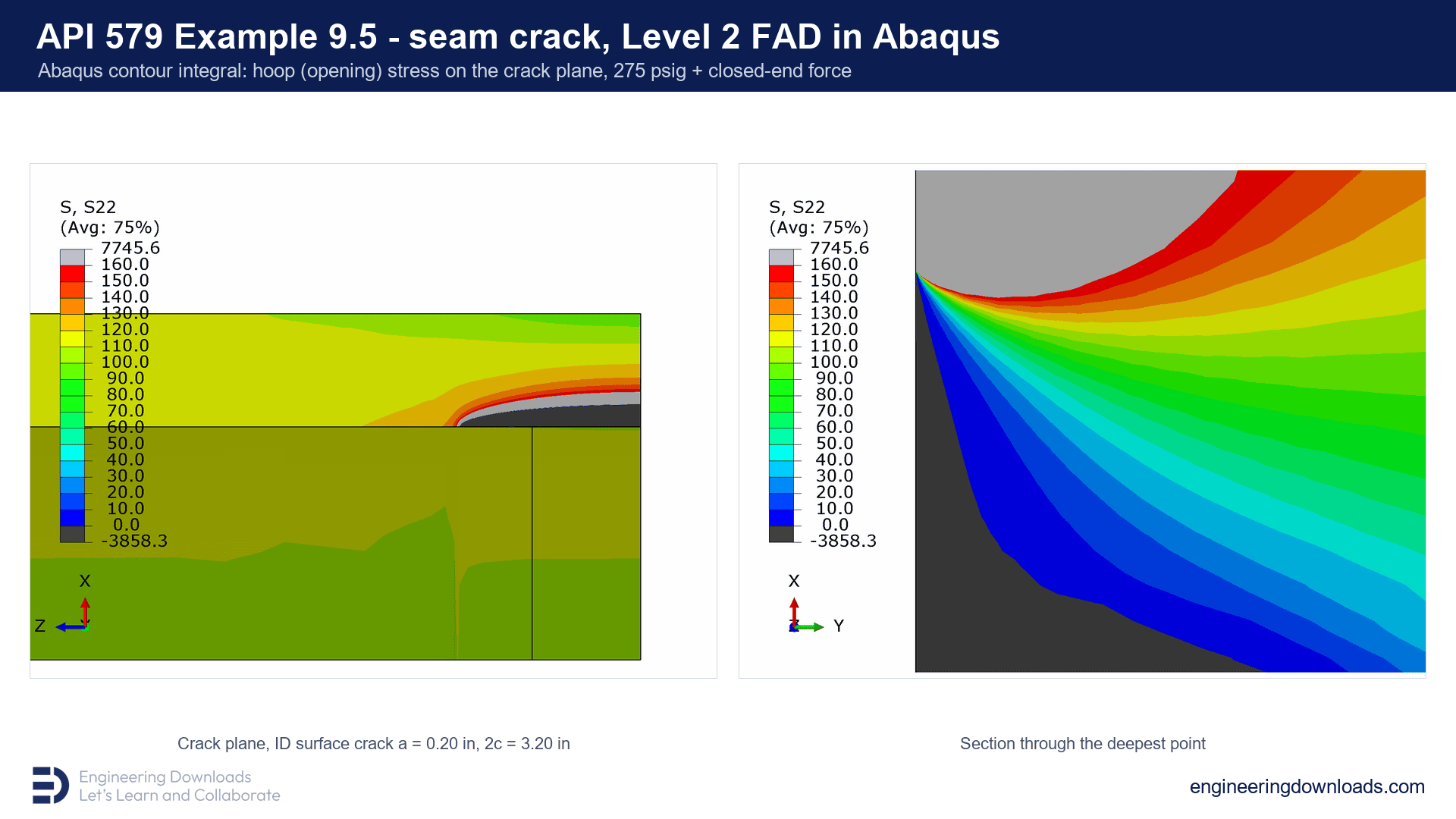 API 579 Example 9.5 in Abaqus: Seam Crack Level 2 FAD with 3D Contour Integral€99,00
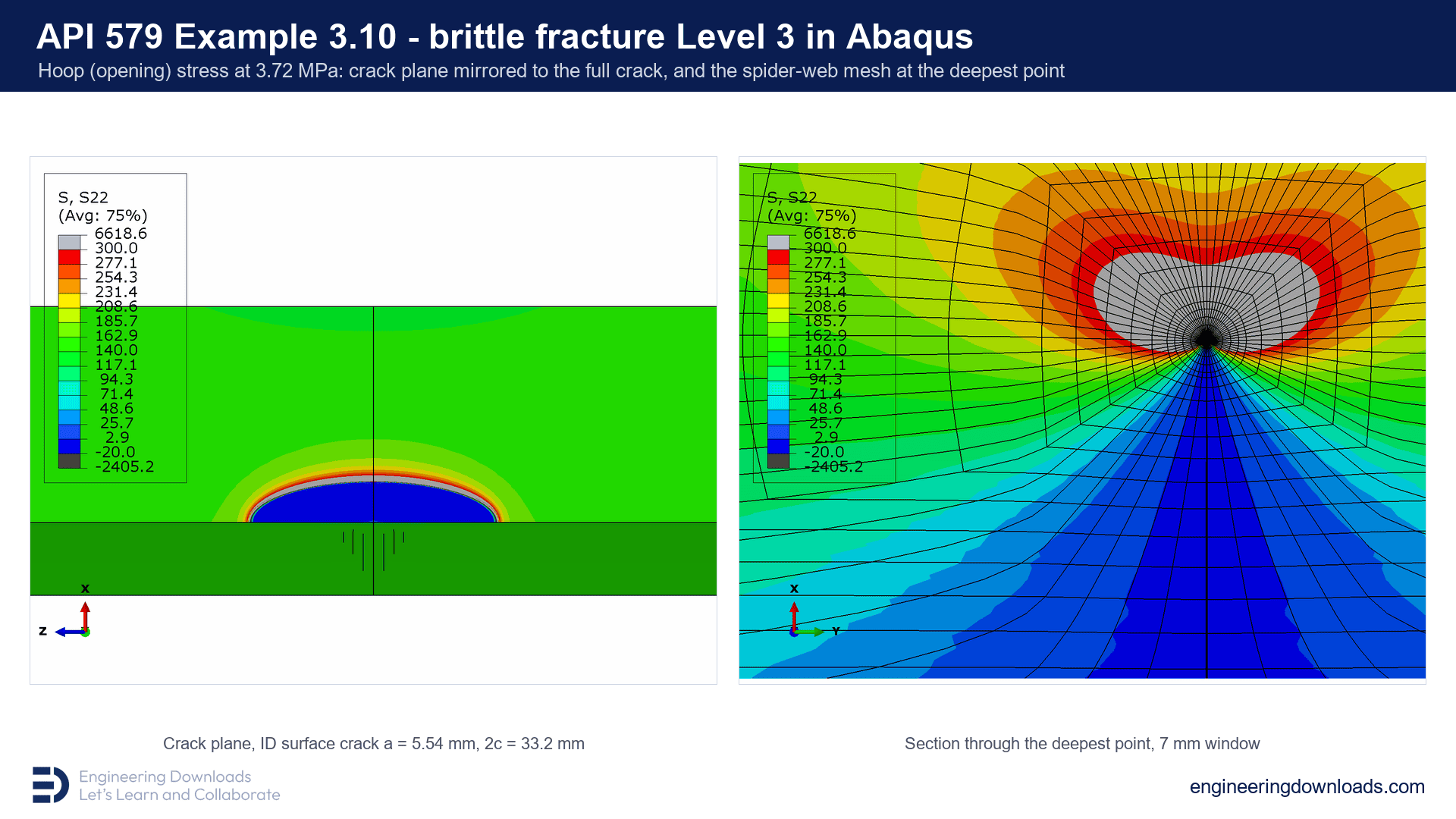 API 579 Example 3.10 in Abaqus: Brittle Fracture Level 3, Demethanizer Thermal Shock€139,00
 Surface Crack in a Pressure Vessel: Validated Abaqus Stress Intensity Factor Model (Spider-Web Mesh)€129,00
 Compact Tension (CT) Specimen: Validated Abaqus Stress Intensity Factor Model vs ASTM E647 (2D + 3D)€99,00
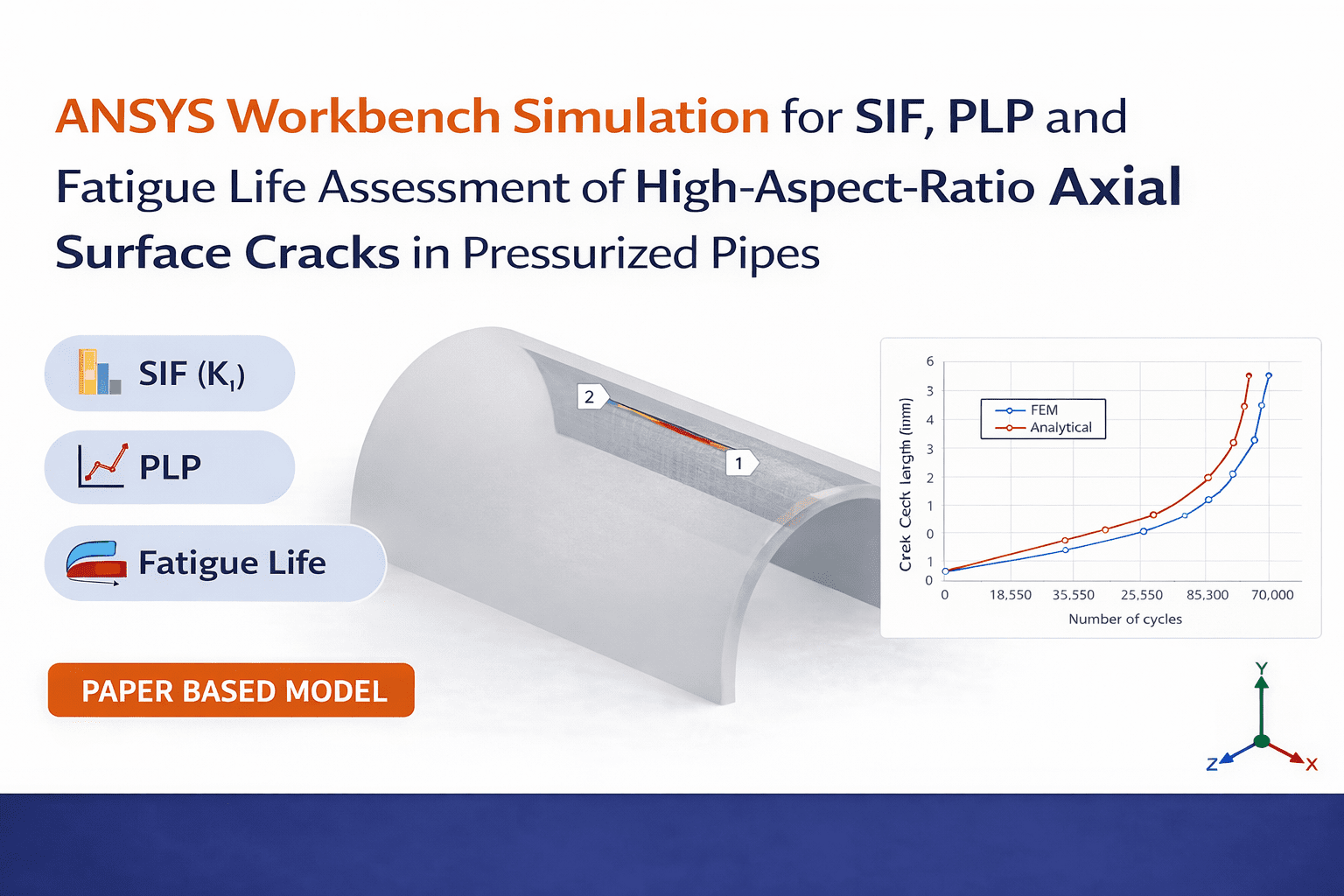 ANSYS Workbench Simulation for SIF, PLP and Fatigue Life Assessment of High-Aspect-Ratio Axial Surface Cracks in Pressurized Pipes€129,00
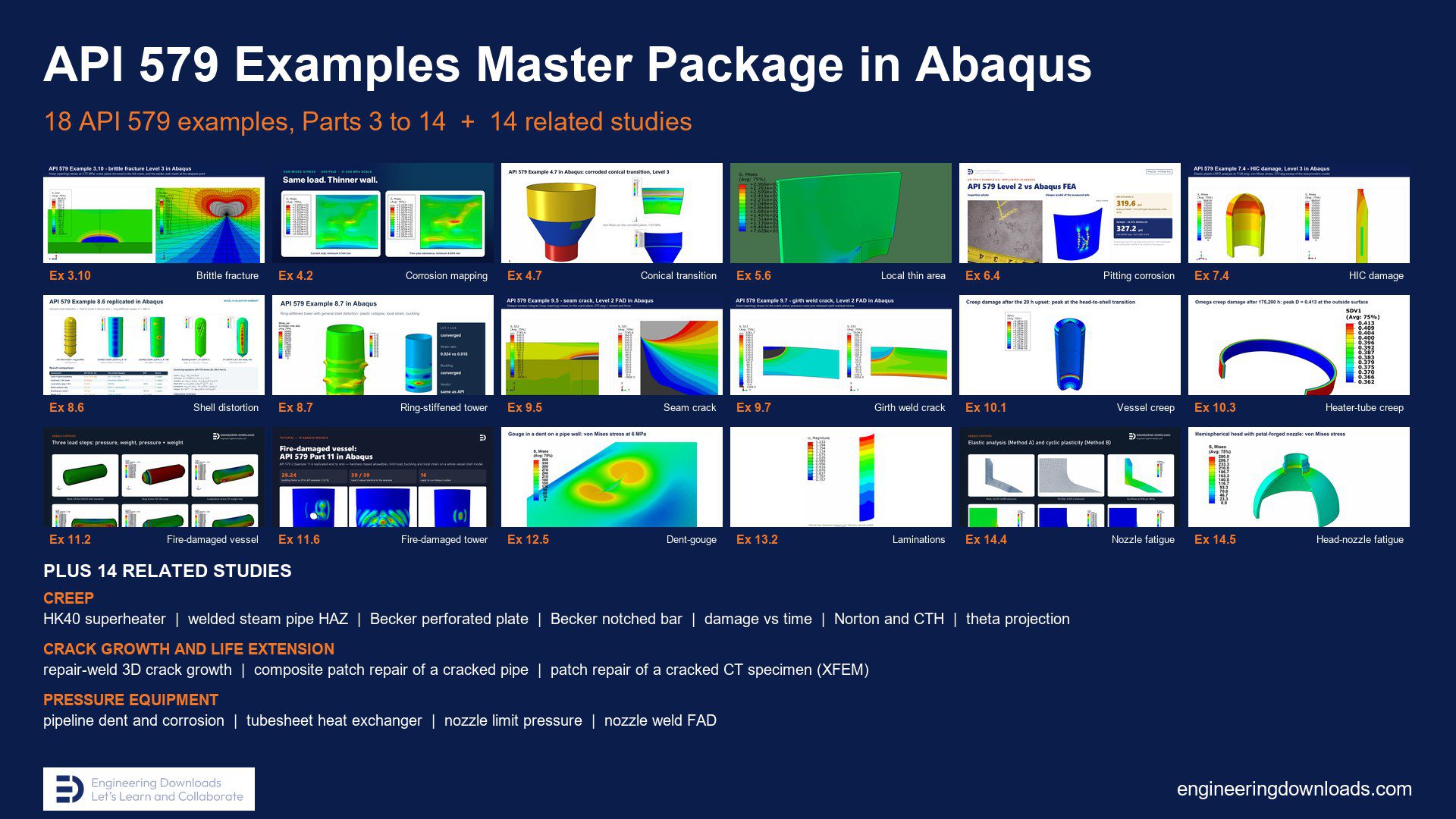 API 579 Examples Master Package in Abaqus: 18 Examples from Parts 3 to 14 plus 14 Creep, Crack Growth, Life Extension and Pressure-Equipment Studies
 API 579 Example 7.4 in Abaqus: HIC Damage Level 3 Assessment with FAD and Plastic Collapse€139,00
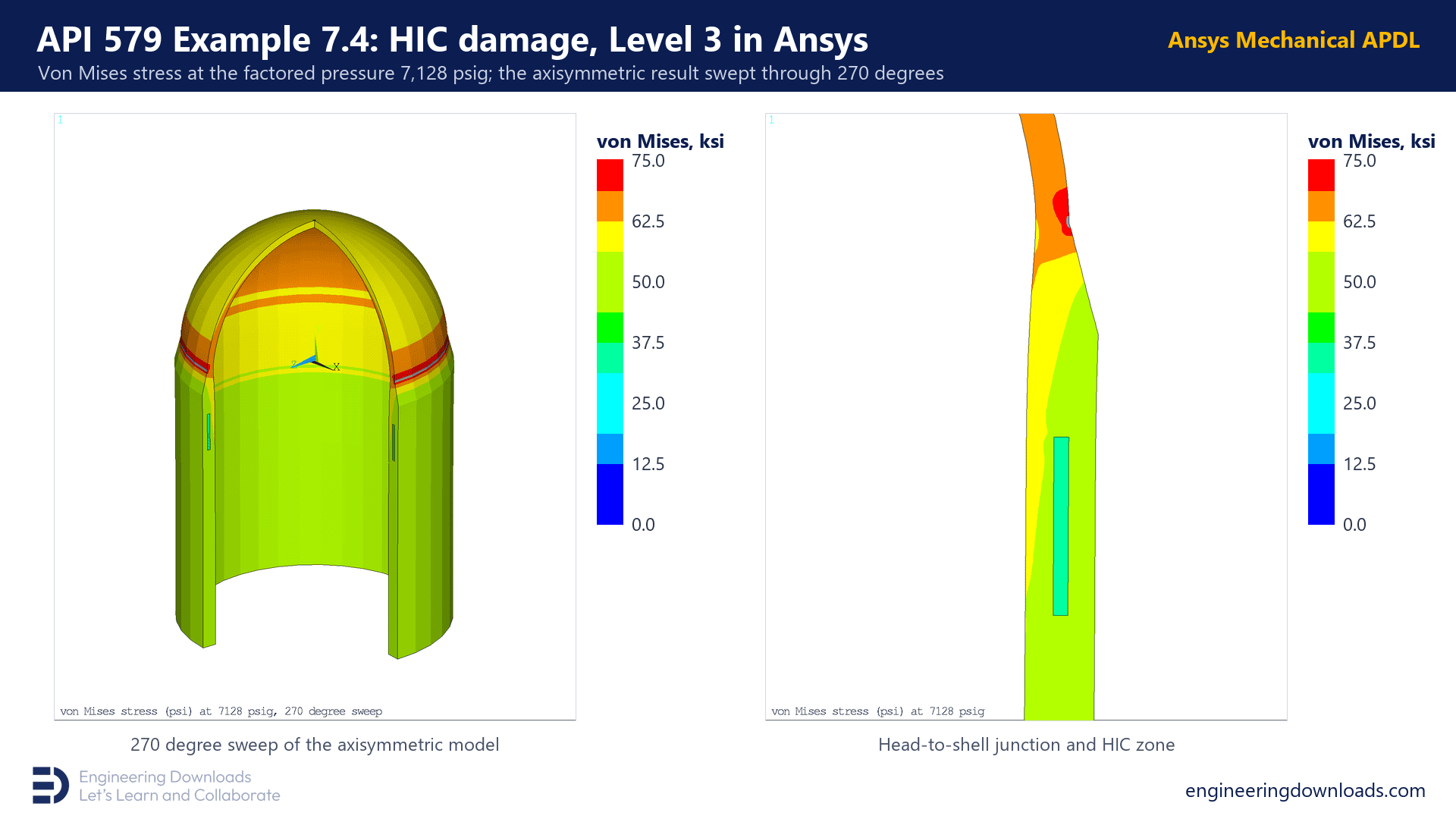 API 579 Example 7.4 in Ansys: HIC Damage Level 3 Assessment with FAD and Plastic Collapse€139,00

Need a full custom project? See the options below.

€129,00

€179,00

€149,00

€119,00

€129,00
See more
Want to receive push notifications for all major on-site activities?