Need a full custom project? See the options below.
Need a full custom project? See the options below.
Papers abstract:
Concrete structures are commonly exposed to low velocity impact loads originating from windborne/waterborne debris, vehicle/vessel collision, and rock fall. For the performance assessment of concrete structures under such loads, several constitutive models have been developed to date. To compare the accuracy of the available models for practical applications, the current study evaluates four constitutive models: the Continuous Surface Cap Model (CSCM), Elasto-Plastic Damage Cap (EPDC) model, Karagozian and Case Concrete (KCC) model, and Winfrith concrete model. For this purpose, the constitutive models are first examined at the material level through single element simulations under basic stress paths, such as uniaxial compression and tension, as well as triaxial compression. A range of measures—such as post-peak softening, shear dilation, and confinement effect—are extracted and compared. The investigation is then extended to understand how the concrete constitutive models perform at the structure level. This is achieved by replicating drop hammer tests on reinforced concrete (RC) and concrete-filled steel tube (CFST) beams. Investigation of these two structural categories provides a unique opportunity to further evaluate the accuracy of the concrete constitutive models in interaction with the most common reinforcement details. To achieve this goal, the impact responses of RC and CFST beams are compared with full-scale experimental test data. Upon understanding the capabilities of each constitutive model in predicting the structural behavior and damage, the most important modeling parameters are examined. The outcome of this study facilitates the selection and use of concrete constitutive models for the design and assessment of concrete structures subjected to various low velocity impact loads.
Product Overview:
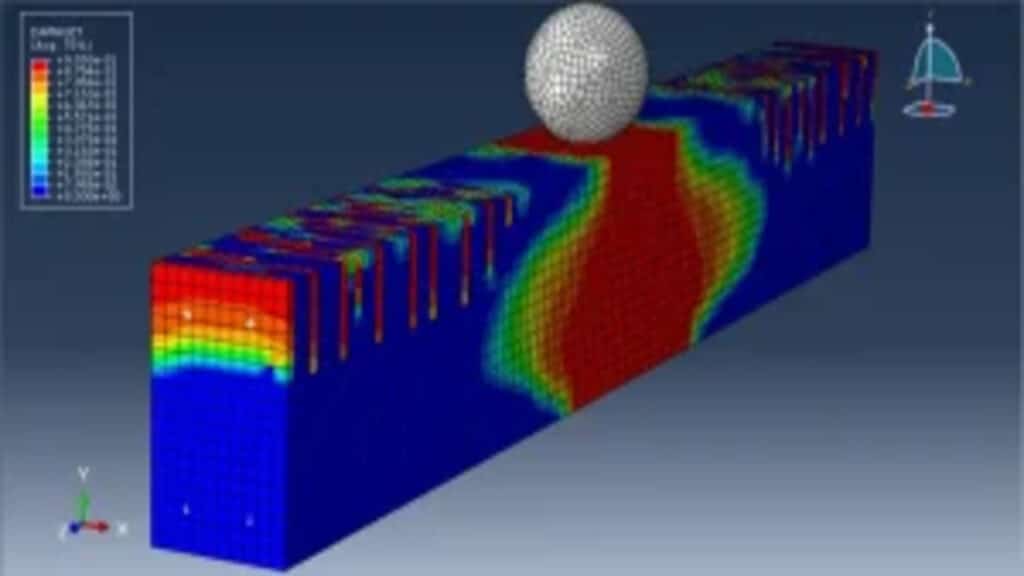
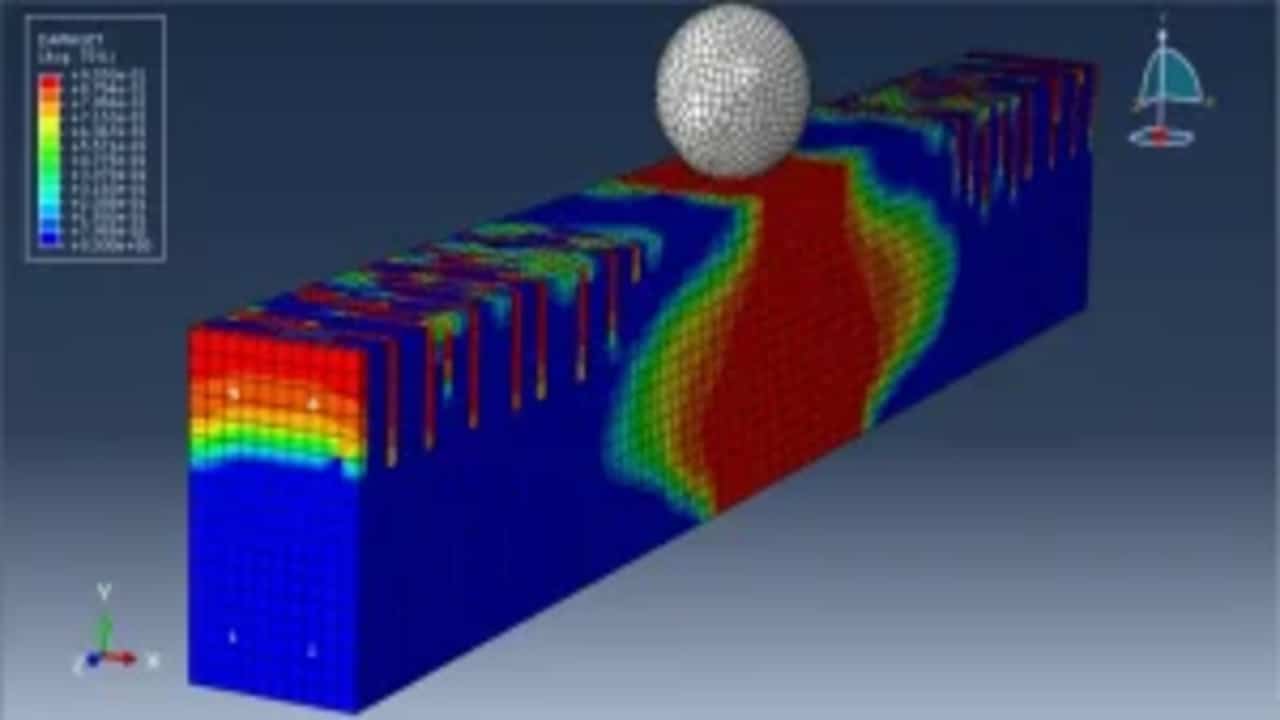
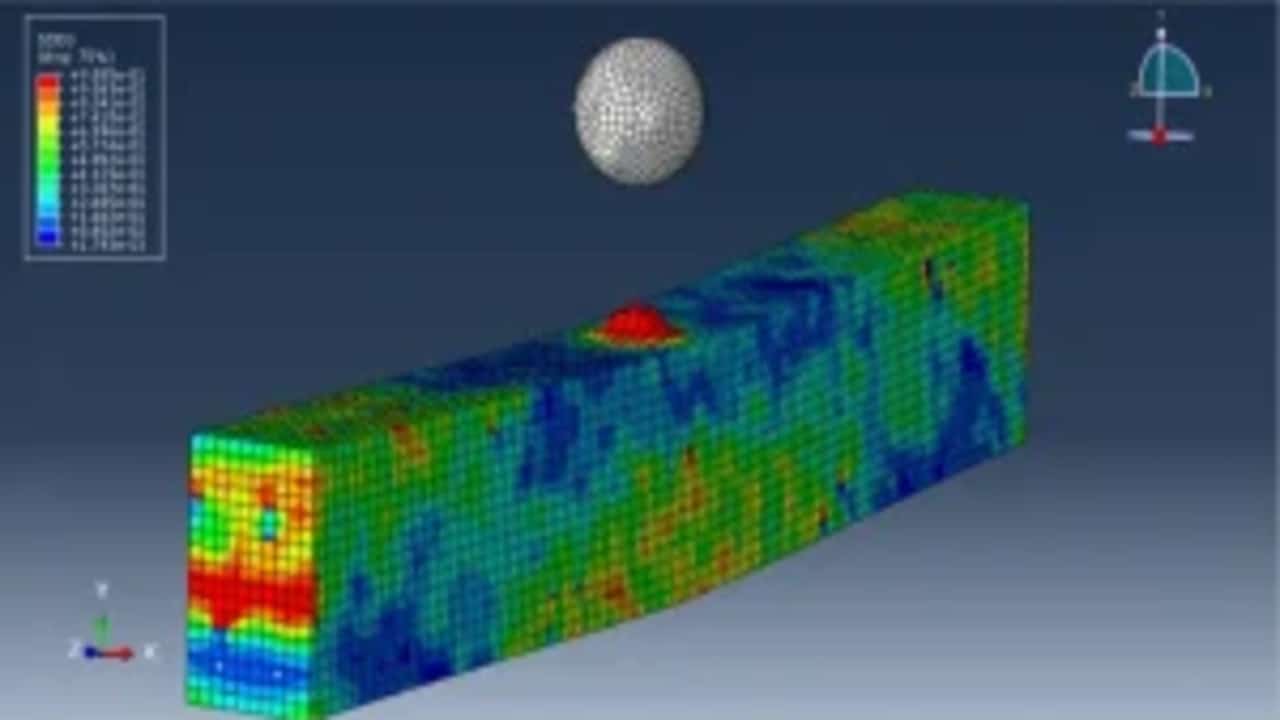
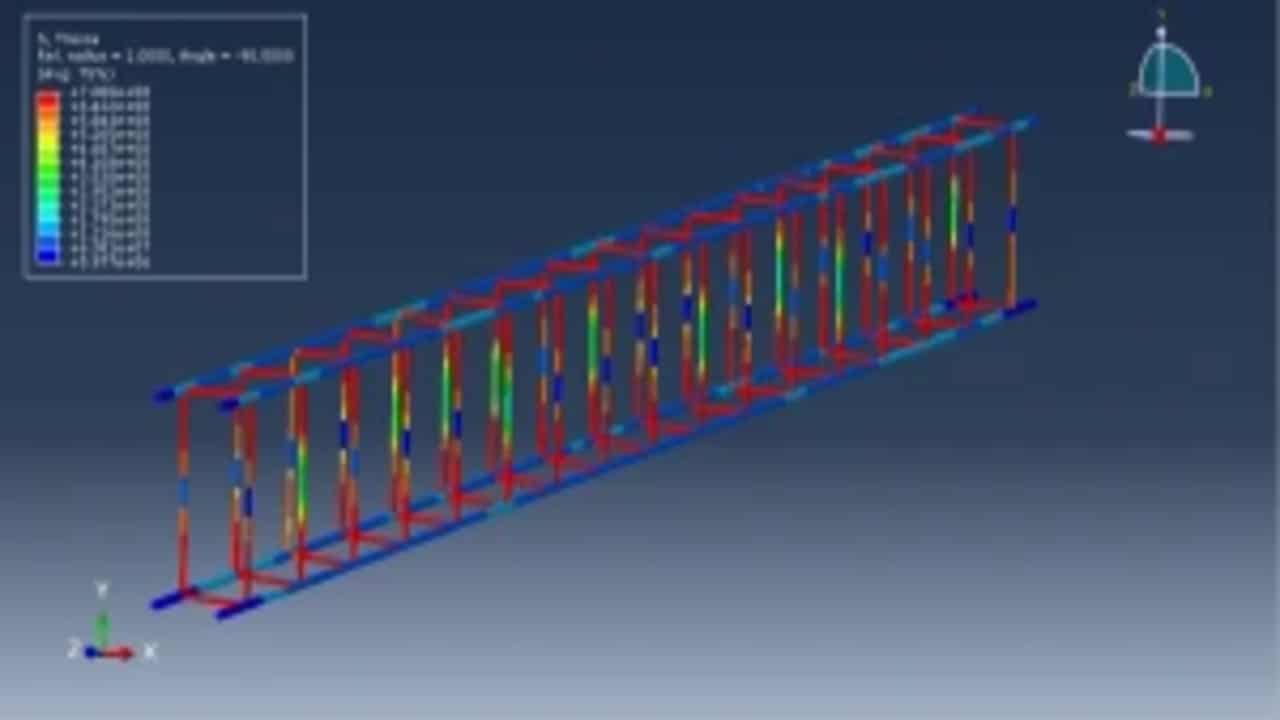
This tutorial demonstrates the complete workflow to simulate a drop-weight impact on a reinforced concrete beam using Abaqus/Explicit. Based on the methodology in a peer-reviewed ISI journal, the setup guides users through geometry creation, material assignment, boundary conditions, and result interpretation. Key simulation steps include:
In this tutorial, reinforced concrete beam impacts are simulated, according to data from the work of Dikshant Saini and Behrouz Shafei.
Need more than the files?
There are two ways we can help. Book a one hour online consultation if you want to talk a problem through with a CAE engineer, using the checkbox in the order box. Order a project if you need a full simulation built for you, delivered to an agreed scope, price and deadline under a written contract.
We work on FEA and CFD for engineers, researchers and companies. Order your project, or message us on WhatsApp for a quick reply.
Other packages engineers working on this topic also download.
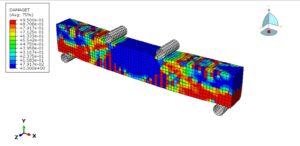 Analysis of the Ultra-High-Performance Geopolymer RC Beam under Four-Point Bending Loading
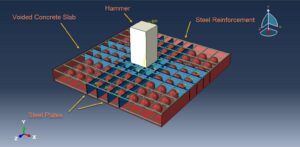 Analysis of interior voided slab-column connections using steel sheets under low-velocity impact
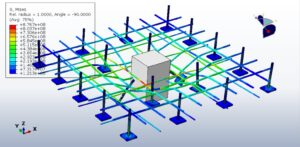 Strengthening of reinforced concrete slabs using carbon fiber reinforced polymers rods and concrete jacket with a mechanical anchorage system under rigid impact load
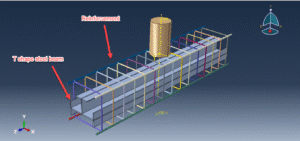 Low and High velocity impact analysis of a T-shaped steel reinforced concrete column
 Flexural behavior of reinforced concrete beams strengthened with ultra-high performance fiber reinforced concrete
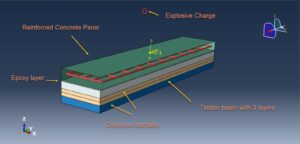 Analysis of adhesively bonded cross-laminated timber-concrete composite under close blast explosion test
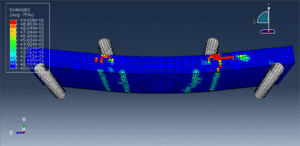 Simulation RC slab with PET foam core under four point bending test in Abaqus
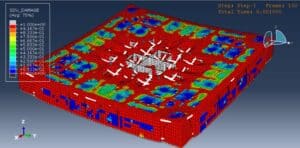 Blast resistance behavior of interior voided slab-column connections using steel sheets and CFRP reinforcement

Need a full custom project? See the options below.

€129,00

€179,00

€149,00

€119,00

€129,00

€149,00
See more
Want to receive push notifications for all major on-site activities?