

API 579 Level 3 Assessment: What Assessors Expect
You have a vessel, a pipe or a nozzle with a flaw. The inspection report gives you a depth, a length and a lot of uncertainty. The Level 1 screening curve fails it. Level 2 fails it too, or the geometry is not covered by the tables. Somebody now has to decide whether that equipment […]
Failure Assessment Diagram (FAD): A Practical Guide for Crack Assessment

How to build a failure assessment diagram, place the assessment point, and get Kr and Lr from Abaqus or ANSYS for API 579 and BS 7910 crack assessment.
Mastering Level 3 FFS Replication and Validation for Engineers

Facing Complex Flaw Assessments? Let’s Break Down Level 3 FFS Are you staring at a component with a detected flaw, knowing that a simple calculation isn’t enough to prove its safety? Maybe you’ve tried basic fitness-for-service checks, but the real-world complexity of geometry, loading, or material behavior just doesn’t fit the textbook formulas. It’s frustrating […]
Pressure Vessel Stress Analysis: A Practical Guide for Engineers

Pressure vessels are indispensable components across numerous industries, from oil and gas and chemical processing to power generation and aerospace. These enclosed containers are designed to hold gases or liquids at pressures significantly different from the ambient pressure, making their structural integrity paramount for safety and operational efficiency. Ensuring they can withstand internal and external […]
Effective Dent Assessment: Ensuring Structural Integrity

Dents in engineering structures, whether pipelines, pressure vessels, or aerospace components, are more than just cosmetic imperfections. They represent potential weak points that can compromise structural integrity, leading to catastrophic failures, operational disruptions, and significant safety risks. Effective dent assessment is a critical discipline for engineers across various sectors, from oil & gas to aerospace […]
API 579 vs BS 7910: When to Use Each Standard in Fitness for Service Assessments
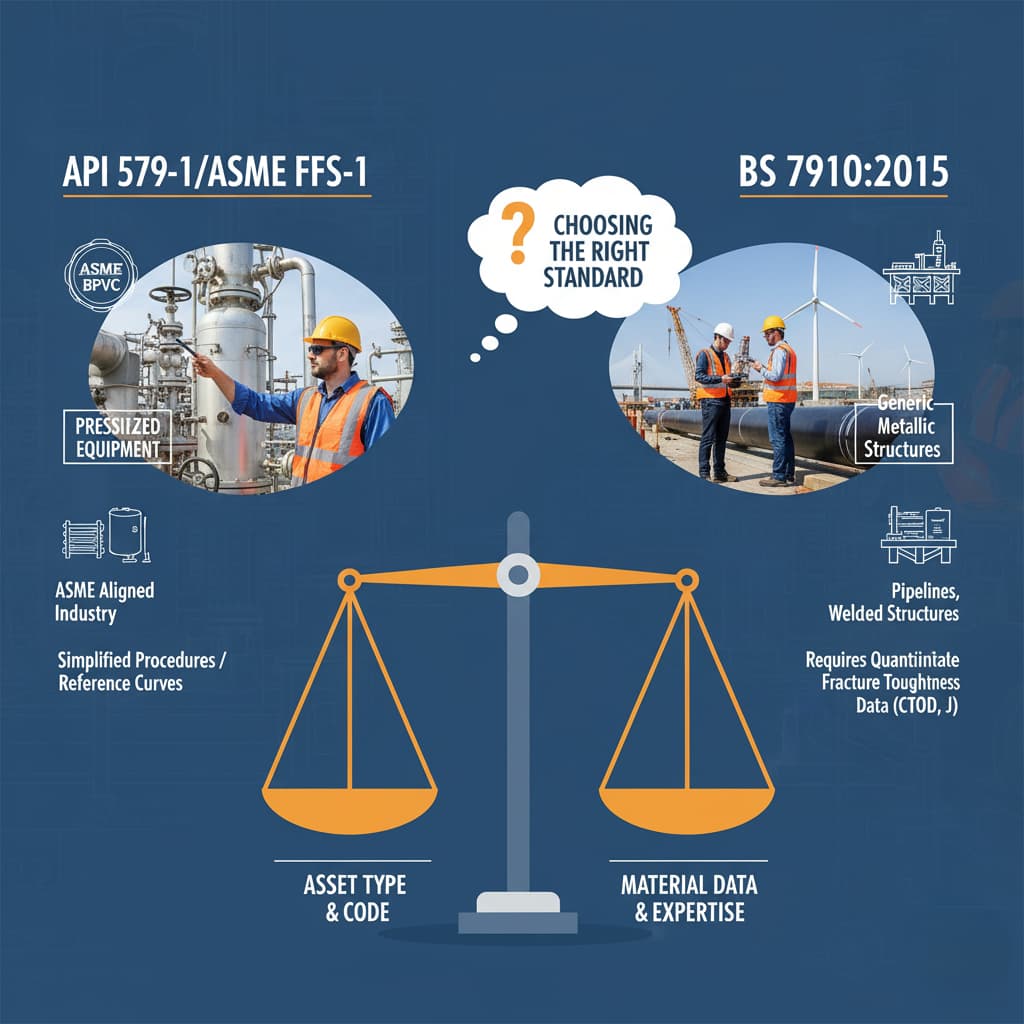
API 579 vs BS 7910 Fitness for Service (FFS) assessments help engineers decide whether a component with defects can continue operating safely. Different standards exist for performing these evaluations, and two of the most widely used are API 579‑1/ASME FFS‑1 and BS 7910. Both documents use fracture mechanics to determine whether flaws are acceptable, but their scopes and data […]
Understanding API 579 and FFS Assessment Levels
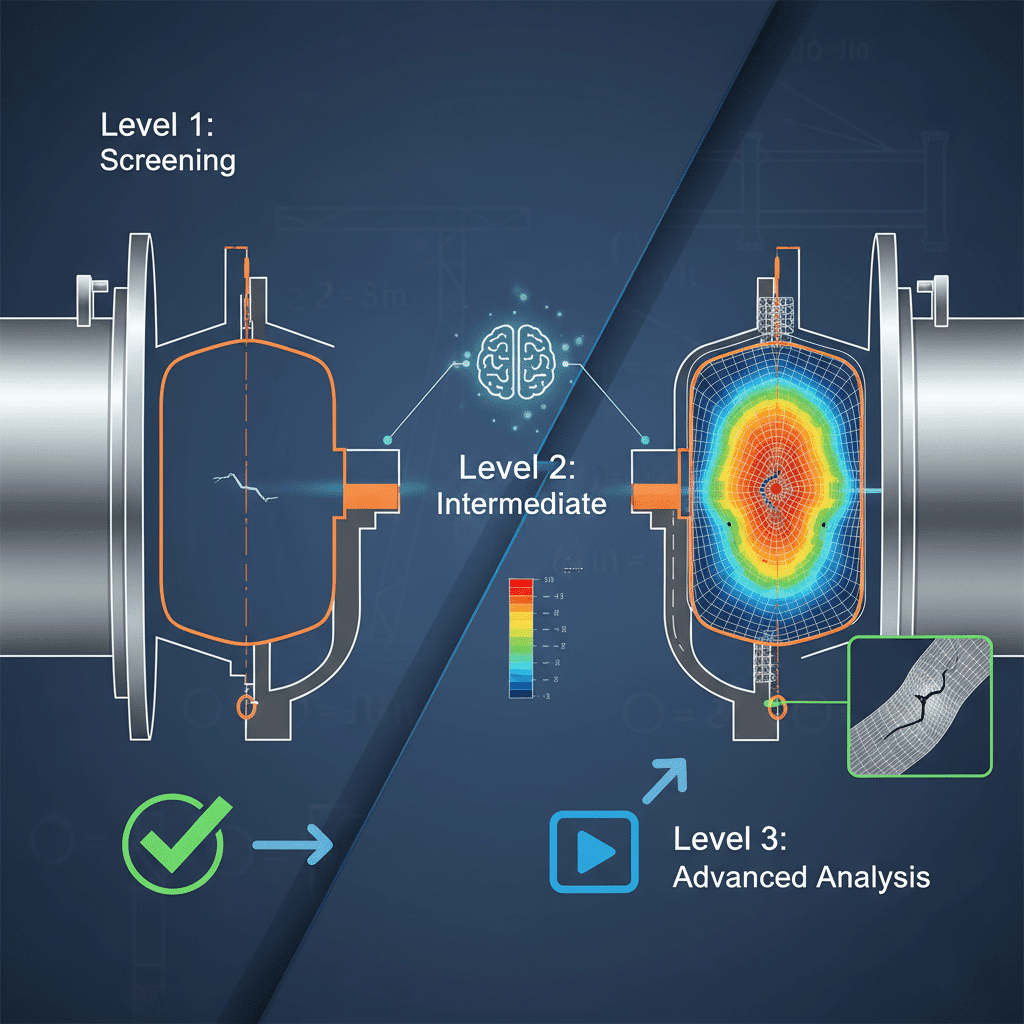
Understanding API 579 and FFS Assessment Levels: From Screening to Advanced Analysis Industrial equipment doesn’t last forever. Corrosion, fatigue and accidental damage gradually erode the strength of pipelines, pressure vessels and other critical assets. Fitness for Service (FFS) assessments give engineers a structured way to decide whether a piece of equipment can safely continue operating or whether it […]
Fitness for Service (FFS) in Asset Integrity

The Role of Fitness-for-Service (FFS) in Asset Integrity Fitness-for-Service (FFS) analysis is a structured engineering approach to determine if equipment with flaws or damage can continue to operate safely and reliably. It is a crucial part of asset integrity management, especially in high-risk sectors like oil & gas, power generation, and manufacturing. Over an asset’s […]