

Abaqus Composite Layup: Practical Setup for Shell, Continuum and Solid
Abaqus composite layup setup for shell, continuum and solid: ply orientation, stacking direction, output and the mistakes that ruin results.
Hashin Damage in Abaqus: Setup, Inputs and Fixes

A practical guide to Hashin damage in Abaqus: the six strengths, the four fracture energies, supported element types, viscous regularization and the fixes for jobs that stall after first failure.
AI in Composite Structure Analysis: A Practical Approach

See how machine learning speeds up composite structure analysis: surrogate models, failure prediction, training data from FEA runs and how to start.
Tsai-Wu Failure Criterion: A Practical Guide for Composites

Learn the Tsai-Wu failure criterion for composites: the formula, strength parameters, interaction term, and how to use it in Abaqus or ANSYS.
Mastering Composite Structural Analysis: A Practical Guide

Dealing with Composites? It’s Not Always Easy. Ever found yourself staring at a composite material problem, scratching your head, wondering if your simulation setup is even remotely correct? You’re not alone. Composites are fantastic materials, offering incredible strength-to-weight ratios, but simulating them accurately can feel like navigating a maze blindfolded. From complex material properties to […]
Composite Analysis: A Practical Guide for Engineers
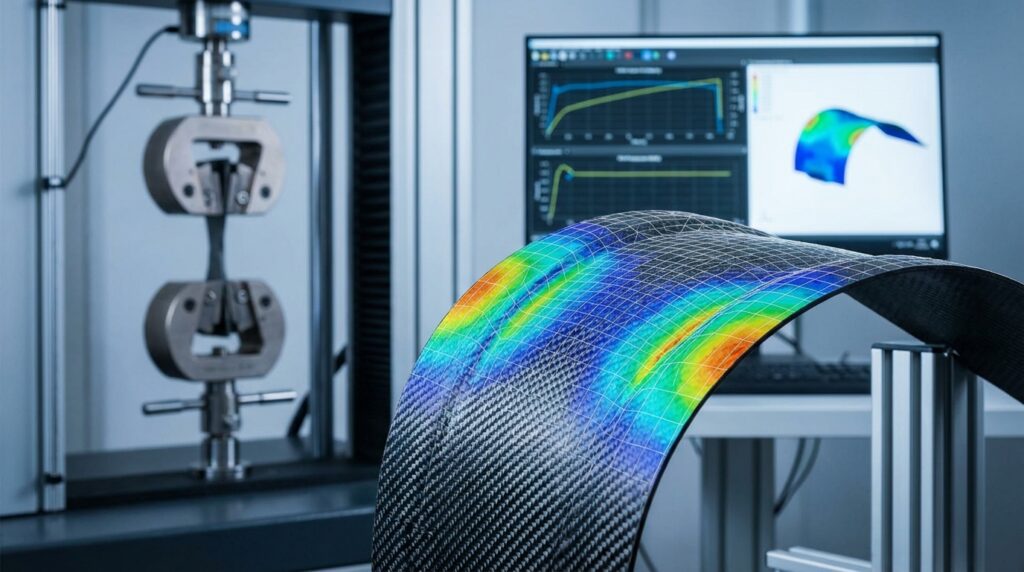
Demystifying Composite Analysis for Engineers Composite materials, like carbon fiber reinforced polymers (CFRPs) and glass fiber reinforced plastics (GFRPs), have revolutionized engineering design across industries. From lightweight aerospace structures and high-performance automotive components to critical oil & gas infrastructure and advanced biomedical implants, their unique properties offer unparalleled strength-to-weight ratios and design flexibility. However, harnessing […]
Composite Failure Criteria: A Practical Guide for Engineers
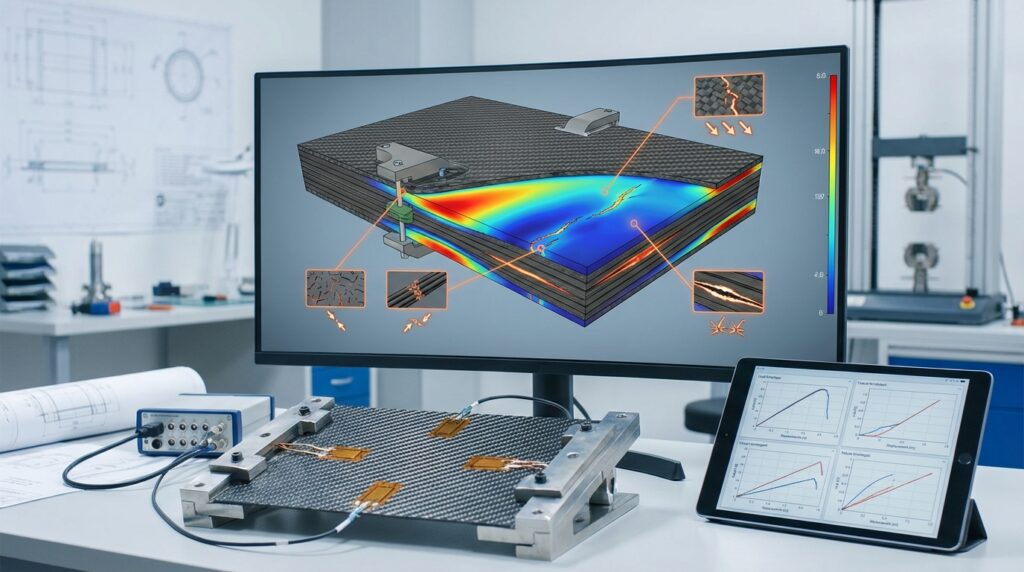
Composite materials have revolutionized engineering across industries, from aerospace and automotive to wind energy and biomechanics. Their impressive strength-to-weight ratio and tailored properties make them indispensable. However, designing with composites isn’t as straightforward as with isotropic metals. The anisotropic nature – where material properties vary with direction – introduces unique complexities, especially when it comes […]