

Abaqus Reduced Integration vs Full Integration: How to Choose
Abaqus reduced integration vs full integration explained: when C3D8R, C3D8I or C3D20R is right, and how to avoid shear locking and hourglassing.
Hex vs Tet Elements in Abaqus: How to Choose the Right Mesh

A practical guide to choosing between hexahedral and tetrahedral elements in Abaqus, with the element codes that matter and a hex-dominant partitioning workflow.
Shell vs Solid Elements in FEA: How to Choose
A practical guide to choosing between shell and solid elements in FEA, with thickness rules, Abaqus and ANSYS setup, coupling and common mistakes.
Element Aspect Ratio in FEA and CFD: What It Is and Why It Matters

What is element aspect ratio, what values are acceptable in FEA and CFD, and how bad aspect ratios hurt accuracy and convergence. Practical fixes.
Abaqus Meshing: A Practical Guide for Engineers

Learn Abaqus meshing: element types, structured vs sweep vs free mesh, partitioning, mesh controls, quality checks and mesh convergence studies.
Excessive Element Distortion in FEA: Causes and Fixes
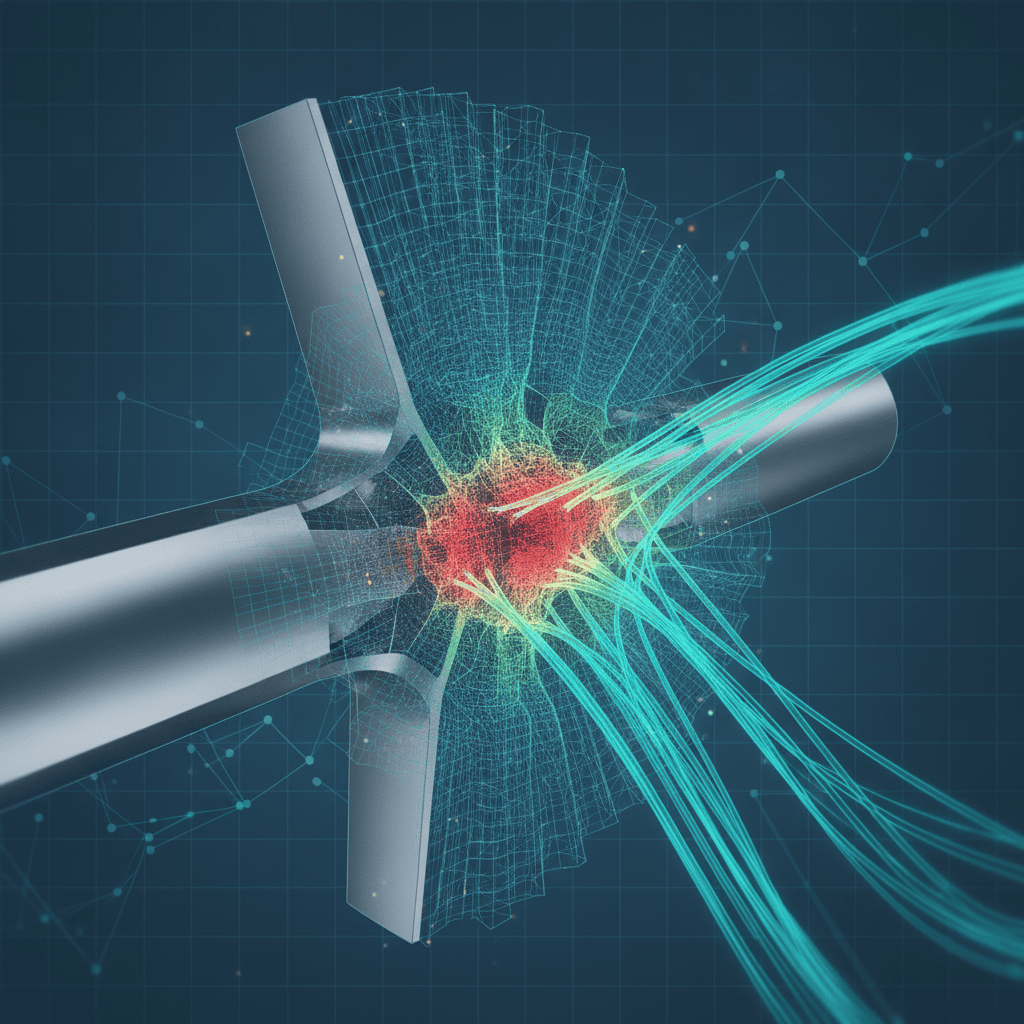
Getting excessive distortion errors in Abaqus or ANSYS? Learn the real causes and fixes: mesh, material, contact, ALE, element choice and step size.
Pre-Processing Best Practices for Accurate CAE Results
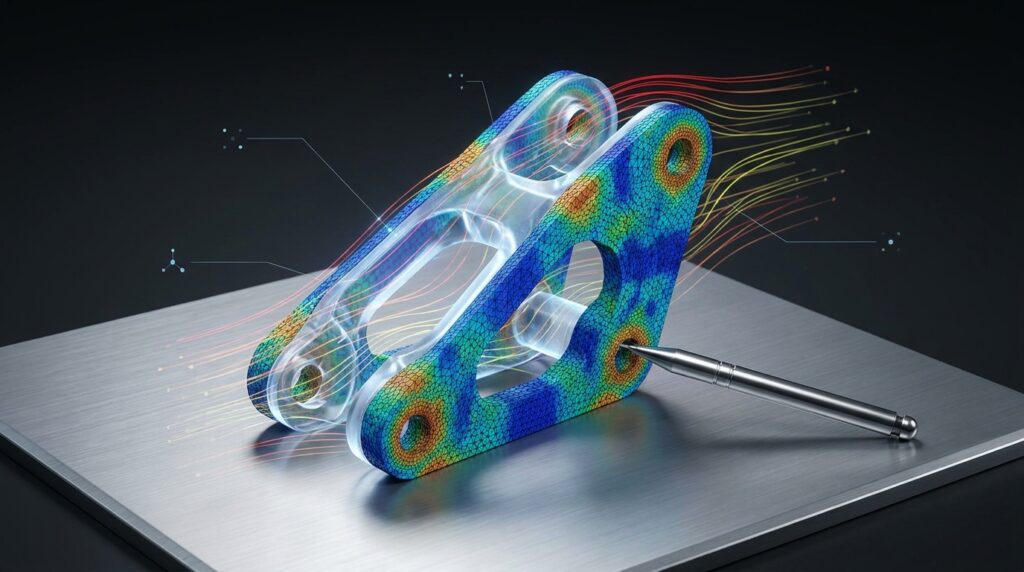
Most simulation errors start in pre-processing. Learn best practices for geometry cleanup, meshing, materials, loads and boundary conditions.
Orthogonal Quality in CFD and FEA Meshes: A Practical Guide

What orthogonal quality means in ANSYS meshing, which values are acceptable, and how poor orthogonality affects CFD accuracy and convergence.
Mastering Mesh Quality Metrics: A Practical Guide for FEA/CFD

Understanding Mesh Quality Metrics for Robust FEA & CFD Simulations In the world of Finite Element Analysis (FEA) and Computational Fluid Dynamics (CFD), the quality of your computational mesh isn’t just a detail – it’s fundamental to the accuracy, stability, and convergence of your simulations. A poorly constructed mesh can lead to non-physical results, convergence […]
Mastering Mesh Independence: An Essential Guide for Engineers

In the world of computational engineering, especially within Finite Element Analysis (FEA) and Computational Fluid Dynamics (CFD), achieving accurate and reliable results is paramount. A crucial step often overlooked or incompletely performed is the Mesh Independence Study. This process ensures that your simulation results are not unduly influenced by the size or density of your […]