

Numerical analysis of the super austenitic stainless and CFRP-based efficient protective structures under high-velocity impact
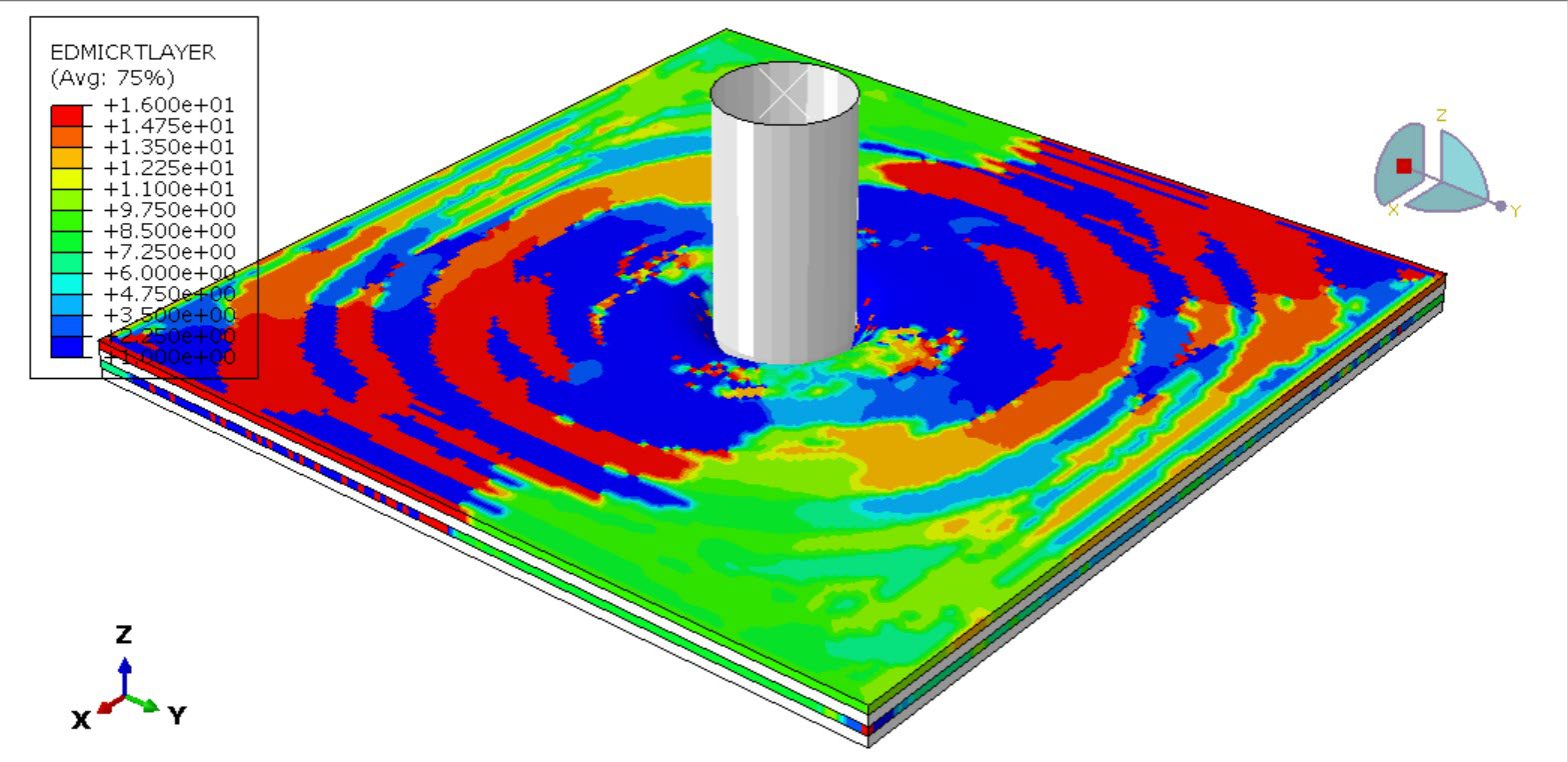
The growing need for advanced protective systems capable of resisting high-velocity impacts has led to increasing interest in hybrid multilayered structures that combine metals and fiber-reinforced composites. Among these, configurations incorporating super austenitic stainless steel and carbon fiber reinforced polymer (CFRP) are particularly attractive due to their complementary mechanical properties. Super austenitic stainless steels exhibit […]
High-velocity impact analysis of the composite sandwich panels with GFRP faces and an aluminum foam core
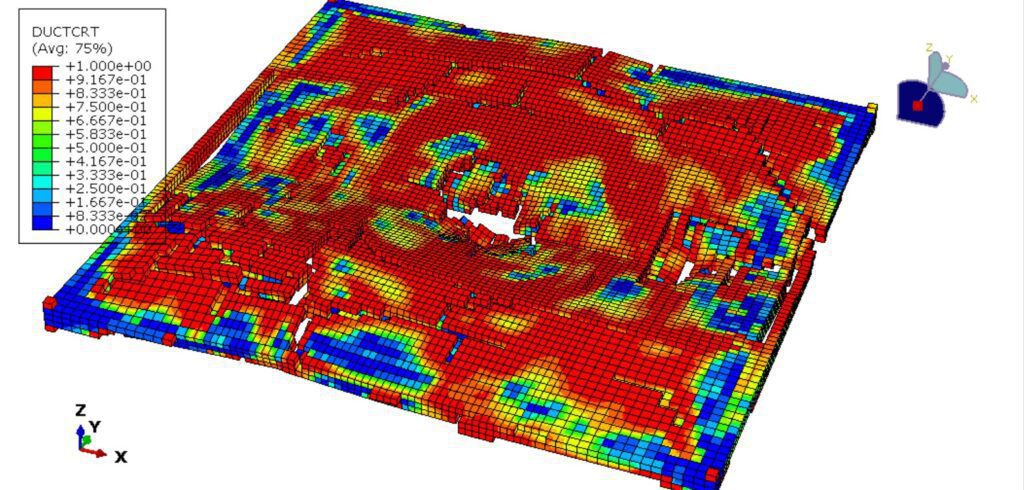
Composite sandwich panels are widely used in aerospace, automotive, marine, and protective structures due to their exceptional stiffness-to-weight ratio, energy absorption capability, and structural efficiency. A typical sandwich configuration consists of two high-strength face sheets bonded to a lightweight core, enabling the panel to carry bending loads efficiently while minimizing mass. Among various material combinations, […]
High-velocity impact simulation of Rubber-Toughened Poly Methyl Methacrylate (RT-PMMA) reinforced with CFRP
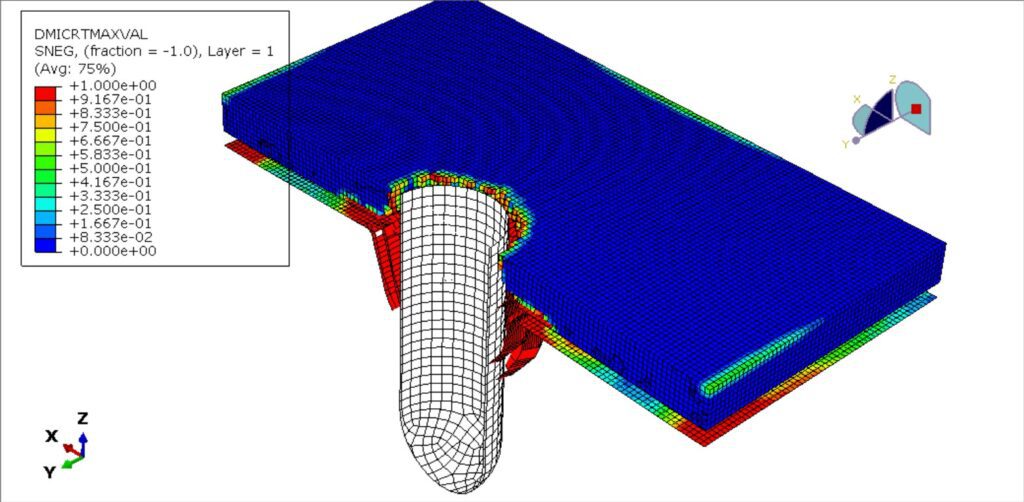
RT-PMMA/CFRP High-Velocity Impact Simulation Rubber-toughened poly(methyl methacrylate) (RT-PMMA) reinforced with carbon-fiber-reinforced polymer (CFRP) is an advanced hybrid material system designed to combine the optical clarity, lightweight characteristics, and strain-rate sensitivity of PMMA with the high specific strength and stiffness of carbon-fiber composites. Such hybrids have growing relevance in engineering applications that demand excellent impact resistance—such […]
Impact analysis of the CFRP/PEEK/ceramic/gelatin composite for finding behind the armor trauma
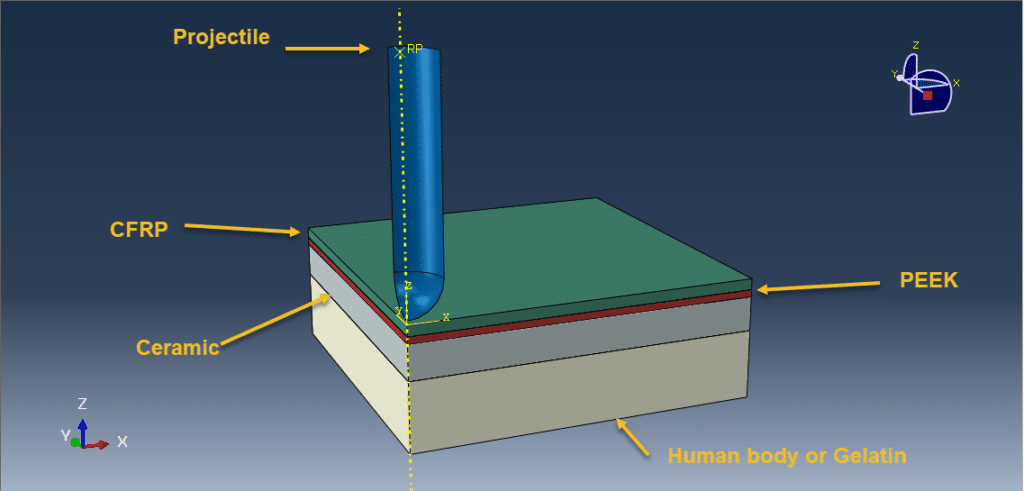
Impact analysis of the CFRP/PEEK/Ceramic composite for finding behind the armor trauma In this tutorial, the impact analysis of a CFRP/PEEK/ceramic/gelatin composite panel for evaluating behind-armor trauma (BAT) has been carried out in Abaqus. The carbon fiber reinforced polymer (CFRP) is modeled as a three-dimensional shell part with elastic layers and Hashin’s damage criterion to […]
Impact Simulation Package in Abaqus (35 Ballistic and Low-Velocity Models)

Impact simulation package in Abaqus: 35 ready-to-run models of ballistic, high-velocity, low-velocity and repeated impact on metals, ceramics, concrete, composites and foams, each with a video tutorial.
Glass analysis package in Abaqus

Introduction to Glass Analysis and Simulation Using the Johnson-Holmquist Model in Abaqus Glass is a brittle material widely used in defense, automotive, civil, and aerospace engineering due to its transparency, hardness, and relatively low density. However, its failure behavior under dynamic loading, such as high-velocity impacts, differs significantly from metals or polymers. Unlike ductile materials, […]
Analysis of aluminum-wood composite panels under high-velocity impact
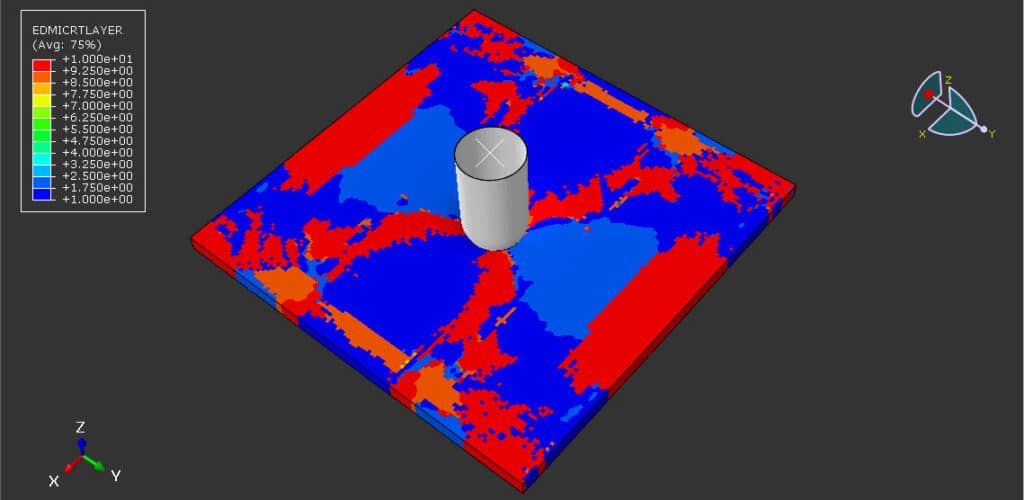
Introduction Aluminum-wood composite panels are hybrid materials that combine the high strength and lightweight characteristics of aluminum with the natural energy absorption and aesthetic qualities of wood. These materials are increasingly used in sectors such as construction, transportation, and protective structures where both structural performance and impact resistance are critical. One area of growing interest […]
Analysis of high-low velocity impact response of GLAREs
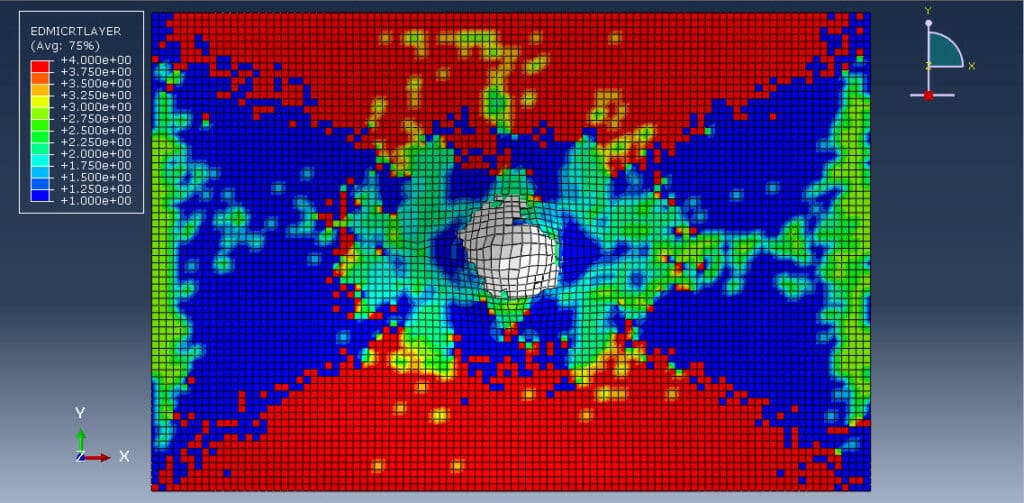
Introduction In modern aerospace engineering and defense industries, impact resistance of materials is a critical factor in ensuring structural safety and durability. One class of materials that has gained significant attention for its superior impact performance is GLARE (Glass Laminate Aluminum Reinforced Epoxy). GLARE is a type of Fiber Metal Laminate (FML) that combines aluminum […]
Analysis of a composite GLARE panel under air blast load
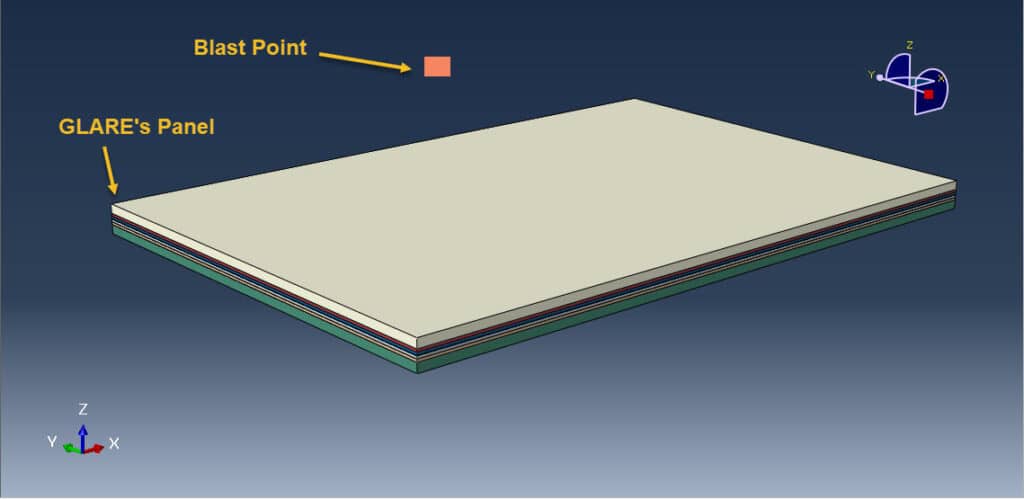
Analysis of a composite panel(CFRP-Ceramic-GFPP) under air blast load
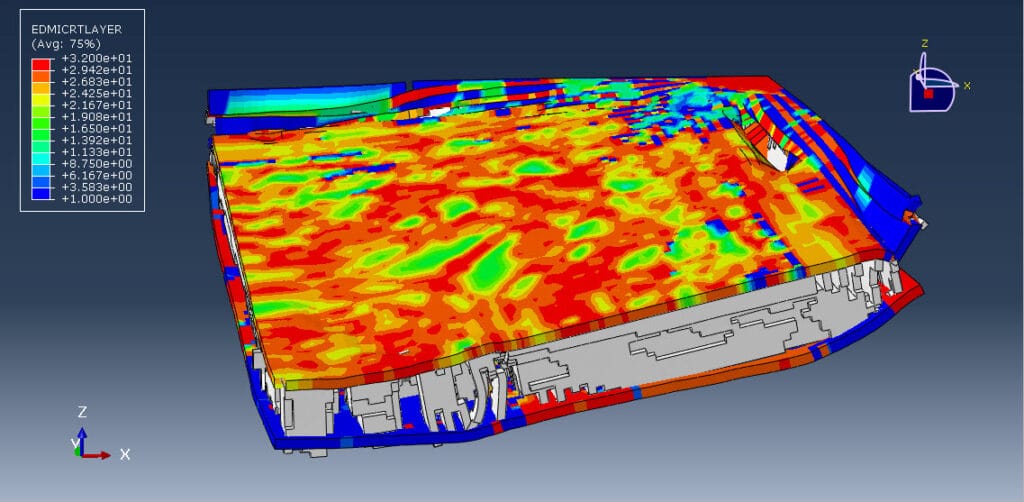
Introduction: In modern engineering, multi-layer composite panels are widely used in defense, aerospace, and infrastructure due to their high strength-to-weight ratio, damage tolerance, and energy absorption capabilities. With increasing threats from blast and impact loading, it’s crucial to assess the performance of these panels under extreme dynamic conditions, such as an air blast explosion. This […]