Need a full custom project? See the options below.
Need a full custom project? See the options below.
Fire is one of the most critical accidental loading conditions affecting the safety and structural performance of buildings. When timber and steel components are exposed to elevated temperatures, their thermal and mechanical properties change significantly. These changes can influence the load-transfer mechanism, stiffness, strength, deformation, and overall integrity of structural connections.
Timber–steel connections are particularly interesting from a fire engineering perspective because they combine two materials with substantially different thermal and mechanical characteristics. Timber has relatively low thermal conductivity and can provide a degree of thermal protection to embedded steel components. However, its mechanical properties deteriorate as temperature increases, and thermal degradation can significantly affect its load-carrying capacity. Steel, on the other hand, conducts heat efficiently and experiences reductions in stiffness and strength at elevated temperatures.
In this workshop, a timber beam connected to a steel plate using bolts is investigated under fire conditions using Abaqus/Standard. A three-dimensional finite element model is developed to investigate the heat transfer process and the subsequent structural response of the connection.
A sequentially coupled thermal–structural analysis is performed in two stages. First, a transient heat transfer analysis is conducted to determine the temperature distribution throughout the timber beam, steel plate, and bolts. The effects of convection, conduction, and radiation are considered to simulate the thermal interaction between the fire environment and the structural components.
In the second stage, the temperature results obtained from the thermal analysis are transferred to a static structural model. The mechanical response of the connection is then investigated under elevated-temperature conditions.
Particular attention is given to the orthotropic mechanical behavior of timber, its temperature-dependent properties, and the use of the Hill anisotropic plasticity criterion to represent its inelastic response. Appropriate thermal and mechanical properties are also assigned to the steel components.
This practical Abaqus workshop demonstrates how thermal and mechanical analyses can be combined to investigate the behavior of timber–steel bolted connections exposed to fire.
Need more than the files?
There are two ways we can help. Book a one hour online consultation if you want to talk a problem through with a CAE engineer, using the checkbox in the order box. Order a project if you need a full simulation built for you, delivered to an agreed scope, price and deadline under a written contract.
We work on FEA and CFD for engineers, researchers and companies. Order your project, or message us on WhatsApp for a quick reply.
Other packages engineers working on this topic also download.
 Fire Analysis of a CFRP-Strengthened Reinforced Concrete Beam Using Abaqus
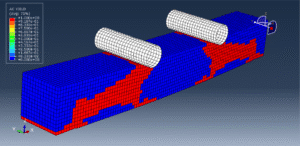 Fire analysis of a timber beam-sequential method
 Simulation an analysis of the Steel-Timber composite beam under fire conditions in Abaqus
 Modeling the Fatigue Response of Reinforced Concrete Columns Using the Direct Cyclic Procedure
 Seismic Response of a Steel Building in Abaqus: Nonlinear Dynamic Analysis with Beam Elements
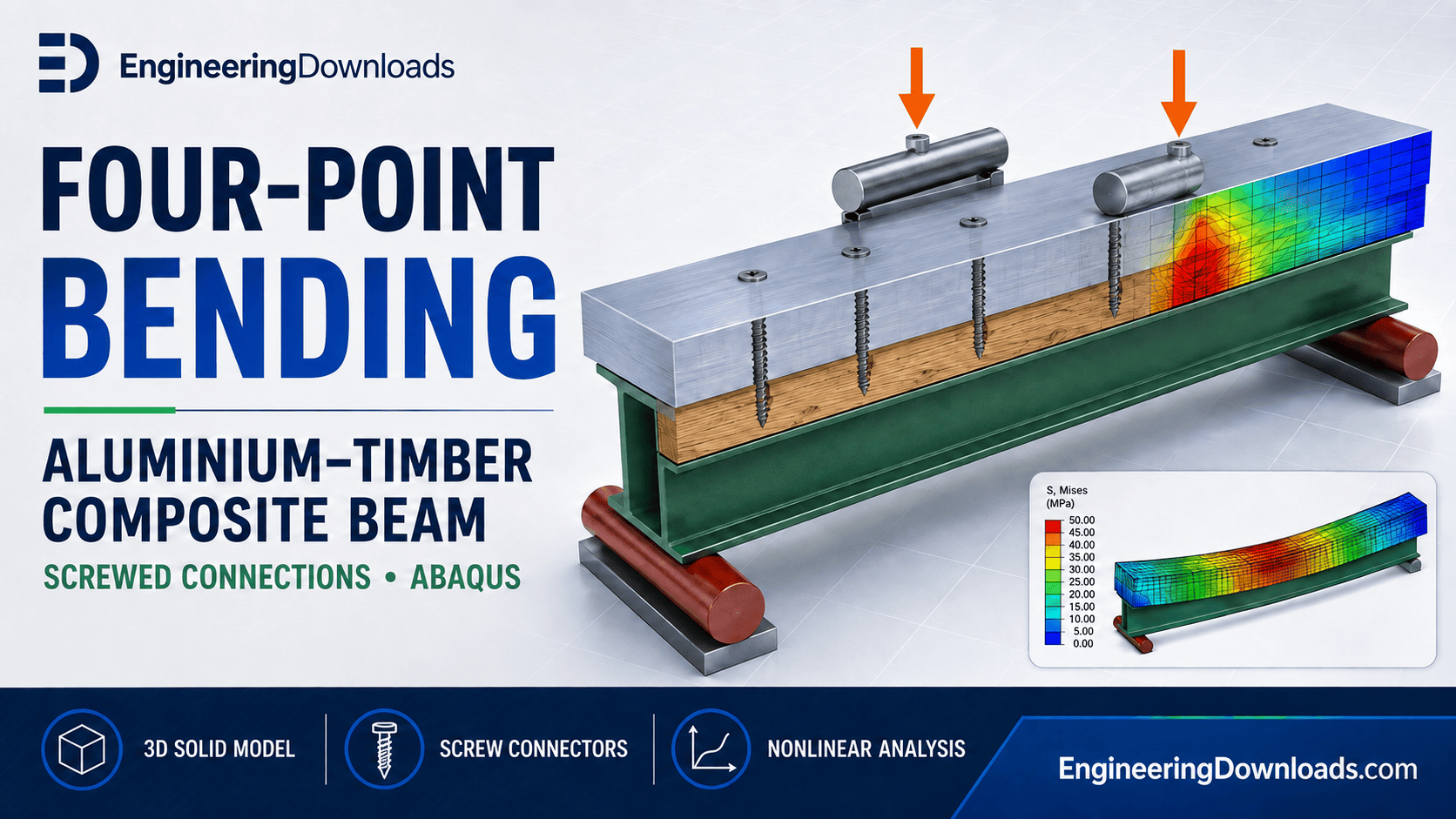 Analysis of aluminium-timber under four-point bending test
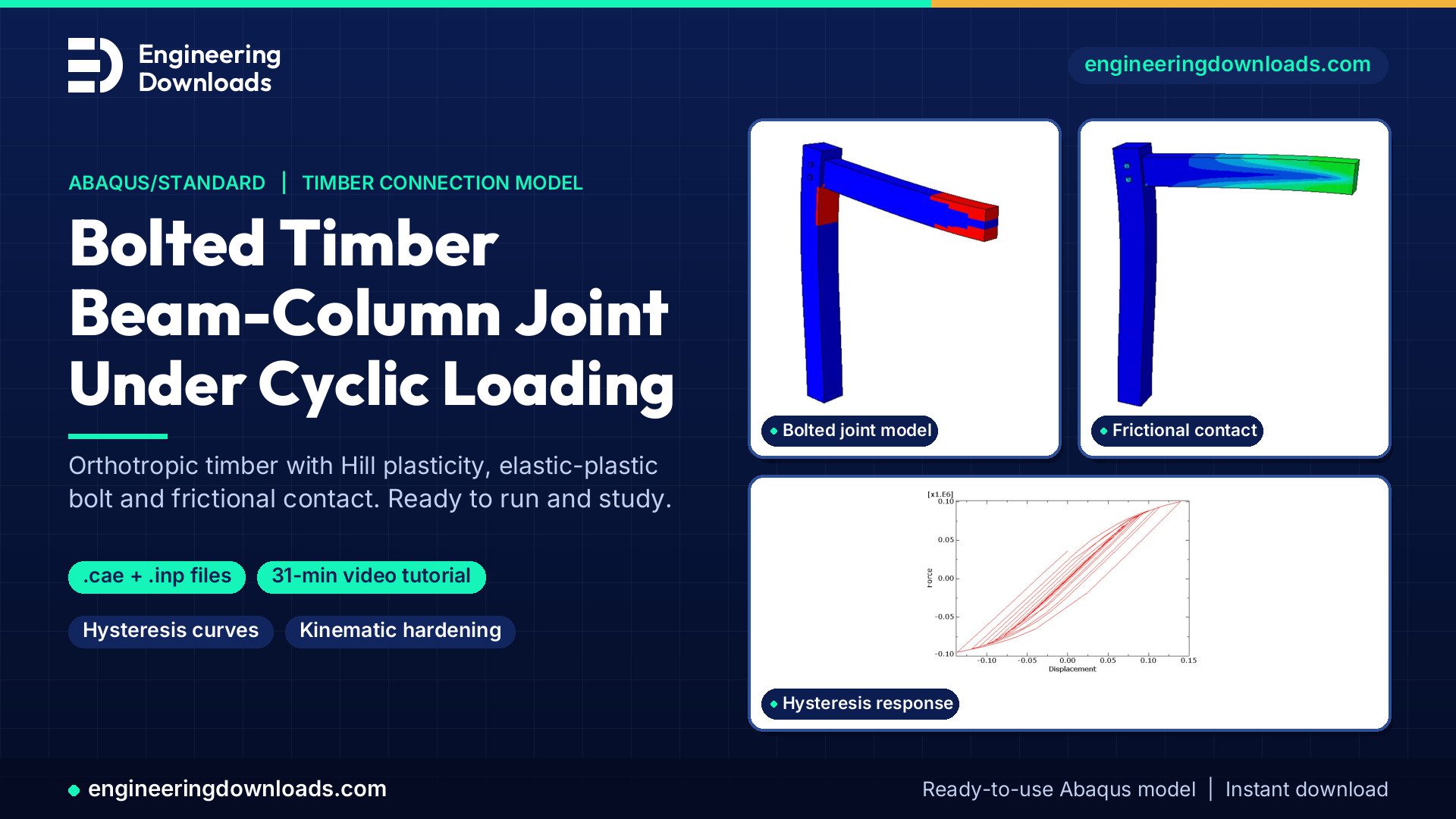 Bolted Timber Beam-Column Joint Under Cyclic Loading in Abaqus: Hill Plasticity & Hysteresis
 Fire Simulation Package in Abaqus (12 Structural Fire Analysis Models)

Need a full custom project? See the options below.

€129,00

€179,00

€149,00

€119,00

€129,00
See more
Want to receive push notifications for all major on-site activities?