
Need a full custom project? See the options below.
Need a full custom project? See the options below.
Product Overview:
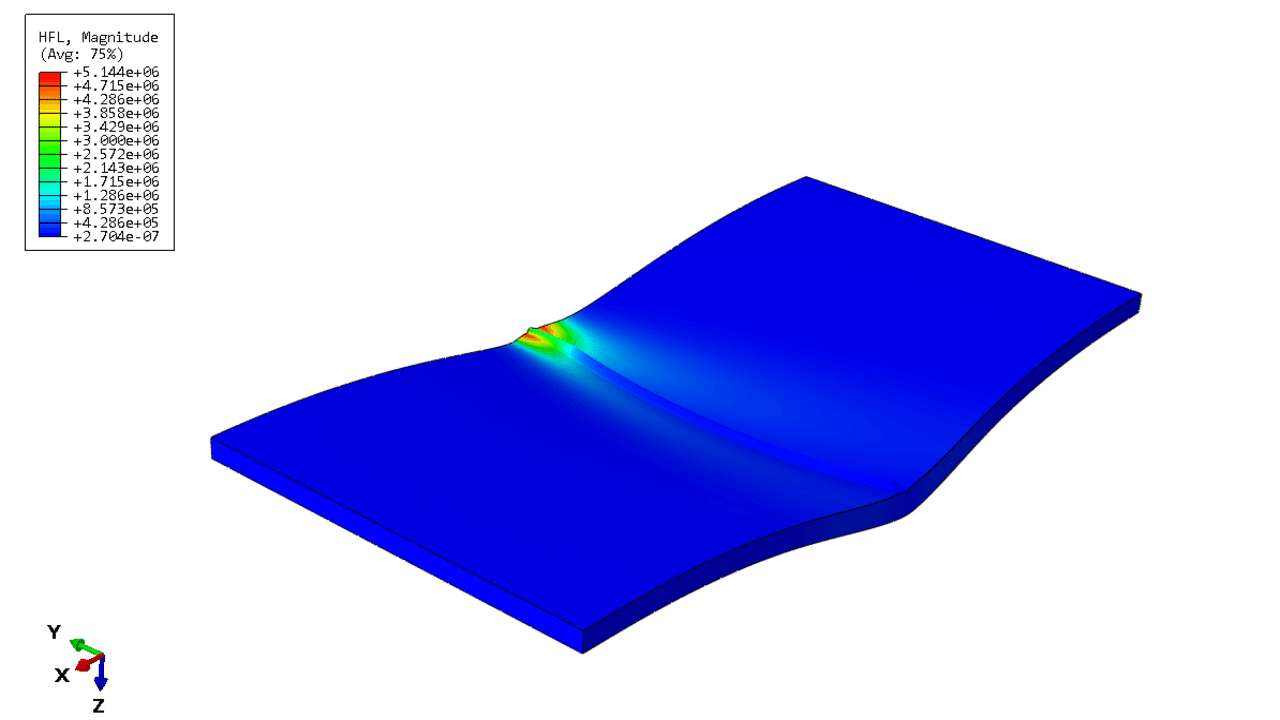
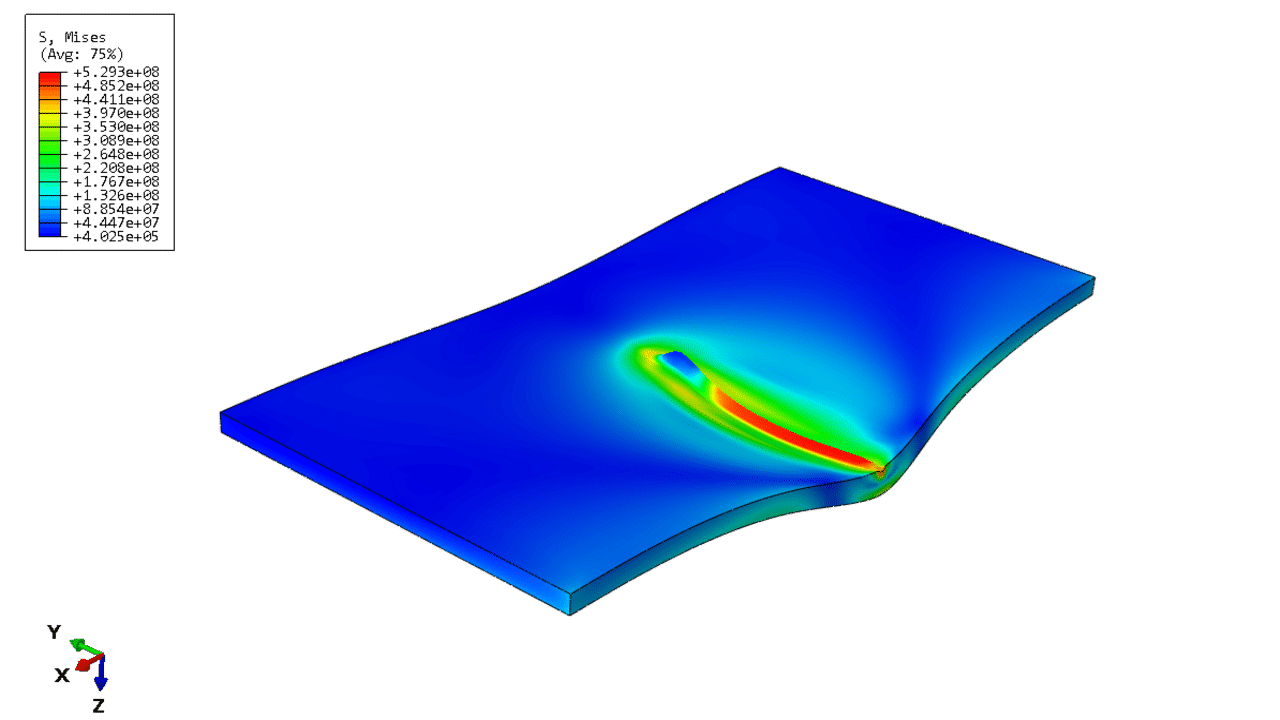
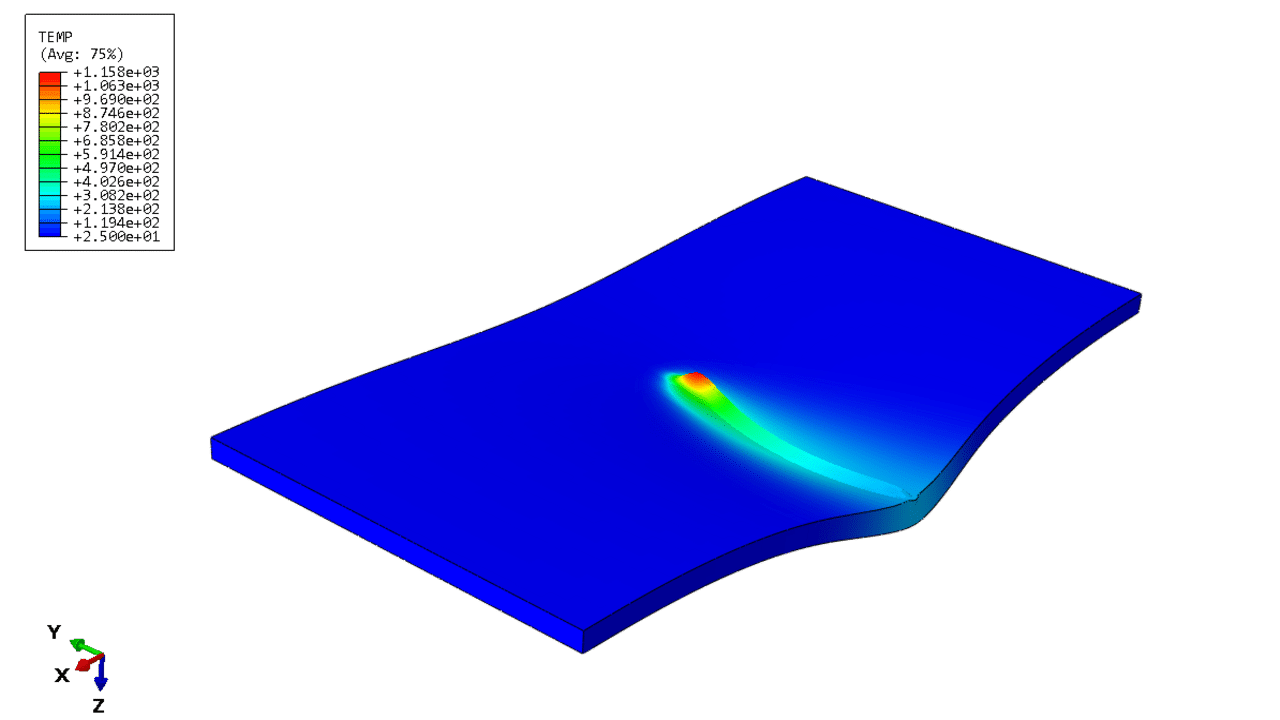
This video presents a comprehensive, step-by-step tutorial on simulating the welding process with the DFLUX subroutine to analyze non-uniform heat distribution. For this example, we designed a geometric model and defined temperature-dependent material properties. We utilized steel as the base material, incorporating characteristics such as elasticity, plasticity, thermal conductivity, expansion, and specific heat that vary with temperature. The applied heat source generates significant thermal stresses within the plate.
Key Topics:
Welding heats a small zone to a very high temperature while the rest of the part stays cold. This steep temperature gradient makes the metal expand and contract unevenly, which creates thermal stress and, after cooling, residual stress. A good welding model has to capture both the heat input and the temperature-dependent response of the steel.
Engineers and students who want to move from a simple thermal weld model to a stress analysis in Abaqus, and researchers who need a clean starting point for their own welding studies.
You need Abaqus. DFLUX is a Fortran user subroutine, so Abaqus must be linked to a supported Fortran compiler. See the welding simulation category for related models.
If the delivered product does not meet your expectations, you can ask for a refund.
Need more than the files?
There are two ways we can help. Book a one hour online consultation if you want to talk a problem through with a CAE engineer, using the checkbox in the order box. Order a project if you need a full simulation built for you, delivered to an agreed scope, price and deadline under a written contract.
We work on FEA and CFD for engineers, researchers and companies. Order your project, or message us on WhatsApp for a quick reply.
Other packages engineers working on this topic also download.

Need a full custom project? See the options below.

€129,00

€179,00

€149,00

€119,00

€129,00

€149,00
See more
Want to receive push notifications for all major on-site activities?