
Need a full custom project? See the options below.
Need a full custom project? See the options below.
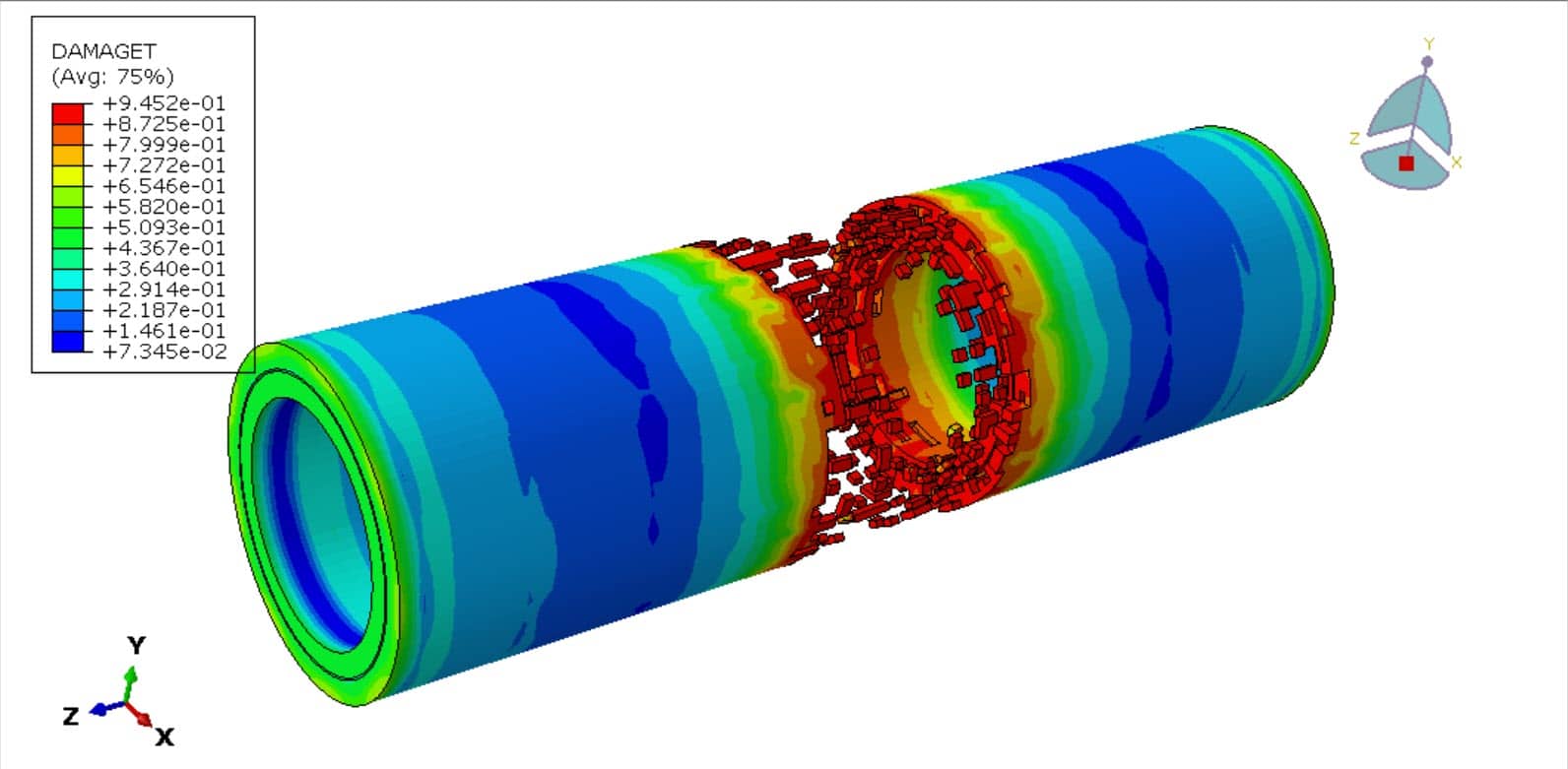
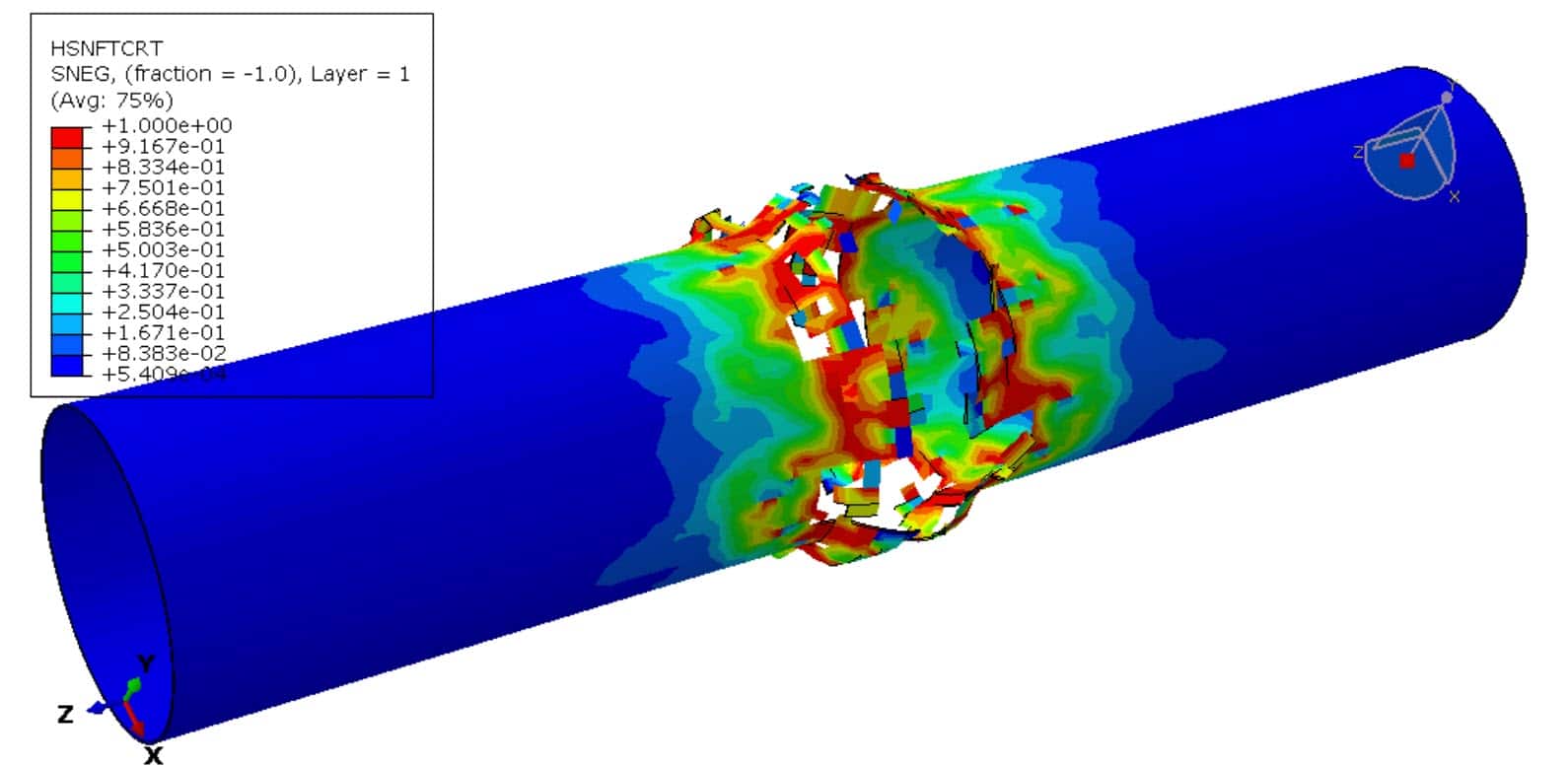
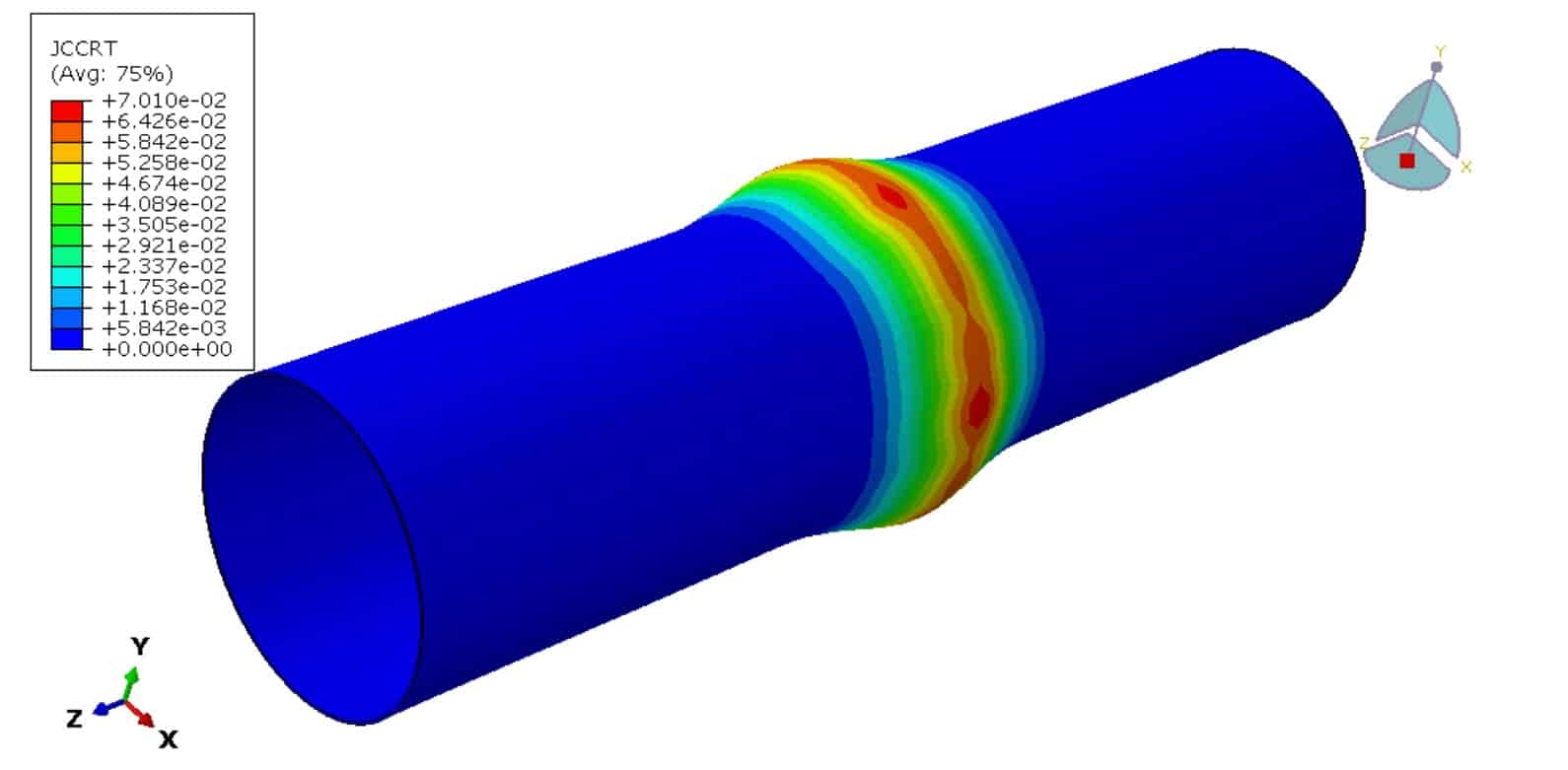
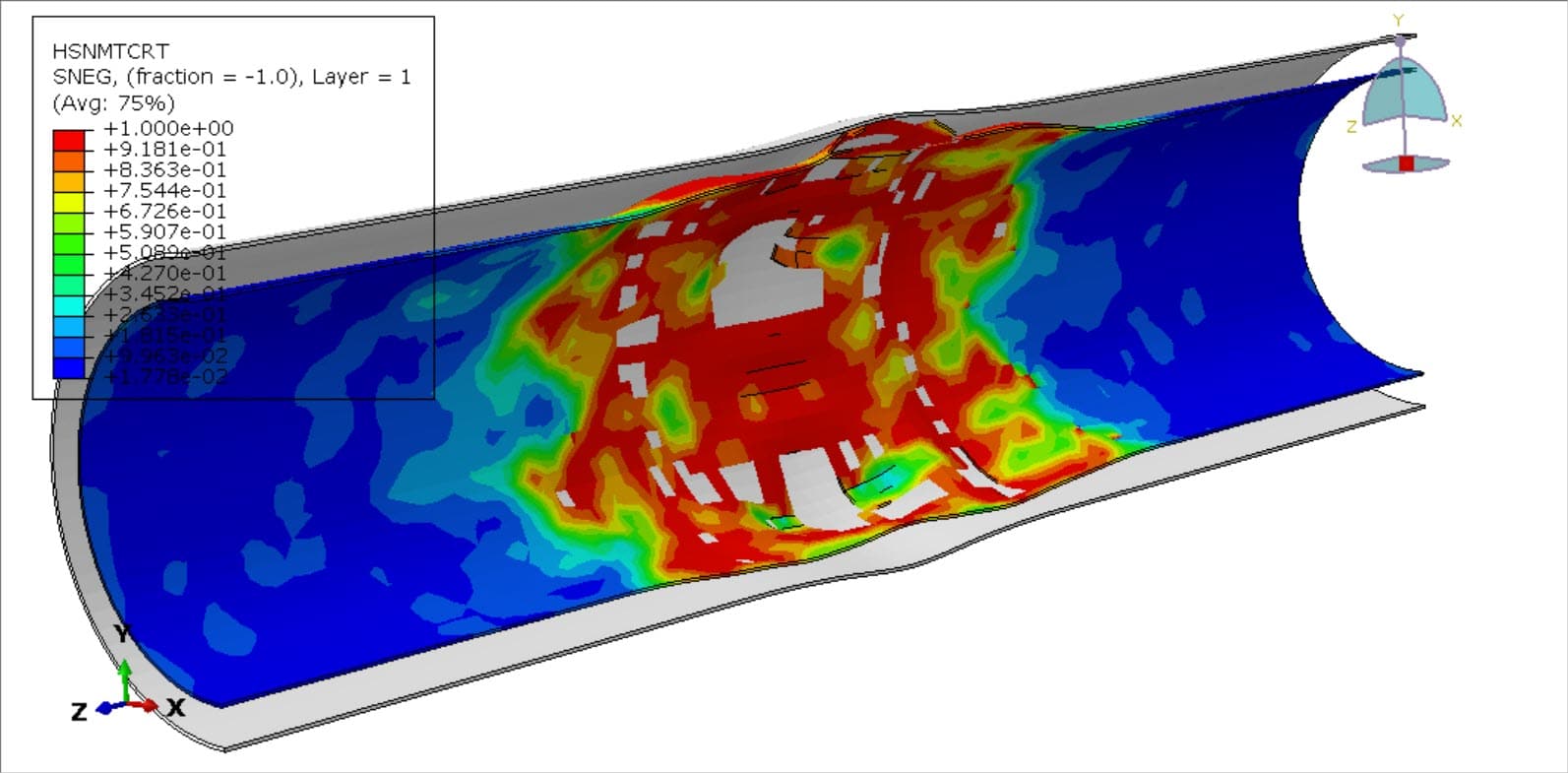
This study investigates the dynamic response of a multi-layered composite pipe structure, composed of CFRP, concrete, and steel layers, subjected to internal blast loading. A high-fidelity finite element model is developed using Abaqus Explicit, incorporating advanced material models, contact definitions, and blast loading conditions. The objective is to assess the blast resistance and failure mechanisms of the composite pipe, providing insights for the design of blast-proof pipeline systems in high-risk industrial and defense applications.
This example is similar to the paper here: “Experimental and numerical study on CFRP-lined prestressed concrete cylinder pipe under internal pressure.”
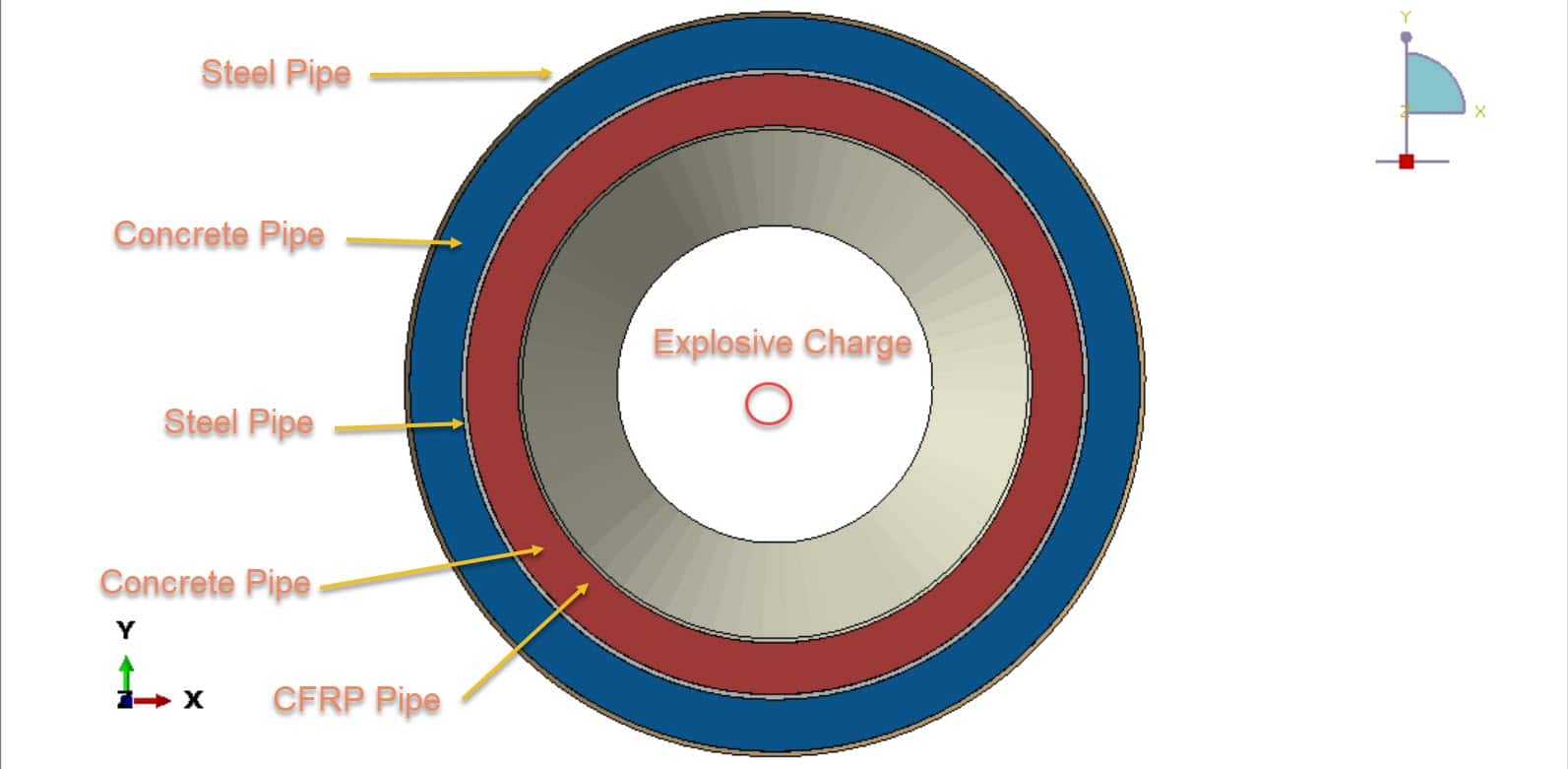
In recent years, the use of composite materials in infrastructure and defense-related applications has gained significant attention due to their superior strength-to-weight ratios, energy absorption capabilities, and corrosion resistance. One such innovation is the CFRP-reinforced composite pipe system, integrating layers of Carbon Fiber Reinforced Polymer (CFRP), concrete, and steel in a multi-layered configuration (CFRP-Concrete-Steel-Concrete-Steel) to withstand extreme loading conditions such as internal blast pressures.
Pipelines and containment systems in the petrochemical, military, and nuclear sectors are frequently exposed to high-strain-rate events, including accidental or deliberate internal explosions. These dynamic loads can result in catastrophic failure if the pipe materials and design are not optimized to absorb and redistribute the energy effectively. The multi-layered composite structure is designed to capitalize on the unique advantages of each constituent material: CFRP for its high tensile strength and stiffness; concrete for mass and energy dissipation; and steel for its ductility and resistance to fracture under dynamic loading.
To accurately assess the performance of such complex systems under internal blast loading, numerical simulation plays a crucial role. Finite Element Analysis (FEA) using software such as ANSYS AUTODYN, LS-DYNA, or ABAQUS/Explicit allows for detailed modeling of material behavior, interface interactions, failure modes, and transient pressure propagation during an explosion. These simulations help predict critical response parameters such as radial displacement, stress wave distribution, and layer delamination or rupture.
Need more than the files?
There are two ways we can help. Book a one hour online consultation if you want to talk a problem through with a CAE engineer, using the checkbox in the order box. Order a project if you need a full simulation built for you, delivered to an agreed scope, price and deadline under a written contract.
We work on FEA and CFD for engineers, researchers and companies. Order your project, or message us on WhatsApp for a quick reply.
Other packages engineers working on this topic also download.
 Pipe and Pipeline Simulation Package in Abaqus (21 Models)
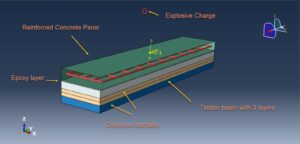 Analysis of adhesively bonded cross-laminated timber-concrete composite under close blast explosion test
 Blast resistance behavior of interior voided slab-column connections using steel sheets and CFRP reinforcement
 Analysis of a reinforced concrete (RC) beam with an embedded spiral GFRP bar subjected to air blast loading
 Air blast analysis of a composite panel made of CFRP facing and PET foam core
 Simulation and analysis of subsurface tunnel with GFRP protection against internal blast using CEL method
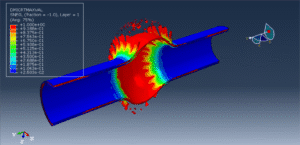 Simulation composite Pipe(Aluminum-Bamboo fiber-Aluminum) under internal blast in Abaqus
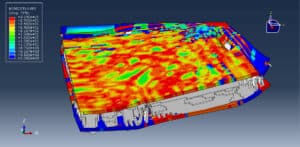 Analysis of a composite panel(CFRP-Ceramic-GFPP) under air blast load

Need a full custom project? See the options below.

€129,00

€179,00

€149,00

€119,00

€129,00

€149,00
See more
Want to receive push notifications for all major on-site activities?




