Need a full custom project? See the options below.
Need a full custom project? See the options below.
Wood analysis and simulation is the study and modeling of wood as an engineering and biological material to predict its performance, behavior, and properties under different conditions. Since wood is a natural, heterogeneous, and anisotropic material (its properties vary depending on the direction of the grain), analyzing and simulating its characteristics is essential for fields such as construction, furniture design, structural engineering, materials science, and even bioenergy research.
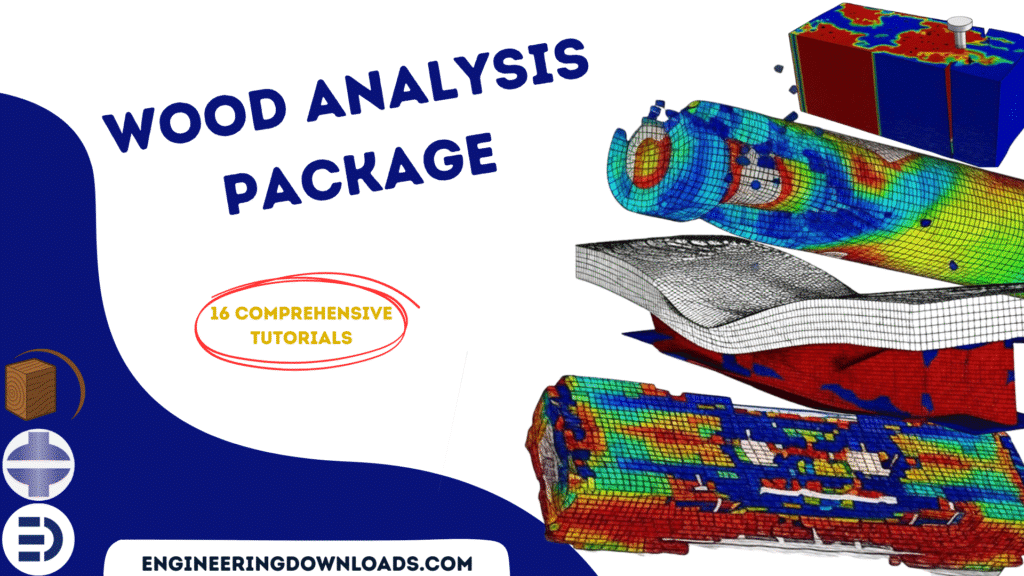
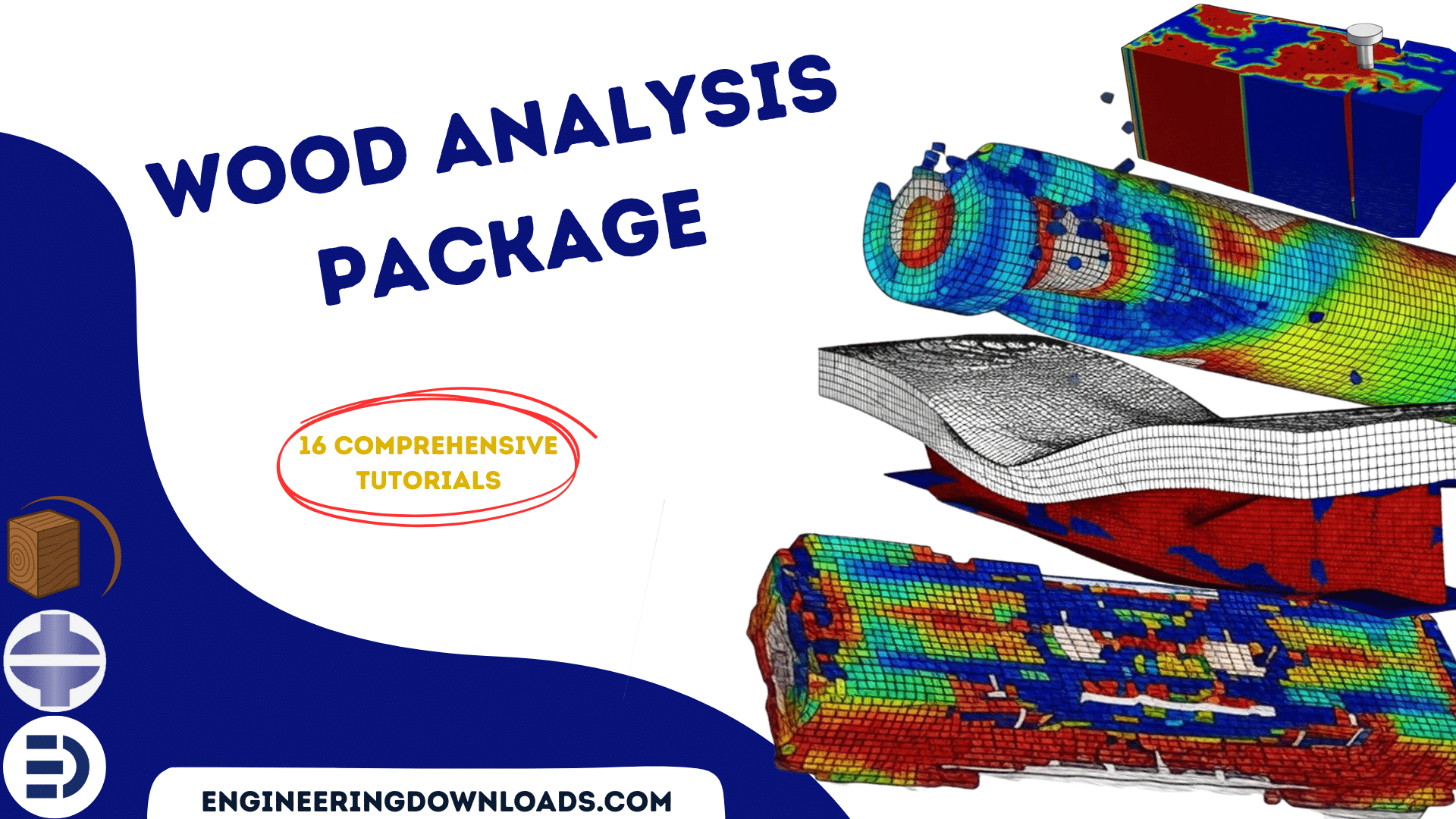
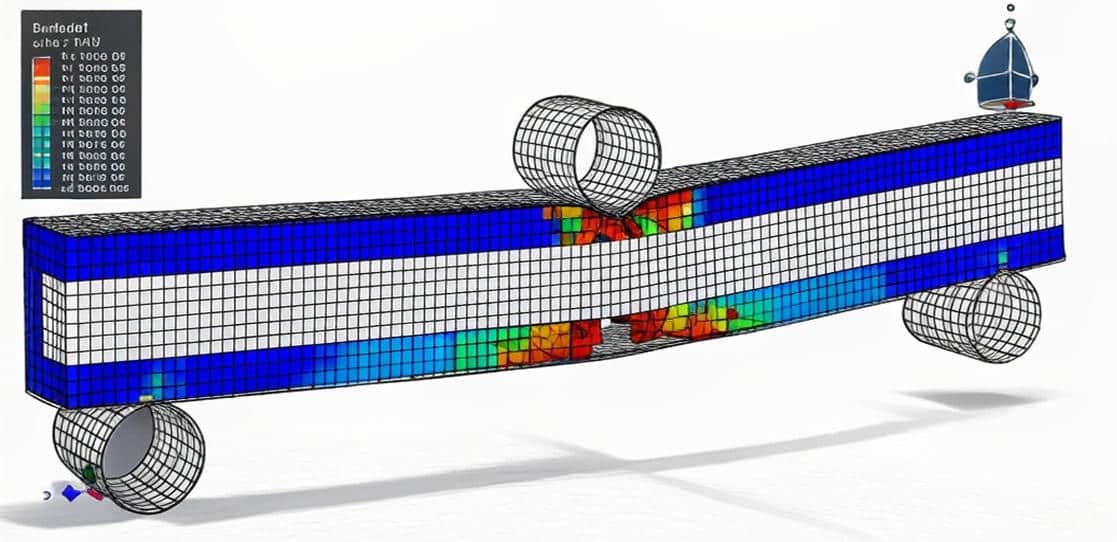
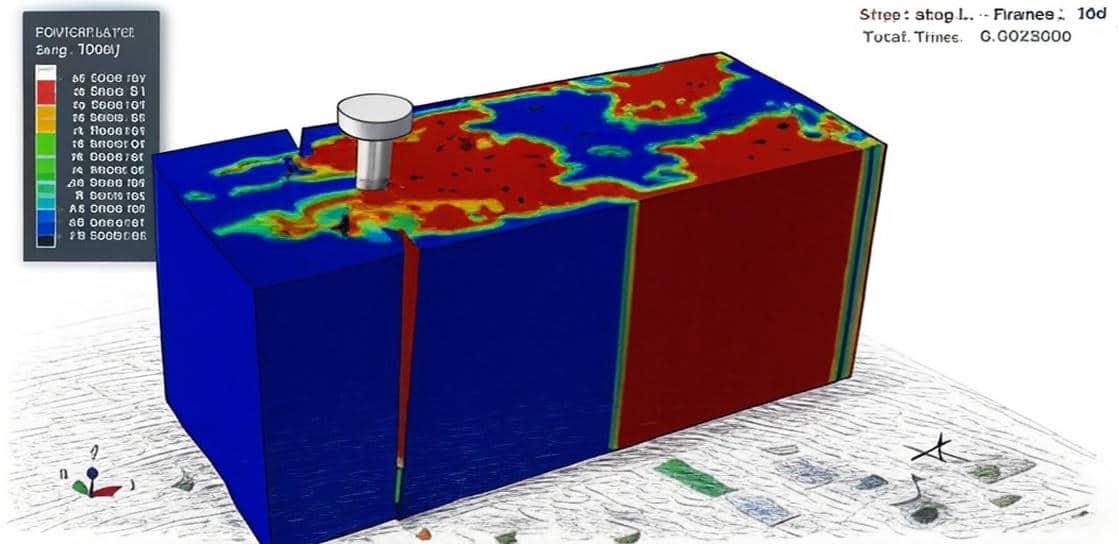
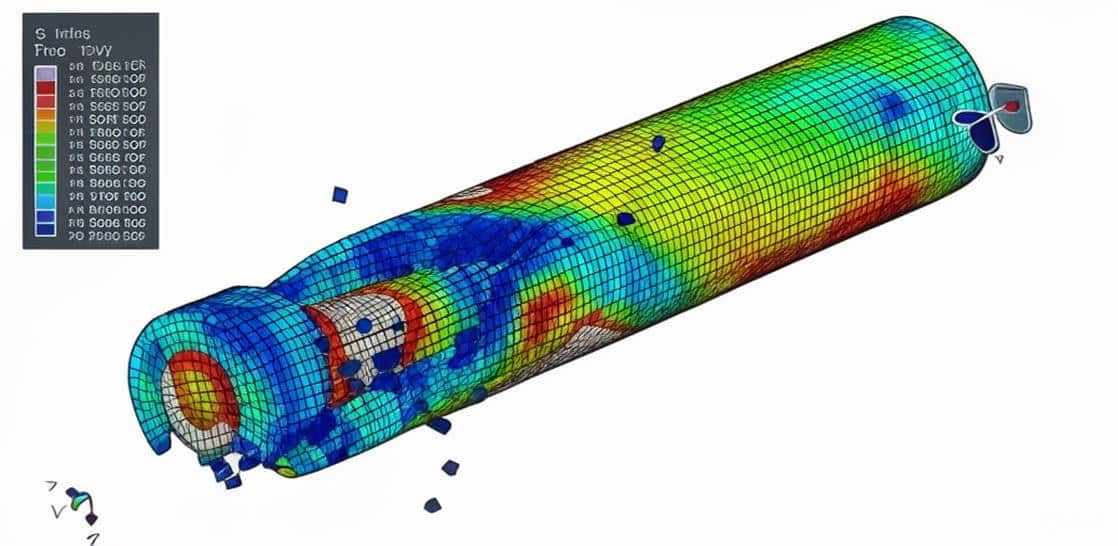
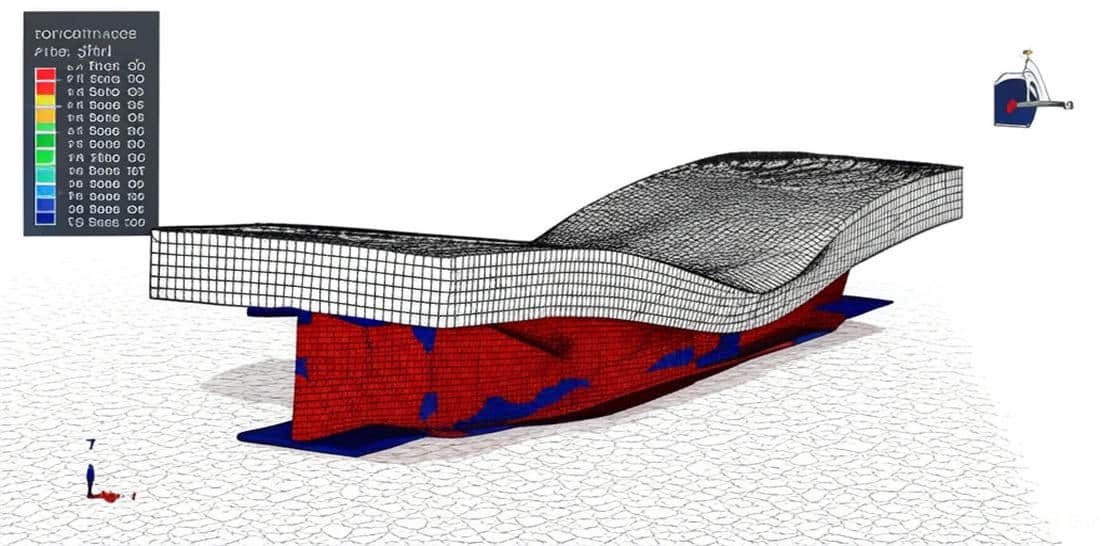
In this package, during 16 practical tutorials, you’ll learn all about wood analysis in Abaqus, such as tension, compression, blast, impact, bending, flexure, and other analyses.
Mechanical properties: Wood strength, stiffness, and elasticity determine its ability to bear loads in beams, columns, or flooring.
Moisture behavior: Wood absorbs and releases moisture, causing swelling, shrinkage, and dimensional instability.
Durability: Susceptibility to decay, insects, and environmental stress affects long-term performance.
Sustainability: Wood is renewable, but its properties must be well understood for efficient and safe use.
Simulation allows researchers and engineers to predict wood’s behavior without excessive physical testing. Common approaches include:
Finite Element Analysis (FEA): Models stress, strain, and deformation of wood structures under loads.
Moisture Transport Models: Simulate how water moves within wood, influencing swelling, shrinkage, and mechanical changes.
Fracture and Damage Models: Predict crack initiation and propagation, especially in structural timber.
Computational Fluid Dynamics (CFD): Used in drying simulations to optimize kiln drying processes.
Multiscale Modeling: Connects the microscopic (cellular) structure of wood to macroscopic (structural) properties.
Civil Engineering: Designing safe and efficient wooden bridges, houses, and tall timber buildings.
Furniture and Product Design: Ensuring stability, ergonomics, and resistance to environmental changes.
Wood Drying and Processing: Optimizing drying methods to reduce defects like warping and cracking.
Bioenergy and Pulp Industry: Studying wood combustion, gasification, and pulping processes.
Conservation Science: Preserving wooden cultural heritage by simulating aging and degradation.
Wood variability due to species, growth conditions, and defects (knots, cracks).
Complex anisotropic behavior (different properties along longitudinal, radial, and tangential directions).
Coupling of multiple factors (mechanical, thermal, and moisture effects interact strongly).
Need more than the files?
There are two ways we can help. Book a one hour online consultation if you want to talk a problem through with a CAE engineer, using the checkbox in the order box. Order a project if you need a full simulation built for you, delivered to an agreed scope, price and deadline under a written contract.
We work on FEA and CFD for engineers, researchers and companies. Order your project, or message us on WhatsApp for a quick reply.
Other packages engineers working on this topic also download.
 Impact analysis of a bullet on a wooden tank containing soil in Abaqus
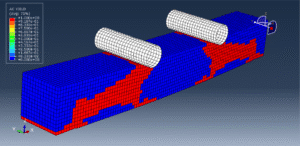 Fire analysis of a timber beam-sequential method
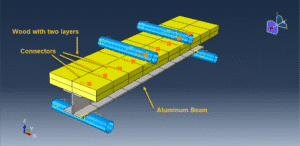 Bending test analysis of an aluminium-timber composite beam
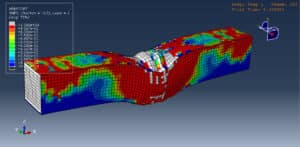 Analysis of the laced reinforced concrete with wood cover under air blast load
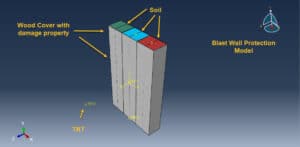 Analysis of the blast protection wall system( wood cover-soil)
 Analysis of aluminum-wood composite panels under high-velocity impact
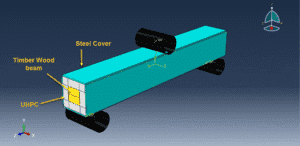 Simulation of Bending Test on a Wood–UHPC–Steel Composite Beam in Abaqus
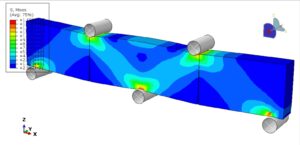 XFEM crack analysis of a timber beam under the five-point bending test

Need a full custom project? See the options below.

€129,00

€179,00

€149,00

€119,00

€129,00
See more
Want to receive push notifications for all major on-site activities?