
Need a full custom project? See the options below.
Need a full custom project? See the options below.
With the rising threat of explosions in crowded urban settings, the demand for advanced protective glass in applications such as windows, doors, security shields, and partitions has significantly increased. In the event of a powerful explosion, conventional glass panels can shatter even at a considerable distance, posing serious risks due to splintering. In buildings closer to the blast, even toughened or laminated splinter-free glass can be forced inward under pressure.
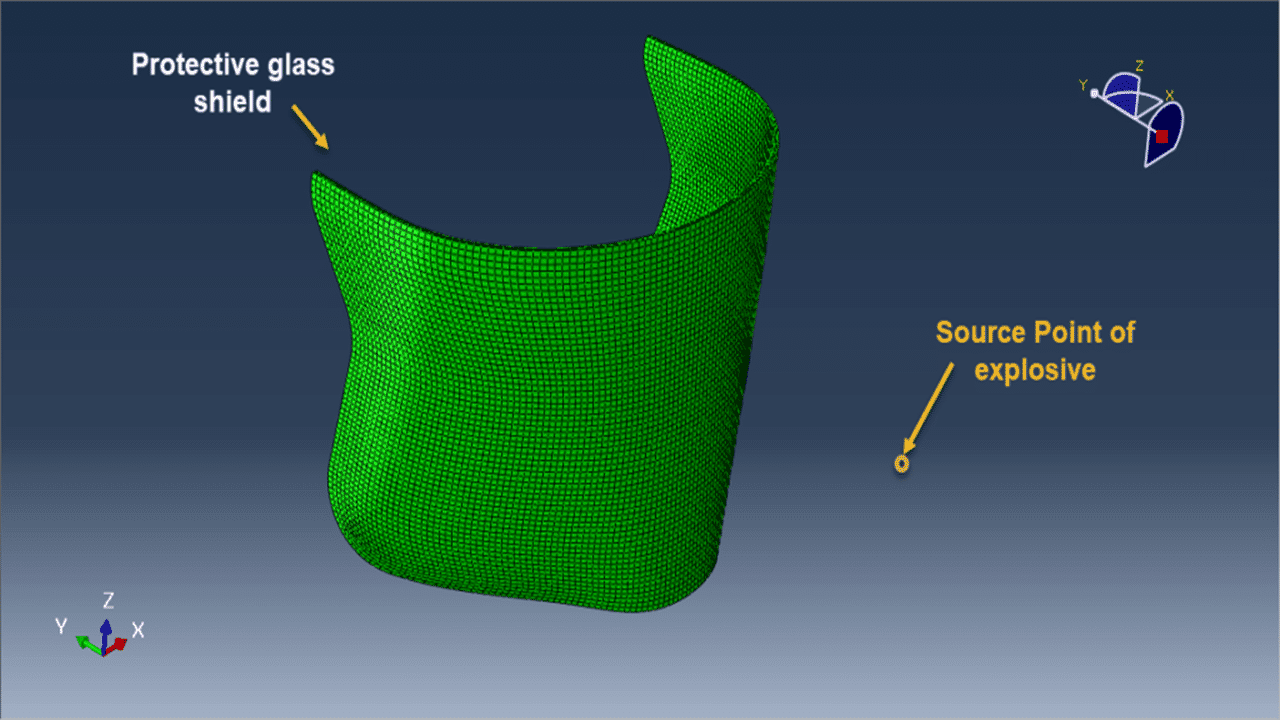
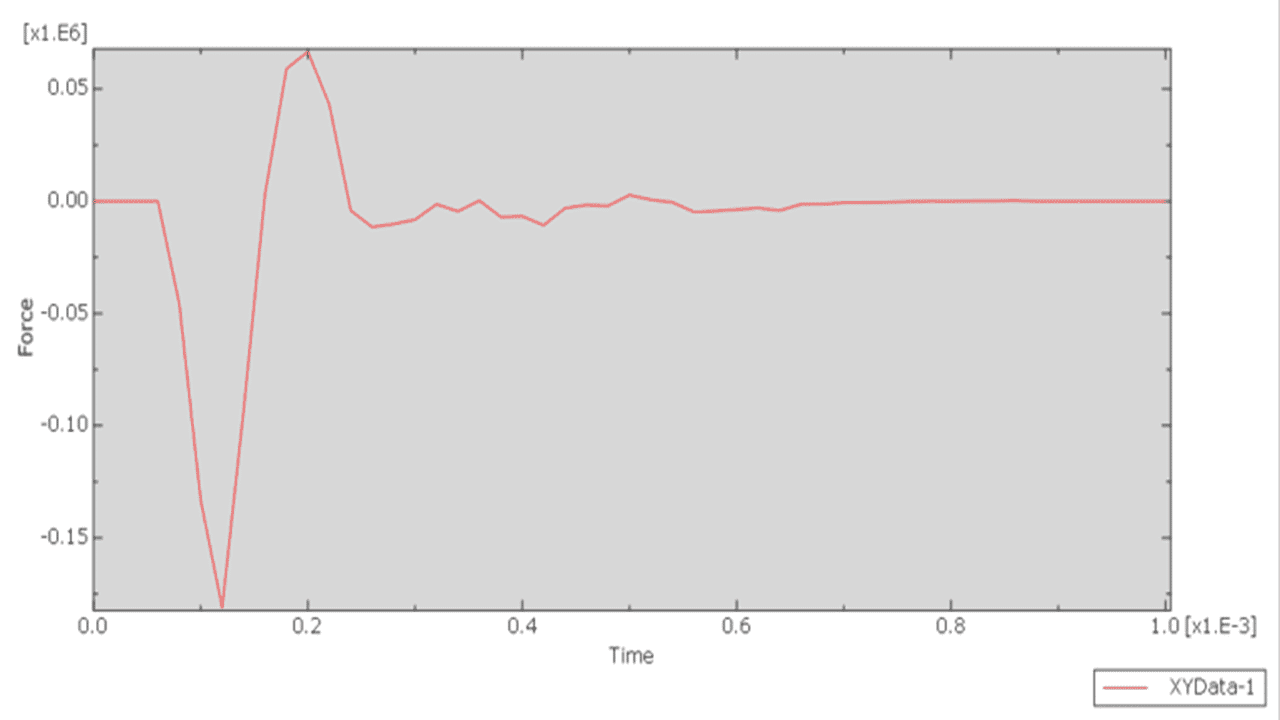
In this tutorial, the simulation of a close-range explosion test on a curved glass shield using Abaqus is investigated. The glass shield is modeled as a three-dimensional solid part, imported into Abaqus due to its complex curvature. To accurately represent the material behavior under extreme loading, the Johnson-Holmquist (JH-2) model is used. This model is well-suited for brittle materials like ceramics and glass under high-pressure, high-strain-rate conditions. It captures the material’s increased strength under confinement and its degradation as damage accumulates. The model includes two strength curves—one for intact material and one for damaged material—based on pressure and strain.
The Dynamic Explicit step is selected for the analysis, as it is suitable for high-speed, transient events like explosions. The blast load is applied using the CONWEP method, where the explosive charge’s mass and location relative to the shield must be defined. Proper boundary conditions are applied to replicate realistic constraints. A fine mesh is necessary to accurately capture stress distribution and potential failure zones.
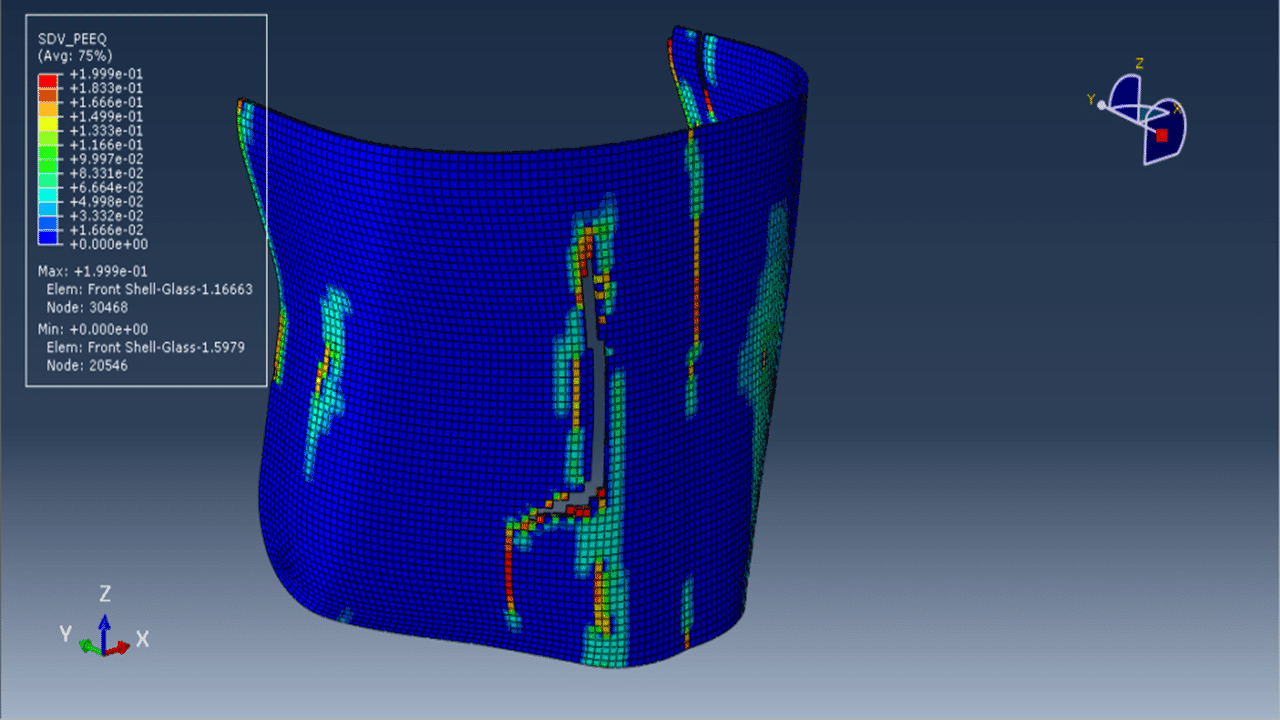
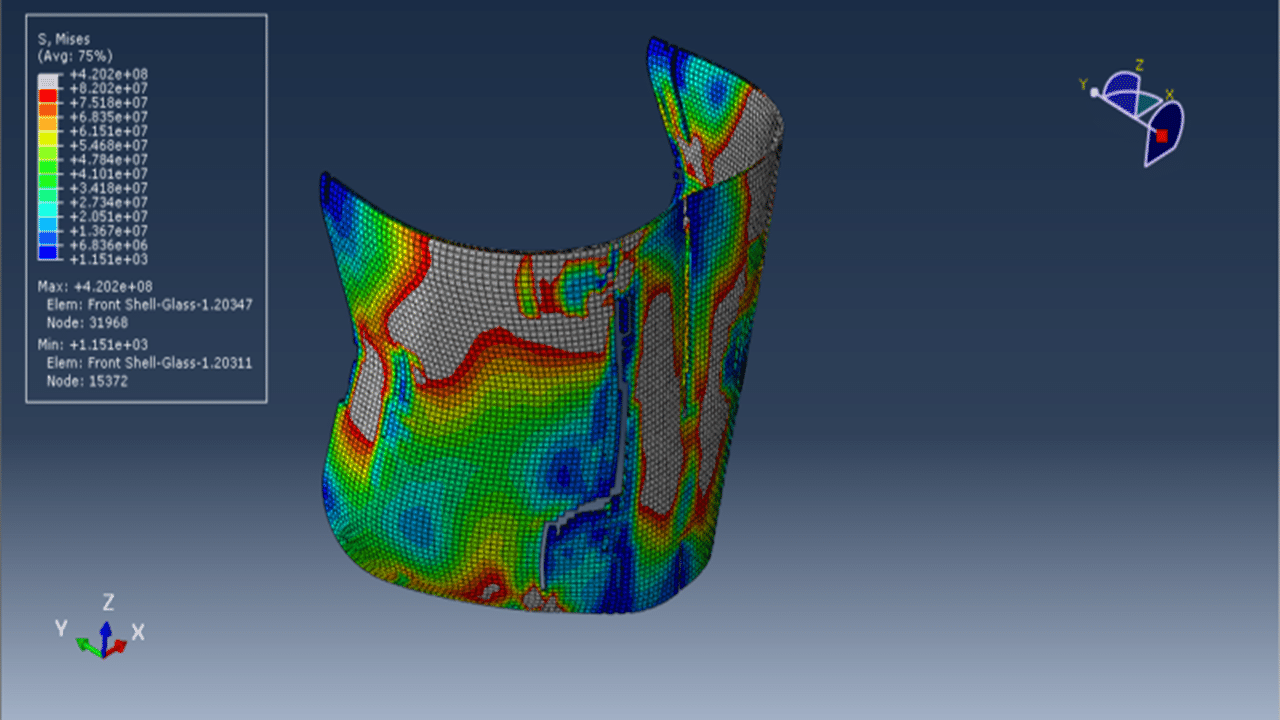
After the simulation, results such as stress, strain, damage evolution, failure zones, and crack patterns are available for post-processing and analysis.
Need more than the files?
There are two ways we can help. Book a one hour online consultation if you want to talk a problem through with a CAE engineer, using the checkbox in the order box. Order a project if you need a full simulation built for you, delivered to an agreed scope, price and deadline under a written contract.
We work on FEA and CFD for engineers, researchers and companies. Order your project, or message us on WhatsApp for a quick reply.
Other packages engineers working on this topic also download.
 Wood Analysis Package in Abaqus
 Glass analysis package in Abaqus
 Underwater Explosion Shock Analysis of a Cylindrical Aluminum Hull
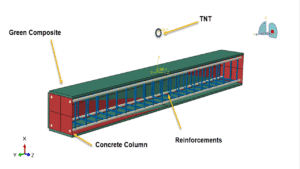 Air Blast Simulation on Rubberized Concrete Column Reinforced with Green Composite Using Abaqus
 Underwater CEL Explosion Near Aluminum Hull from Three Sea Mines in Abaqus
 Sequential CEL Explosion Simulation in Soil Beneath a RC Slab Using Abaqus
 Polymer and Metal Foam Analysis Package in Abaqus
 Pipe and Pipeline Simulation Package in Abaqus (21 Models)

Need a full custom project? See the options below.

€129,00

€179,00

€149,00

€119,00

€129,00
See more
Want to receive push notifications for all major on-site activities?