
Need a full custom project? See the options below.
Need a full custom project? See the options below.
Bolted steel splice connections play a critical role in the continuity and integrity of structural steel members. During a fire, these connections are subjected to extreme thermal and mechanical demands that can significantly alter their performance. Understanding their behavior under elevated temperatures is essential for ensuring the fire resilience of steel-framed structures.
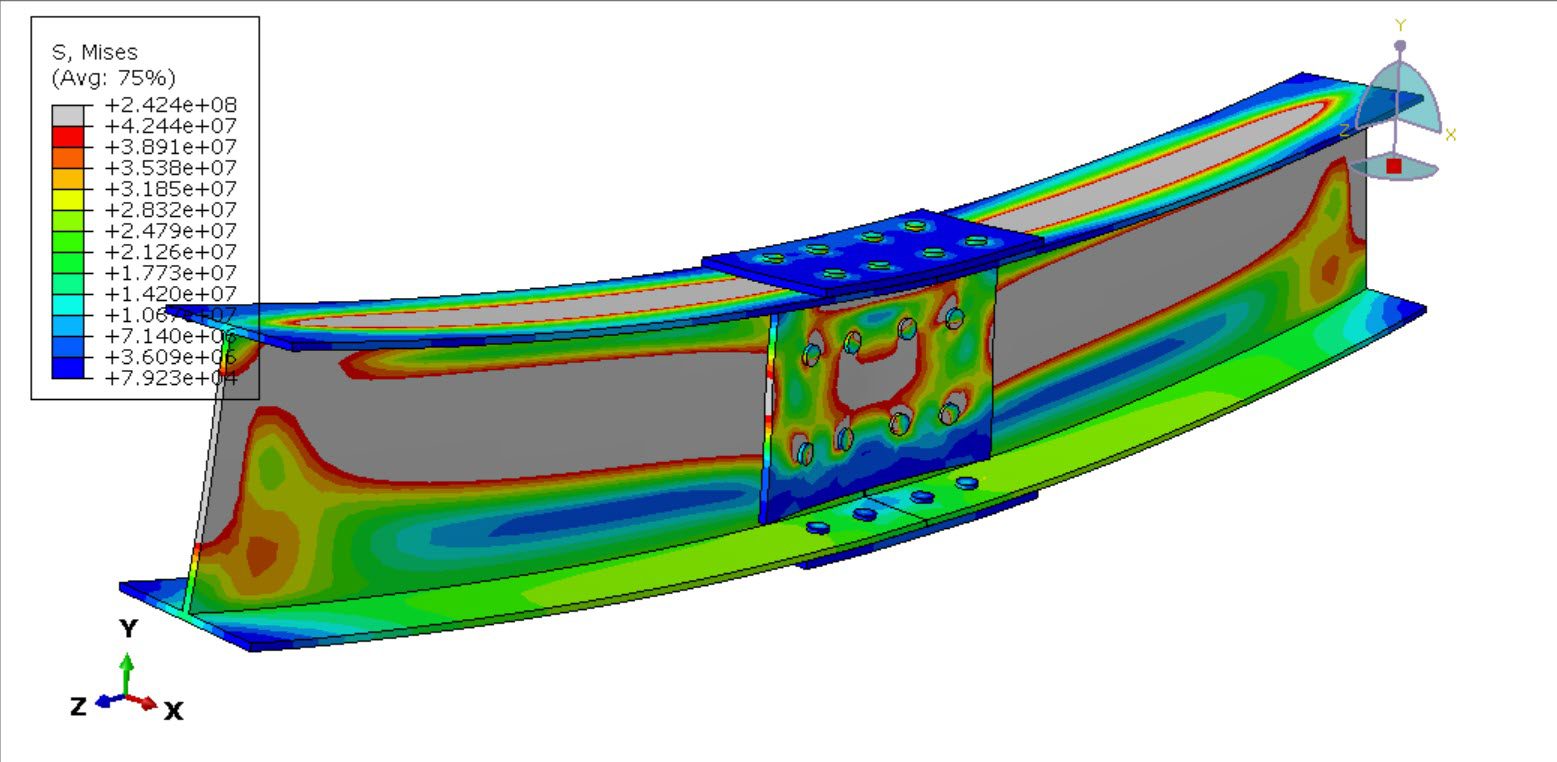
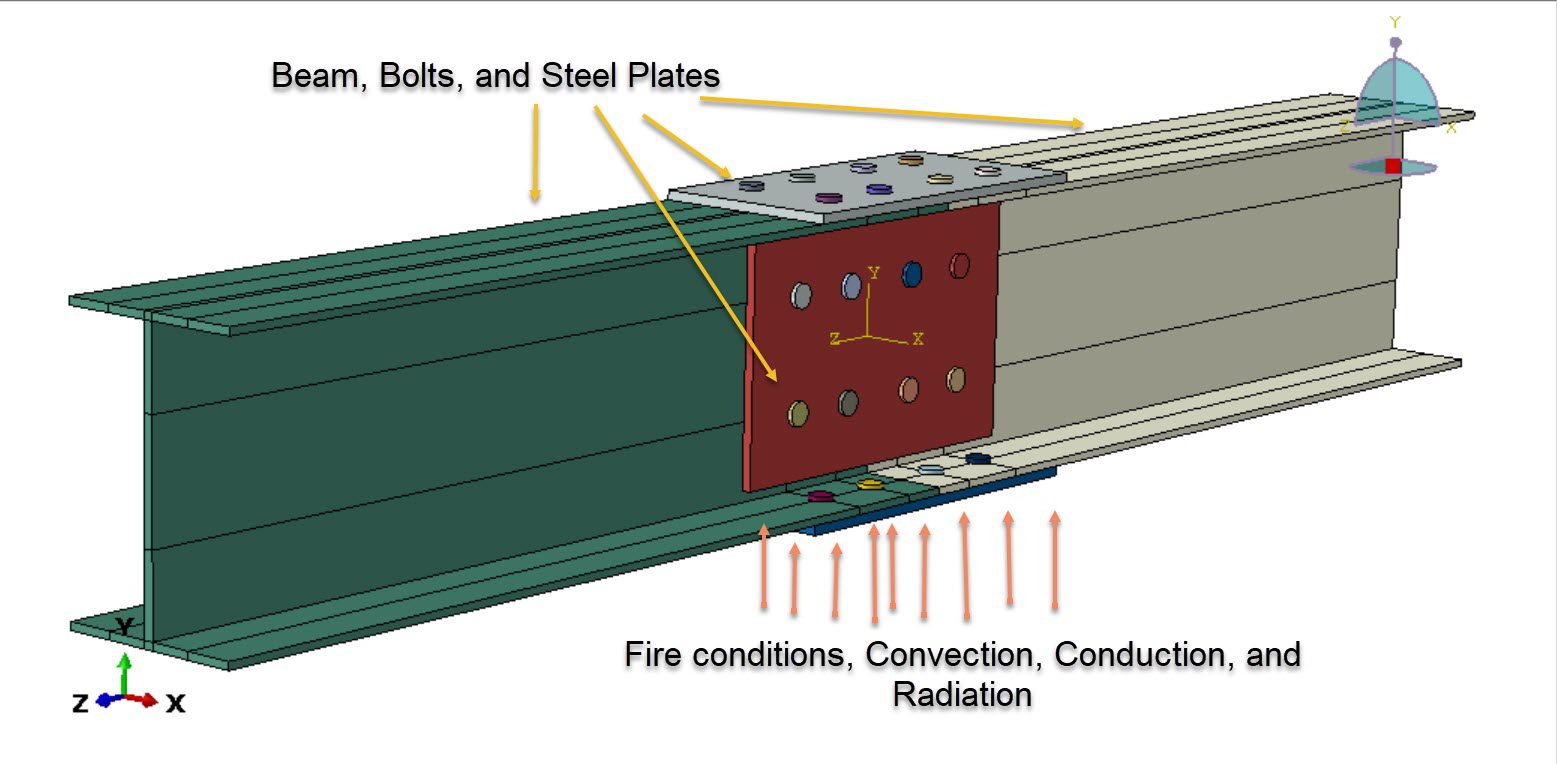
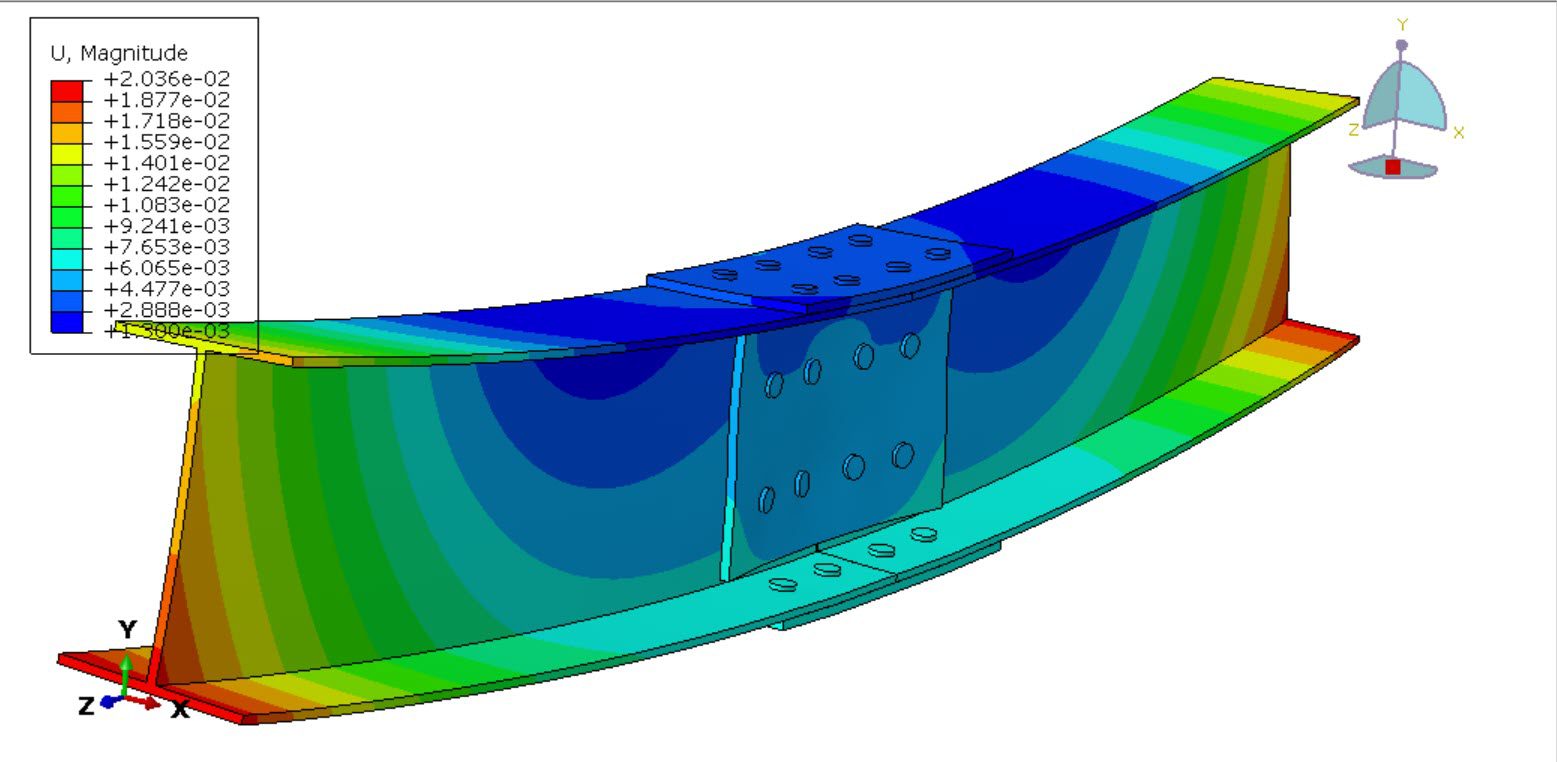
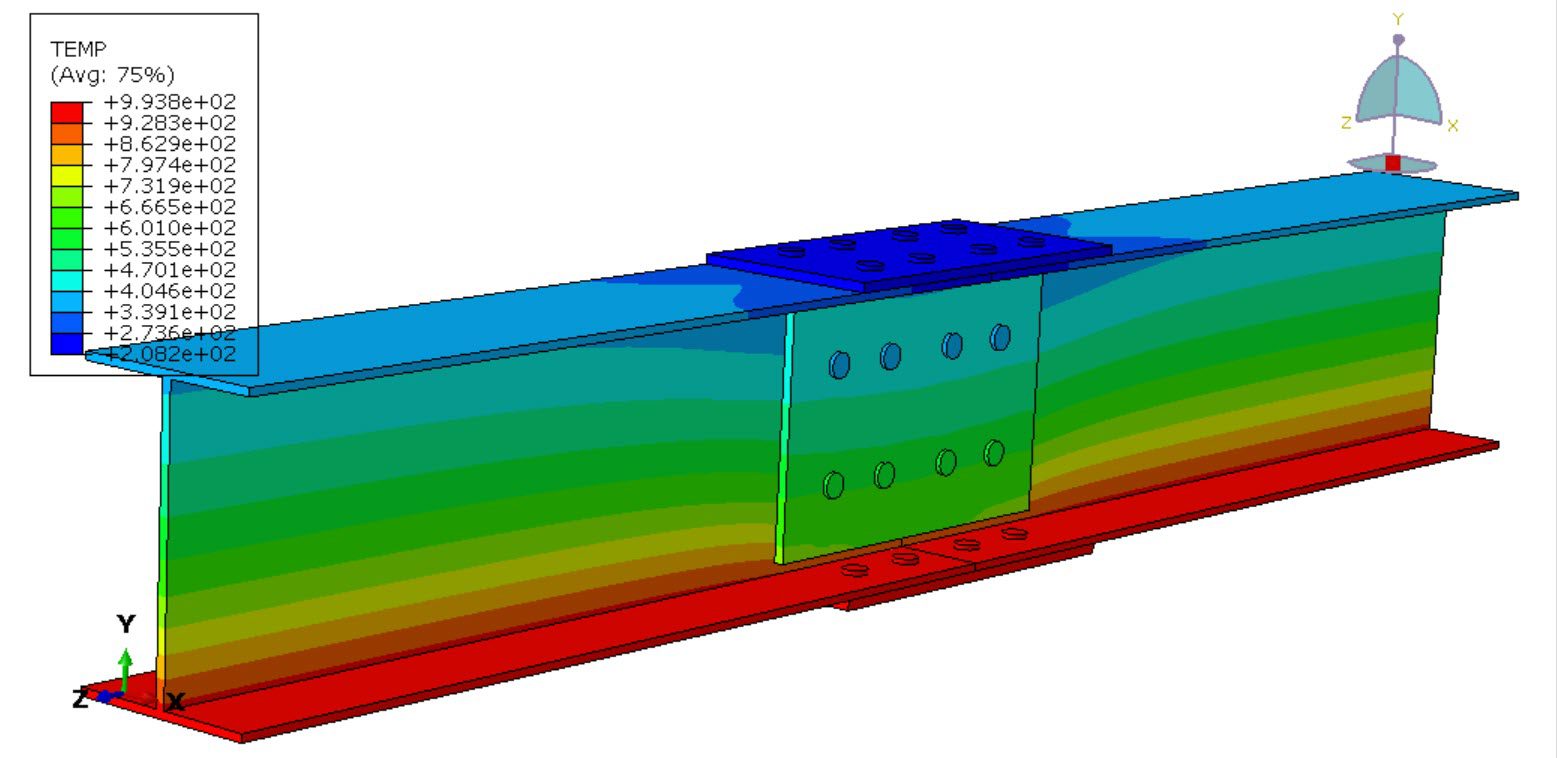
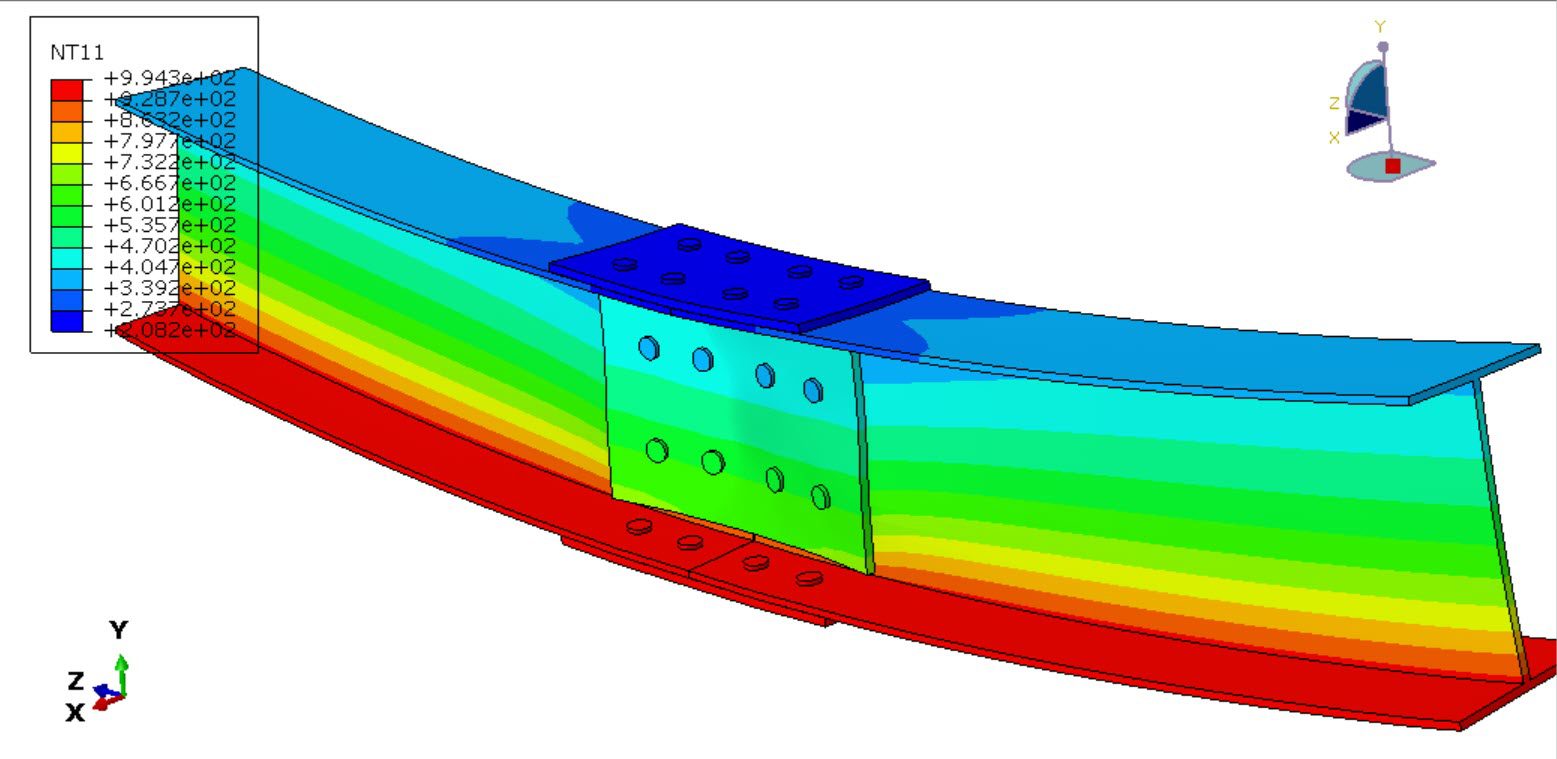
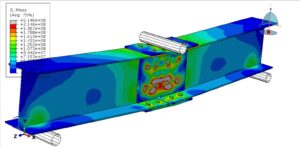
In this practical example, the beams, bolts, and steel plates are modeled as 3D parts. In the first stage, a heat-transfer and fire analysis is carried out through a Heat Transfer step. The results from this analysis are then imported into the static structural analysis to obtain the stresses and deformations of all parts under fire conditions. All modes of heat transfer, convection, conduction, and radiation, are included.
Splice connections are commonly used in steel construction to:
In a fire, the global and local stability of the structure often depends on the ability of these connections to maintain sufficient load-bearing capacity despite weakening materials and thermal expansion effects.
Fire exposure causes a significant reduction in mechanical properties:
These changes directly influence connection behavior, failure modes, and overall stability.
Analysis must consider the combined effects of:
Fire-induced forces can cause connections to shift from ductile to brittle behavior, depending on bolt type and plate configuration.
Key failure mechanisms include:
The mode of failure typically becomes more ductile at high temperatures but may still be sudden due to rapid strength degradation.
The analysis of bolted splice connections in fire involves:
To improve fire performance, designers may:
Employ slip-critical connections with consideration for pretension loss
Complex interactions between thermal degradation of materials, connection geometry, and structural loading govern the behavior of bolted steel splice connections under fire. A comprehensive analysis, combining thermal modeling, material behavior, mechanical loading, and potential failure modes, is essential for designing connections that maintain structural integrity during fire events.
Related model: Abaqus buckling analysis of a steel braced frame — linear eigenvalue buckling plus nonlinear post-buckling with initial imperfections.
Related model: Bolted steel beam–column connection under fire in Abaqus — the same sequential heat transfer and structural workflow applied to a beam–column connection with an end plate.
Need more than the files?
There are two ways we can help. Book a one hour online consultation if you want to talk a problem through with a CAE engineer, using the checkbox in the order box. Order a project if you need a full simulation built for you, delivered to an agreed scope, price and deadline under a written contract.
We work on FEA and CFD for engineers, researchers and companies. Order your project, or message us on WhatsApp for a quick reply.
Other packages engineers working on this topic also download.
 Bolted Steel Beam–Column Connection Under Fire in Abaqus: Sequential Heat Transfer and Structural Analysis
 Fire Simulation Package in Abaqus (12 Structural Fire Analysis Models)
 Fire analysis of a timber beam-sequential method
 Simulation of RC Beams During Fire Events Using a Fully Coupled Thermal Stress Analysis in Abaqus
 Fire and bending analysis of hollow-core concrete slab-DCT method
 Fire Analysis of a CFRP-Strengthened Reinforced Concrete Beam Using Abaqus
 Dynamic analysis of the three-point bending test of a bolted steel splice connection
 Simulation an analysis of the Steel-Timber composite beam under fire conditions in Abaqus

Need a full custom project? See the options below.

€129,00

€179,00

€149,00

€119,00

€129,00

€149,00
See more
Want to receive push notifications for all major on-site activities?




