Need a full custom project? See the options below.
Need a full custom project? See the options below.
The growing need for advanced protective systems capable of resisting high-velocity impacts has led to increasing interest in hybrid multilayered structures that combine metals and fiber-reinforced composites. Among these, configurations incorporating super austenitic stainless steel and carbon fiber reinforced polymer (CFRP) are particularly attractive due to their complementary mechanical properties. Super austenitic stainless steels exhibit excellent ductility, strain hardening, and impact resistance, while CFRP offers high specific strength and stiffness, making it highly efficient for weight-sensitive applications. When combined with a cementitious core such as carbon fiber reinforced concrete (CFRC), these materials can significantly enhance energy absorption and damage tolerance.
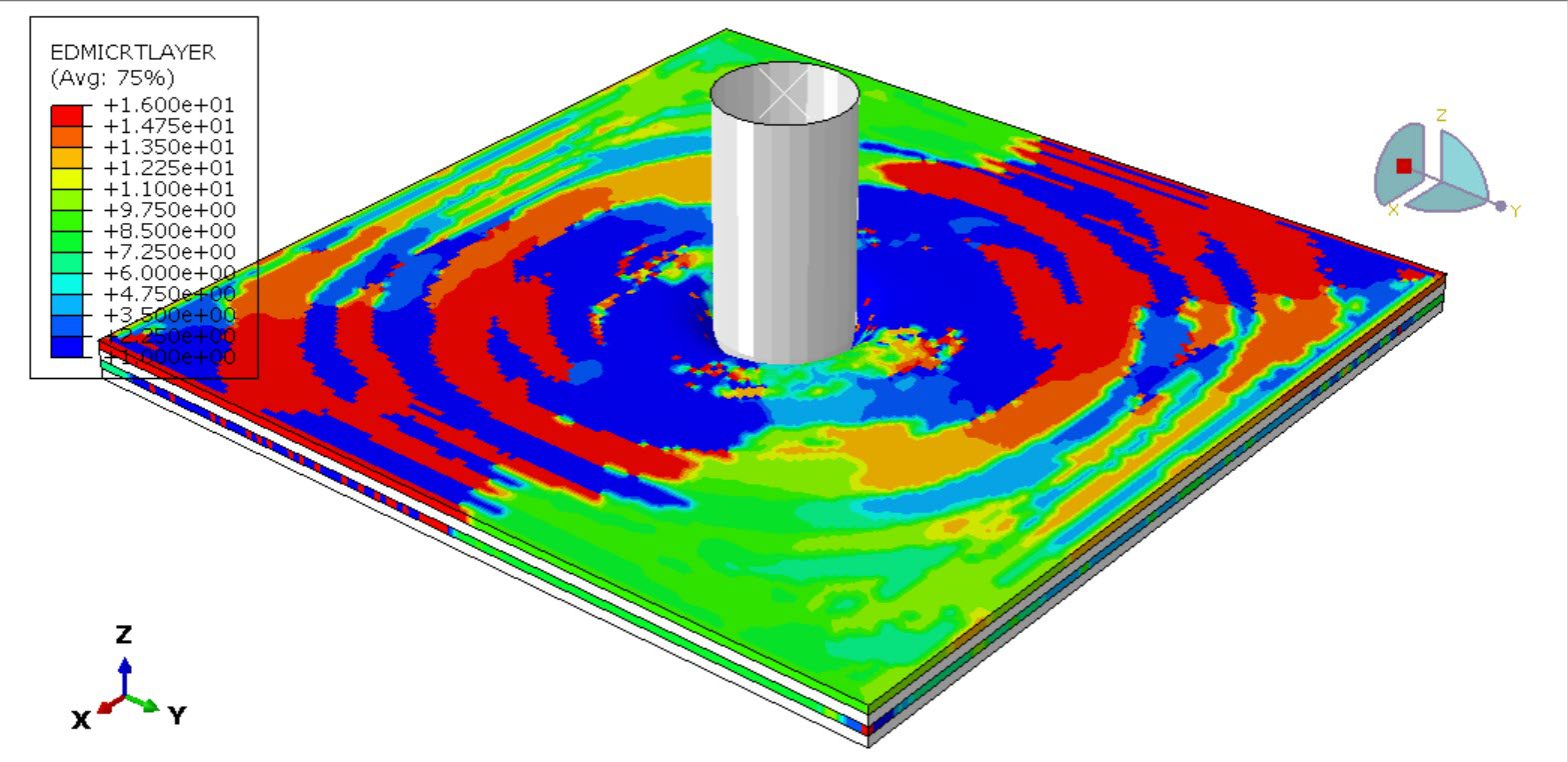
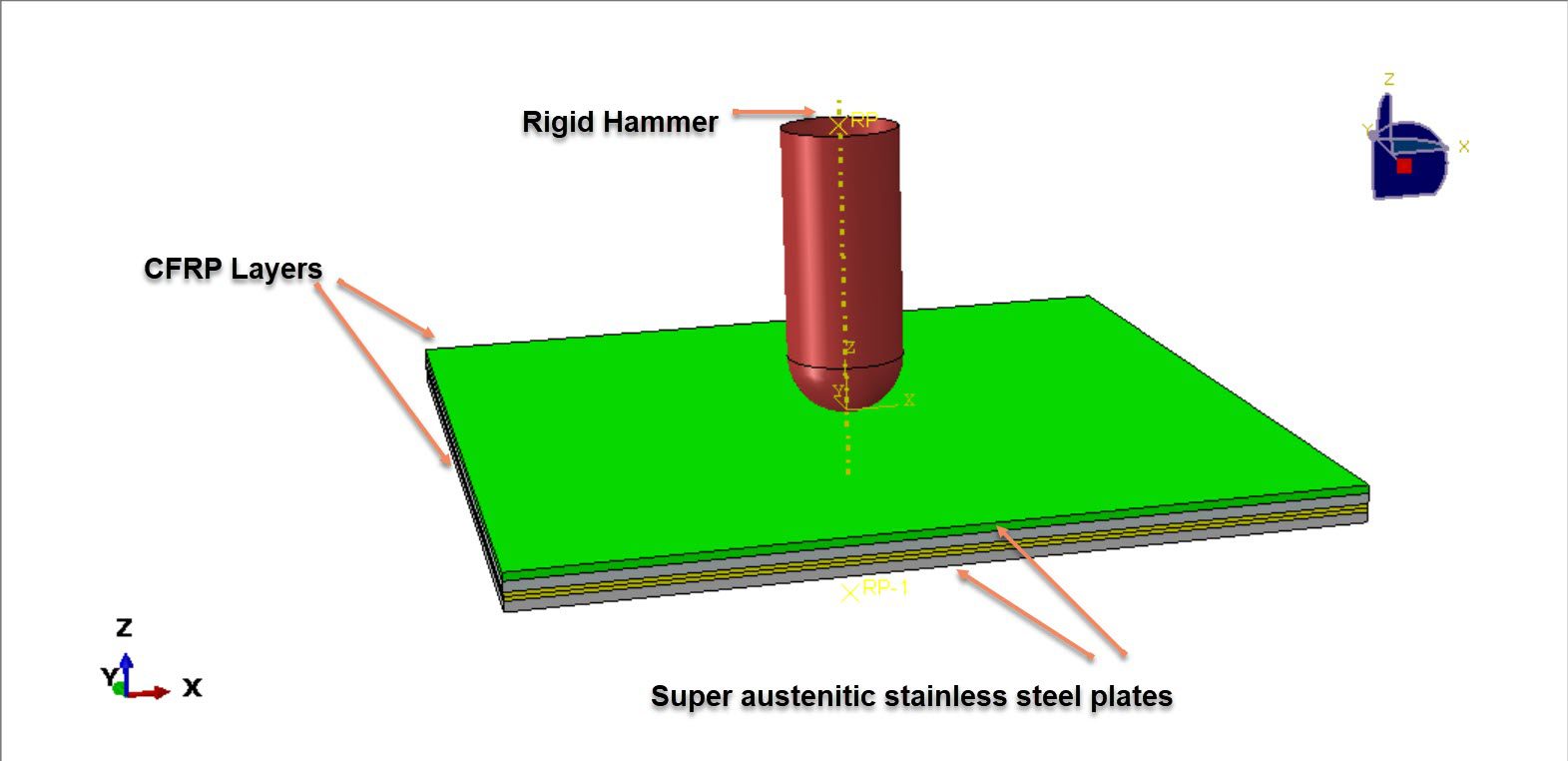
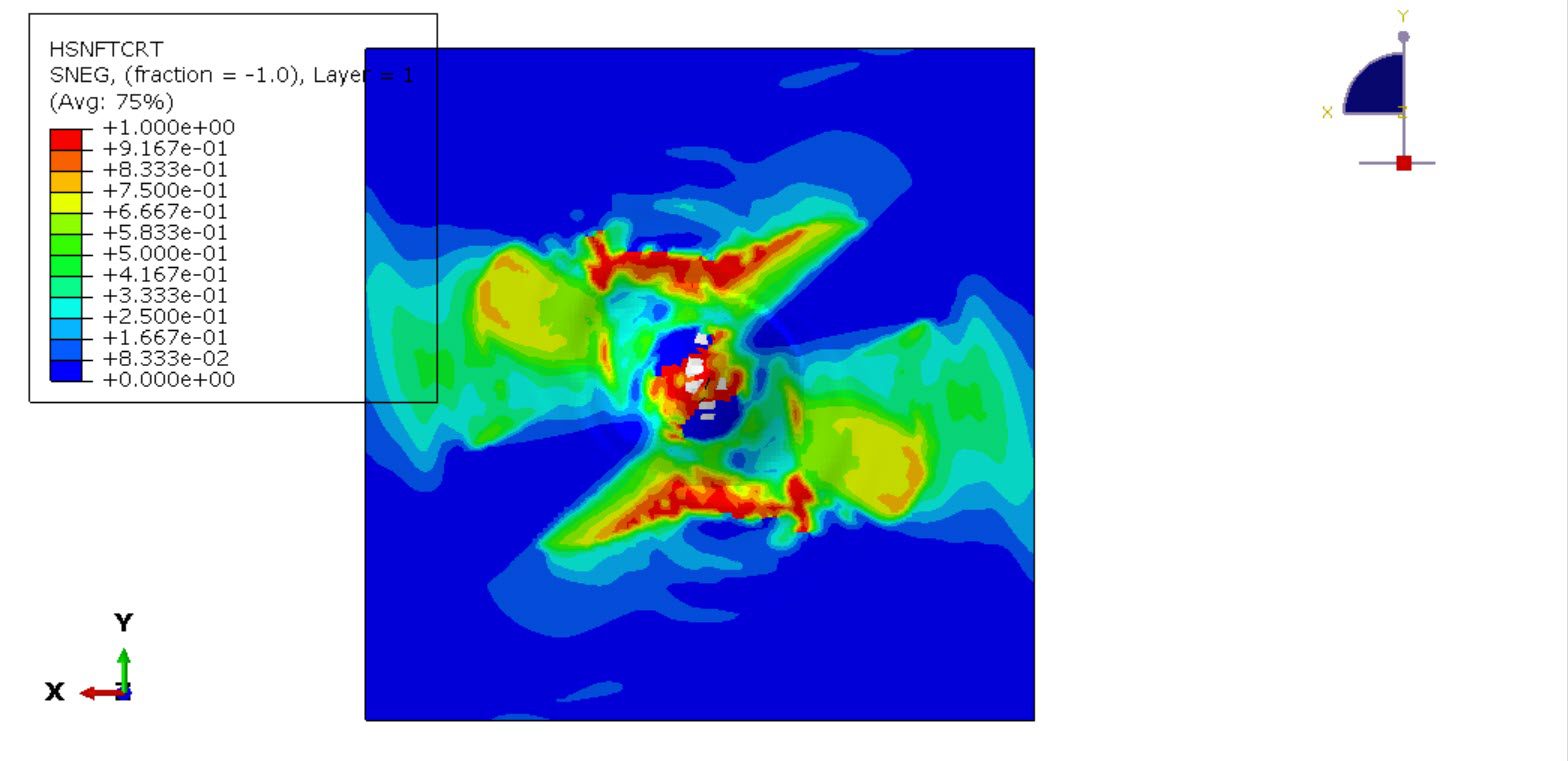
This study focuses on the numerical analysis of a multilayered protective structure with a CFRP–steel–CFRC–steel configuration subjected to high-velocity impact loading. The simulations are performed using the finite element software Abaqus, employing an explicit dynamic approach that is well-suited for modeling highly transient events involving large deformations, nonlinear material behavior, and complex failure mechanisms.
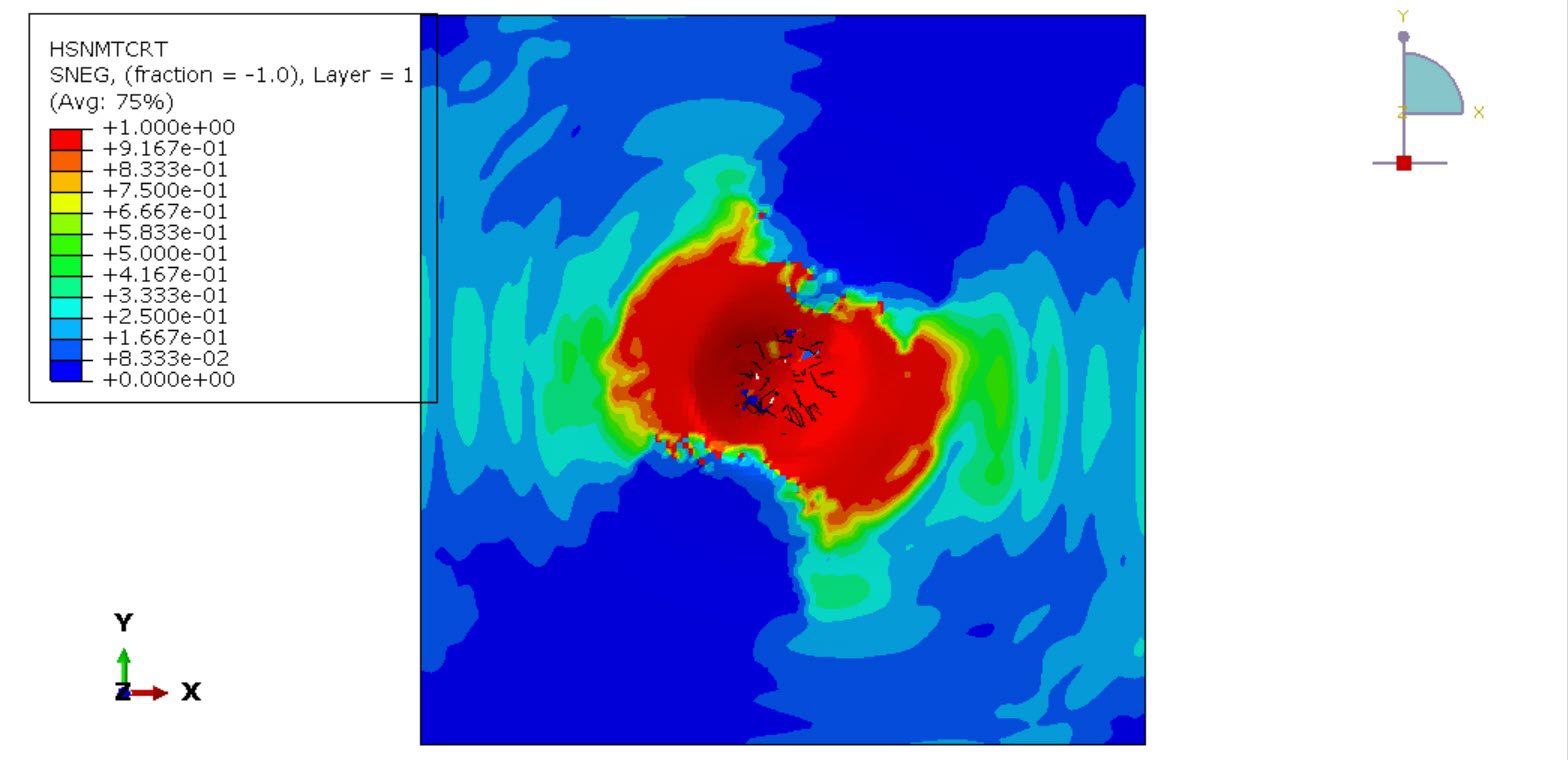
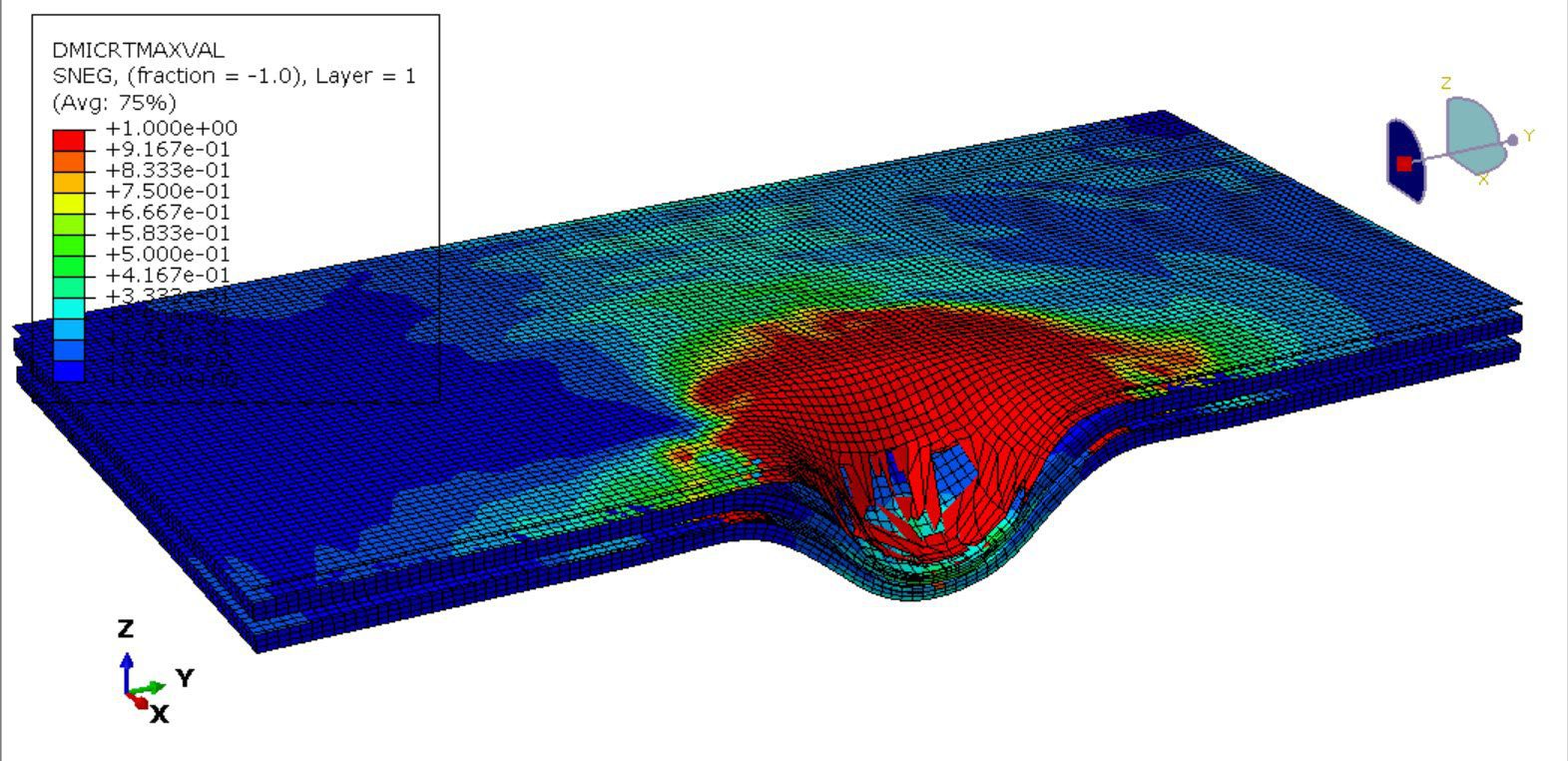
The metallic layers are modeled using the Johnson–Cook (JC) constitutive framework, which captures strain hardening, strain-rate sensitivity, and damage evolution under dynamic loading conditions. This model enables accurate prediction of plastic deformation and failure in super austenitic stainless steel subjected to impact. The CFRP layer is represented using the Hashin damage criteria, allowing for the distinction between different failure modes such as fiber tension, fiber compression, matrix cracking, and matrix crushing. This provides a realistic description of anisotropic damage initiation and progression in the composite.
To accurately simulate interfacial behavior, cohesive interactions are defined between the CFRP and steel layers, enabling the prediction of debonding and delamination under impact loading. These interfacial phenomena are critical in determining the overall structural integrity and energy dissipation capability of the system. The CFRC core contributes to impact resistance through its enhanced toughness and crack-bridging mechanisms provided by embedded carbon fibers, which improve post-cracking behavior and energy absorption.
The numerical model is developed to evaluate key impact performance metrics, including energy absorption, stress wave propagation, damage evolution, and residual projectile velocity. By examining the role of each layer and its interactions, the study aims to provide insights into the synergistic effects within the hybrid structure and to identify efficient design configurations for improved protective performance.
Overall, this work highlights the effectiveness of combining advanced constitutive models and explicit finite element techniques to investigate and optimize multilayered protective systems under extreme loading conditions.
Need more than the files?
There are two ways we can help. Book a one hour online consultation if you want to talk a problem through with a CAE engineer, using the checkbox in the order box. Order a project if you need a full simulation built for you, delivered to an agreed scope, price and deadline under a written contract.
We work on FEA and CFD for engineers, researchers and companies. Order your project, or message us on WhatsApp for a quick reply.
Other packages engineers working on this topic also download.
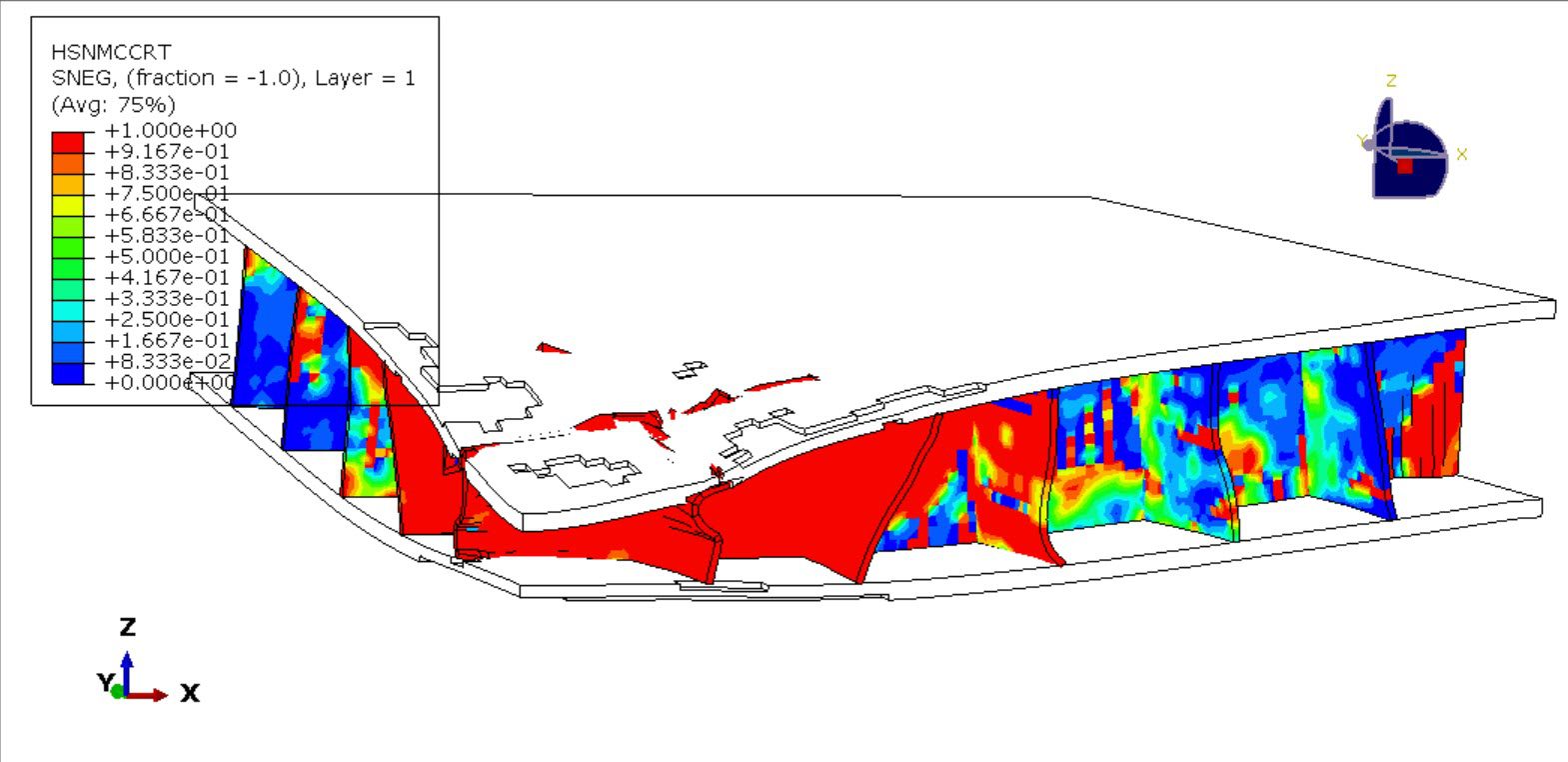 Analysis of the AL-6XN steel protective structures with CFRP core under air blast loading in Abaqus
 High-velocity impact simulation of Rubber-Toughened Poly Methyl Methacrylate (RT-PMMA) reinforced with CFRP
 Impact analysis of the CFRP/PEEK/ceramic/gelatin composite for finding behind the armor trauma
 Analysis and simulation of high-velocity impact on a Composite panel(CFRP-Aluminum foam-Aluminum honeycomb-CFRP)
 High-velocity impact analysis of the composite sandwich panels with GFRP faces and an aluminum foam core
 Impact Simulation Package in Abaqus (35 Ballistic and Low-Velocity Models)
 Analysis of aluminum-wood composite panels under high-velocity impact
 Low and High velocity impact analysis of a T-shaped steel reinforced concrete column

Need a full custom project? See the options below.

€129,00

€179,00

€149,00

€119,00

€129,00

€149,00
See more
Want to receive push notifications for all major on-site activities?




