
Need a full custom project? See the options below.
Need a full custom project? See the options below.
The increasing demand for lightweight, high-strength, and blast-resistant structural systems has led researchers to investigate advanced composite sandwich configurations for protective applications. Among these materials, AL-6XN steel has attracted significant attention due to its excellent corrosion resistance, high toughness, and superior mechanical performance under extreme loading conditions. When combined with Carbon Fiber Reinforced Polymer (CFRP) cores, these hybrid protective structures can provide enhanced energy absorption, improved stiffness-to-weight ratio, and better resistance against impulsive blast loading.
Air blast loading generated by explosions produces extremely high-pressure waves within very short durations, causing severe deformation, localized failure, and possible collapse of conventional metallic structures. Therefore, the development of blast-resistant sandwich structures capable of dissipating large amounts of energy while maintaining structural integrity has become an important research topic in civil, military, offshore, and protective engineering applications. Hybrid steel–composite sandwich panels are considered promising solutions because they combine the ductility of steel with the high specific strength and energy absorption capacity of composite materials.
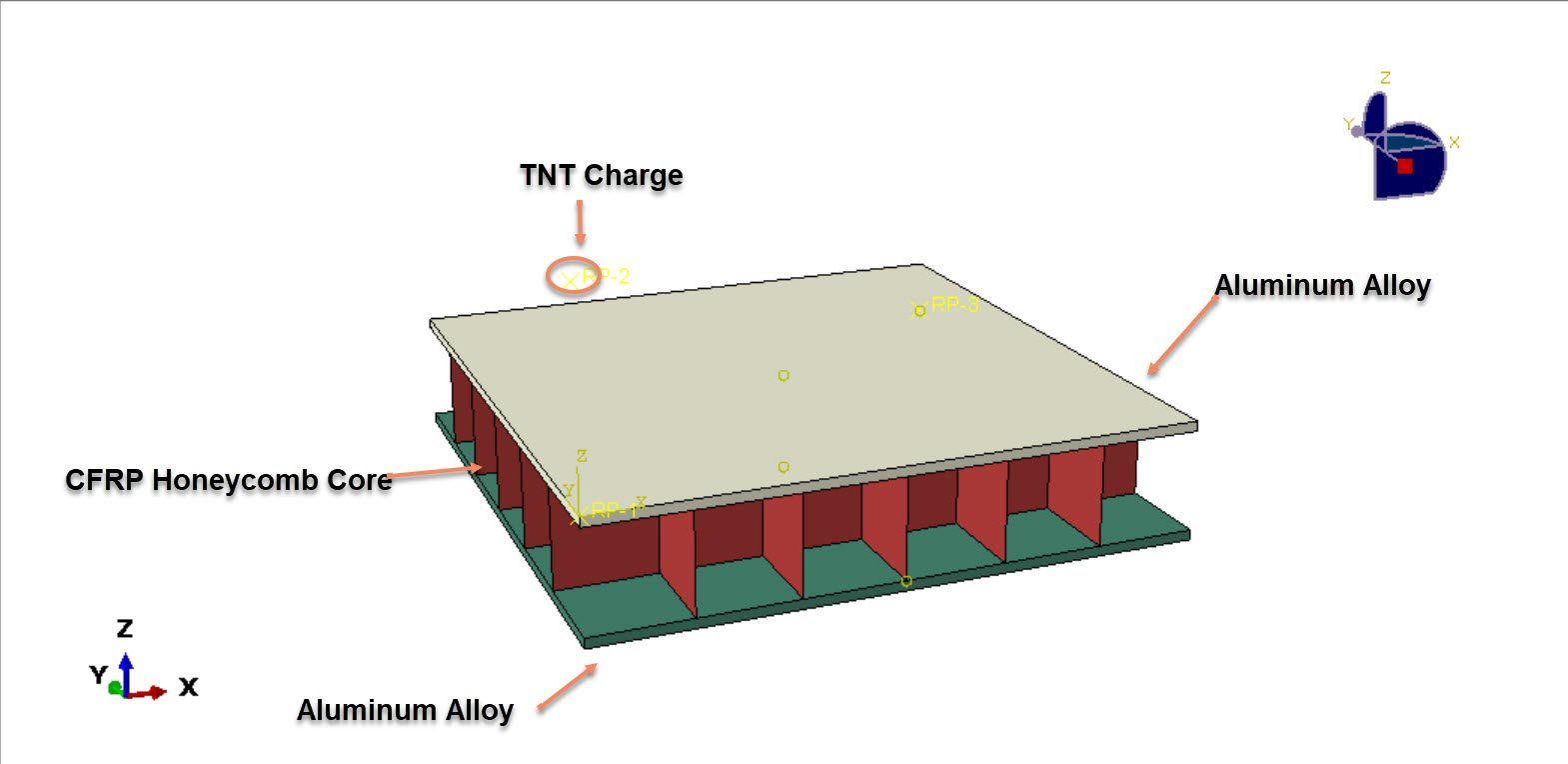
In this study, the behavior of AL-6XN steel protective sandwich structures with a CFRP honeycomb core under air-blast loading is investigated numerically using Abaqus. The proposed configuration consists of two AL-6XN steel face sheets positioned at the top and bottom surfaces, while the intermediate CFRP honeycomb core acts as the primary energy-absorbing component. The sandwich arrangement is designed to enhance blast resistance by distributing stresses efficiently and reducing localized deformation under high-strain-rate loading conditions.
To accurately capture the nonlinear dynamic response of the structure, the analysis is performed using the Dynamic Explicit solver in Abaqus. The blast pressure loading is modeled using the CONWEP approach, which simulates realistic air blast wave propagation and pressure-time history generated by explosive detonations. Surface-to-surface contact interactions are employed to represent the interaction between the steel face sheets and the CFRP core during deformation and possible separation.
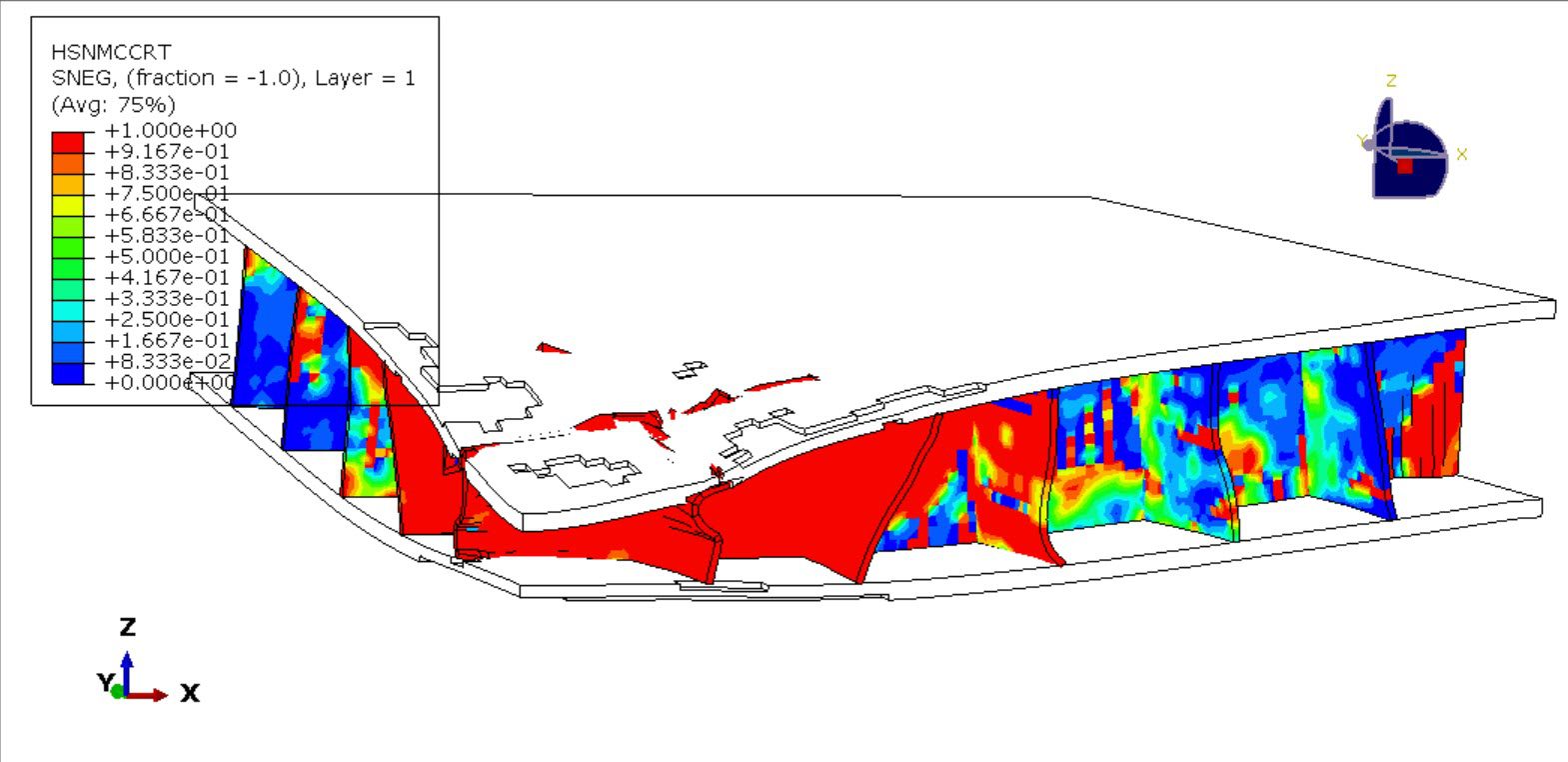
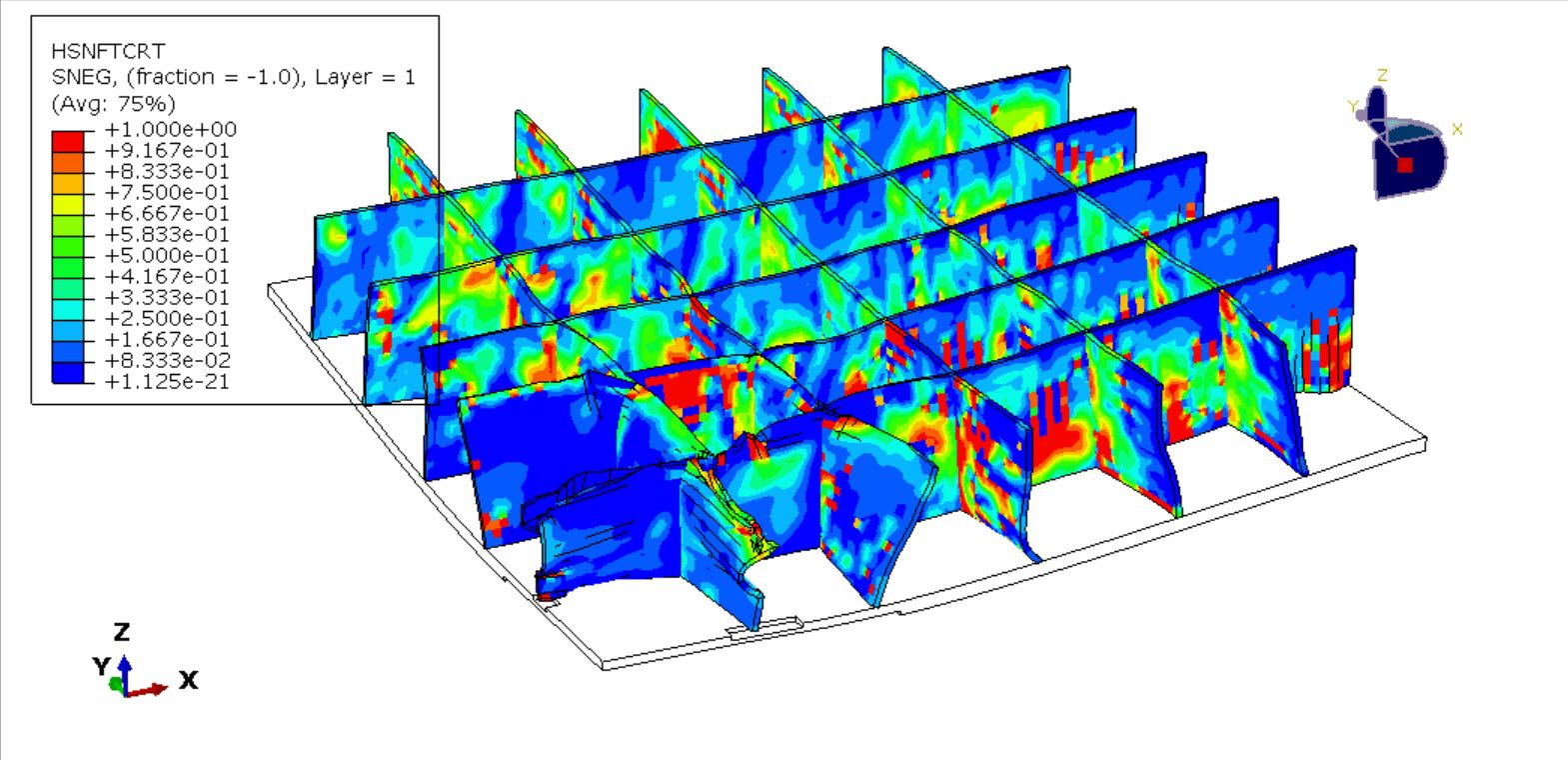
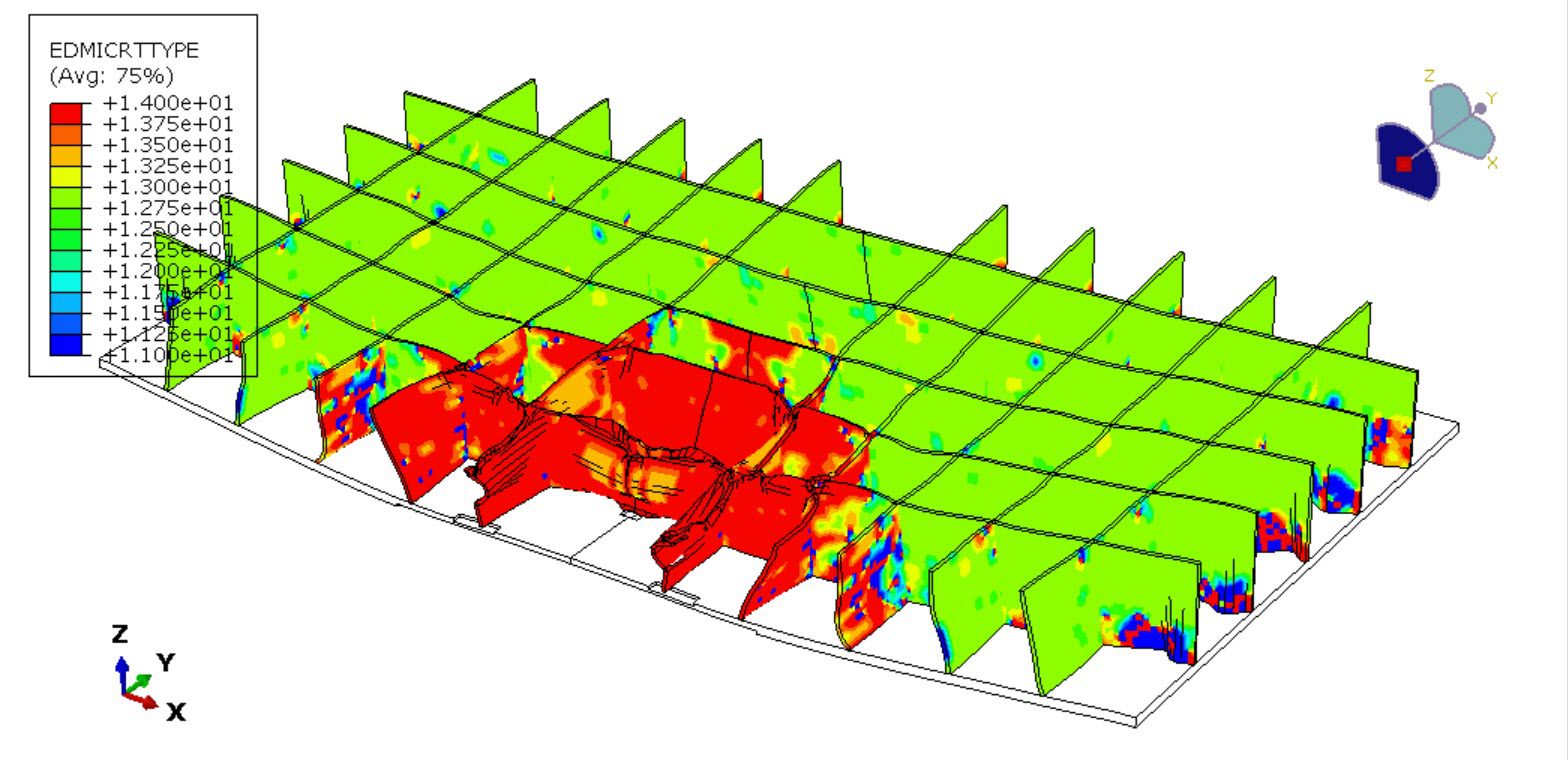
The constitutive behavior of the CFRP core is modeled using the Hashin damage criterion, which enables prediction of multiple composite failure modes including fiber tension, fiber compression, matrix cracking, and matrix crushing. This damage model is particularly suitable for simulating progressive failure in composite materials subjected to severe dynamic loading conditions. For the AL-6XN steel layers, the material response is defined using the Johnson–Cook/HC hardening and damage formulation to account for strain hardening, plastic deformation, strain-rate sensitivity, and damage evolution under blast loading. Such advanced material modeling techniques are essential for accurately predicting the failure mechanisms and energy dissipation characteristics of hybrid protective systems.
A refined finite element mesh is adopted throughout the numerical model to ensure accurate stress distribution, contact behavior, and damage propagation within both the steel and composite components. Mesh refinement is especially important in regions expected to experience high stress concentration and localized failure under blast impact.
The primary objective of this research is to evaluate the structural response, deformation behavior, stress distribution, and damage evolution of AL-6XN steel/CFRP sandwich structures under air blast loading. The study also aims to investigate the effectiveness of the CFRP honeycomb core in improving blast resistance and reducing structural failure. The numerical results obtained can contribute to the design and optimization of advanced lightweight protective structures for applications requiring high-impact and explosion resistance.
Need more than the files?
There are two ways we can help. Book a one hour online consultation if you want to talk a problem through with a CAE engineer, using the checkbox in the order box. Order a project if you need a full simulation built for you, delivered to an agreed scope, price and deadline under a written contract.
We work on FEA and CFD for engineers, researchers and companies. Order your project, or message us on WhatsApp for a quick reply.
Other packages engineers working on this topic also download.
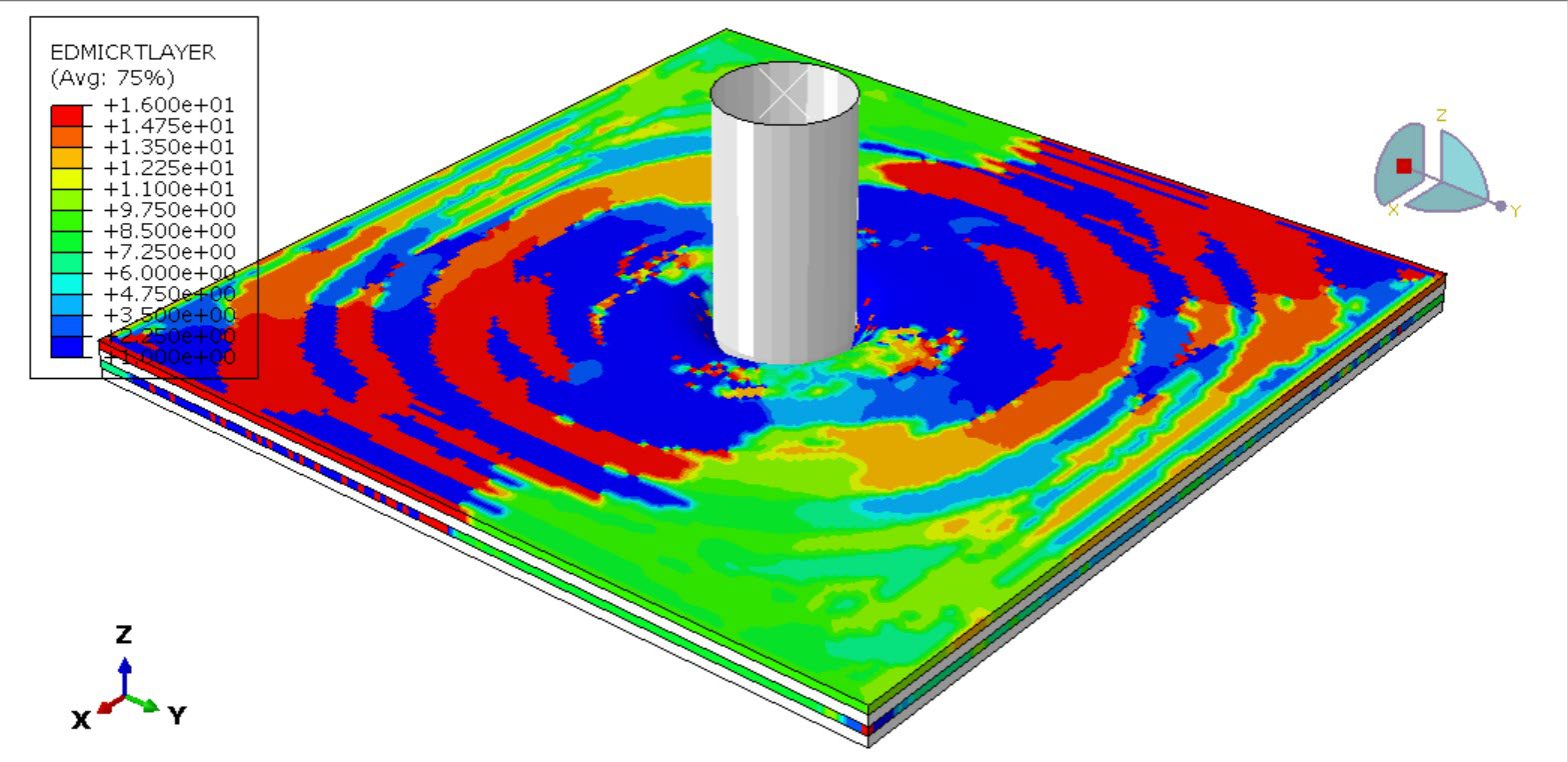 Numerical analysis of the super austenitic stainless and CFRP-based efficient protective structures under high-velocity impact
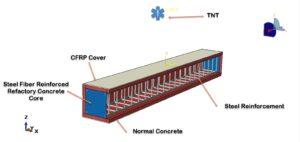 Analysis of the SSFRRC composite beam under air blast load
 Deformation behavior of super-austenitic stainless steel sandwich panels subjected to air blast and underwater explosion
 Analysis of a composite panel(CFRP-Ceramic-GFPP) under air blast load
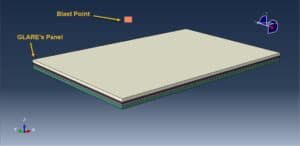 Analysis of a composite GLARE panel under air blast load
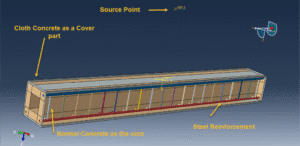 Simulation of Air Blast Load on an RC Beam Reinforced with Cloth Concrete Cover in Abaqus
 Numerical analysis of the composite column, which includes normal and ultra-high performance geopolymer concrete under air blast load
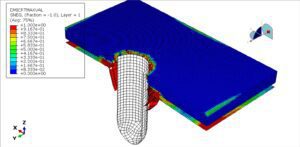 High-velocity impact simulation of Rubber-Toughened Poly Methyl Methacrylate (RT-PMMA) reinforced with CFRP

Need a full custom project? See the options below.

€129,00

€179,00

€149,00

€119,00

€129,00

€149,00
See more
Want to receive push notifications for all major on-site activities?




