
Need a full custom project? See the options below.
Need a full custom project? See the options below.
Composite columns consisting of conventional geopolymer concrete and ultra-high-performance geopolymer concrete (UHPGC) have gained increasing attention in protective and resilient structural engineering due to their superior mechanical strength, durability, and sustainability. When subjected to extreme dynamic events such as air blast loading, the nonlinear behavior of these materials, together with the interaction between concrete and steel reinforcement, becomes highly complex. Numerical analysis using finite element methods provides an efficient approach to investigate the structural response, damage mechanisms, and energy dissipation characteristics of such composite systems under blast effects.
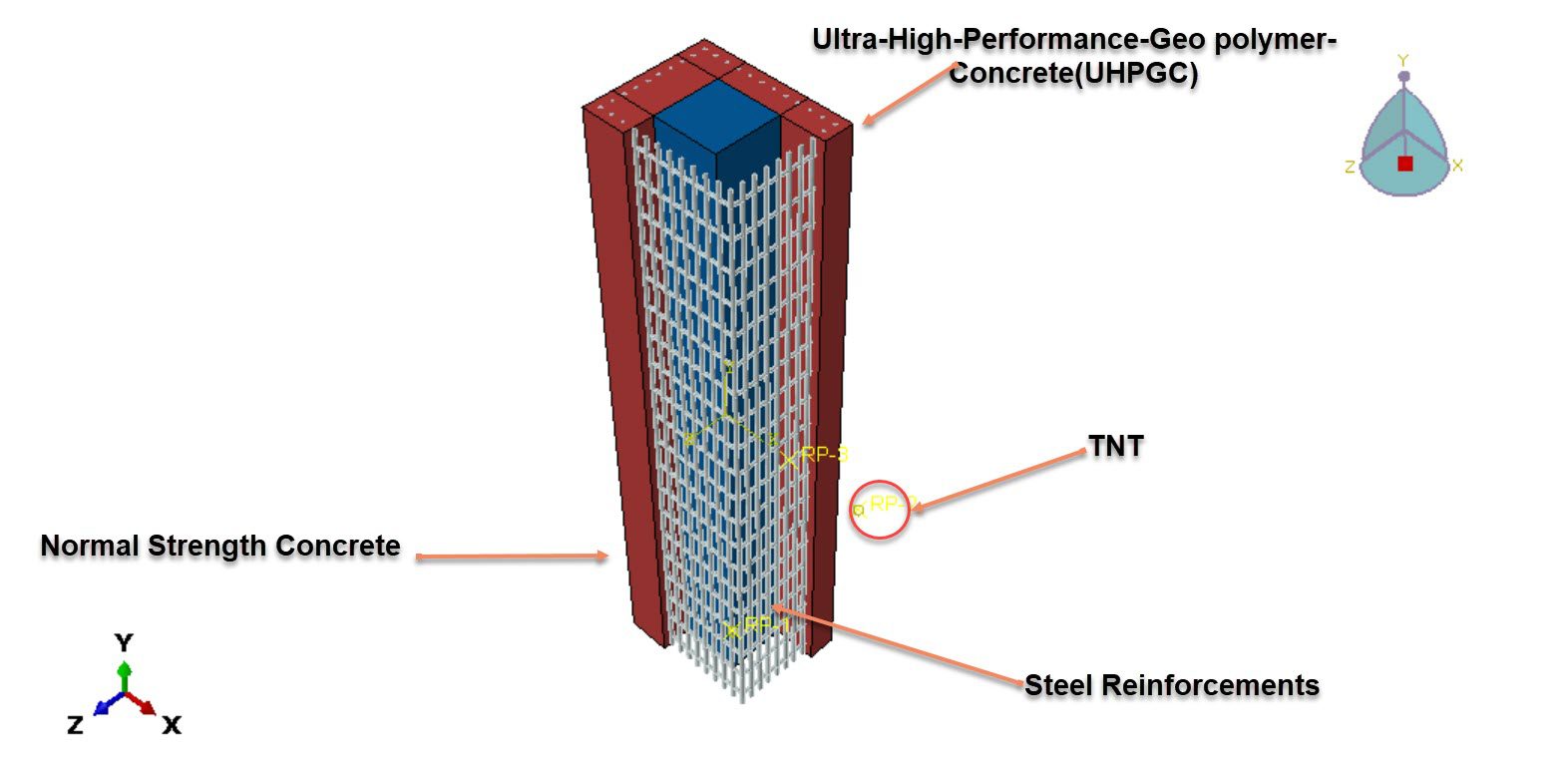
In this study, the numerical simulation of a composite column composed of normal geopolymer concrete and UHPGC was conducted using Abaqus. The analysis aimed to evaluate the dynamic response of the column under air blast loading generated through the CONWEP blast model. The finite element model incorporated appropriate constitutive material models for both geopolymer concretes and reinforcing steel to accurately capture nonlinear behavior under high-strain-rate loading conditions.
The concrete materials, including both normal geopolymer concrete and UHPGC, were modeled using the Concrete Damaged Plasticity (CDP) model available in Abaqus. The CDP model is widely used for simulating the nonlinear compressive and tensile behavior of concrete-like materials, including stiffness degradation, cracking, crushing, and plastic deformation under cyclic or dynamic loading. Separate material parameters were assigned for the normal geopolymer concrete and UHPGC to reflect their distinct mechanical properties, such as compressive strength, tensile behavior, fracture energy, and dilation characteristics. The superior strength and ductility of UHPGC make it particularly suitable for resisting localized blast-induced damage and improving structural integrity.
The steel reinforcement embedded within the composite column was modeled using an elastic–plastic constitutive relationship. This approach allows the reinforcement to exhibit yielding and plastic deformation under high dynamic stresses while maintaining computational efficiency. The interaction between reinforcement and surrounding concrete was represented using the embedded region constraint technique in Abaqus, which assumes perfect bond behavior between steel and concrete throughout the analysis.
To capture the highly transient nature of blast loading, the analysis was performed using the Dynamic Explicit solver in Abaqus. The explicit integration scheme is particularly suitable for short-duration, high-intensity loading events involving material nonlinearity, contact interactions, and possible localized failure. The blast pressure was applied using the CONWEP method, which is based on empirical blast wave relationships derived from explosive test data. The CONWEP model enables efficient simulation of free-air blast effects by defining parameters such as charge weight, stand-off distance, and detonation location without explicitly modeling the surrounding air domain.
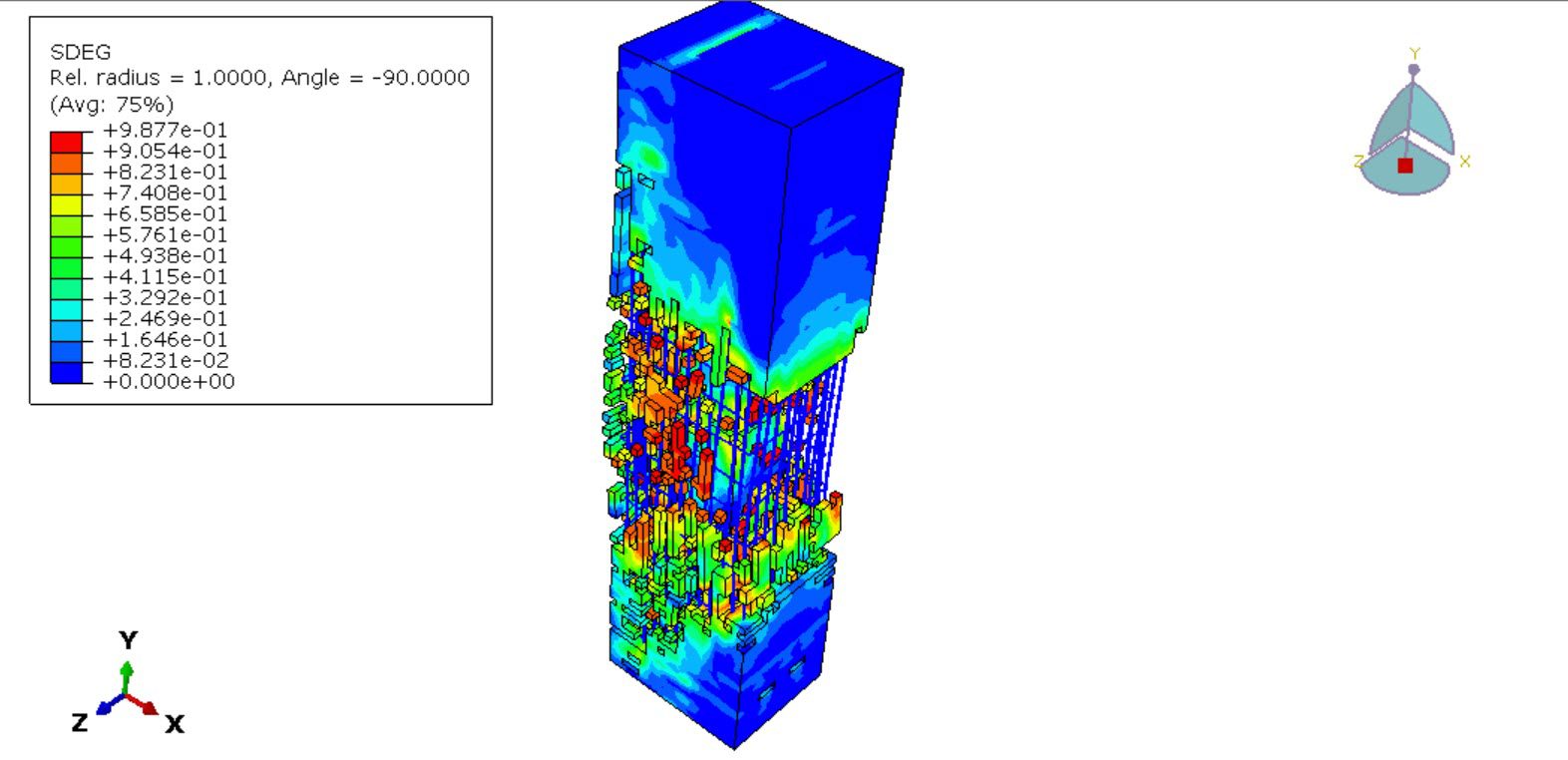
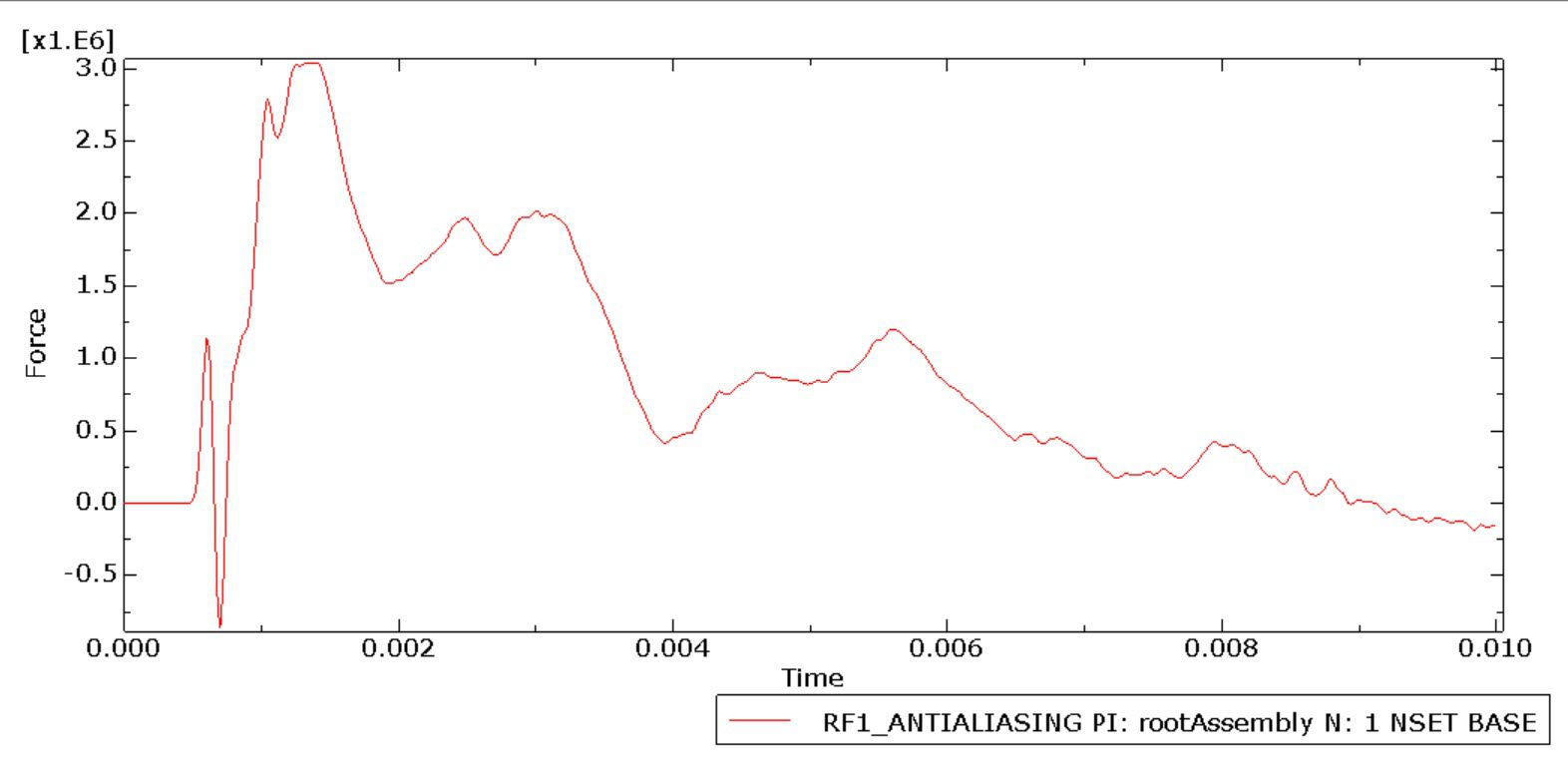
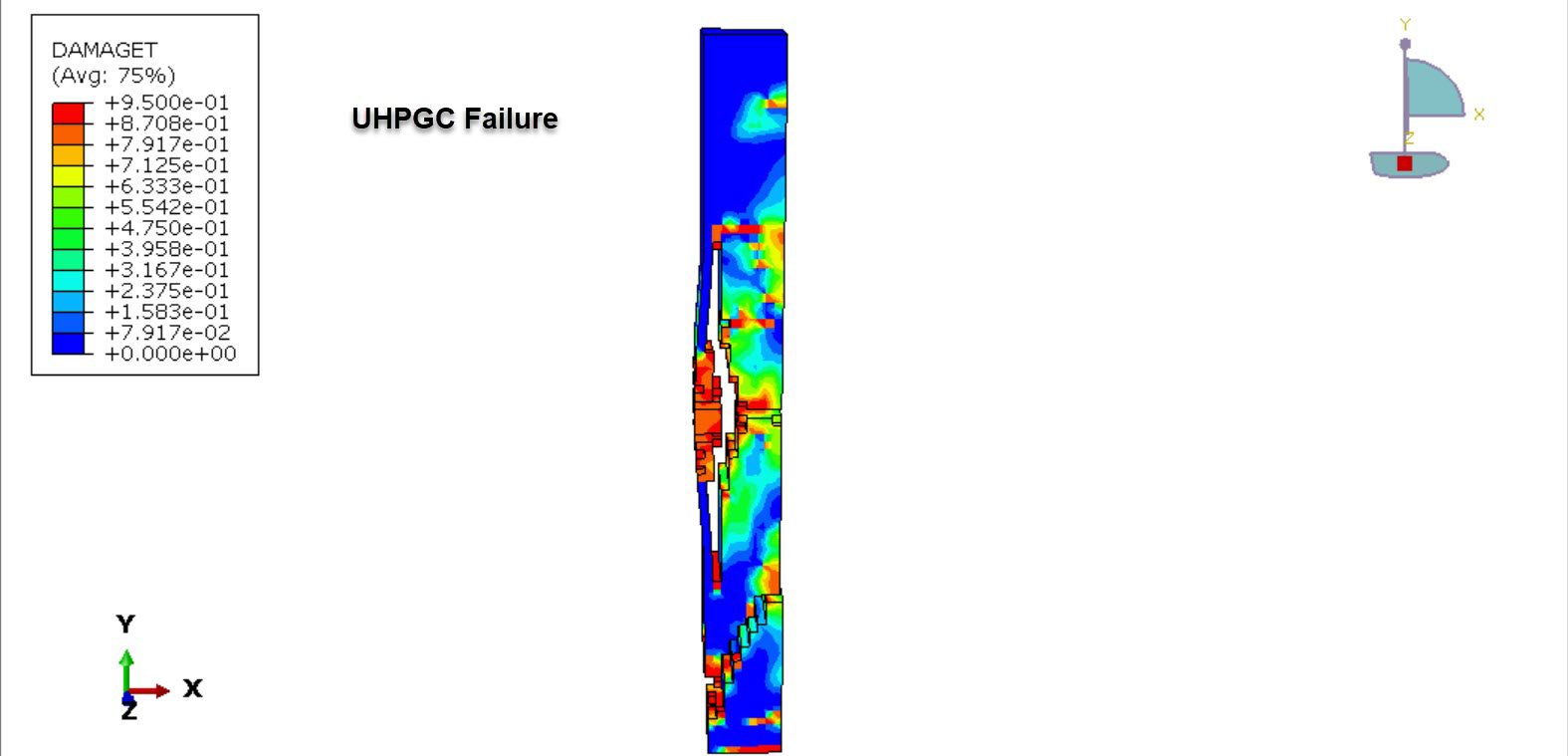
The developed finite element model enables the investigation of important structural responses, including displacement, stress distribution, damage propagation, energy absorption, and failure modes of the composite column under blast loading. By comparing the behavior of normal concrete and UHPGC regions, the study can assess the effectiveness of UHPGC in enhancing blast resistance and mitigating structural damage. The numerical results may contribute to the development of safer and more resilient composite structural systems for protective infrastructure applications.
Need more than the files?
There are two ways we can help. Book a one hour online consultation if you want to talk a problem through with a CAE engineer, using the checkbox in the order box. Order a project if you need a full simulation built for you, delivered to an agreed scope, price and deadline under a written contract.
We work on FEA and CFD for engineers, researchers and companies. Order your project, or message us on WhatsApp for a quick reply.
Other packages engineers working on this topic also download.
 Analysis of the Ultra-High-Performance Geopolymer RC Beam under Four-Point Bending Loading
 analysis of a composite column under air blast load
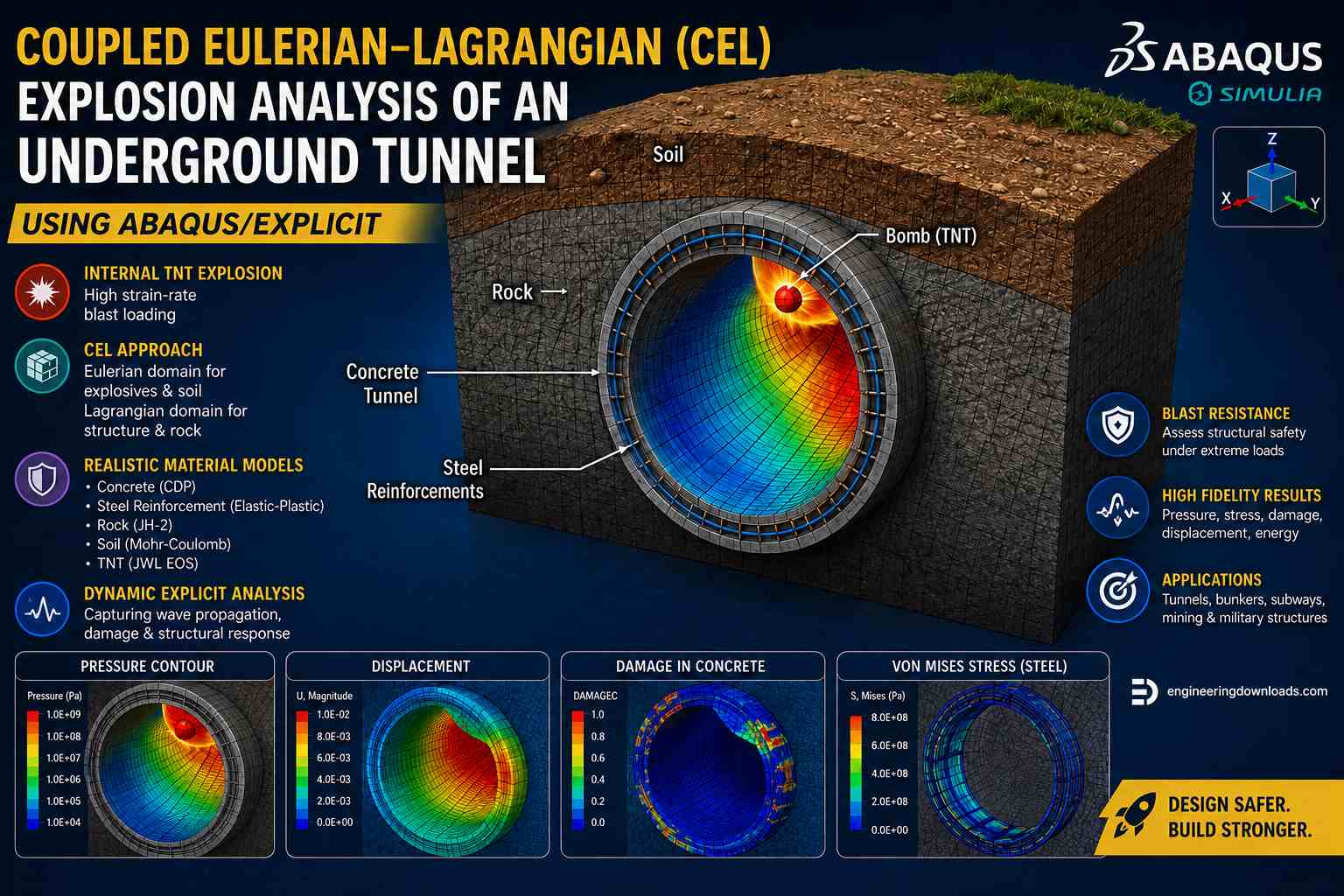 Analysis of a CEL explosion in an underground tunnel
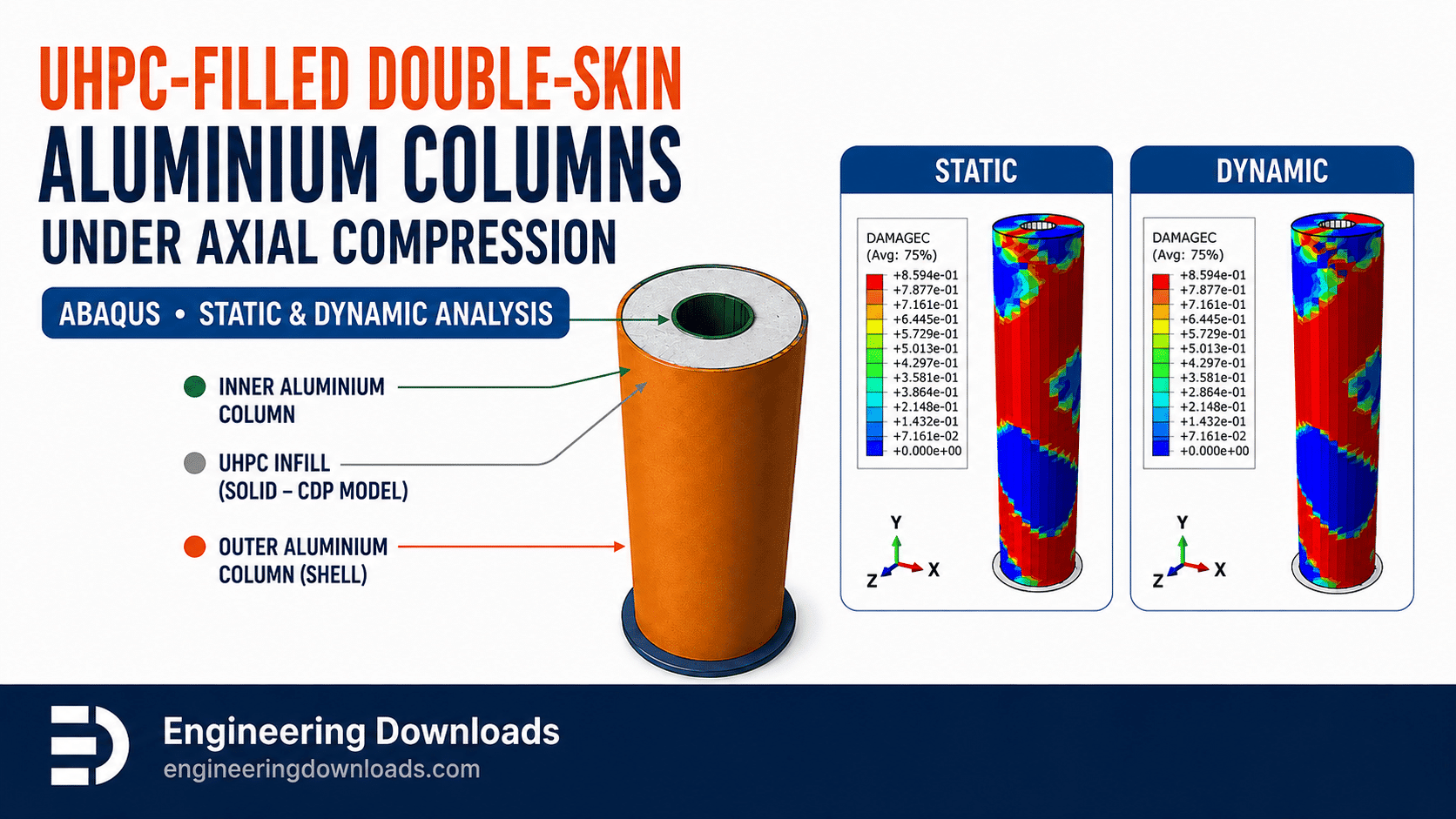 Numerical Investigation of the Structural Behaviour of UHPC-Filled Double-Skin Aluminium Columns under Axial Compression
 Ultra High Performance Fiber Reinforced Concrete (UHPFRC) Package
 Behavior and punching capacity of flat slabs with the rational use of UHPFRC
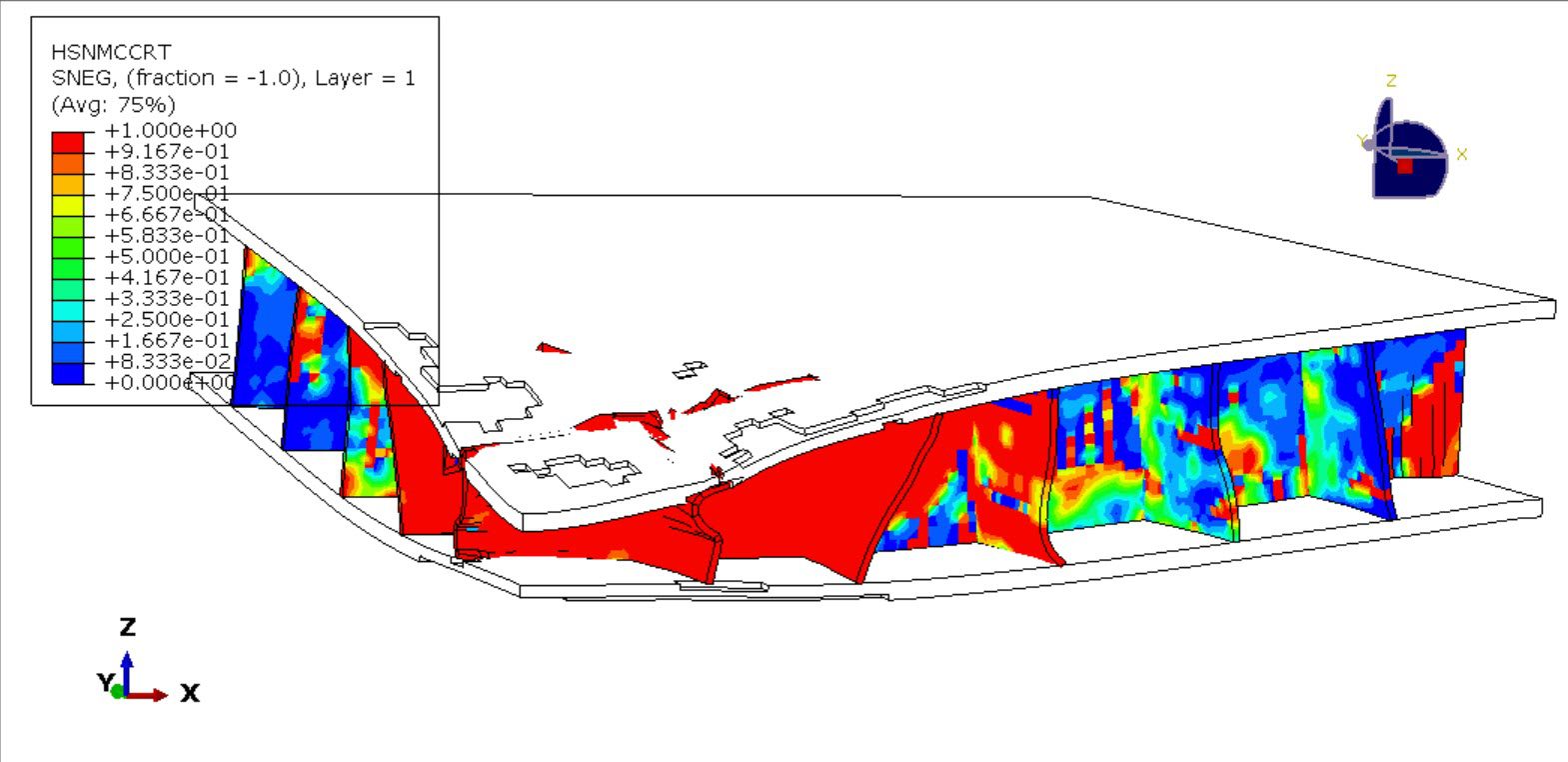 Analysis of the AL-6XN steel protective structures with CFRP core under air blast loading in Abaqus
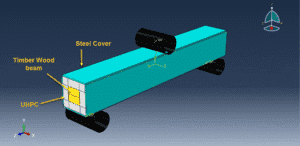 Simulation of Bending Test on a Wood–UHPC–Steel Composite Beam in Abaqus

Need a full custom project? See the options below.

€129,00

€179,00

€149,00

€119,00

€129,00

€149,00
See more
Want to receive push notifications for all major on-site activities?




