Need a full custom project? See the options below.
Need a full custom project? See the options below.
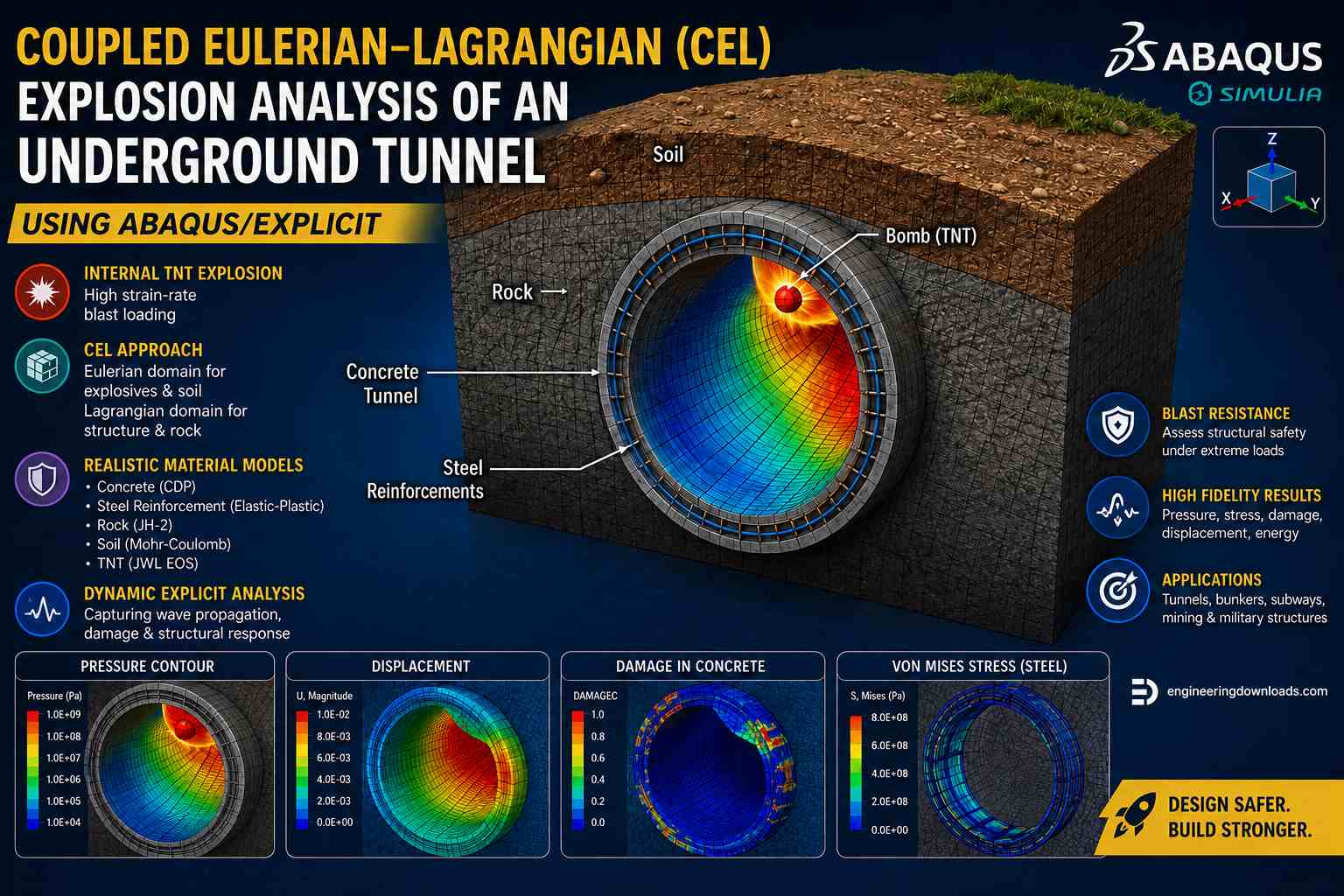
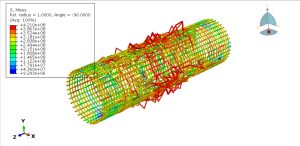
In this study, a Coupled Eulerian–Lagrangian (CEL) approach implemented in Abaqus/Explicit is employed to investigate the response of a reinforced concrete tunnel subjected to an internal TNT detonation. The CEL formulation is particularly suitable for explosion simulations because it combines the advantages of Eulerian and Lagrangian descriptions. The explosive products and surrounding air can undergo extremely large deformations within the Eulerian domain without causing mesh distortion, while the structural components are modeled using the Lagrangian formulation, allowing accurate representation of stress, strain, cracking, and damage evolution in solid materials.
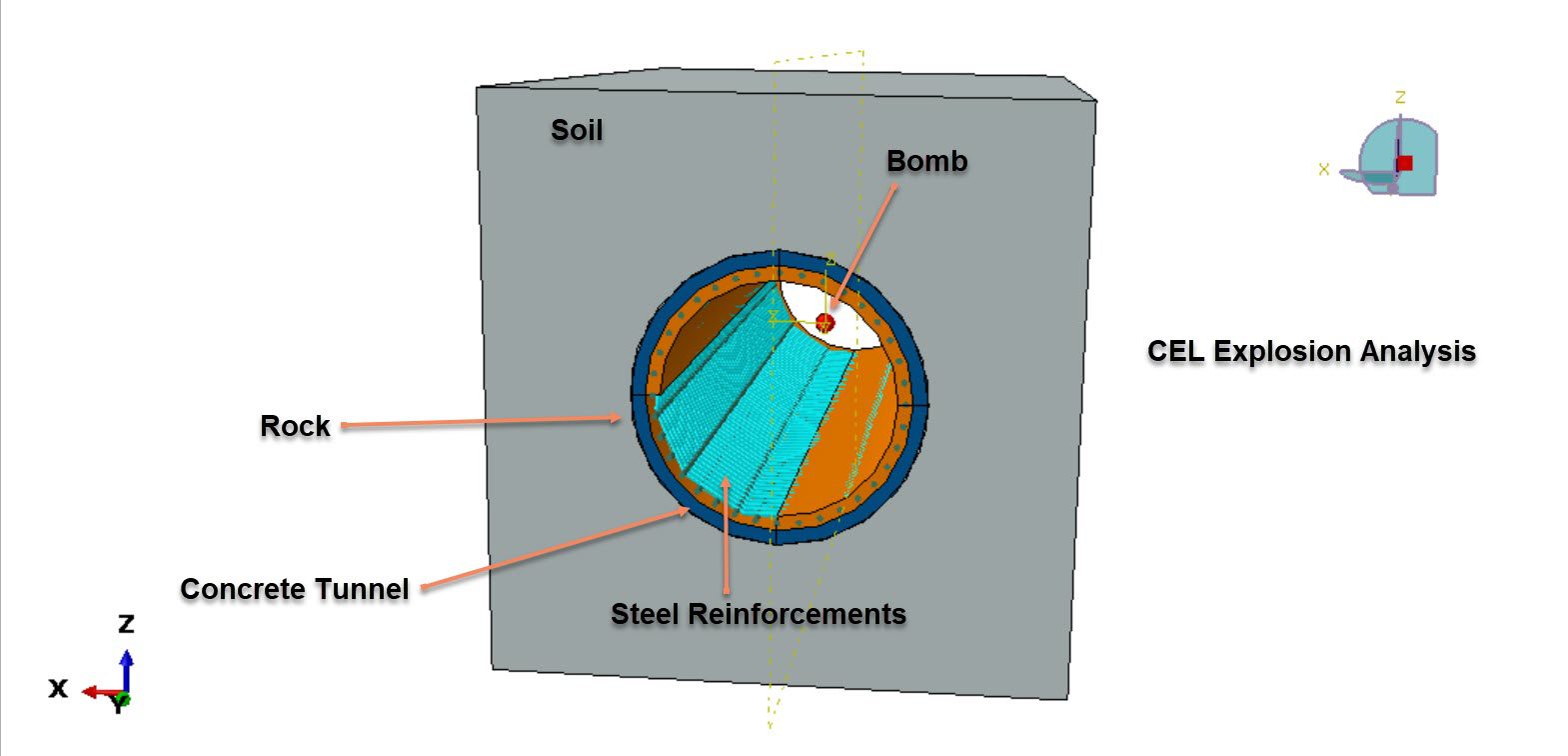
The numerical model consists of a reinforced concrete tunnel embedded within a rock mass and surrounded by soil, as illustrated in Figure X. The tunnel lining is modeled as a solid concrete structure reinforced with embedded steel bars. A TNT charge is positioned inside the tunnel to generate the blast load. The surrounding geological environment includes a rock layer adjacent to the tunnel and an external soil domain that provides confinement and realistic boundary conditions. The interaction between the explosive products, tunnel lining, reinforcement, rock, and soil is captured through the CEL framework.
To accurately represent the behavior of different materials under high strain-rate loading conditions, appropriate constitutive models are adopted. The concrete tunnel lining is modeled using the Concrete Damaged Plasticity (CDP) model, which captures tensile cracking, compressive crushing, stiffness degradation, and damage accumulation. Steel reinforcements are represented using an elastic–plastic constitutive model, enabling the simulation of yielding and plastic deformation under blast-induced stresses. The surrounding rock mass is modeled using the Johnson–Holmquist II (JH-2) material model, which is specifically developed for brittle geomaterials subjected to high pressures, high strain rates, and large deformations. The soil medium is described using the Mohr–Coulomb constitutive model, accounting for pressure-dependent yielding and frictional behavior. The explosive charge is modeled using the Jones–Wilkins–Lee (JWL) equation of state, which accurately characterizes the pressure-volume-energy relationship of TNT detonation products.
The blast event is simulated using the Dynamic Explicit analysis procedure in Abaqus, which is well suited for highly nonlinear transient problems involving impact, explosion, material damage, and complex contact interactions. Appropriate contact definitions and embedded constraints are employed to model the interaction between the reinforcement and concrete as well as the coupling between structural and geological components.
The primary objective of this analysis is to evaluate the blast-resistant performance of the underground tunnel by examining pressure-wave propagation, displacement response, stress distribution, damage evolution, and energy dissipation mechanisms within the tunnel lining and surrounding ground. The results provide insight into the effectiveness of reinforced concrete tunnel systems under internal explosion scenarios and contribute to the development of safer and more resilient underground protective structures.
Need more than the files?
There are two ways we can help. Book a one hour online consultation if you want to talk a problem through with a CAE engineer, using the checkbox in the order box. Order a project if you need a full simulation built for you, delivered to an agreed scope, price and deadline under a written contract.
We work on FEA and CFD for engineers, researchers and companies. Order your project, or message us on WhatsApp for a quick reply.
Other packages engineers working on this topic also download.
 Rock and Stone Analysis Package in Abaqus
 Tunnel and TBM Analysis and Simulation Package in Abaqus
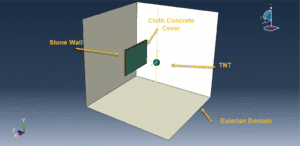 Simulation of CEL Explosion Near a Stone Wall Covered with Cloth and Concrete in Abaqus
 Underwater and Underground Explosion Simulation Package in Abaqus (20 Models)
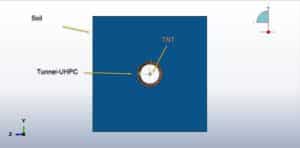 Simulation and analysis of subsurface tunnel with GFRP protection against internal blast using CEL method
 Numerical analysis of the composite column, which includes normal and ultra-high performance geopolymer concrete under air blast load
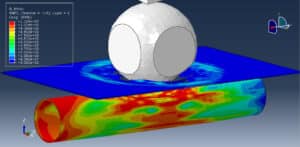 Numerical analysis of the CFRP blanket effect on reducing the deformation of pipelines in soil exposed to the Coupled Eulerian-Lagrangian subsurface explosion
 Blast and Explosion Simulation Package in Abaqus (26 Models)

Need a full custom project? See the options below.

€129,00

€179,00

€149,00

€119,00

€129,00

€149,00
See more
Want to receive push notifications for all major on-site activities?




