Need a full custom project? See the options below.
Need a full custom project? See the options below.
Delamination is one of the most common defects in laminated composites. It appears during manufacturing or in service, and it is usually invisible from the outside. But it changes how the structure vibrates. Stiffness drops, natural frequencies shift, and mode shapes distort.
That shift is what makes vibration-based damage detection possible. The difficulty is modelling it correctly. Most simple beam models ignore shear deformation, rotary inertia, and the coupling that comes from an unbalanced stacking sequence. For thick composite beams, those simplifications give the wrong frequencies.
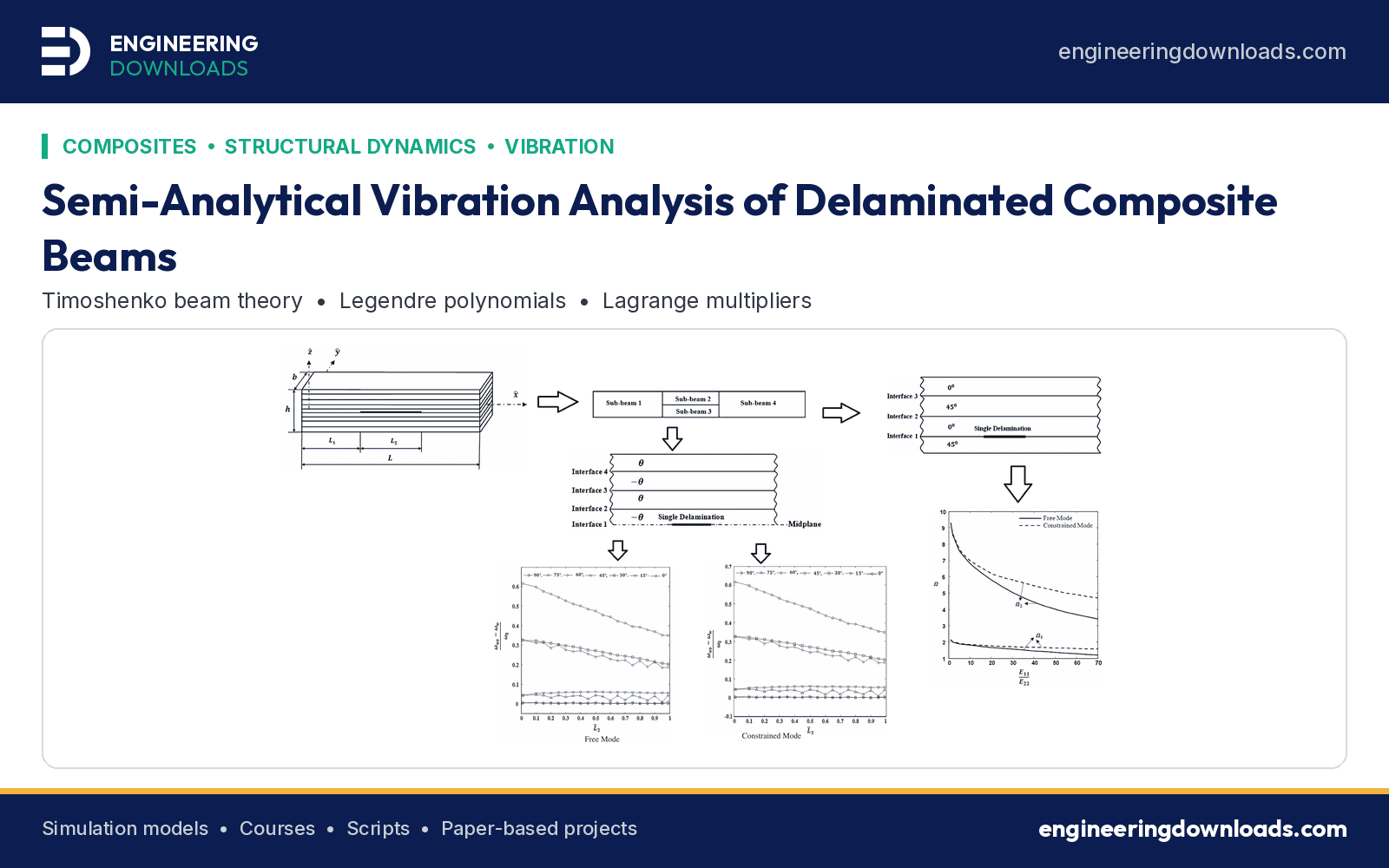
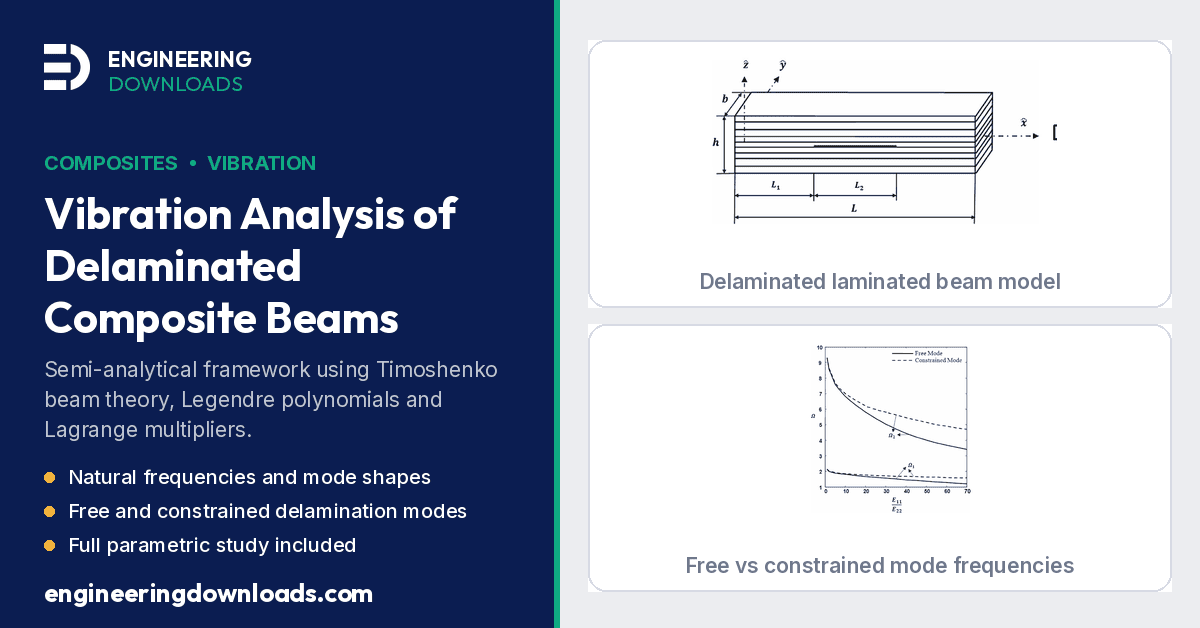
This model treats the delaminated beam as four connected sub-beams. Continuity and compatibility at the delamination interfaces are enforced using Lagrange multipliers, and the displacement fields are expanded with Legendre polynomials.
The formulation accounts for effects that are normally left out:
Because all three material couplings are included together with shear and rotary effects, the model works for generally laminated beams, not just symmetric or cross-ply layups.
Paper abstract:
A rather new semi-analytical method towards investigating the free vibration analysis of generally lam inated composite beam (LCB) with a delamination is presented. For the first time the combined effects of material couplings (bending–tension, bending–twist, and tension–twist couplings) with the effects of shear deformation, rotary inertia and Poisson’s effect are taken into account. The semi-analytical solution
for the natural frequencies and mode shapes are presented by incorporating the constraint conditions using the method of Lagrange multipliers. To verify the validity and the accuracy of the obtained results, they were compared with the results from other available references. Very good agreements were observed. Furthermore, the effects of some parameters such as slenderness ratio, the rotary inertia, the
shear deformation, material anisotropy, ply configuration, and delamination parameters on the dynamic response of the delaminated beam are examined.
The formulation is implemented in MATLAB. You need a working knowledge of laminated composite theory, Timoshenko beam theory, and basic structural dynamics. No commercial FE licence is required to run it.
Deriving and coding this formulation from scratch typically takes several weeks, and most of that time goes into debugging the constraint conditions at the delamination front. This gives you a working starting point that you can extend toward multiple delaminations, different beam theories, or forced vibration.
The code is modular, so adapting it to your own layup and boundary conditions is straightforward.
Based on the methodology published in: Kargarnovin M.H., Ahmadian M.T., Jafari-Talookolaei R.A., Abedi M., Semi-analytical solution for the free vibration analysis of generally laminated composite Timoshenko beams with single delamination, Composites: Part B, Vol. 45, 2013, pp. 587–600.
Every purchase includes technical support from our team. If you need the model extended to your own case, or you want help writing the validation section of your paper, contact us through our consultation and project services. If your parametric study is heavy, our HPC rental starts from EUR 5 per week.
Not satisfied with the product? We refund it.
Need more than the files?
There are two ways we can help. Book a one hour online consultation if you want to talk a problem through with a CAE engineer, using the checkbox in the order box. Order a project if you need a full simulation built for you, delivered to an agreed scope, price and deadline under a written contract.
We work on FEA and CFD for engineers, researchers and companies. Order your project, or message us on WhatsApp for a quick reply.
Other packages engineers working on this topic also download.
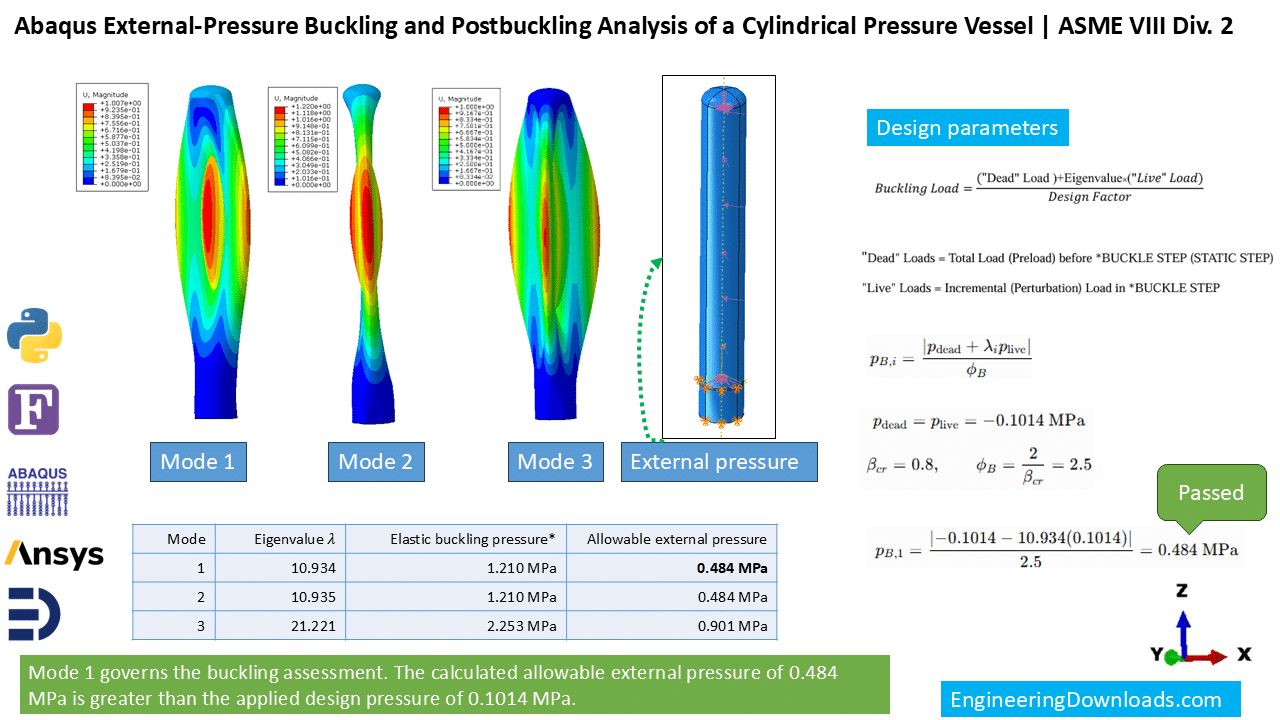 Abaqus External-Pressure Buckling of a Cylindrical Pressure Vessel: Eigenvalue and Static Riks Analysis
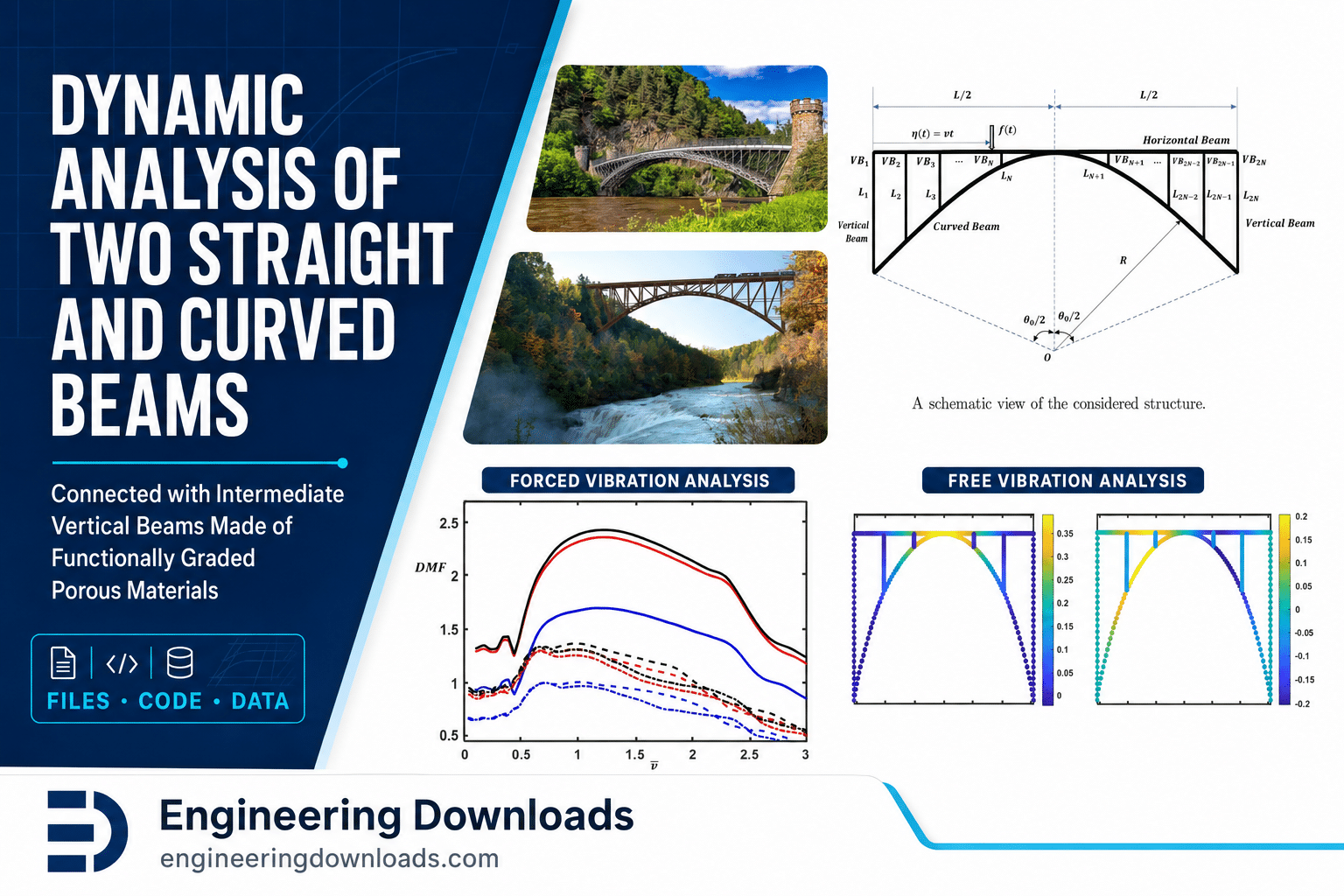 Dynamic Analysis of Functionally Graded Porous Straight and Curved Beams – Files, Code and Data
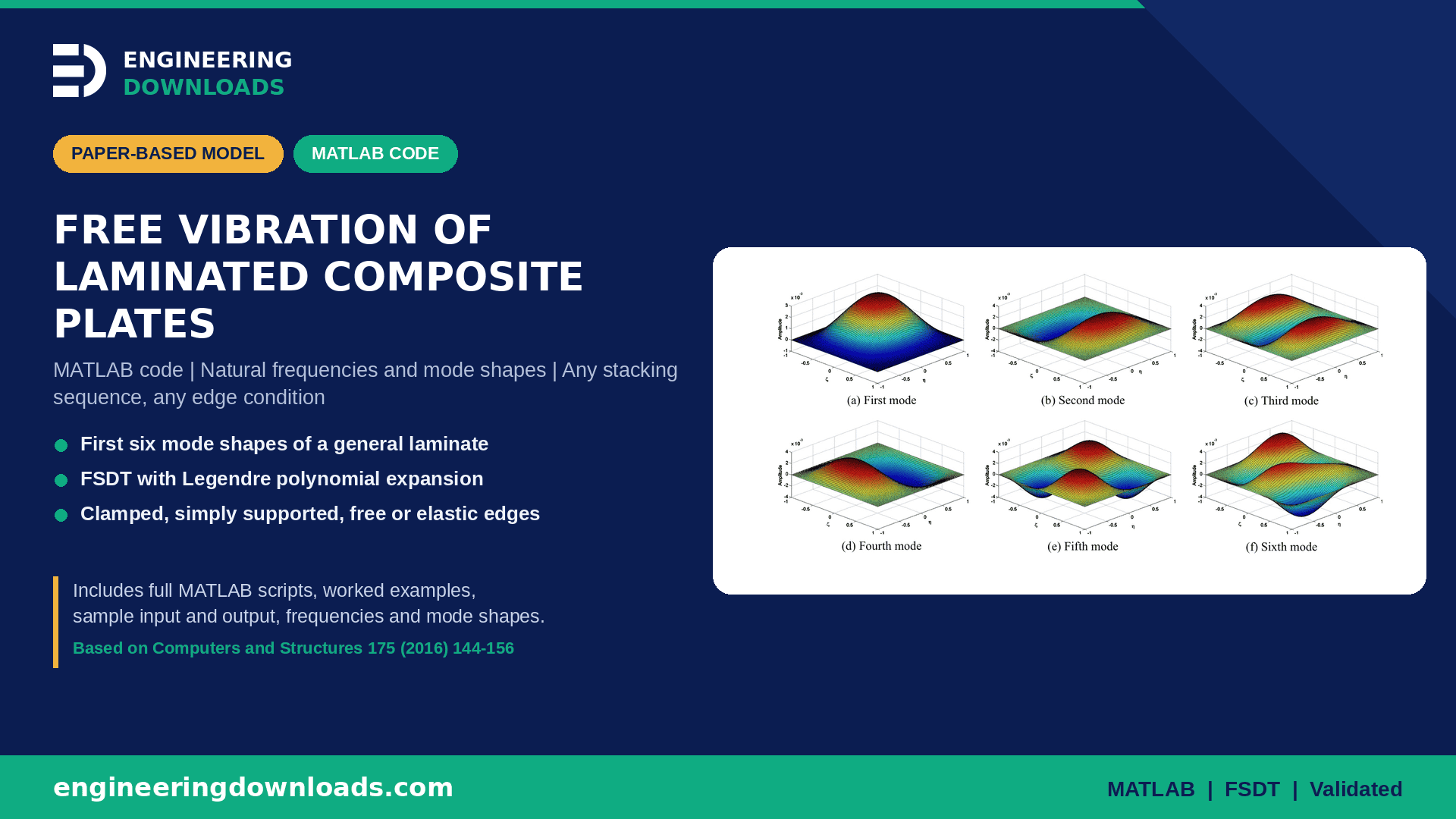 Free Vibration Analysis of Laminated Composite Plates in MATLAB – General Stacking Sequences and Elastic Edge Restraints (Paper-Based Code)
 Seismic Response of a Steel Building in Abaqus: Nonlinear Dynamic Analysis with Beam Elements
 Vibration in functionally graded material circular cylindrical and testing its validity
 Abaqus Verified Training Pack: Composite Structural Analysis
 Abaqus Rotor Kit Unbalance Response: Two-Disc Shaft Model, Natural Frequencies and Campbell Diagram€129,00
 MATLAB Code for Finite Element analysis of Pipes: Free Vibration Analysis and Validation

Need a full custom project? See the options below.

€129,00

€179,00

€149,00

€119,00

€129,00

€149,00
See more
Want to receive push notifications for all major on-site activities?