Need a full custom project? See the options below.
Need a full custom project? See the options below.
Papers abstract:
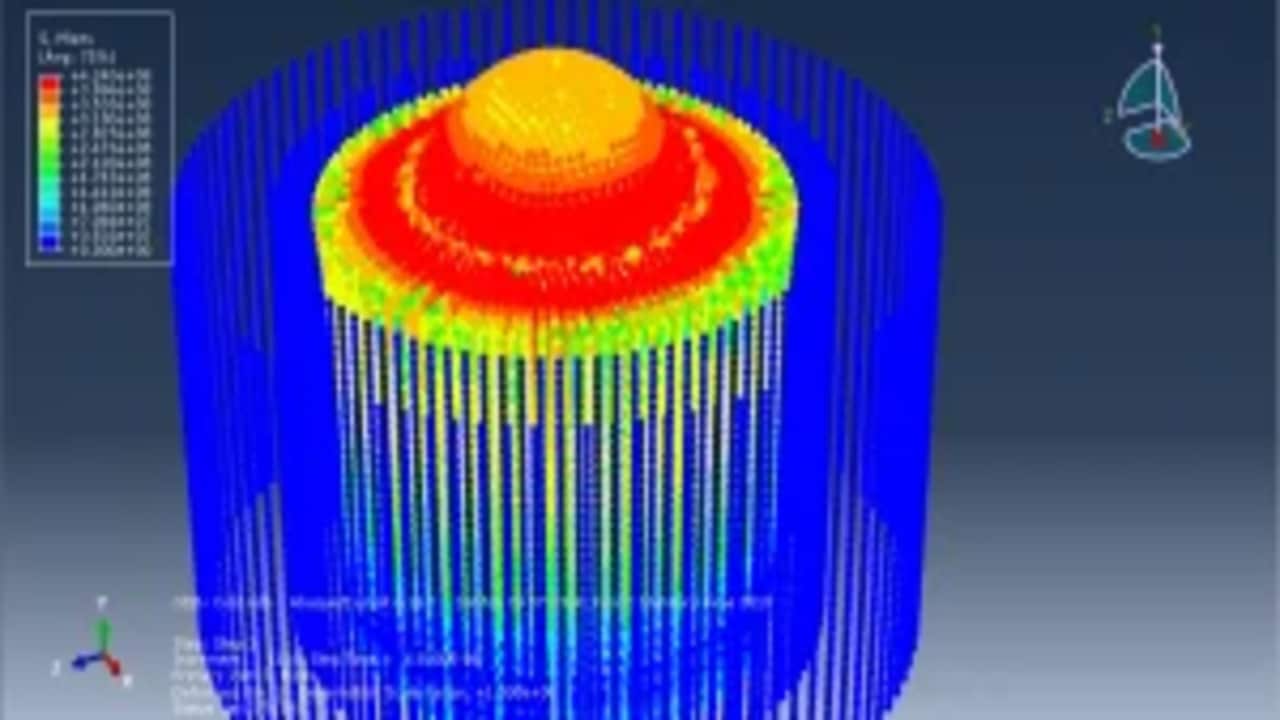
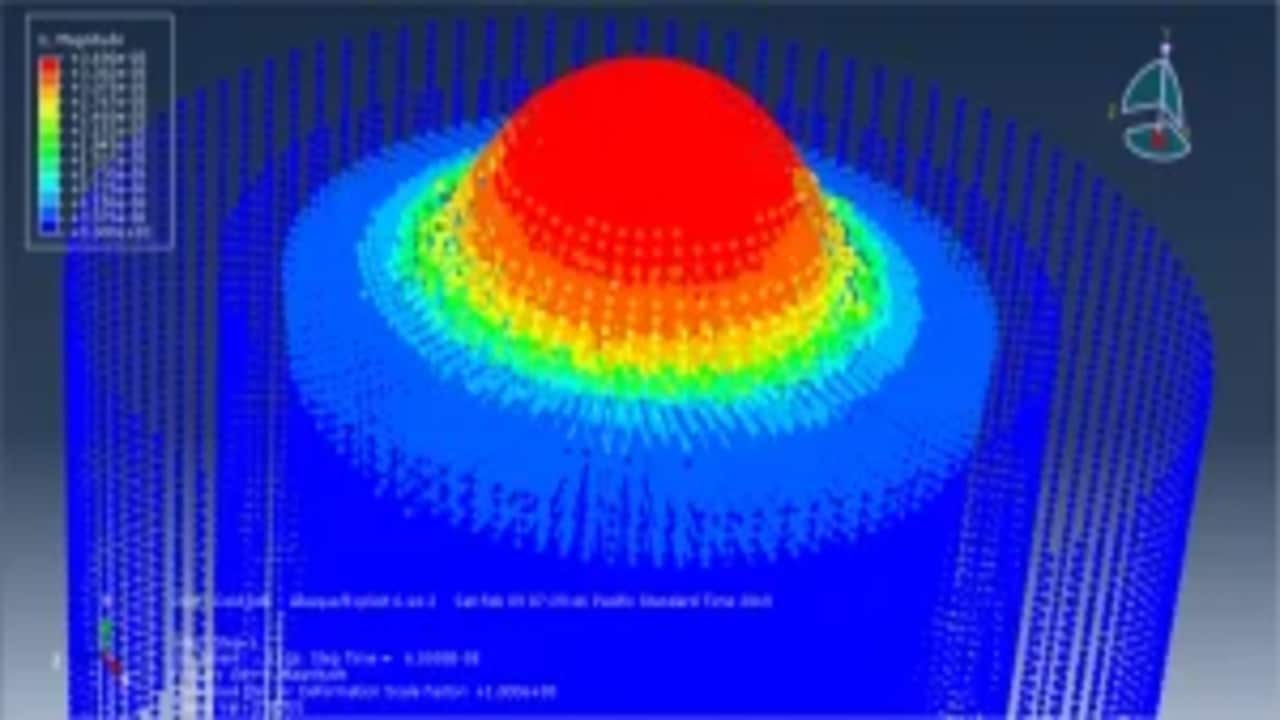
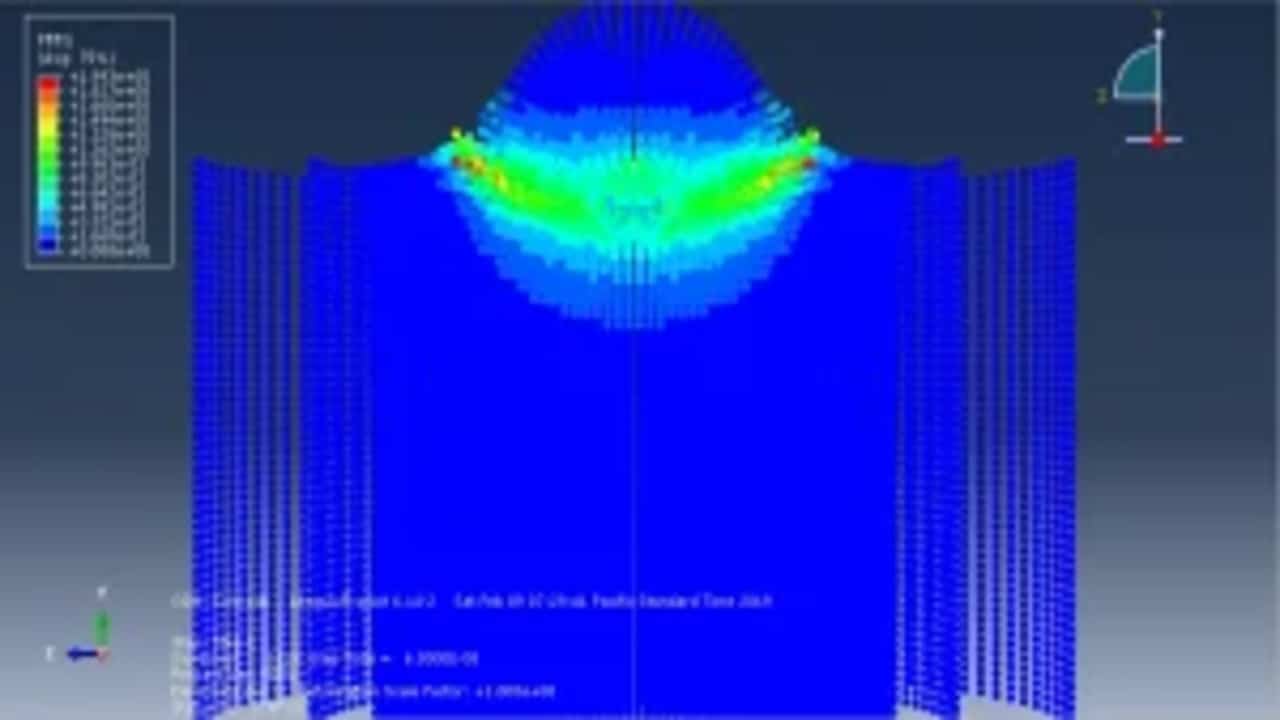
Cold spray is an emerging solid-state coating technique that enables material deposition without melting. This study simulates the cold spray particle deposition process by analyzing the high-velocity impact of spherical particles onto a flat substrate under various conditions. A novel aspect of this work is the application of the Coupled Eulerian–Lagrangian (CEL) numerical method to effectively capture the high-strain rate deformation behavior during impact. The simulations revealed a compressive stress zone at the particle–substrate interface, driven by intense plastic deformation. Due to extremely high contact pressures (around 1 GPa) and brief contact durations (approximately 40 nanoseconds), the plastic deformation was confined to a thin region—just a few micrometers deep—at the base of the particle and the surface of the substrate. The study conducted a parametric investigation into key influencing factors such as impact velocity, initial particle temperature, friction coefficient, and combinations of particle and substrate materials. It was found that increasing impact velocity raised kinetic energy, leading to greater deformation and higher substrate temperatures. The initial particle temperature had a more pronounced effect on the plastic strain than on substrate heating. Friction contributed minimally to temperature rise and only slightly affected plastic strain. Simulations of four material pairings (Cu/Cu, Al/Al, Cu/Al, and Al/Cu) demonstrated that the particle material significantly influenced the deposition behavior more than the substrate. In particular, copper particles, due to their higher density and kinetic energy, enhanced both the contact area and bonding effectiveness. Overall, among the numerical methods evaluated—including Lagrangian, ALE, and SPH—the CEL approach proved to be the most robust and accurate for modeling the extreme deformation conditions typical in cold spray deposition.
Product Overview:
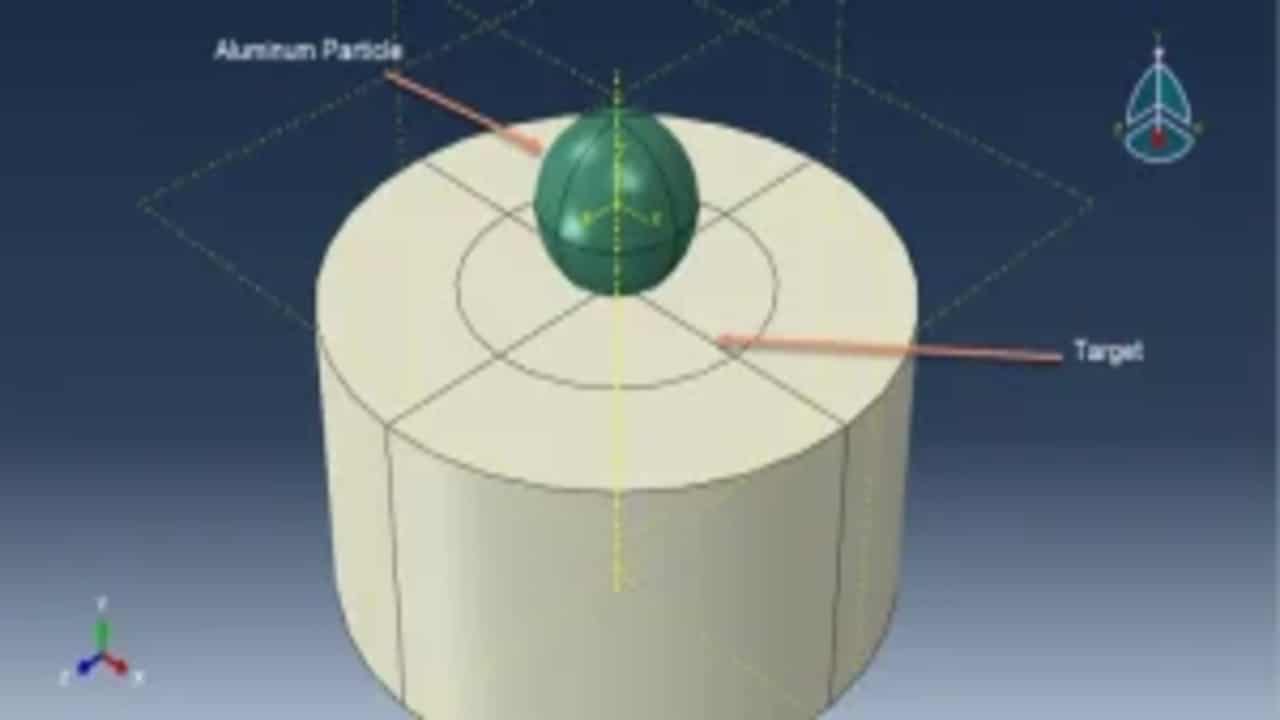
This simulation tutorial reproduces the single particle impact scenario in cold spray deposition, analyzing plastic deformation and thermal effects using Abaqus. It is designed for researchers and engineers interested in high-velocity solid-state coating processes. Key simulation steps include:
In this tutorial, cold spray particle impacts on metallic substrates are simulated, according to data from the work of Jing Xie et al.
Need more than the files?
There are two ways we can help. Book a one hour online consultation if you want to talk a problem through with a CAE engineer, using the checkbox in the order box. Order a project if you need a full simulation built for you, delivered to an agreed scope, price and deadline under a written contract.
We work on FEA and CFD for engineers, researchers and companies. Order your project, or message us on WhatsApp for a quick reply.
Other packages engineers working on this topic also download.
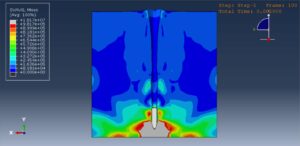 CEL analysis of the large defomation- Bullet penetraion into the soil
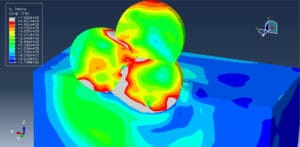 Cold Spray analysis of Depositing Al-Based Metallic Coatings onto PEEK Polymer Substrate
 Cold Spray Simulation Package in Abaqus (9 Models: CEL, ALE and SPH)
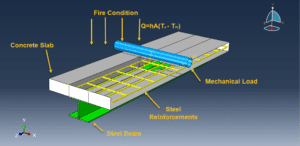 Composite beam analysis under fire conditions-Sequential method
 Simulation an analysis of the Steel-Timber composite beam under fire conditions in Abaqus
 Heat Transfer and Thermal-Structure Package in Abaqus
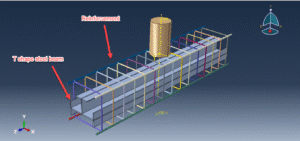 Low and High velocity impact analysis of a T-shaped steel reinforced concrete column
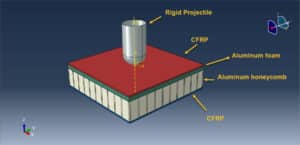 Analysis and simulation of high-velocity impact on a Composite panel(CFRP-Aluminum foam-Aluminum honeycomb-CFRP)

Need a full custom project? See the options below.

€129,00

€179,00

€149,00

€119,00

€129,00

€149,00
See more
Want to receive push notifications for all major on-site activities?