
Need a full custom project? See the options below.
Need a full custom project? See the options below.
Papers abstract:
Nature has evolved ingenious armor designs, like the flexible carapaces of armadillo and boxfish consisting of hexagonal segments connected by collagen fibers, that serve as bio-inspiration for modern ballistic armors. Here, finite element modelling (FEM) is used to analyze the effect of scale geometry and other impact parameters on the ballistic protection provided by a bioinspired segmented ceramic armor. For this purpose, the impact of cylindrical fragment simulating projectiles (FSPs) onto alumina-epoxy non-overlapping scaled plates was simulated. Scale geometrical parameters (size, thickness, and shape) and impact conditions (FSP diameter, speed, location) are varied, and the amount of damage produced in the ceramic tiles and the final residual velocity of the FSP after the impact are evaluated. It is found that segmentation drastically reduces the size of the damaged area without significantly reducing the ballistic protection in centered impacts, provided the tile size is kept over a critical value. Such critical tile size (∼20 mm inscribed diameter for impacts at 650 m/s) is independent of the scale thickness but decreases with projectile speed, although never below the diameter of the projectile. Off-centered impacts reduce ballistic protection and increase the damaged area, but this can be minimized with an appropriate tile shape. In this sense, and in agreement with the natural hexagonal tiles of the boxfish and armadillo, hexagonal scales are found to be optimal, exhibiting a variation of ballistic protection—measured as reduction of projectile speed—with impact location under 12%. Design guidelines for the fabrication of segmented protection systems are proposed in light of these numerical results.
Product Overview:
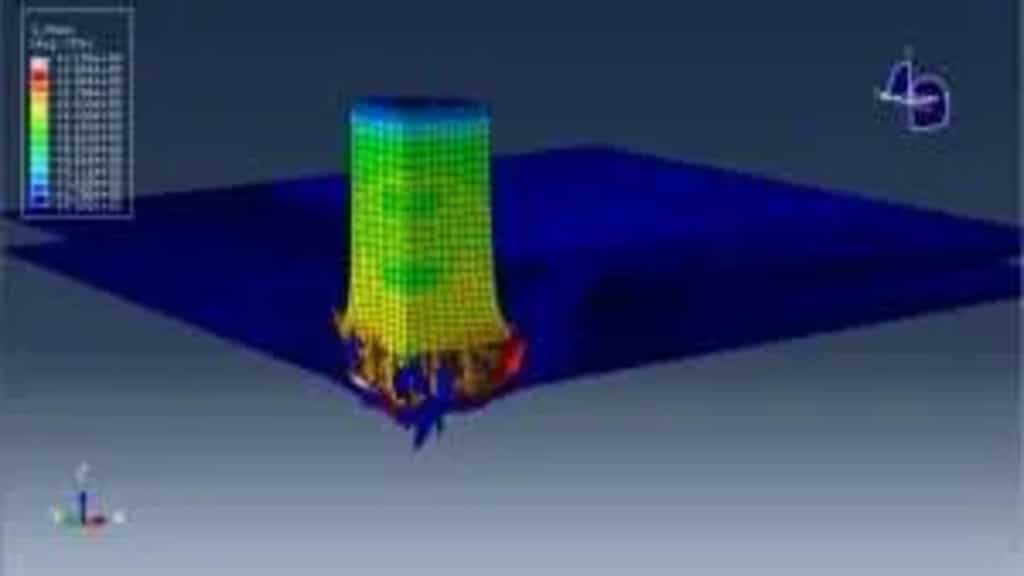
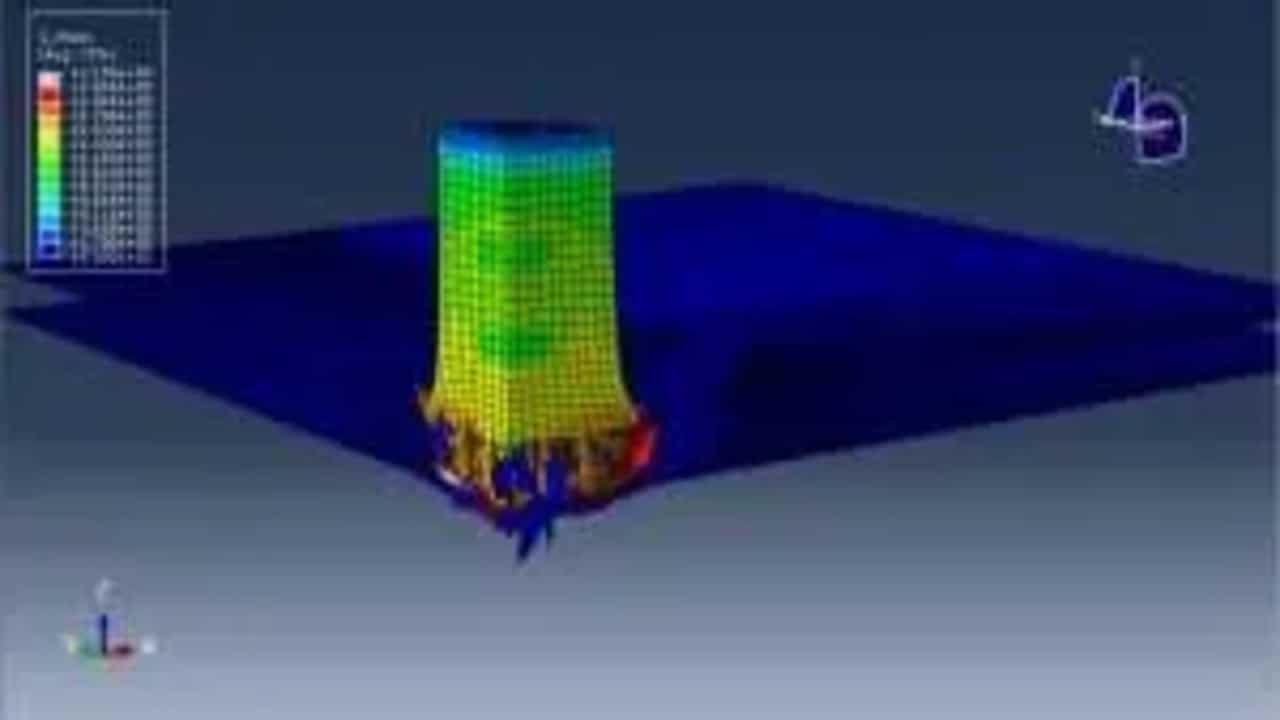
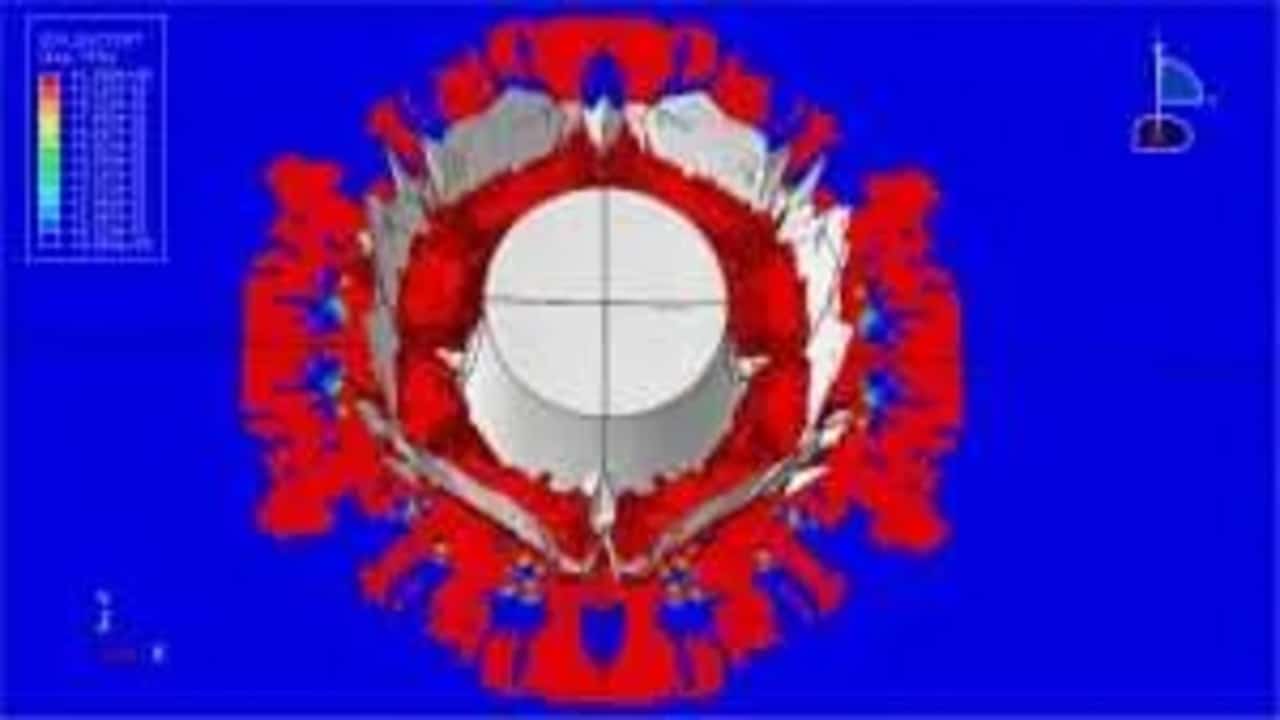
This tutorial provides a step-by-step guide for simulating high-velocity projectile impacts on multi-layered ceramic-epoxy armor, based on the methodologies from the referenced ISI paper. The model focuses on damage confinement and energy dissipation in segmented structures, simplifying the bioinspired hexagonal design into a stacked-layer configuration for instructional clarity. Key simulation steps include:
In this tutorial, ballistic impacts on alumina-epoxy composite armours are simulated, according to data from the work of Miranda et al.
Need more than the files?
There are two ways we can help. Book a one hour online consultation if you want to talk a problem through with a CAE engineer, using the checkbox in the order box. Order a project if you need a full simulation built for you, delivered to an agreed scope, price and deadline under a written contract.
We work on FEA and CFD for engineers, researchers and companies. Order your project, or message us on WhatsApp for a quick reply.
Other packages engineers working on this topic also download.
 Analysis of ceramic plates as shielding for the UHPC panel against projectile penetration
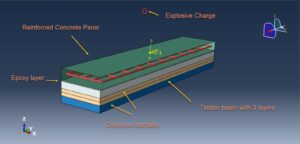 Analysis of adhesively bonded cross-laminated timber-concrete composite under close blast explosion test
 Simulation Pull-Out Test Modeling of GFRP bars bonded with epoxy inside timber
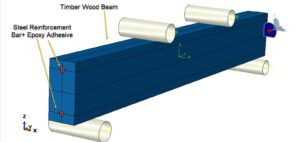 Analysis of reinforcement of timber beam with steel bars and epoxy glue
 Glass analysis package in Abaqus
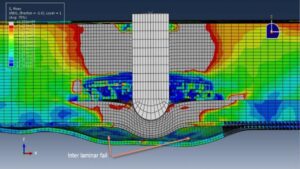 Influence of different back laminate layers on ballistic performance of ceramic composite armor
 CEL analysis of the large defomation- Bullet penetraion into the soil
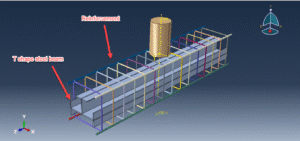 Low and High velocity impact analysis of a T-shaped steel reinforced concrete column

Need a full custom project? See the options below.

€129,00

€179,00

€149,00

€119,00

€129,00

€149,00
See more
Want to receive push notifications for all major on-site activities?