Need a full custom project? See the options below.
Need a full custom project? See the options below.
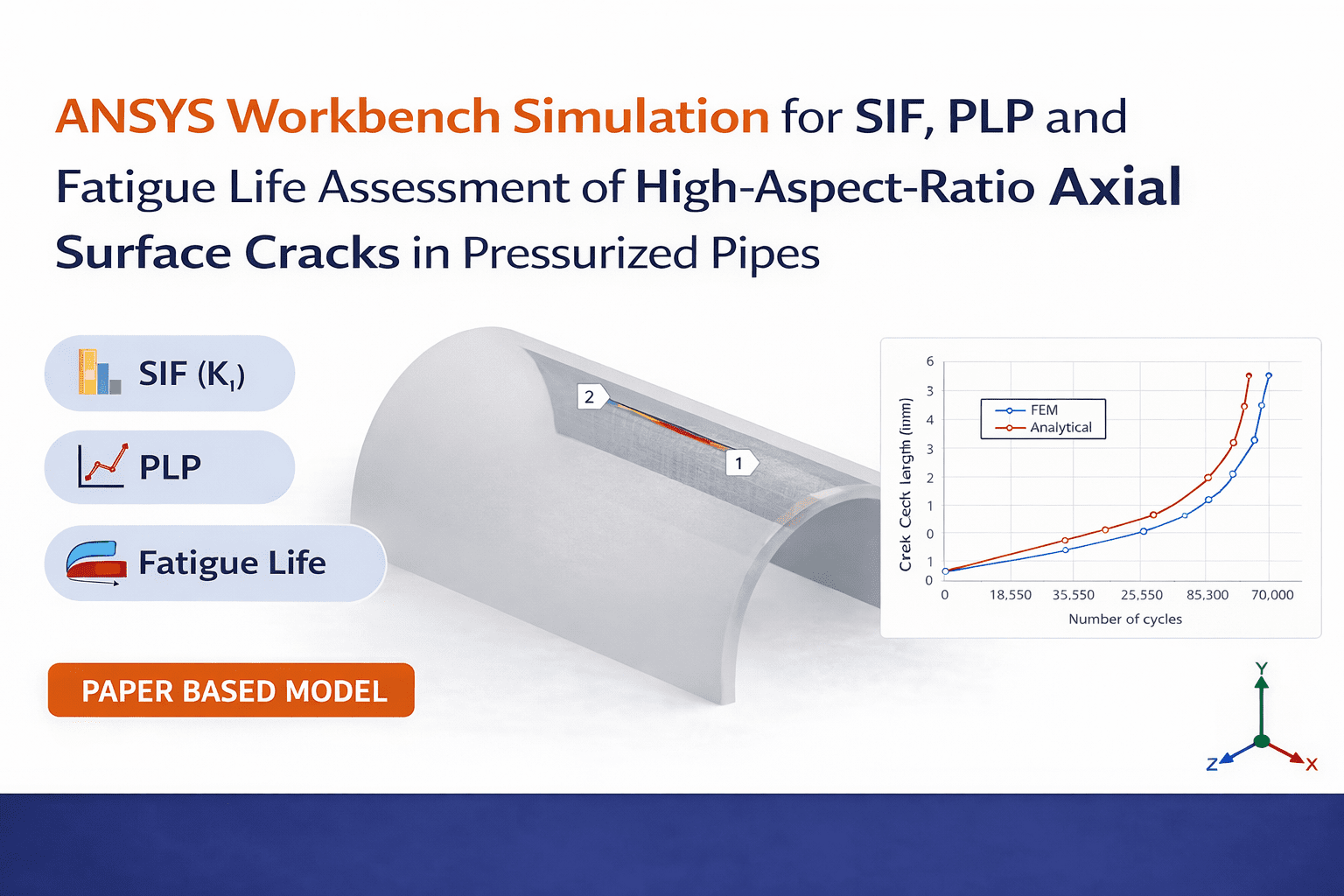
This is a ready-to-use ANSYS Workbench model for calculating the stress intensity factor (SIF) of a long axial surface crack in a pressurized pipe. It also shows how to evaluate the plastic limit pressure (PLP) of the cracked pipe and how these two values feed into fatigue and integrity assessment.
The model reproduces the reference case from a peer-reviewed 2025 paper in Computer Modeling in Engineering & Sciences (CMES). Instead of building the crack geometry, the singular crack-tip mesh and the high-temperature setup from scratch, you open a working project and see a validated workflow step by step.
Prefabricated pipe spools can get damaged during transport. A shallow scratch or gouge along the pipe axis acts as a surface crack, and under daily pressure cycles it can grow until the pipe fails, even when the nominal stress is below the allowable limit.
The difficulty is geometry. This crack is very long and very shallow (half-length c = 50 mm, depth a = 2 mm, so c/a = 25). Most handbook SIF solutions and ASME Section XI tables were developed for moderate aspect ratios. For long, shallow axial cracks, the classic Newman formula overestimates the SIF by up to 30%. That makes FEA the reliable way to get the real crack driving force.
Title: Stress Intensity Factor, Plastic Limit Pressure and Service Life Assessment of a Transportation-Damaged Pipe with a High-Aspect-Ratio Axial Surface Crack
Authors: Božo Damjanović, Pejo Konjatić, Marko Katinić (University of Slavonski Brod, Croatia)
Journal: Computer Modeling in Engineering & Sciences, 2025, 145(2), 1735–1753
DOI: 10.32604/cmes.2025.072256 (read the paper, open access, CC BY 4.0)
Summary of the study: The paper assesses a steam power plant pipe that was damaged during transportation and then operates at high temperature under cyclic loading (22,000 operational cycles, two charge and discharge cycles per day). The damage is modeled as a long axial semi-elliptical surface crack. The authors compute the SIF and the plastic limit pressure with FEA in ANSYS Workbench and compare them with analytical solutions. They show that Newman’s original formula overestimates the SIF for this crack shape, and they propose a modified magnification factor (M* = Me, dropping the shell curvature correction) that matches FEA within about 5% for aspect ratios c/a = 25 to 70. Fatigue crack growth is then evaluated with the Paris law, analytically and numerically with ANSYS S.M.A.R.T. crack growth, and the integrity is checked with a Failure Assessment Diagram (FAD) based on the SINTAP/FITNET procedure.
| Software | ANSYS Workbench (Mechanical, fracture tools) |
| Pipe | DN150, wall thickness t = 7.11 mm |
| Material | Austenitic stainless steel A312 TP321H at operating temperature (E = 166,169 MPa, yield 108 MPa, UTS 389 MPa at 427°C) |
| Crack | Axial semi-elliptical surface crack, a = 2 mm, c = 50 mm (c/a = 25) |
| Loading | Internal pressure 2.2 MPa at 420°C, with end-cap compensation force |
| Model | Half-pipe model with a symmetry plane |
| Mesh | Second-order tetrahedral elements, hexahedral singular elements at the crack front (350 elements along the front), about 300,000 elements after mesh sensitivity study |
| Outputs | KI along the crack front, von Mises stress in the ligament, plastic limit pressure |
| Parameter | Analytical | FEA (ANSYS) | Difference |
|---|---|---|---|
| Stress intensity factor KI | 85.375 MPa√mm | 85.195 MPa√mm | 0.21% |
| Plastic limit pressure | 8.38 MPa | 8.75 MPa | 4.23% |
| Cycles until fracture (Paris law) | 142,450 | 151,080 | 5.71% |
In the paper, the pipe stays far beyond the required 22,000 cycles, and the FAD shows at which crack depth the assessment point crosses into the unacceptable region. The model you download gives the SIF and PLP values for the reference crack, so you can check your own setup against these published numbers.
The goal of this package is to save you setup time and show a validated workflow you can learn from and adapt to your own crack and pipe dimensions.
The paper used ANSYS Workbench 2022. Use the same release or a newer one to open the project.
No. It includes the single reference crack (a = 2 mm, c = 50 mm). The other depths discussed in the paper (a/t = 0.1 to 0.25) are shown as published results, but you can change the crack dimensions in the model yourself.
The FEA value of 85.195 MPa√mm differs by only 0.21% from the analytical solution with the modified magnification factor, and the mesh study shows a 0.05% change between medium and fine meshes.
The model gives the two main inputs for a FAD-based assessment: the stress intensity factor and the plastic limit pressure. It is a learning and validation reference, not a certified assessment for a specific plant component.
For very long and shallow axial cracks, the shell curvature correction in Newman’s formula double-counts curvature effects. In the paper, this led to SIF errors of 13% to 30%. FEA, or the modified factor validated against it, gives much closer values.
Need more than the files?
There are two ways we can help. Book a one hour online consultation if you want to talk a problem through with a CAE engineer, using the checkbox in the order box. Order a project if you need a full simulation built for you, delivered to an agreed scope, price and deadline under a written contract.
We work on FEA and CFD for engineers, researchers and companies. Order your project, or message us on WhatsApp for a quick reply.
Other packages engineers working on this topic also download.
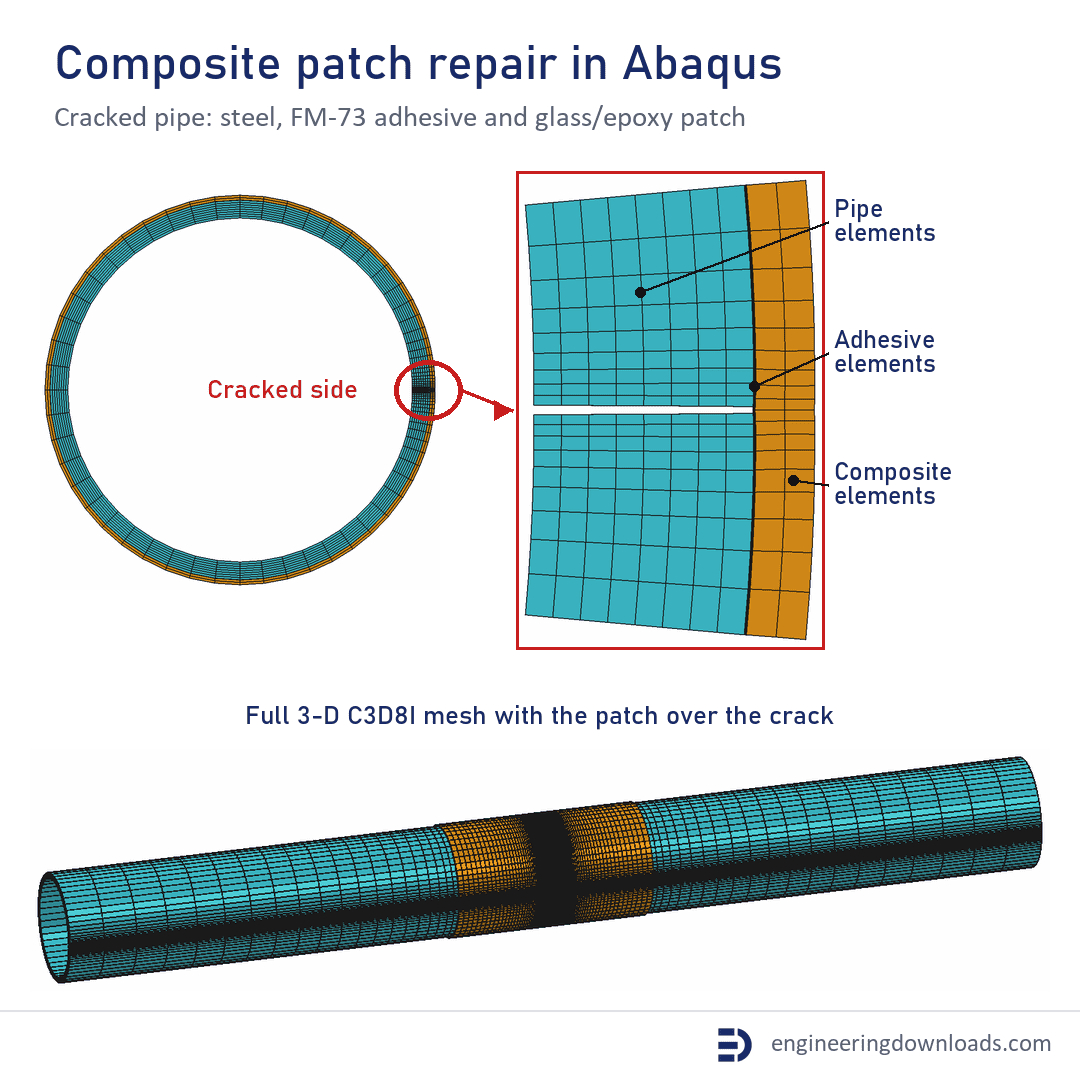 Composite Patch Repair of a Cracked Pipe in Abaqus: Fatigue Crack Growth under Cyclic Pressure
 Compact Tension (CT) Specimen: Validated Abaqus Stress Intensity Factor Model vs ASTM E647 (2D + 3D)€99,00
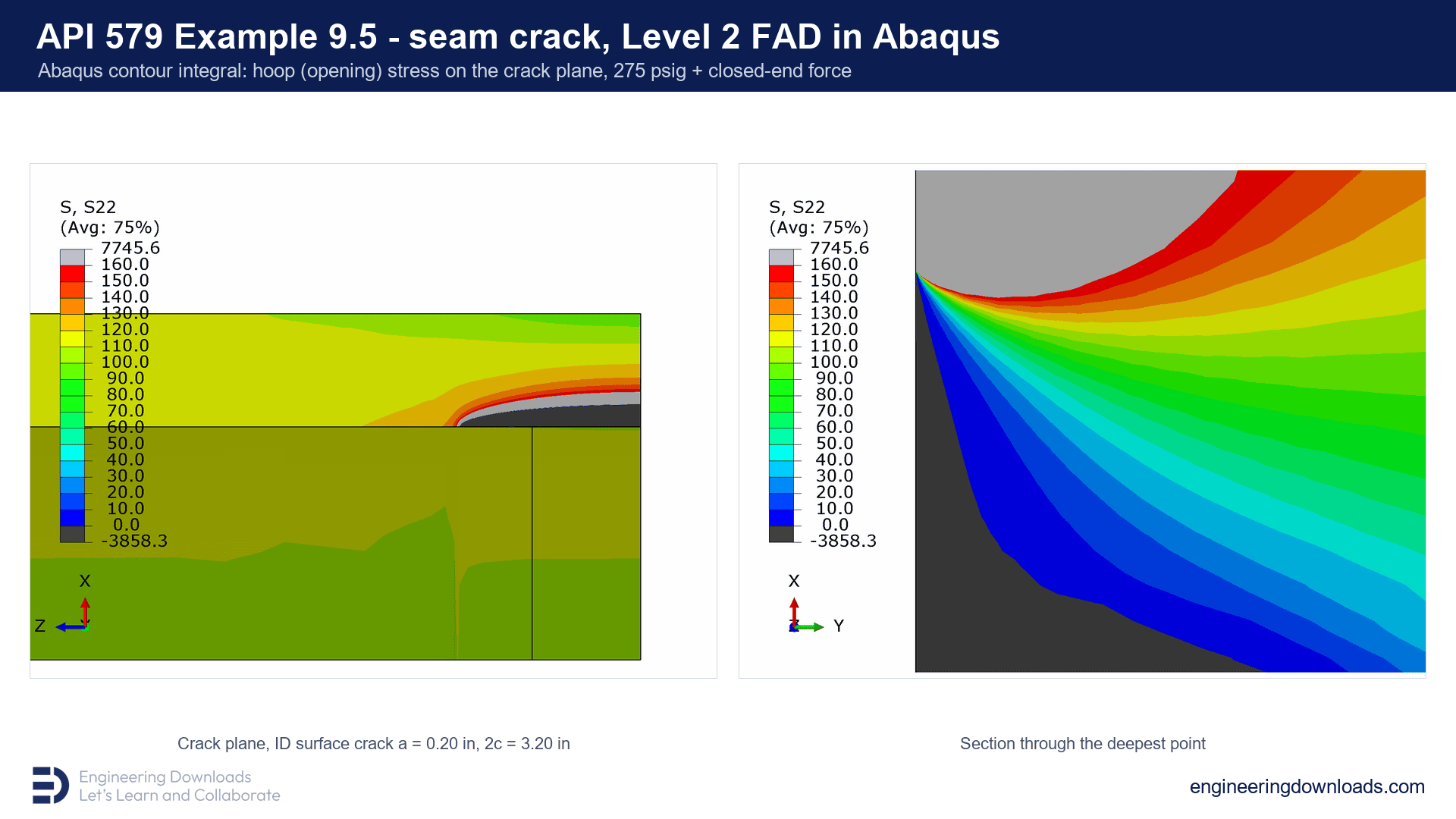 API 579 Example 9.5 in Abaqus: Seam Crack Level 2 FAD with 3D Contour Integral€99,00
 API 579 Example 9.7 in Abaqus: Girth Weld Crack with Weld Residual Stress, Level 2 FAD€129,00
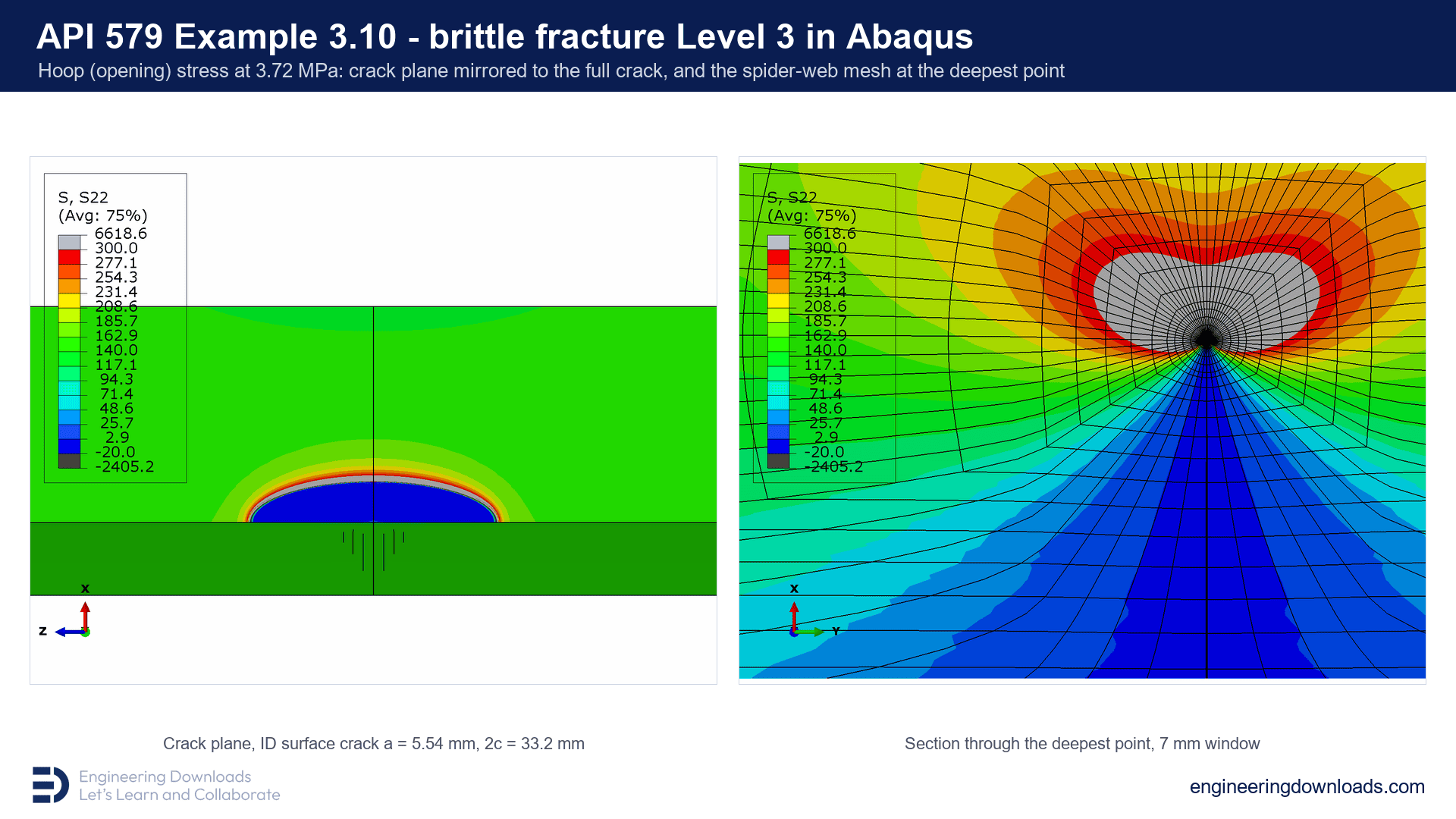 API 579 Example 3.10 in Abaqus: Brittle Fracture Level 3, Demethanizer Thermal Shock€139,00
 Fatigue and Cyclic Loading Package
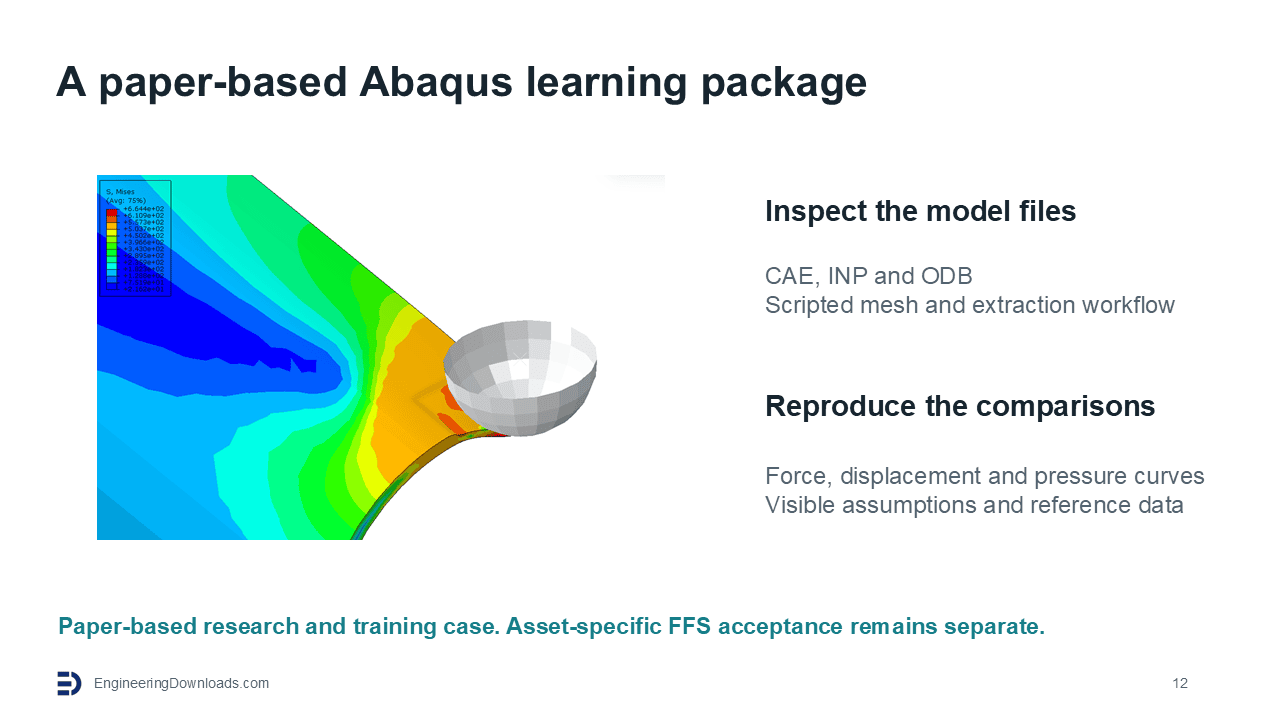 Pipeline Dent and Corrosion Analysis in Abaqus: Level 3 FFS Modelling
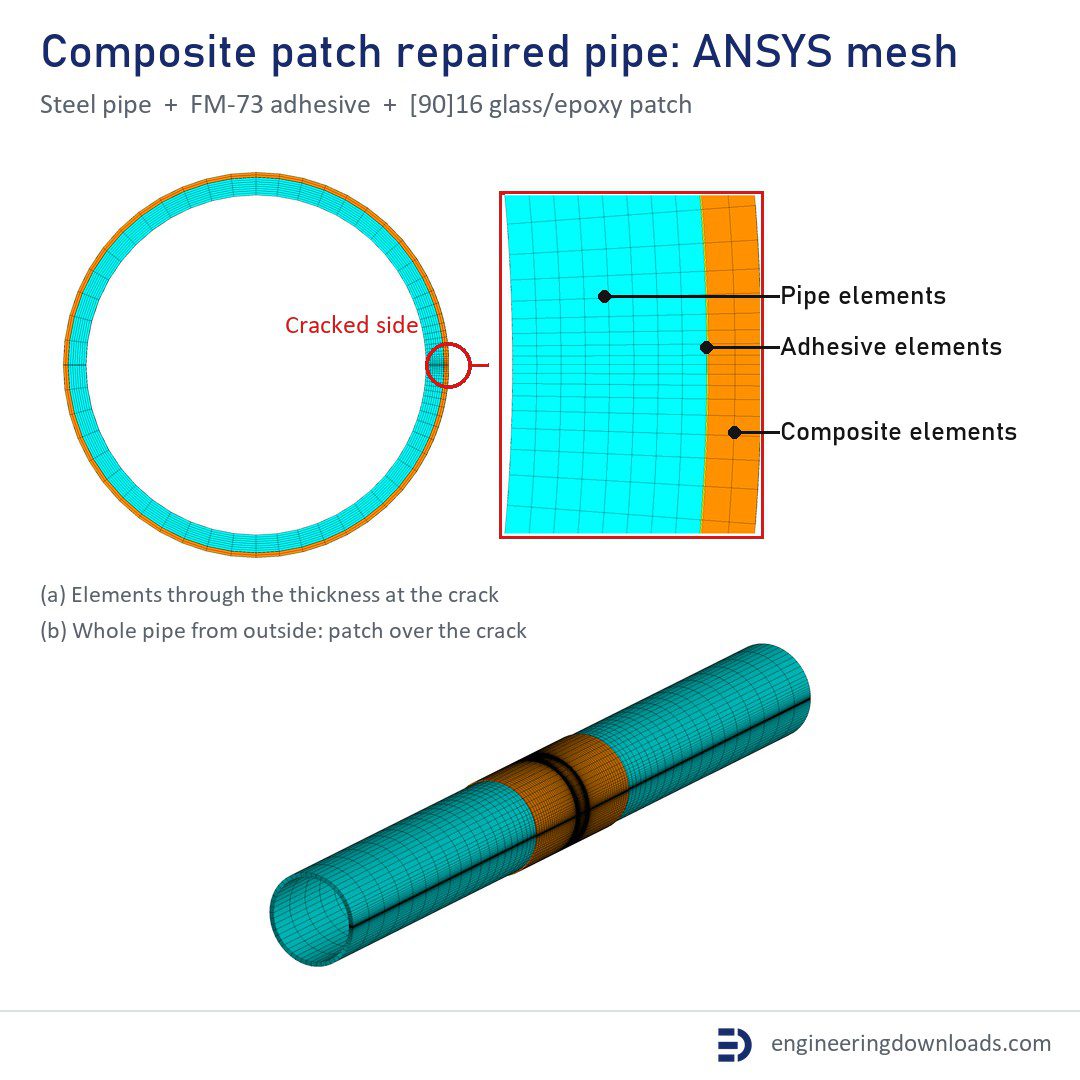 Composite Patch Repair of a Cracked Pipe in ANSYS: Fatigue Crack Growth under Cyclic Pressure

Need a full custom project? See the options below.

€129,00

€179,00

€149,00

€119,00

€129,00

€149,00
See more
Want to receive push notifications for all major on-site activities?



