Need a full custom project? See the options below.
Need a full custom project? See the options below.
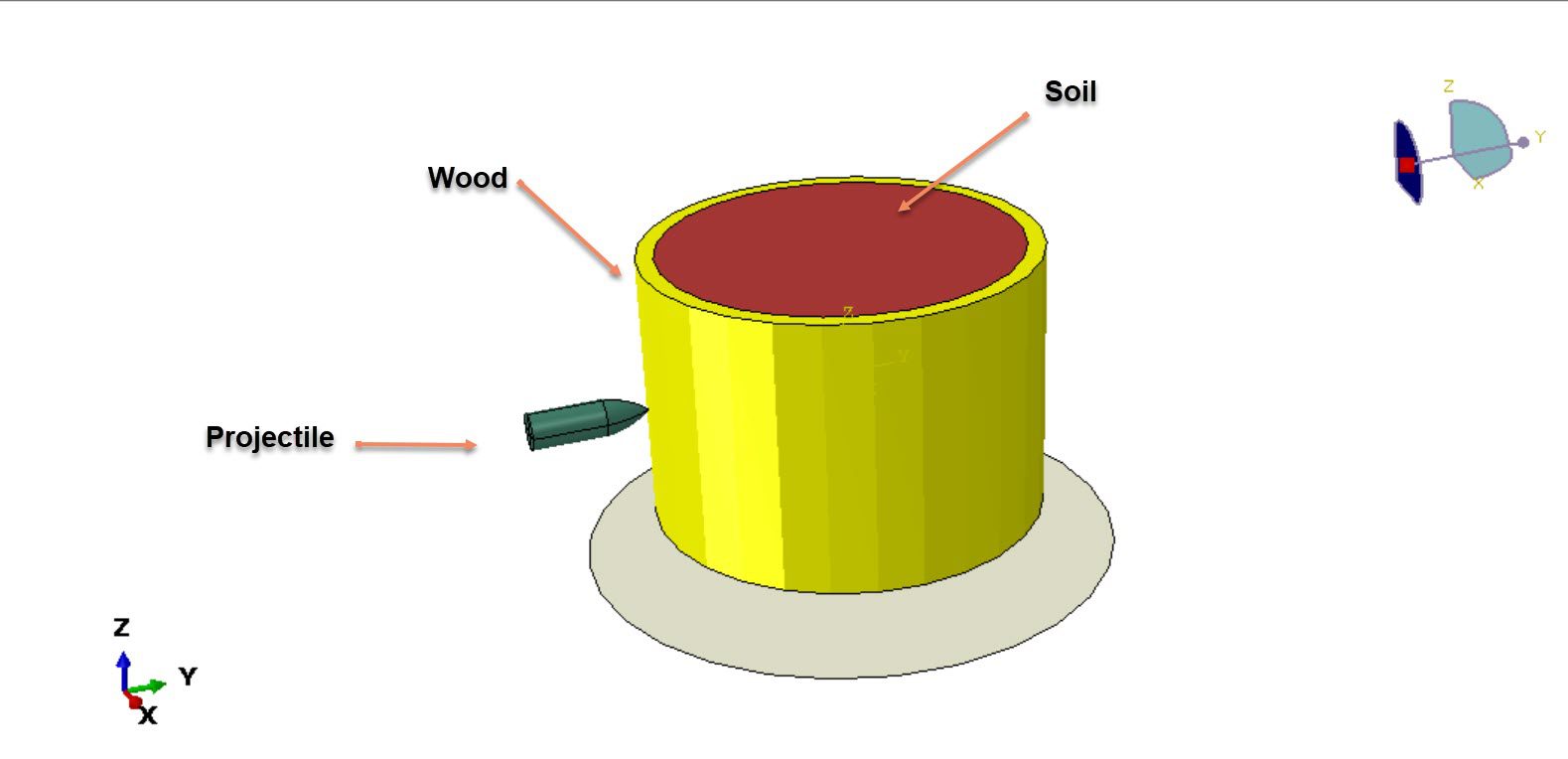
The study of high-velocity projectile impact on protective and containment structures is of significant importance in defense, civil protection, and structural safety engineering. Understanding the interaction between a bullet and multi-material targets such as wood and soil is essential for predicting penetration depth, energy dissipation, structural damage, and overall impact resistance. Wooden containers filled with soil are commonly employed in temporary protective barriers, shooting ranges, military fortifications, and blast/ballistic mitigation systems due to their cost-effectiveness and energy-absorbing capacity.
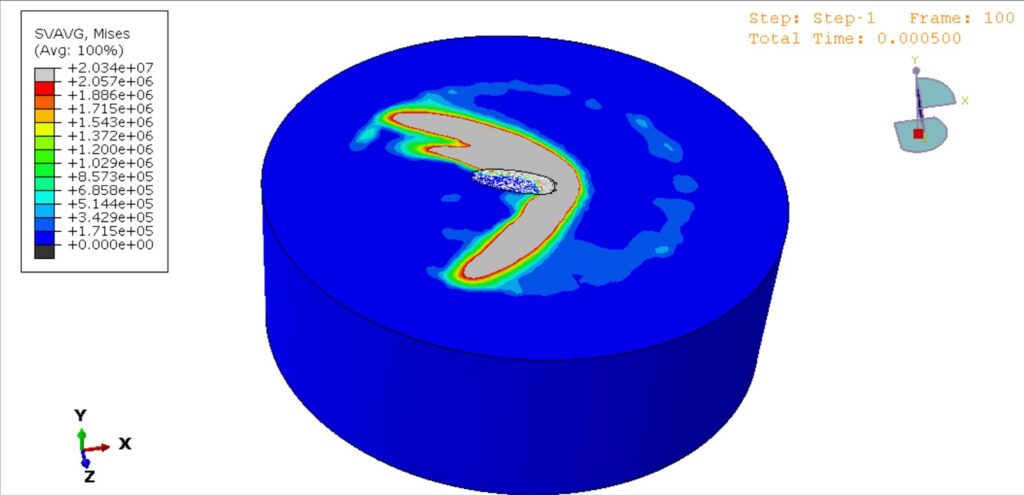
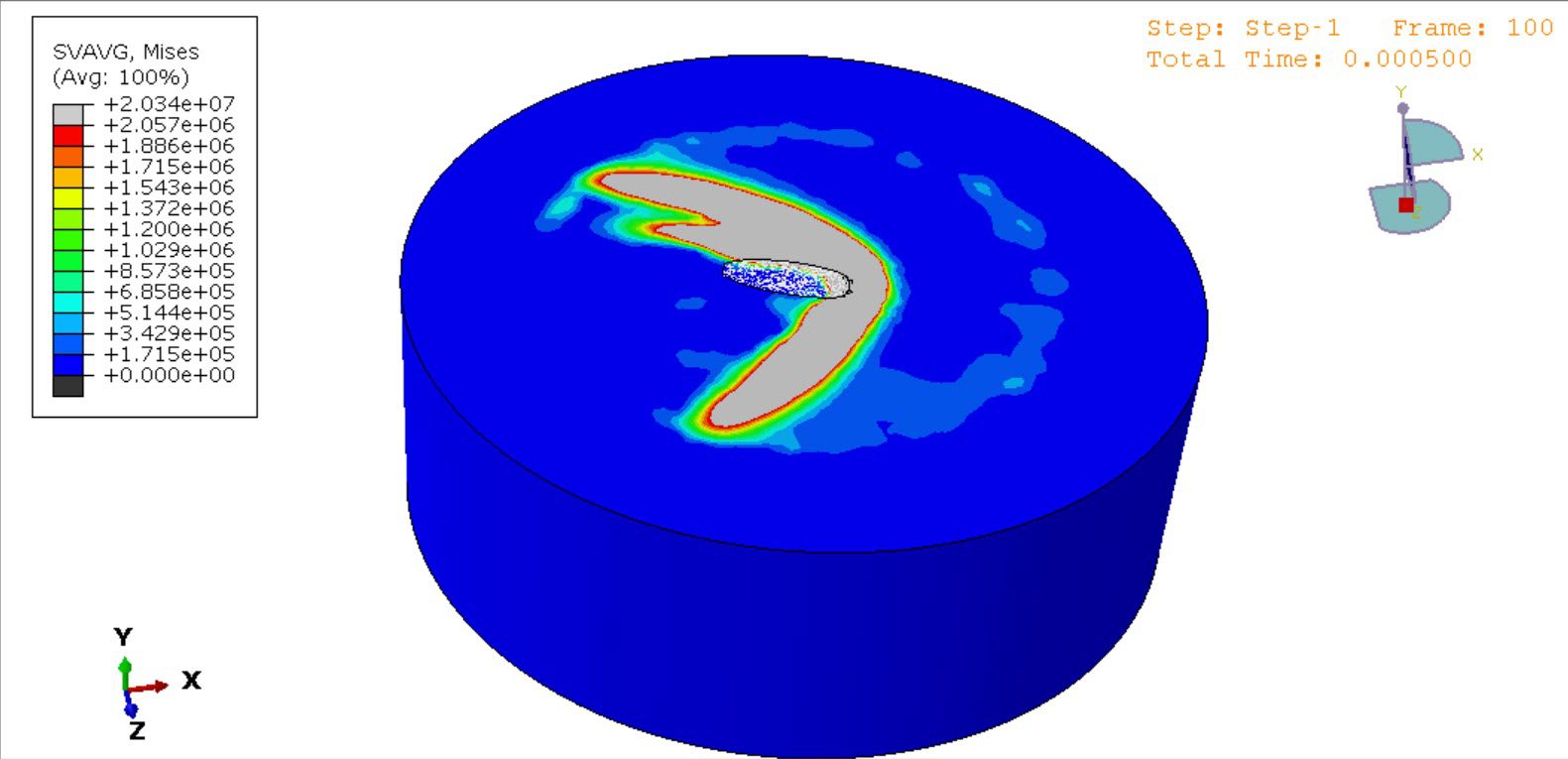
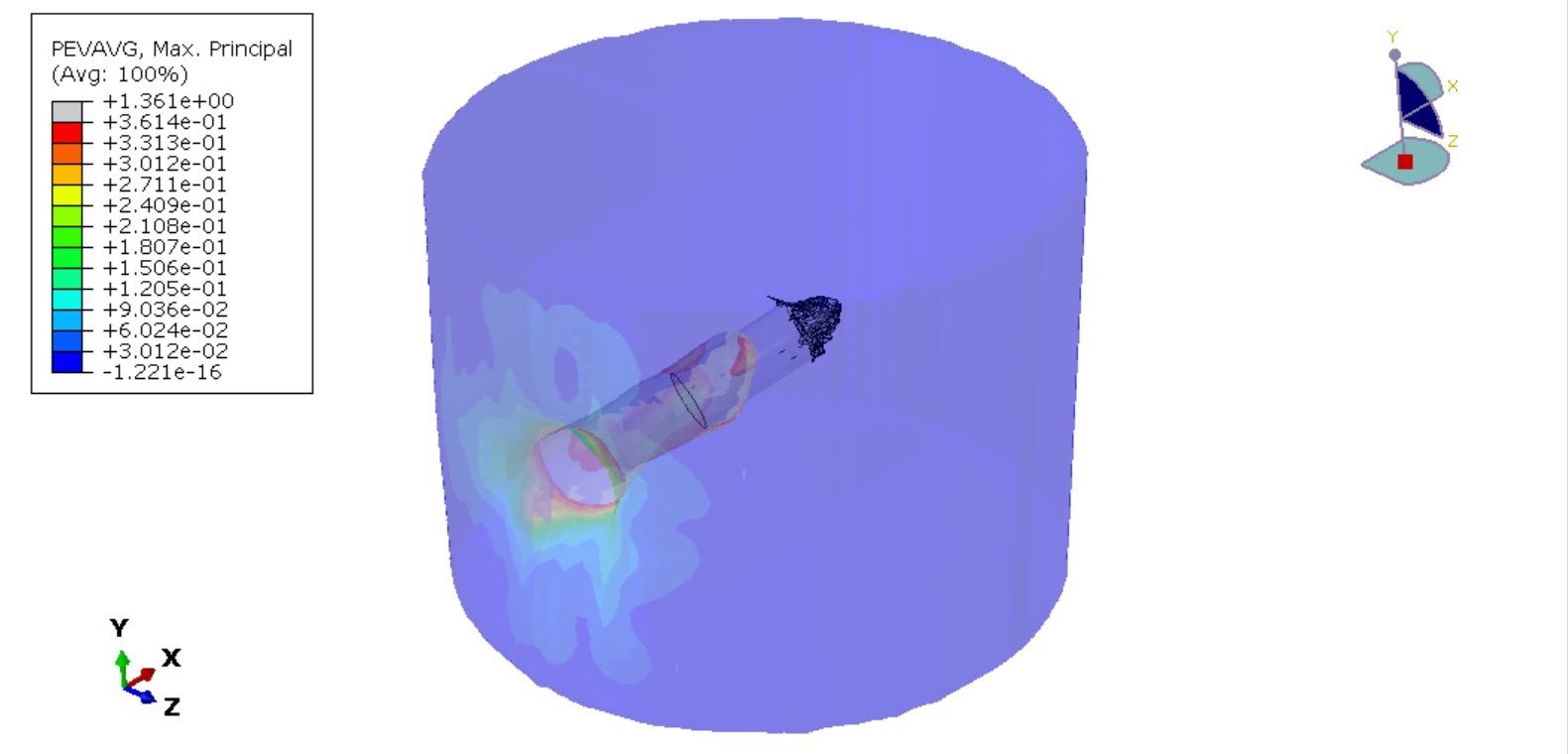
In this study, a finite element–based impact analysis was conducted using ABAQUS/Explicit, which is well-suited for solving high-speed dynamic events involving severe contact and material nonlinearity. A coupled Eulerian–Lagrangian (CEL) modeling approach was adopted to effectively capture the interaction between the deformable projectile, the wooden tank, and the soil fill. The soil domain was modeled using an Eulerian formulation, allowing it to undergo large deformations and flow without excessive mesh distortion. In contrast, the bullet and wooden tank were modeled using a Lagrangian formulation, enabling accurate tracking of structural deformation and damage evolution.
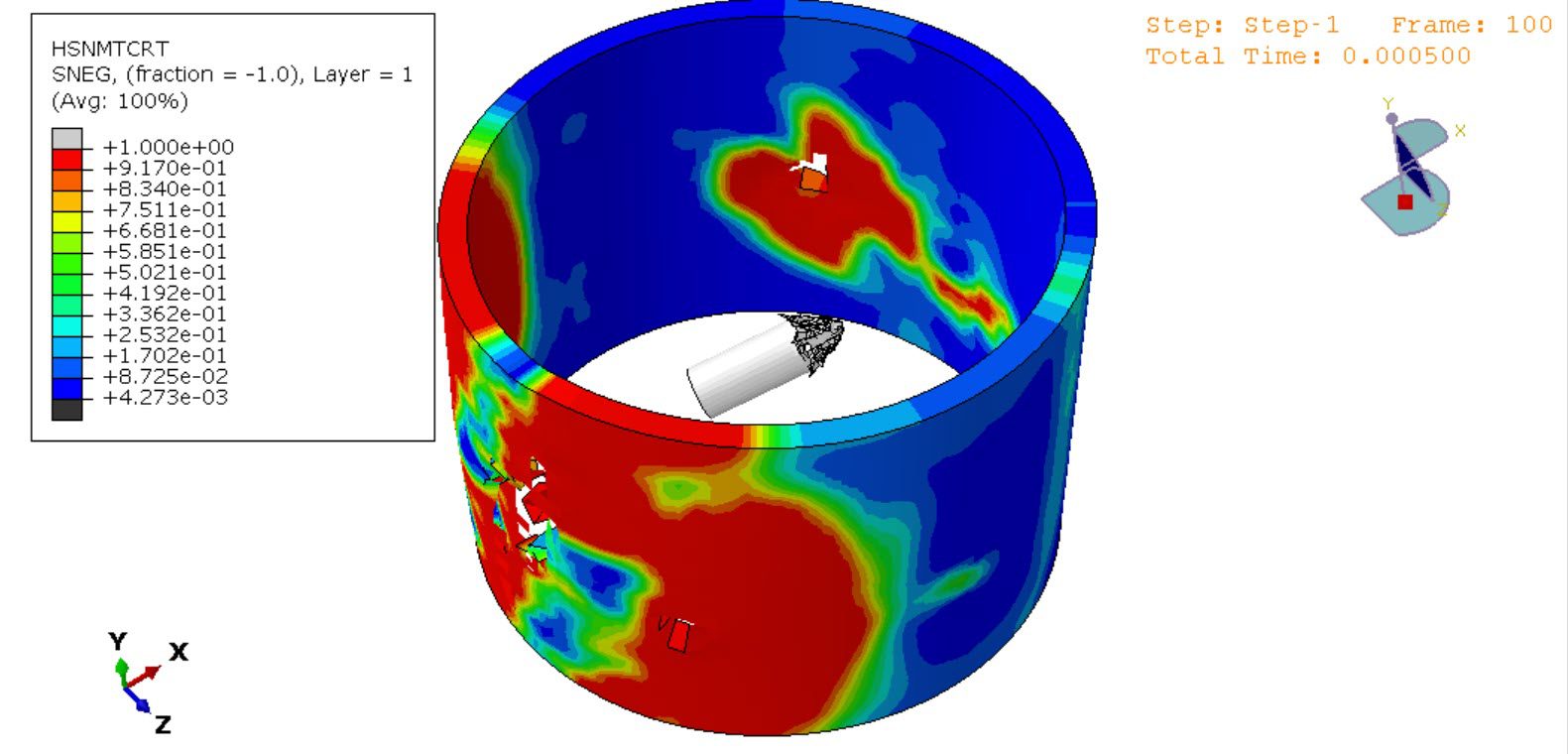
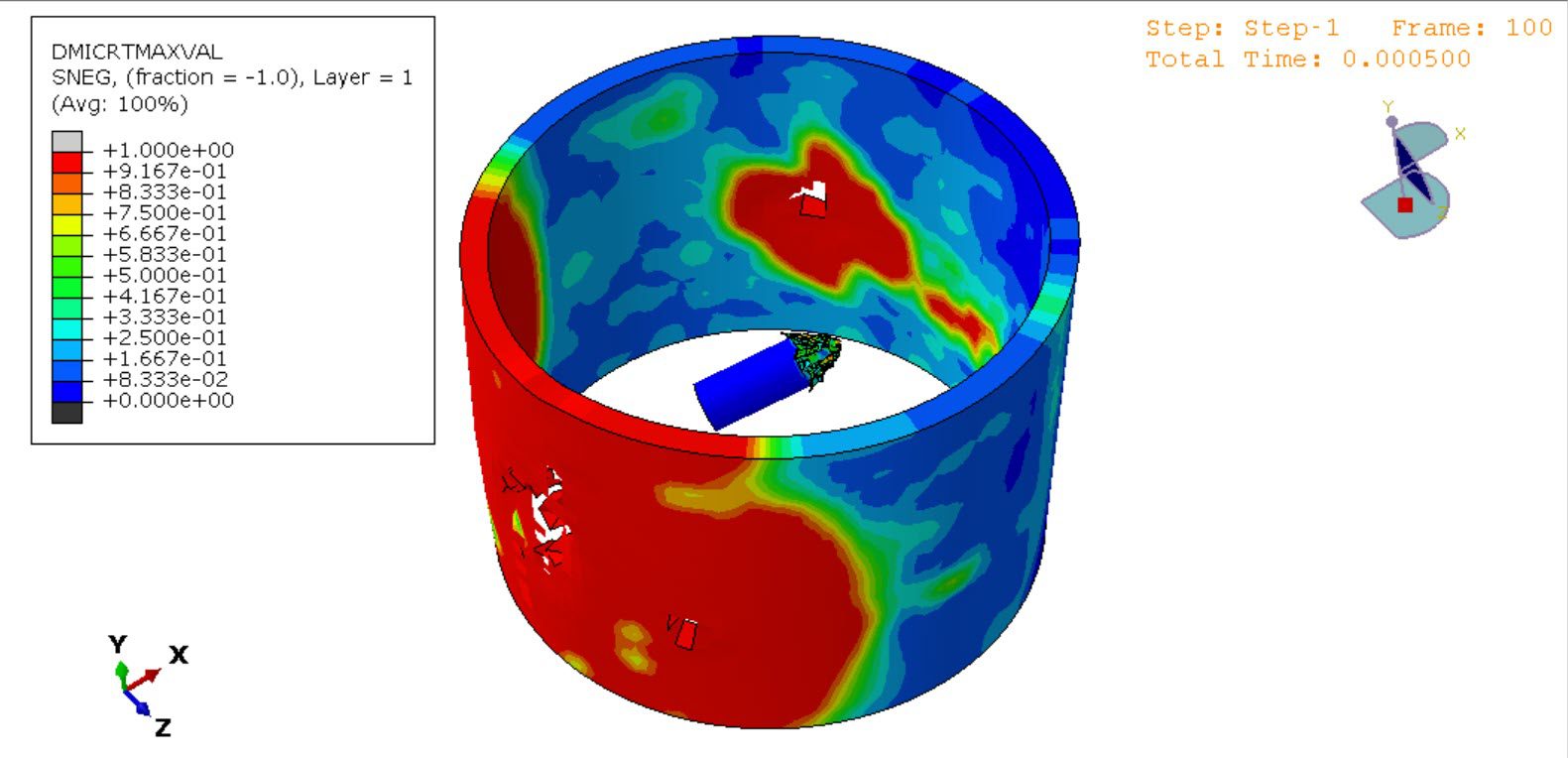
Appropriate constitutive models were implemented to represent the material responses under impact loading. The soil behavior was described using the Mohr–Coulomb plasticity model, which accounts for frictional yielding and pressure-dependent strength characteristics of granular media. The bullet material was modeled with Johnson–Cook plasticity, incorporating strain hardening, strain-rate sensitivity, and thermal softening, along with Johnson–Cook damage to simulate progressive failure and fragmentation. The wooden tank structure was characterized using a Hashin damage model, enabling the prediction of fiber and matrix failure modes under dynamic loading.
An explicit dynamic step was employed to simulate the ballistic impact event, capturing the transient response, stress distribution, penetration mechanics, and damage propagation within the system. The analysis aims to evaluate parameters such as penetration depth, energy absorption, failure patterns in wood, and the role of soil confinement in attenuating projectile velocity.
Overall, this work contributes to a better understanding of multi-material impact resistance and demonstrates the effectiveness of advanced numerical techniques in simulating ballistic interactions involving soil–structure systems.
Need more than the files?
There are two ways we can help. Book a one hour online consultation if you want to talk a problem through with a CAE engineer, using the checkbox in the order box. Order a project if you need a full simulation built for you, delivered to an agreed scope, price and deadline under a written contract.
We work on FEA and CFD for engineers, researchers and companies. Order your project, or message us on WhatsApp for a quick reply.
Other packages engineers working on this topic also download.
 Wood Analysis Package in Abaqus
 Analysis of ceramic UHMWPE armor penetration resistance against ballistic bullet impact
 CEL analysis of the large defomation- Bullet penetraion into the soil
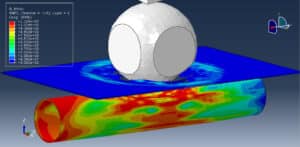 Numerical analysis of the CFRP blanket effect on reducing the deformation of pipelines in soil exposed to the Coupled Eulerian-Lagrangian subsurface explosion
 Analysis of aluminum-wood composite panels under high-velocity impact
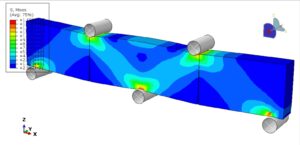 XFEM crack analysis of a timber beam under the five-point bending test
 Cold Spray Simulation Package in Abaqus (9 Models: CEL, ALE and SPH)
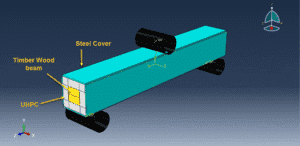 Simulation of Bending Test on a Wood–UHPC–Steel Composite Beam in Abaqus

Need a full custom project? See the options below.

€129,00

€179,00

€149,00

€119,00

€129,00

€149,00
See more
Want to receive push notifications for all major on-site activities?




