Fatigue Life Prediction with fe-safe: Beginner Course (10 Hours)

€280,00 €300,00
Optional extras

Need a full custom project? See the options below.

€280,00 €300,00
Optional extras

Need a full custom project? See the options below.

27 people watching this product now!

Material Includes

  • 10 hours of structured, step-by-step video lessons
  • Example FE models and fe-safe project files to practice (automotive and oil & gas parts)
  • Practical, real-component workflows (not just theory)
  • Lifetime access and updates
  • Certificate of completion

Audience

  • Mechanical, structural, aerospace, automotive, and civil engineers new to fatigue
  • Automotive engineers working on durability of chassis, suspension, brackets, and other components
  • Oil & gas engineers dealing with structural integrity and durability of equipment and piping
  • FEA users (Abaqus / ANSYS) who want to add durability and life prediction to their skill set
  • Design and R&D engineers who need to check whether a component will survive its service life
  • Master's and PhD students working on structural integrity, durability, or simulation
  • Consultants and freelancers who want a marketable, industry-relevant skill

What You Will Learn?

  • Understand why and how metals fail by fatigue, and the limits of each life-prediction method
  • Choose the right fatigue method for your problem
  • Run a stress-life (S-N) fatigue analysis in fe-safe for high-cycle fatigue
  • Apply multiaxial fatigue criteria for components under complex, combined loading
  • Handle variable amplitude loading using cycle counting (rainflow) and damage summation (Miner's rule)
  • Understand the basics of fracture mechanics and crack growth life estimation (Paris law)
  • Import FE results from Abaqus / ANSYS into fe-safe and set up materials, loading, and analysis
  • Read, interpret, and present fatigue results: life contours, damage, and factor of safety
  • Apply these methods to real components, including automotive and oil & gas parts

About Course

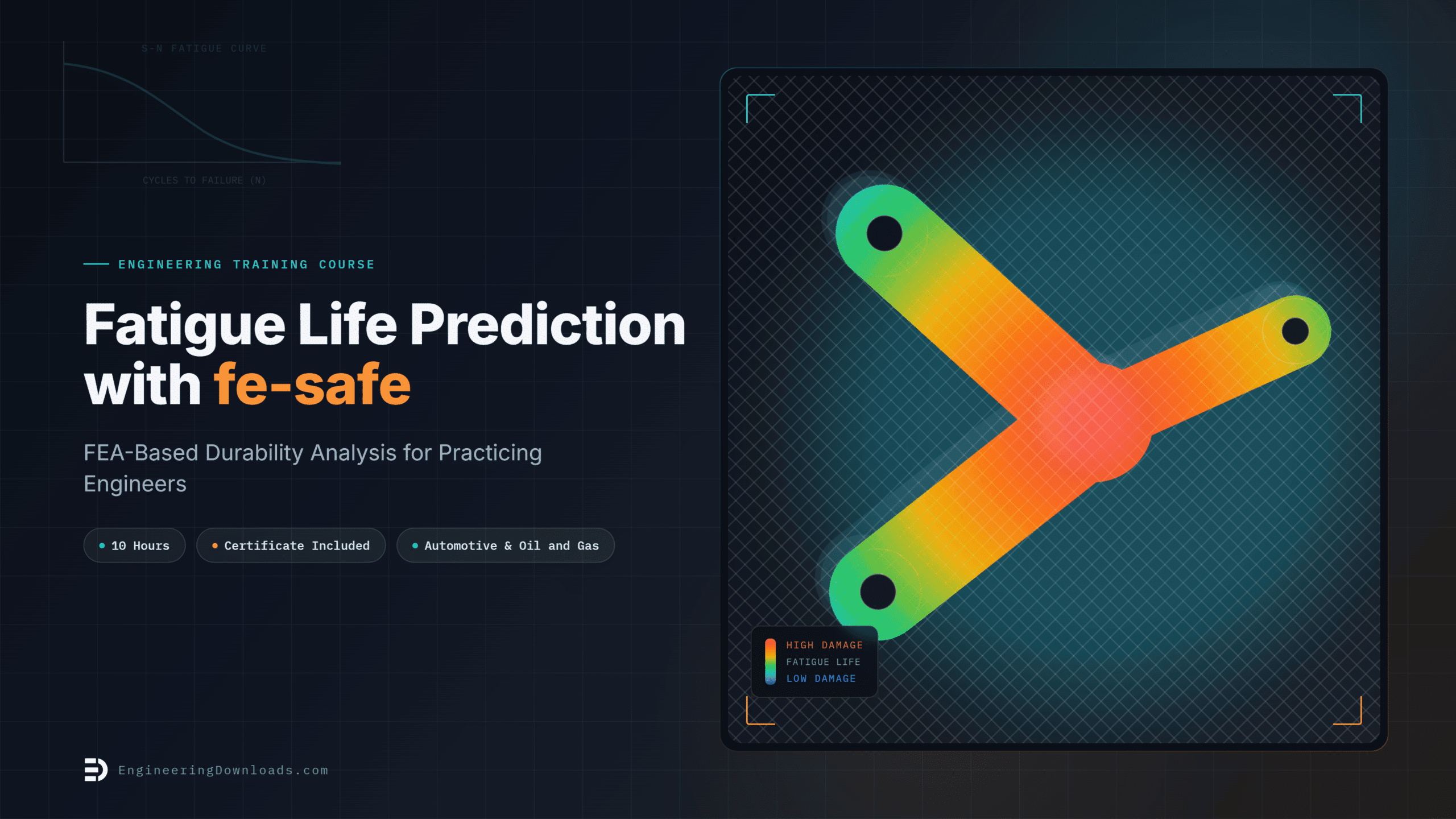
This is a beginner-friendly fe-safe course for fatigue life prediction. In about 10 hours of step-by-step video, you go from the physics of metal fatigue to running real fatigue analyses in fe-safe, with example models from the automotive and oil & gas industries.

By the end, you will be able to set up a fatigue analysis, choose the right method for your problem, define materials and loading, and read and trust the results.

Why fatigue analysis matters

Fatigue is the number one cause of failure in real engineering structures. Most parts do not fail because of a single overload. They fail after thousands or millions of load cycles, often at stress levels well below the material’s strength. Predicting when and where a component will fail is one of the most valuable skills an engineer can have.

A static FEA result tells you the stress. It does not tell you how long the part will last. That is the gap fe-safe fills, and the gap this course teaches you to close.

What is fe-safe?

fe-safe is a dedicated fatigue and durability solver. It reads stress results directly from your finite element model (Abaqus, ANSYS and other FE solvers) and calculates fatigue life, damage and safety factors across the whole component, so you can see the critical locations at a glance.

Course outline

Module 1: Introduction to metal fatigue (about 1.5 hours)

  • What fatigue is and why it matters in real design
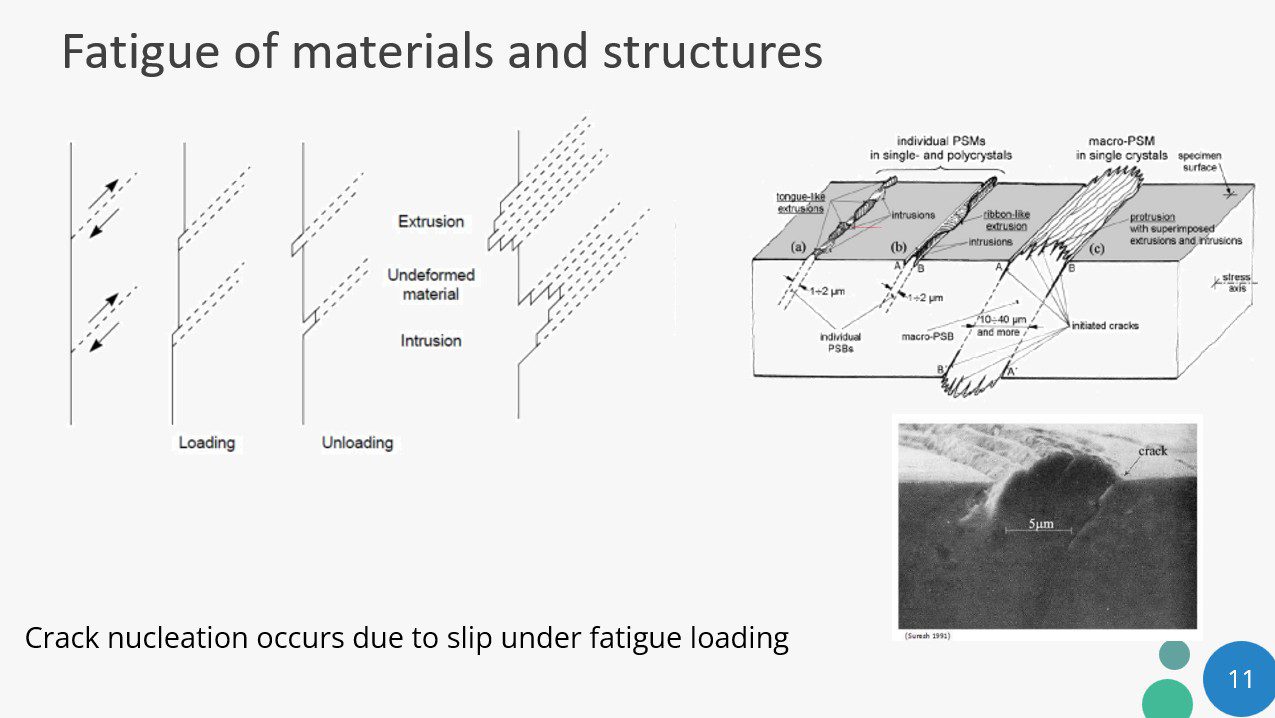
  • The fatigue failure process: crack initiation, growth and final fracture
  • Cyclic loading terms: stress amplitude, mean stress, stress ratio (R) and load history
  • Overview of life prediction methods, with their limits and advantages
  • Where fatigue matters most: automotive and oil & gas examples
  • Where fe-safe fits in the FEA and fatigue workflow

Module 2: Stress-based fatigue analysis, the S-N method (about 2.5 hours)

  • S-N (Wöhler) curves and how they are obtained
  • Endurance limit, high-cycle vs. low-cycle fatigue
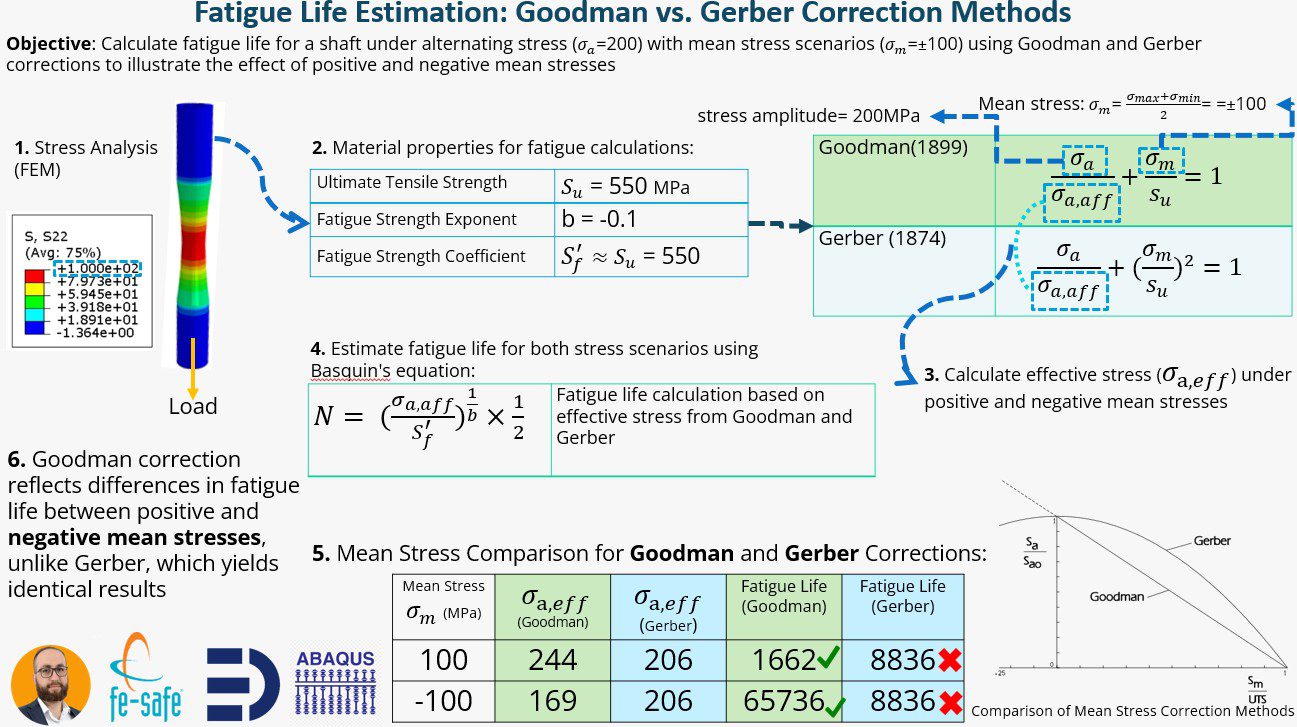
  • Mean stress corrections: Goodman, Gerber and Soderberg
  • Setting up an S-N analysis in fe-safe
  • Importing FE stress results from Abaqus and ANSYS
  • Defining material properties and surface finish effects
  • Reading life and factor-of-safety contours, with a hands-on example

Module 3: Multiaxial fatigue criteria (about 2 hours)

  • Why uniaxial methods are not enough for real loading
  • Proportional vs. non-proportional loading
  • Critical plane methods and common multiaxial criteria
  • How fe-safe handles multiaxial stress states
  • Hands-on: multiaxial fatigue on an example component

Module 4: Fatigue under variable amplitude loading (about 2 hours)

  • Real load histories vs. constant amplitude
  • Rainflow cycle counting, explained simply
  • Cumulative damage and Miner’s rule
  • Applying load histories and duty cycles in fe-safe
  • Hands-on: variable amplitude fatigue and damage summation with automotive-style loading

Module 5: Introduction to fracture mechanics and crack growth (about 2 hours)

  • Total life vs. crack initiation vs. crack propagation
  • Stress intensity factor (K) and the basics of fracture mechanics
  • The Paris law and fatigue crack growth
  • When to use fracture mechanics instead of a total-life (S-N) approach
  • How this connects to structural integrity and fitness-for-service, important in oil & gas
  • Where to go next after this course

What is included

  • About 10 hours of structured, step-by-step video lessons
  • Example FE models and fe-safe project files to practise with (automotive and oil & gas parts)
  • Practical workflows on real components, not just theory
  • Lifetime access and updates
  • Certificate of completion

Who this is for

  • Engineers who are new to fatigue analysis but already understand basic FEA
  • Mechanical engineering students working on durability or fatigue projects
  • Design engineers in automotive and oil & gas who need to predict component life
  • Abaqus and ANSYS users who want to add fatigue to their FEA workflow

Everything is explained in simple, practical language, with the theory kept to what you actually need to run and trust a real analysis.

Software used

fe-safe, with stress results imported from Abaqus and ANSYS.

Related products

Frequently asked questions

Do I need fatigue experience before starting?

No. The course starts from the basics of metal fatigue. You should already understand basic finite element analysis, such as what a stress result means.

Which FE solvers does fe-safe work with?

fe-safe reads stress results from Abaqus, ANSYS and other FE solvers. The course shows how to import results from Abaqus and ANSYS.

Do I need an fe-safe licence?

Yes. To follow the hands-on parts you need access to fe-safe. The theory modules can be followed without it.

Does the course cover crack growth?

Yes. Module 5 introduces fracture mechanics, the stress intensity factor and the Paris law, and explains when to use crack growth instead of an S-N approach.

What if I have a question during the course?

Contact us and we will help. If you need a fatigue assessment for your own component, you can also talk to one of our engineers.

Need more than the files?

There are two ways we can help. Book a one hour online consultation if you want to talk a problem through with a CAE engineer, using the checkbox in the order box. Order a project if you need a full simulation built for you, delivered to an agreed scope, price and deadline under a written contract.

We work on FEA and CFD for engineers, researchers and companies. Order your project, or message us on WhatsApp for a quick reply.

Course Content

Content

  • Module 1 — Introduction to Metal Fatigue
  • Module 2 — Stress-Based Fatigue Analysis: The S-N Method
  • Module 3 — Multiaxial Fatigue Criteria
  • Module 4 — Fatigue Under Variable Amplitude Loading
  • Module 5 — Introduction to Fracture Mechanics and Crack Growth

Reviews

No Review Yet
No Review Yet
€280,00 €300,00
Optional extras

Need a full custom project? See the options below.

27 people watching this product now!

Material Includes

  • 10 hours of structured, step-by-step video lessons
  • Example FE models and fe-safe project files to practice (automotive and oil & gas parts)
  • Practical, real-component workflows (not just theory)
  • Lifetime access and updates
  • Certificate of completion

Audience

  • Mechanical, structural, aerospace, automotive, and civil engineers new to fatigue
  • Automotive engineers working on durability of chassis, suspension, brackets, and other components
  • Oil & gas engineers dealing with structural integrity and durability of equipment and piping
  • FEA users (Abaqus / ANSYS) who want to add durability and life prediction to their skill set
  • Design and R&D engineers who need to check whether a component will survive its service life
  • Master's and PhD students working on structural integrity, durability, or simulation
  • Consultants and freelancers who want a marketable, industry-relevant skill

Related  Products

See more

Want to receive push notifications for all major on-site activities?

✕