Need a full custom project? See the options below.
Need a full custom project? See the options below.
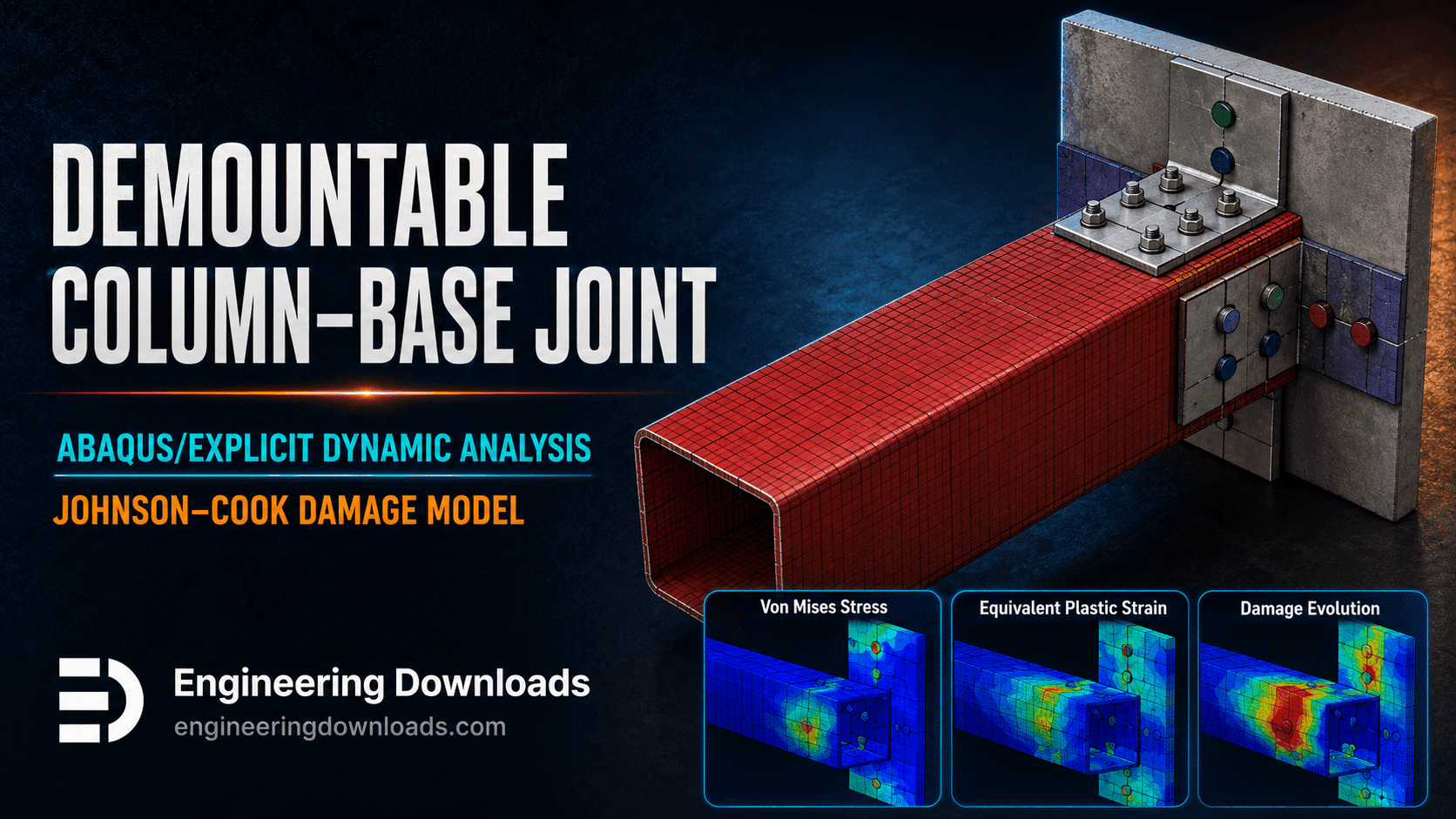
Demountable steel structures have attracted increasing attention in recent years due to their potential to support sustainable construction practices through material reuse, ease of disassembly, and reduction of construction waste. Unlike conventional welded connections, demountable joints are designed to facilitate dismantling and reassembly while maintaining adequate structural performance throughout their service life. Among the various demountable structural systems, tubular steel column-to-base plate joints are widely used in industrial buildings, modular construction, temporary structures, and offshore facilities because of their high strength-to-weight ratio, aesthetic appearance, and efficient load-carrying capacity.
The structural behaviour of demountable tubular column-to-base plate joints is governed by a complex interaction between the steel tube, base plate, bolts, and anchorage system. When subjected to static or dynamic loading, force transfer occurs through a combination of bearing, bolt tension, bolt shear, plate bending, frictional resistance, and local deformation of the connected components. The incorporation of headed studs into the base plate further modifies the load-transfer mechanism by providing additional anchorage, improving force distribution, and enhancing the resistance against uplift, slip, and local plate deformation. Consequently, the overall response of the joint depends on the stiffness and strength contributions of each component as well as their interaction under loading.
Under dynamic loading conditions, the behaviour of these joints becomes even more complex due to strain-rate effects, nonlinear contact interactions, material plasticity, and progressive damage evolution. Dynamic actions may arise from seismic excitation, impact events, machinery-induced vibrations, accidental loads, or blast effects. Such loading scenarios can produce localized stress concentrations around bolt holes, stud weld regions, and contact interfaces, potentially leading to plastic deformation, crack initiation, and failure of critical joint components. Therefore, understanding the nonlinear response and failure mechanisms of demountable tubular column-to-base plate joints is essential for ensuring structural safety and reliability.
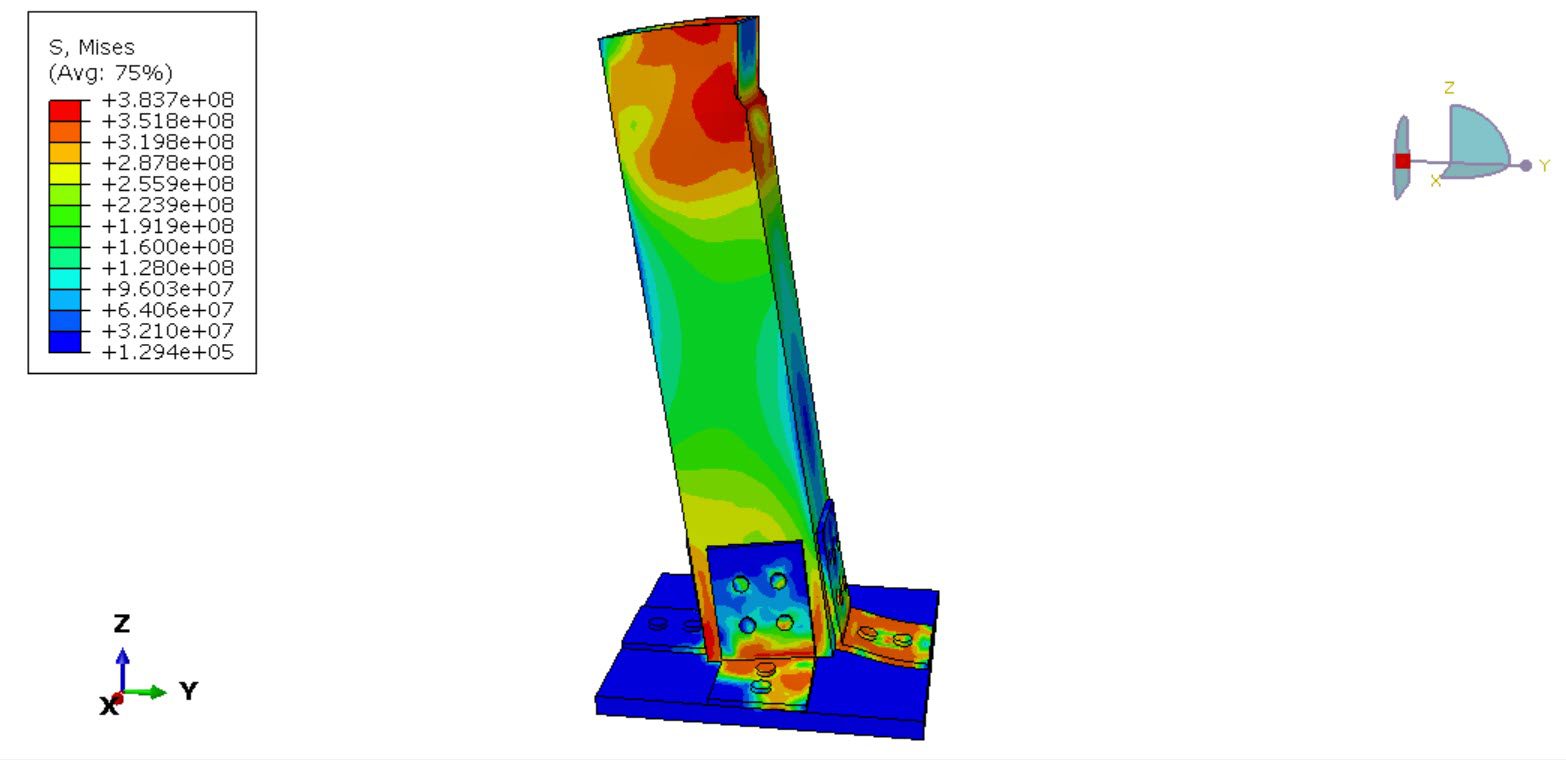
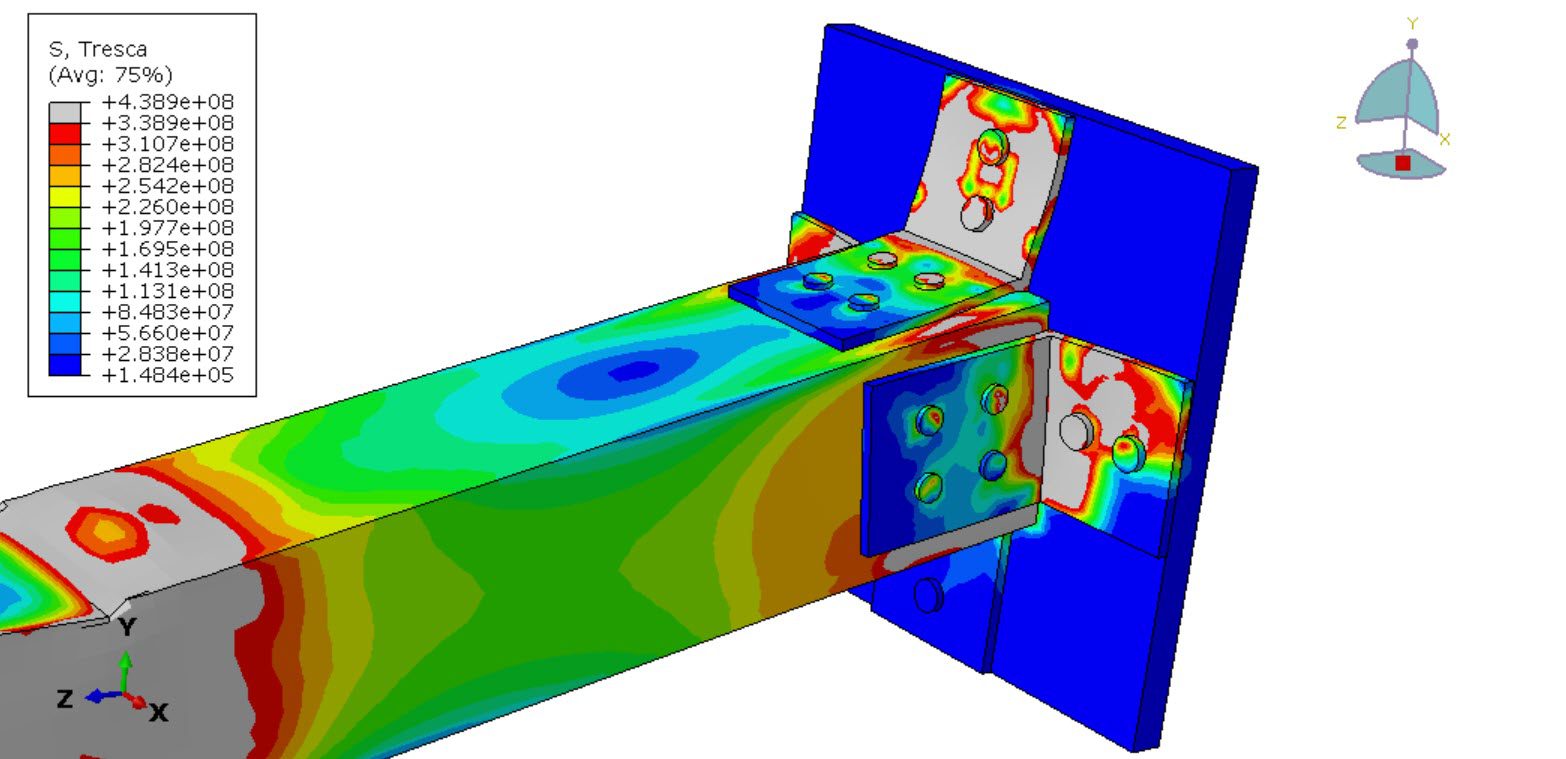
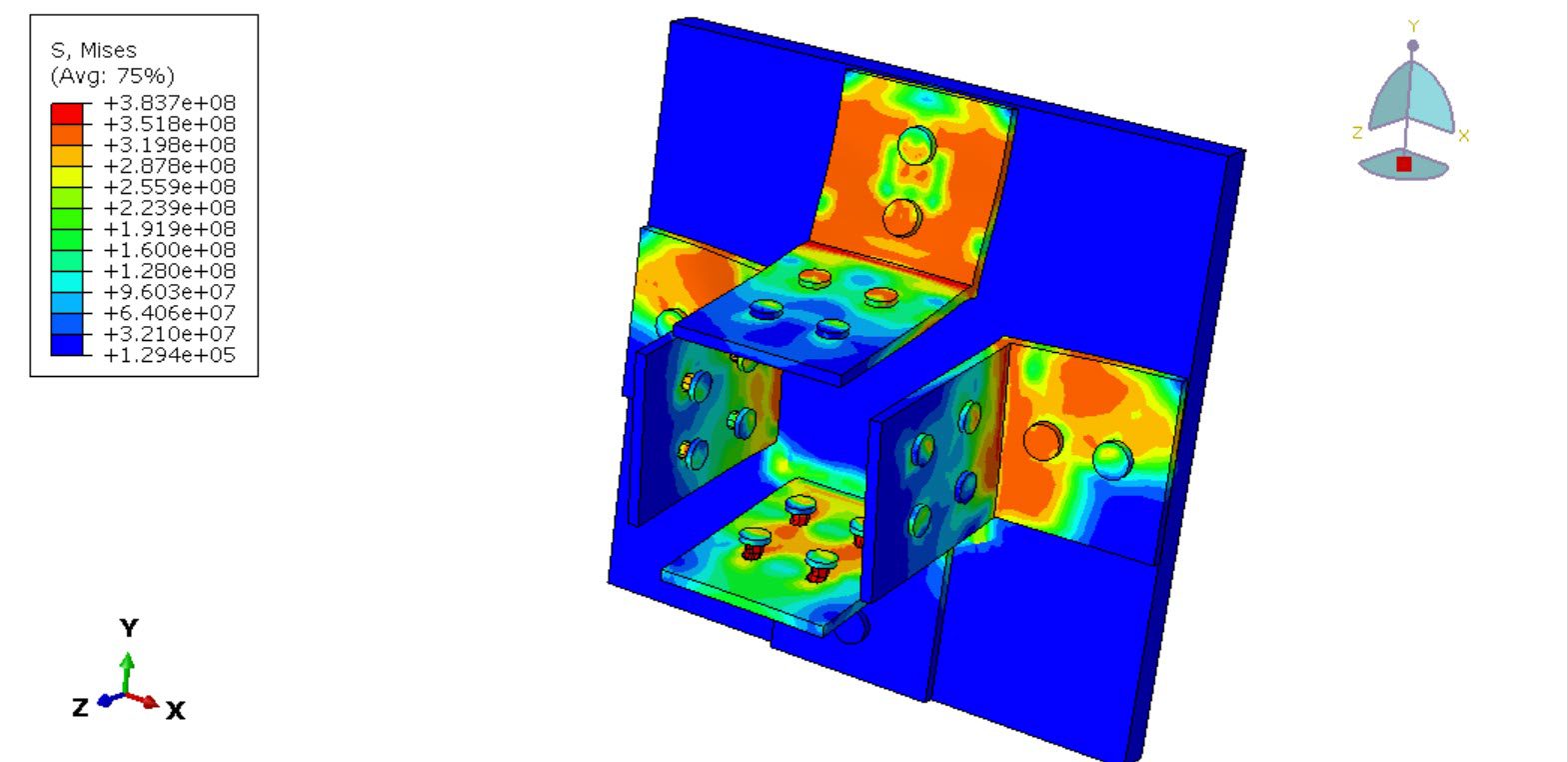
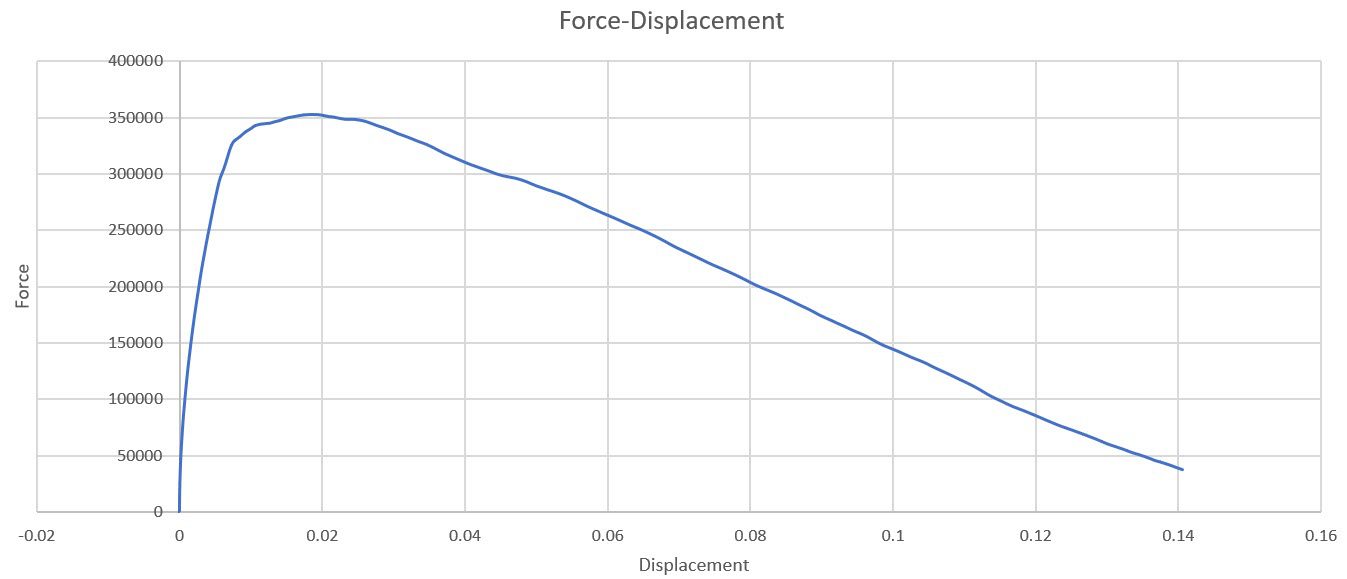
Finite Element Analysis (FEA) provides an effective approach for investigating the detailed behaviour of these connections. In the present study, the joint is modeled using Abaqus/Explicit to capture highly nonlinear phenomena associated with dynamic loading. The steel tubular column, base plate, bolts, and studs are represented using three-dimensional solid elements. Material nonlinearity is incorporated through the Johnson–Cook constitutive model, which accounts for strain hardening and strain-rate sensitivity, while the Johnson–Cook damage model is employed to simulate damage initiation and progressive material degradation leading to failure. Contact interactions between all mating surfaces are defined using frictional contact formulations to realistically represent load transfer and potential slip between components. Furthermore, mesh refinement is applied in critical contact regions, particularly around bolts, studs, and plate interfaces, to accurately capture local stress gradients and deformation patterns.
The numerical model enables the investigation of key structural responses, including load-displacement behaviour, stress distribution, plastic strain development, damage evolution, energy absorption, and failure modes. Particular attention is given to the role of studs in enhancing connection stiffness, delaying damage initiation, improving load redistribution, and increasing the overall dynamic resistance of the joint. The results provide valuable insights into the performance of demountable tubular column-to-base plate connections and contribute to the development of more resilient and sustainable steel structural systems.
Need more than the files?
There are two ways we can help. Book a one hour online consultation if you want to talk a problem through with a CAE engineer, using the checkbox in the order box. Order a project if you need a full simulation built for you, delivered to an agreed scope, price and deadline under a written contract.
We work on FEA and CFD for engineers, researchers and companies. Order your project, or message us on WhatsApp for a quick reply.
Other packages engineers working on this topic also download.
 Numerical analysis of square concrete-filled double skin steel tubular columns with rubberized concretese
 Bolted Steel Beam–Column Connection Under Fire in Abaqus: Sequential Heat Transfer and Structural Analysis
 Bolt Analysis Package in Abaqus
 Analysis of shear stud distribution on the flextural behavior of a steel–concrete composite beam
 Analysis of the bolted steel splice connections under fire-Sequential Method
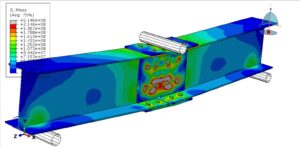 Dynamic analysis of the three-point bending test of a bolted steel splice connection
 Compression test of middle long CFST column with inner I-shaped CFRP Profile
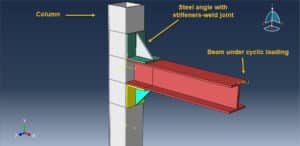 Cyclic loading analysis of a steel beam-column joint with a welded steel angle

Need a full custom project? See the options below.

€129,00

€179,00

€149,00

€119,00

€129,00

€149,00
See more
Want to receive push notifications for all major on-site activities?




