Need a full custom project? See the options below.
Need a full custom project? See the options below.
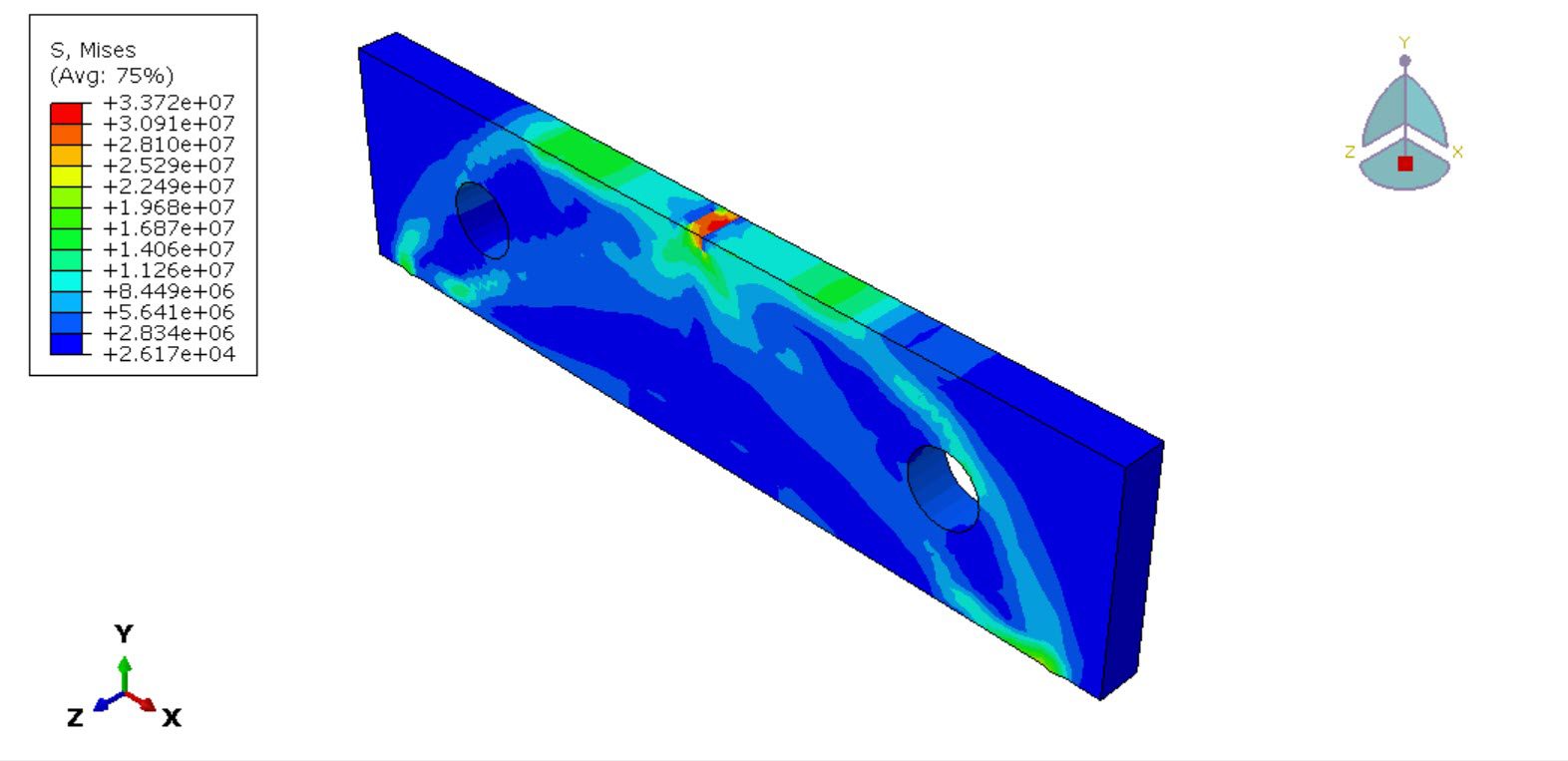
Reinforced concrete (RC) deep beams are structural elements characterized by a small span-to-depth ratio, where load transfer occurs primarily through compression struts rather than classical flexural behavior. Due to their discontinuity regions (D-regions), deep beams exhibit highly nonlinear stress distributions and are particularly sensitive to the presence of openings. Wide web openings are frequently introduced in RC deep beams to accommodate mechanical ducts, utility pipes, or architectural requirements; however, these openings significantly disturb the natural load path between the loading and support zones. As a result, reductions in stiffness, load-carrying capacity, and ductility are commonly observed, together with increased stress concentrations around the opening corners and premature cracking.
To restore or enhance the structural performance of damaged or weakened deep beams, retrofitting techniques using advanced materials have attracted considerable attention. Among these materials, Nickel–Titanium (Ni–Ti) Shape Memory Alloys (SMAs) have emerged as promising reinforcement systems due to their unique superelasticity, high corrosion resistance, and energy dissipation capabilities. Unlike conventional steel reinforcement, Ni–Ti SMAs can undergo large reversible strains and recover their original shape upon unloading, making them particularly effective for improving crack control, deformation recovery, and seismic resilience in reinforced concrete structures.
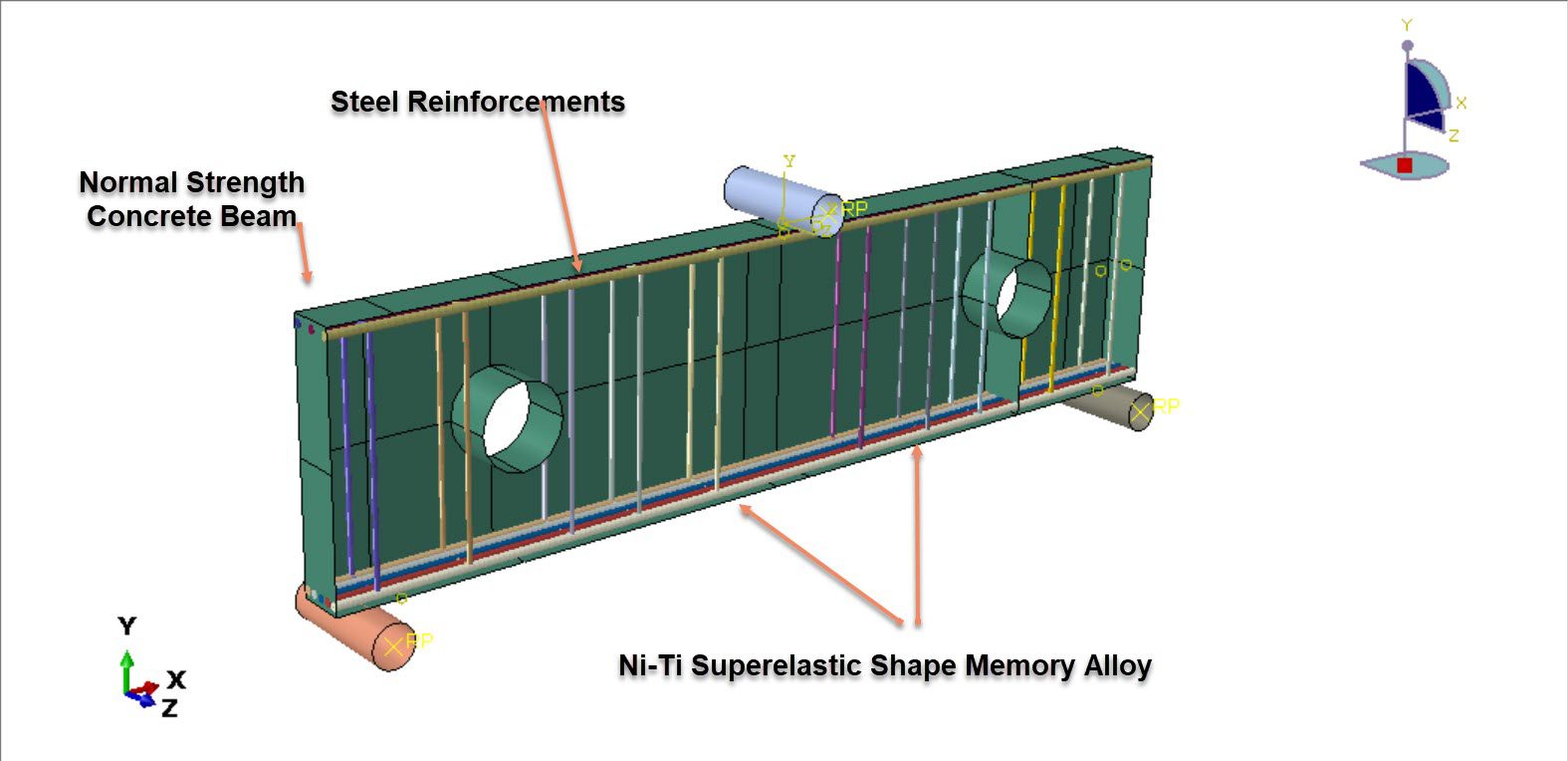
In this study, the numerical behavior of RC deep beams with wide openings retrofitted using Ni–Ti SMA reinforcement under three-point bending is investigated using the finite element software Abaqus. The analysis evaluates the effectiveness of SMA bars and steel strips in improving the structural response of deep beams under monotonic loading. The retrofitting configuration consists of conventional steel reinforcement combined with Ni–Ti SMA bars placed in the tension zone to enhance flexural performance and delay crack propagation.
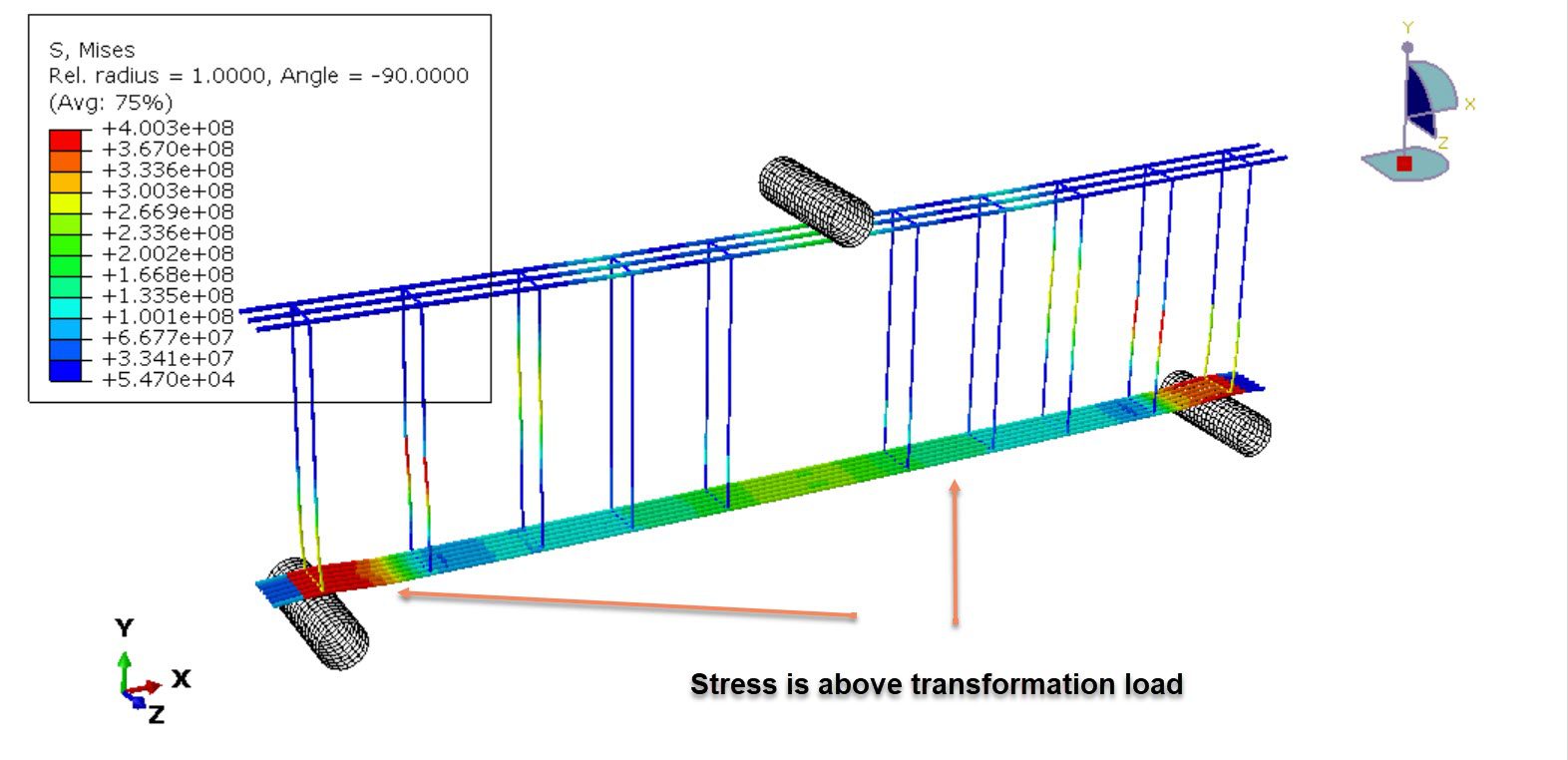
The concrete material is modeled using the Concrete Damaged Plasticity (CDP) model, which is widely adopted to simulate the nonlinear compressive and tensile behavior of concrete, including stiffness degradation and cracking. Reinforcing steel bars and steel strips are represented using an elastic–plastic constitutive model to capture yielding and strain hardening behavior. The Ni–Ti SMA reinforcement is modeled using a superelastic material formulation capable of reproducing the phase transformation behavior and hysteretic response associated with shape memory alloys.
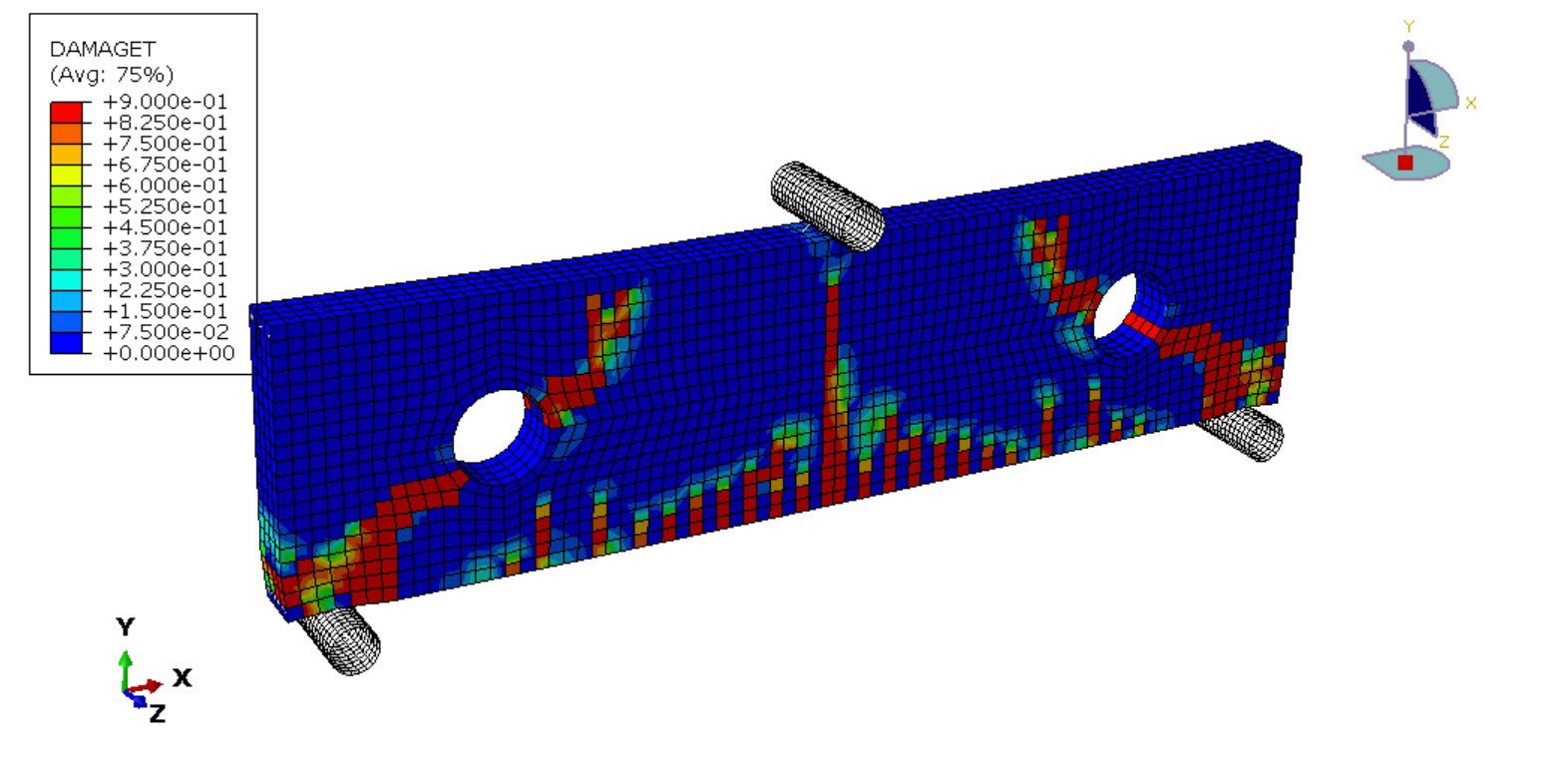
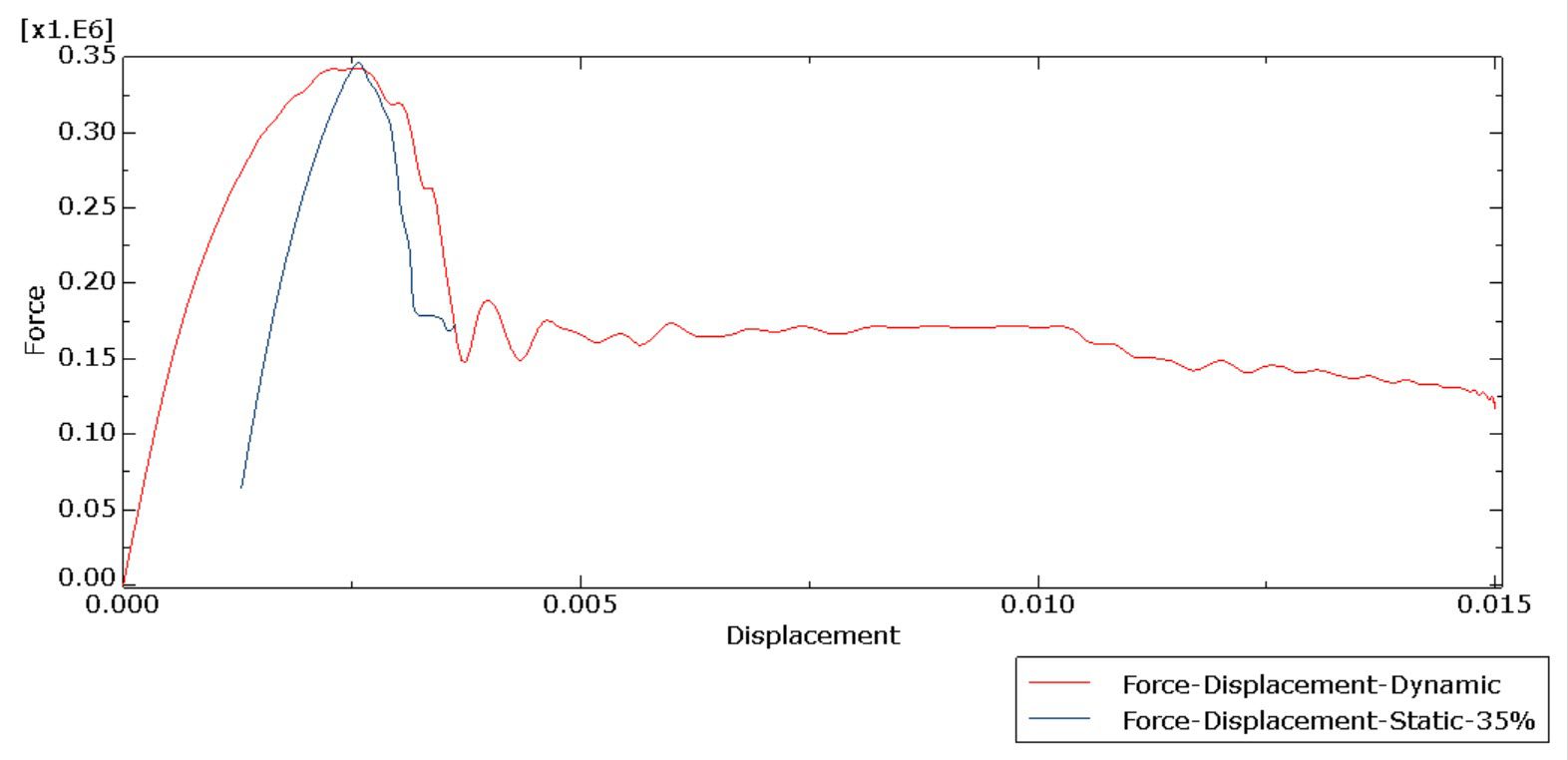
A general static and dynamic analysis steps are employed in Abaqus to simulate the progressive loading process under three-point bending conditions. Appropriate interaction definitions, boundary conditions, and meshing strategies are implemented to ensure accurate representation of the structural response. The numerical model enables the investigation of crack development, stress distribution, load–deflection behavior, and the contribution of SMA retrofitting to the enhancement of strength, ductility, and energy absorption capacity of RC deep beams with openings.
The outcomes of this numerical investigation contribute to a better understanding of the structural efficiency of Ni–Ti SMA retrofitting systems and provide valuable insights for the design and rehabilitation of RC deep beams subjected to severe stress disturbances caused by wide web openings.
Need more than the files?
There are two ways we can help. Book a one hour online consultation if you want to talk a problem through with a CAE engineer, using the checkbox in the order box. Order a project if you need a full simulation built for you, delivered to an agreed scope, price and deadline under a written contract.
We work on FEA and CFD for engineers, researchers and companies. Order your project, or message us on WhatsApp for a quick reply.
Other packages engineers working on this topic also download.
 Analysis of the punching shear behavior of the RC slab with superelastic Ni-Ti shape memory alloy under low-velocity impact
 Shear ductility and transfer criteria of reinforced concrete beams with near surface mounted aluminium sections
 RC Column under Axial Compression in Abaqus: Smeared Cracking Model
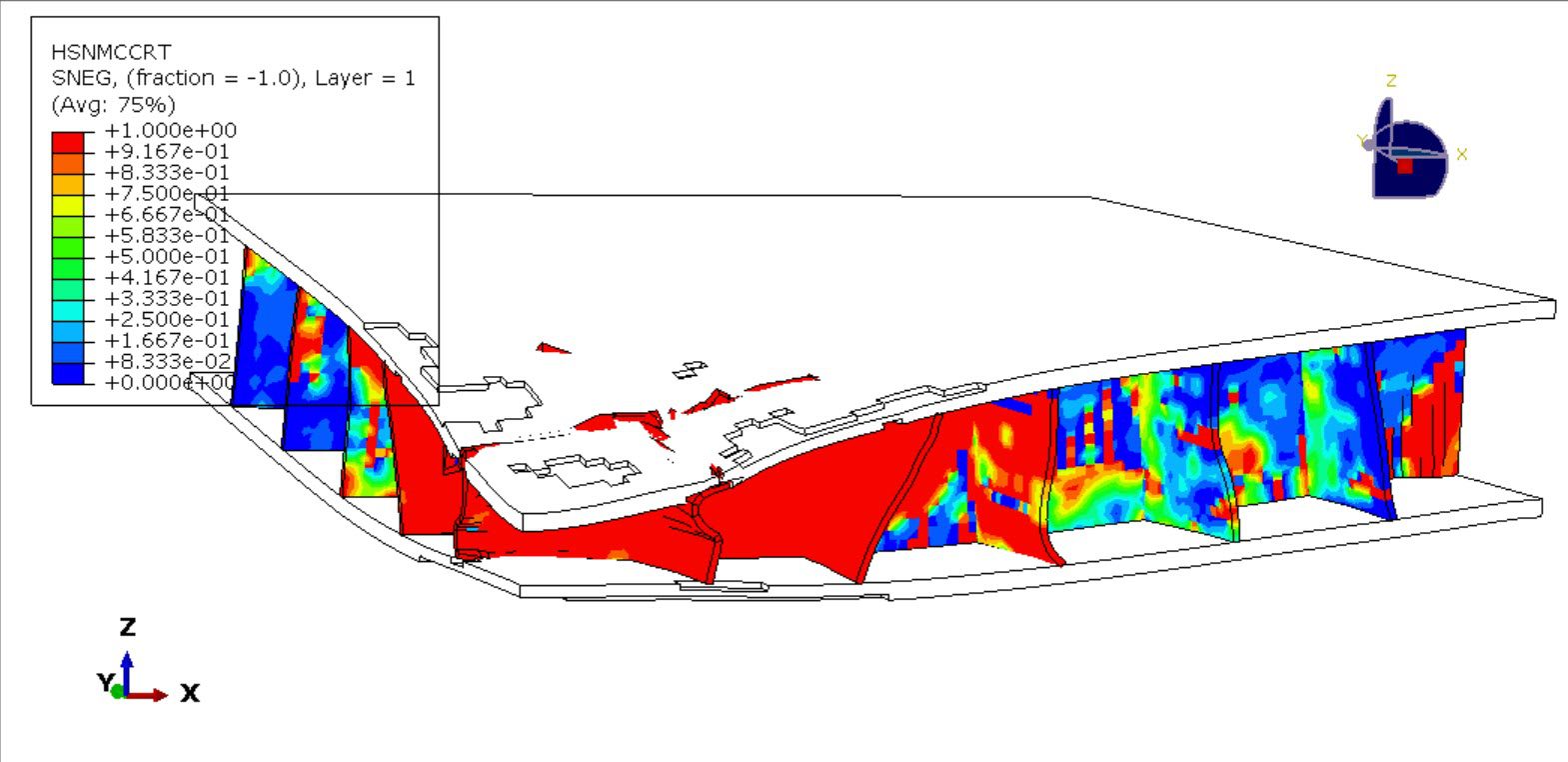 Analysis of the AL-6XN steel protective structures with CFRP core under air blast loading in Abaqus
 Simulation of Bending Test on a Wood–UHPC–Steel Composite Beam in Abaqus
 Analysis of a reinforced concrete (RC) beam with an embedded spiral GFRP bar subjected to air blast loading
 Analysis of a RC beam column joint reinforced with steel plates and rods under vertical load in abaqus
 Modeling the Fatigue Response of Reinforced Concrete Columns Using the Direct Cyclic Procedure

Need a full custom project? See the options below.

€129,00

€179,00

€149,00

€119,00

€129,00

€149,00
See more
Want to receive push notifications for all major on-site activities?




