

Need a full custom project? See the options below.
Need a full custom project? See the options below.
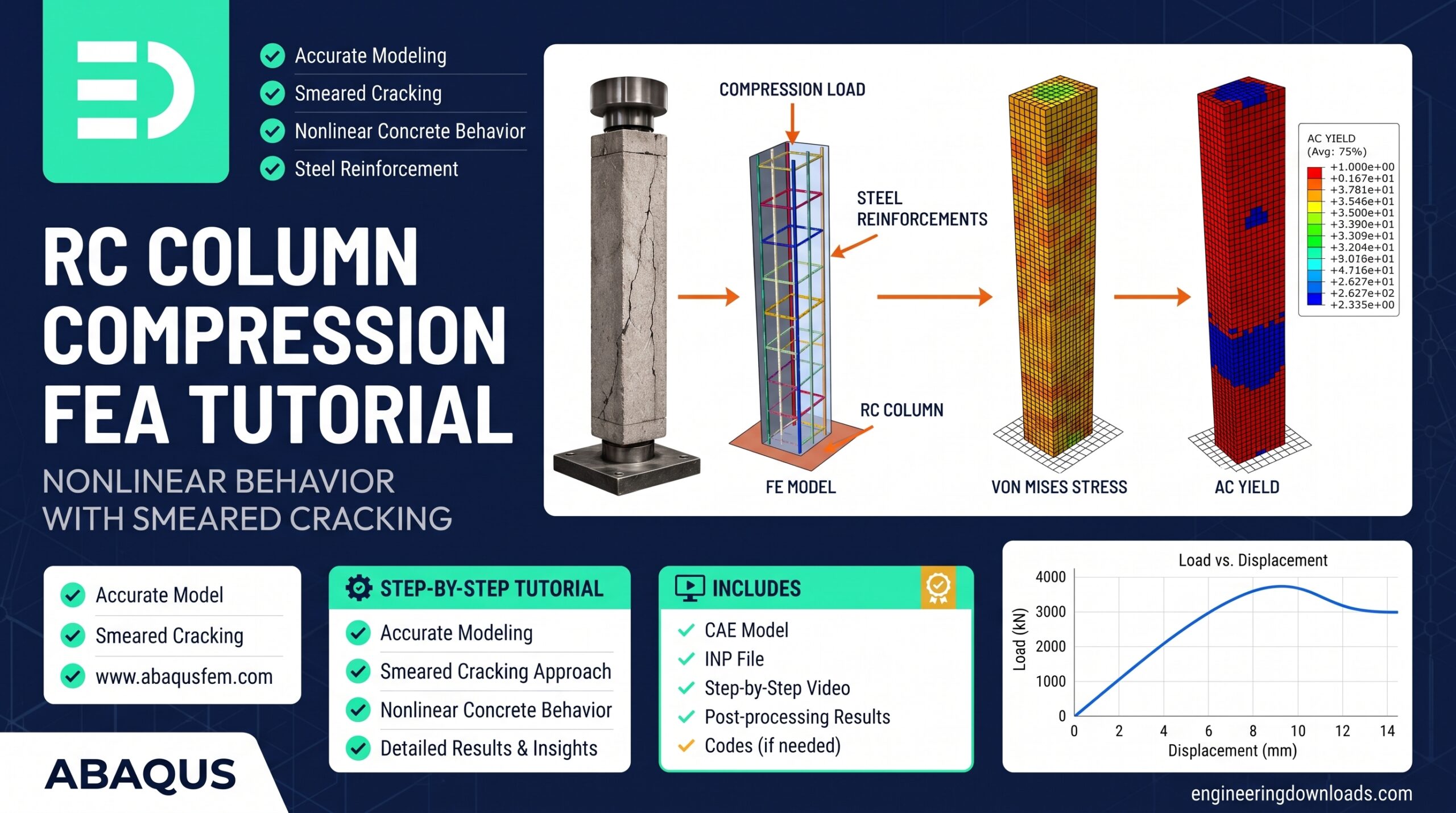
This is a ready-to-use Abaqus model of a reinforced concrete (RC) column under axial compression, built with the concrete smeared cracking material model in Abaqus/Standard. You get the complete finite element model of the concrete column with its longitudinal and transverse reinforcement, plus a step-by-step video tutorial that walks you through building it yourself.
The concrete is defined with the Concrete Smeared Cracking constitutive model, including compressive behaviour, tension stiffening and the crack detection surface. The reinforcement is modelled separately and embedded in the concrete so the composite action between steel and concrete develops naturally as the load increases. The column is compressed incrementally until cracking, crushing and stiffness loss are fully developed.
An RC column does not fail in one clean step. It starts almost elastic, then the concrete begins to crack in tension, stiffness drops, load transfers to the reinforcement, and the concrete finally crushes in compression. Capturing that full sequence in a finite element model is where most people get stuck.
The usual problems are the same every time: choosing between smeared cracking and Concrete Damaged Plasticity, entering concrete data that Abaqus actually accepts, getting the rebar to interact with the concrete correctly, and keeping the job converging once the material starts softening. This model solves all of those, and you get the working files instead of a set of screenshots.
The concrete column is modelled with solid elements, following the dimensions of the reference specimen. Longitudinal bars and transverse ties are built according to the real reinforcement configuration, so the confinement effect of the stirrups is present in the result rather than assumed.
Instead of modelling individual crack surfaces, the smeared cracking approach spreads the effect of cracking through the constitutive response at each integration point. Once the crack detection surface is reached, the crack direction is stored and the material response becomes direction dependent through an oriented damaged-elasticity formulation. This keeps the model computationally manageable while still showing where and how cracking develops through the column.
The bars use an elastic–plastic steel definition, so yielding of the reinforcement after the concrete starts losing stiffness is captured instead of being hidden behind an elastic assumption.
The reinforcement is tied into the concrete so the two materials act as one composite member. Load redistribution from cracked concrete into the bars happens as part of the solution, which is exactly what controls the post-peak shape of the curve.
Supports are applied at the column ends to reproduce the laboratory setup, and the axial compression is applied incrementally. The mesh is refined where stress and strain gradients and cracking are expected, so the crack pattern is resolved without making the job unnecessarily heavy.
You can open the files, run the job, change the concrete grade, column dimensions, bar diameter or stirrup spacing, and use the model directly in your own research or project work.
Abaqus/CAE and Abaqus/Standard. The analysis uses the Concrete Smeared Cracking model, which is intended for monotonic loading at relatively low confining pressure — the exact condition of this compression test.
If you need the same member built with different materials or loading, see our RC column with UHPFRC under compression model, our UHPC column axial compression model, or our RC column strengthening with steel plates and rods model. For concrete cracking under impact rather than compression, see the RC slab impact analysis with brittle cracking.
Every model on Engineering Downloads is built and reviewed by practising simulation engineers, not generated automatically. You get the working files, not screenshots. And if a product does not match what is described here, we refund you.
You can browse our full library of ready-to-use simulation models, tutorials and courses, look through our paper-based validated models, or ask us to build a custom model through our simulation services. Large jobs can be run on our HPC rental service, starting from EUR 5 per week.
The CAE file opens in recent Abaqus versions. The INP file is included as well, so you can run or re-import the model even if your version is different.
Smeared cracking is an Abaqus/Standard model for monotonic loading at low confining pressure, and it represents cracking through an oriented damaged-elasticity response. Concrete Damaged Plasticity works in both Standard and Explicit and handles cyclic and dynamic loading with stiffness recovery. For a single monotonic compression test like this one, smeared cracking is the lighter and more direct choice.
Yes. The concrete data, steel properties, bar diameters and stirrup spacing are all entered as inputs, so you can substitute your own values and rerun the job.
Yes. Because cracking is smeared into the constitutive response, you can view where cracks form and how they spread through the column as the compressive load increases.
The model follows a reference RC column specimen, and the load–displacement response can be compared directly against experimental data to check strength, stiffness and failure behaviour.
Yes. If you have a question about running or modifying the model, contact us and we will help. You can also book an online consultation if you need help adapting the model to your own project.
Need more than the files?
There are two ways we can help. Book a one hour online consultation if you want to talk a problem through with a CAE engineer, using the checkbox in the order box. Order a project if you need a full simulation built for you, delivered to an agreed scope, price and deadline under a written contract.
We work on FEA and CFD for engineers, researchers and companies. Order your project, or message us on WhatsApp for a quick reply.
Other packages engineers working on this topic also download.
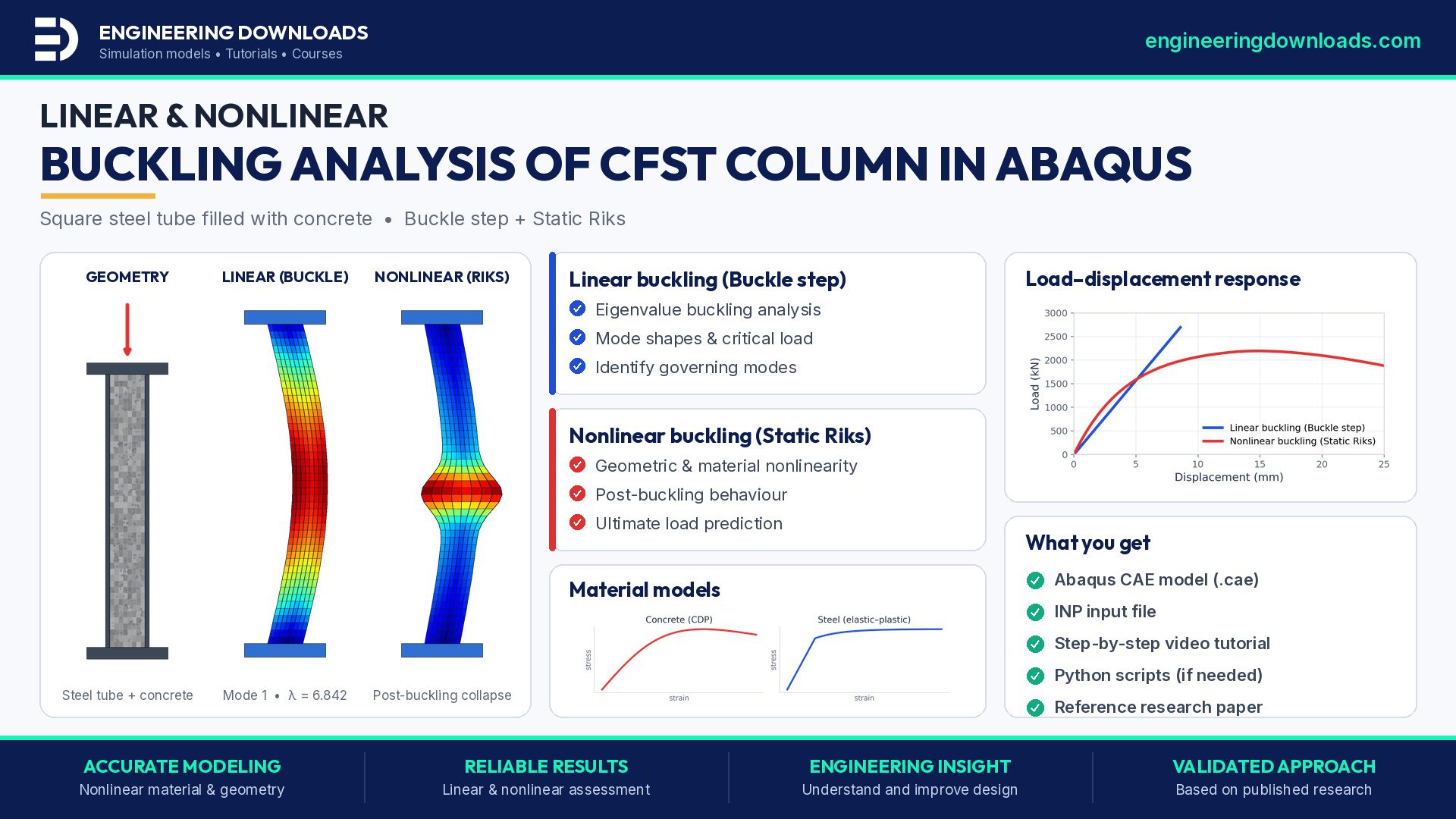 Buckling Analysis of a Concrete-Filled Steel Tube (CFST) Column Using Abaqus
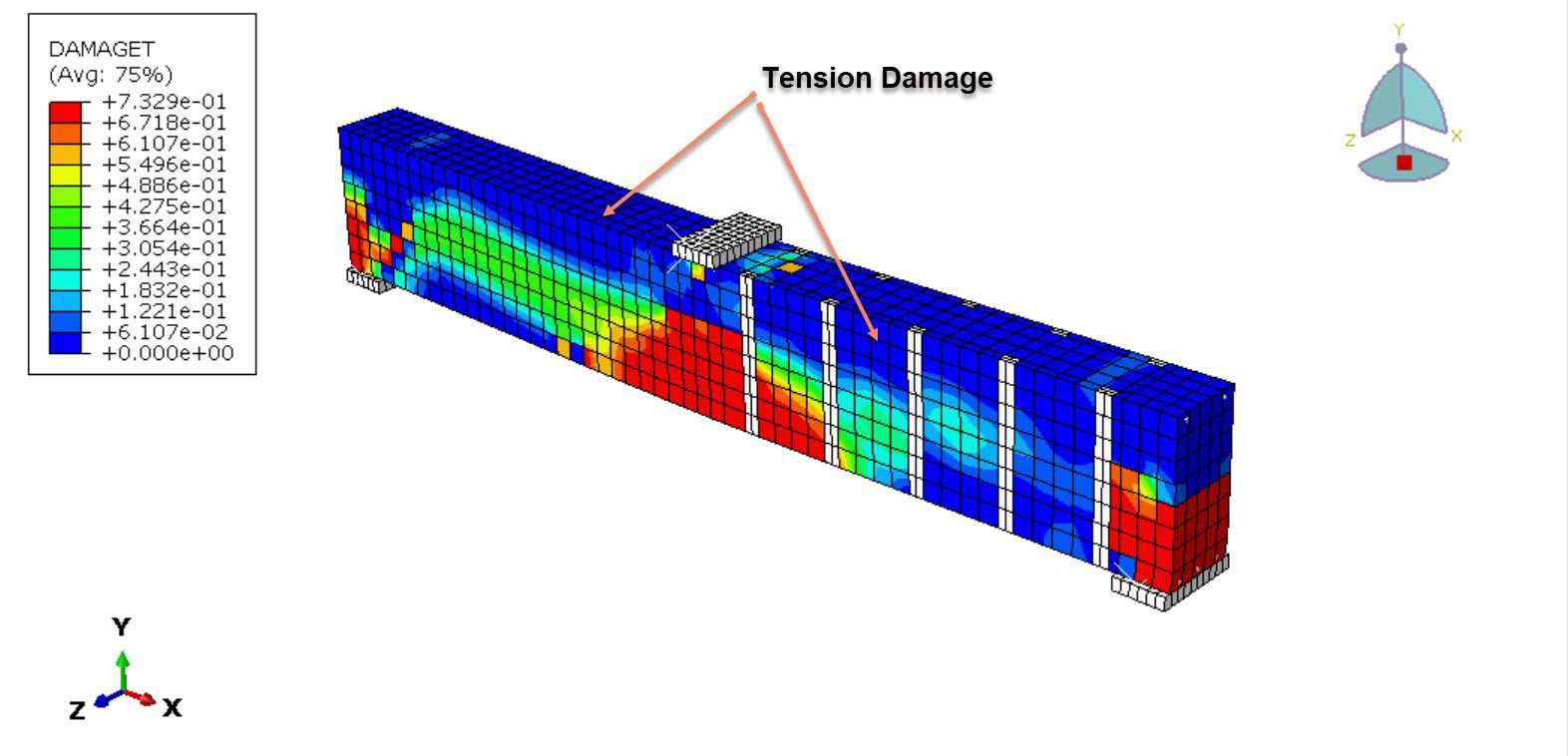 Shear ductility and transfer criteria of reinforced concrete beams with near surface mounted aluminium sections
 Fire Analysis of a CFRP-Strengthened Reinforced Concrete Beam Using Abaqus
 Abaqus Simulation of a Steel Stud Push-Out Test in a Voided Reinforced Concrete Slab
 RC Slab Impact Analysis in Abaqus Using the Brittle Cracking Model (Hammer Impact)
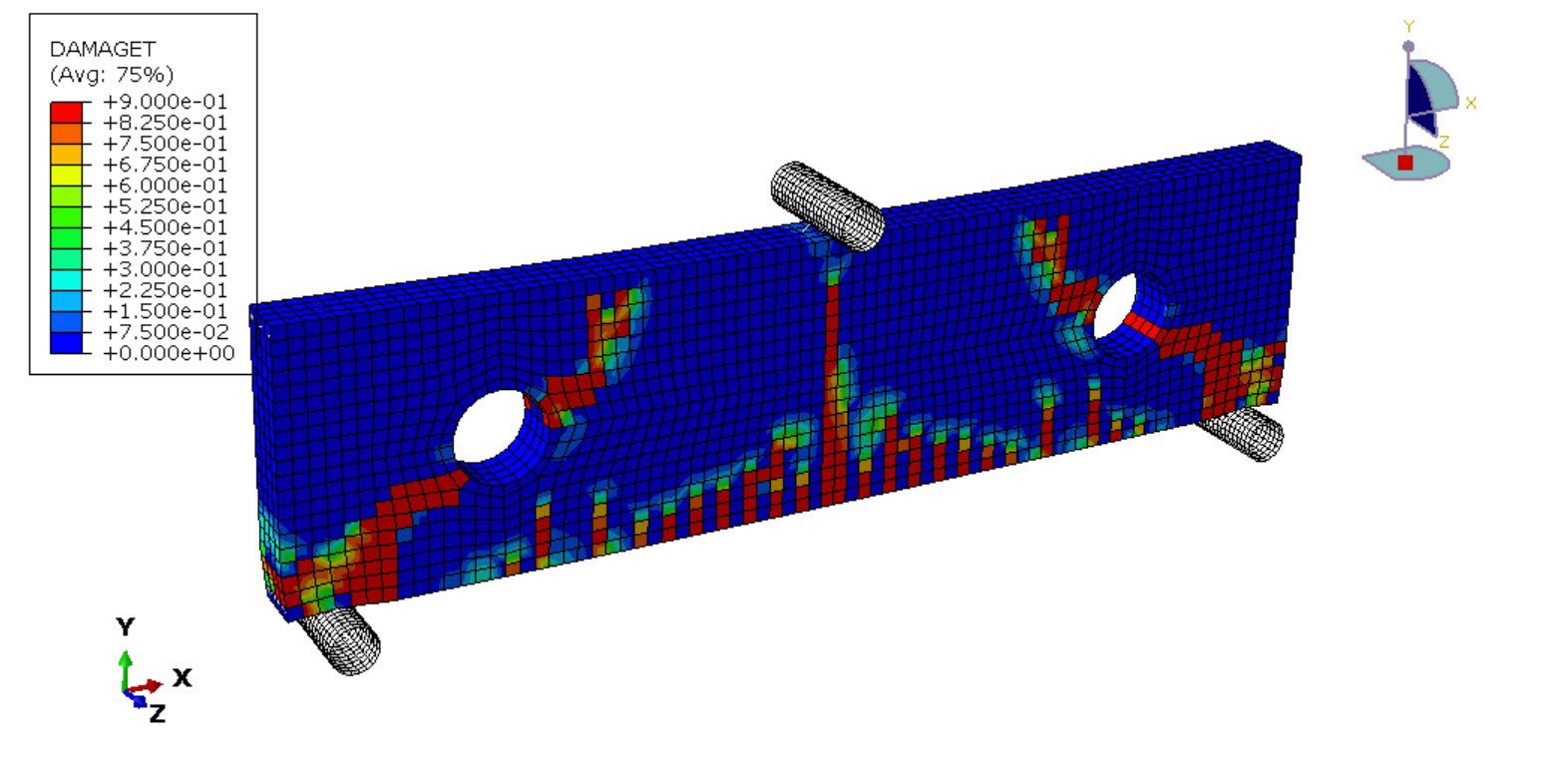 Numerical analysis of RC deep beams with wide openings, retrofitting with Ni-Ti SMA under three-point bending
 Seismic Response of a Steel Building in Abaqus: Nonlinear Dynamic Analysis with Beam Elements
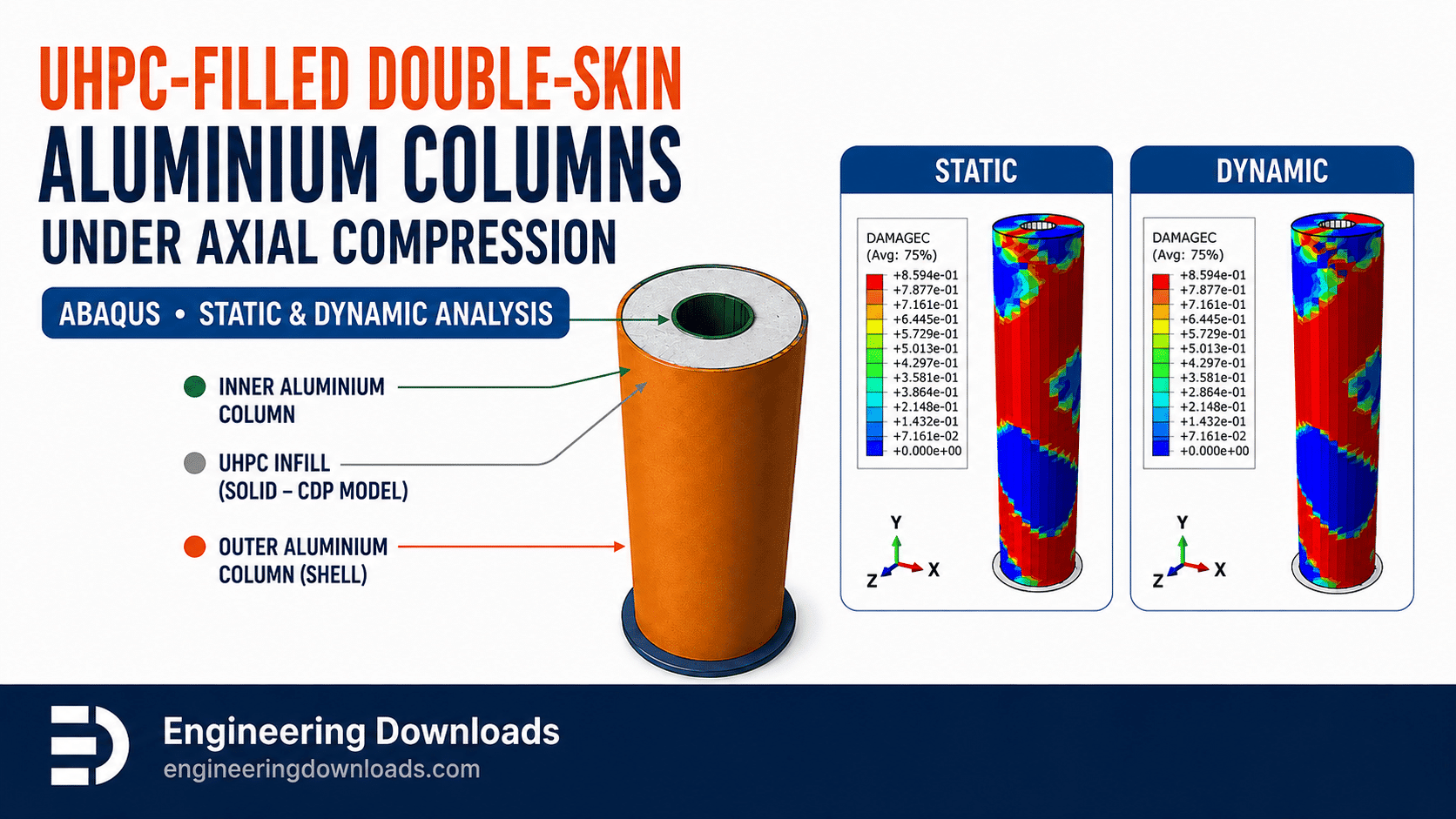 Numerical Investigation of the Structural Behaviour of UHPC-Filled Double-Skin Aluminium Columns under Axial Compression

Need a full custom project? See the options below.

€129,00

€179,00

€149,00

€119,00

€129,00

€149,00
See more
Want to receive push notifications for all major on-site activities?




