


Need a full custom project? See the options below.
Need a full custom project? See the options below.
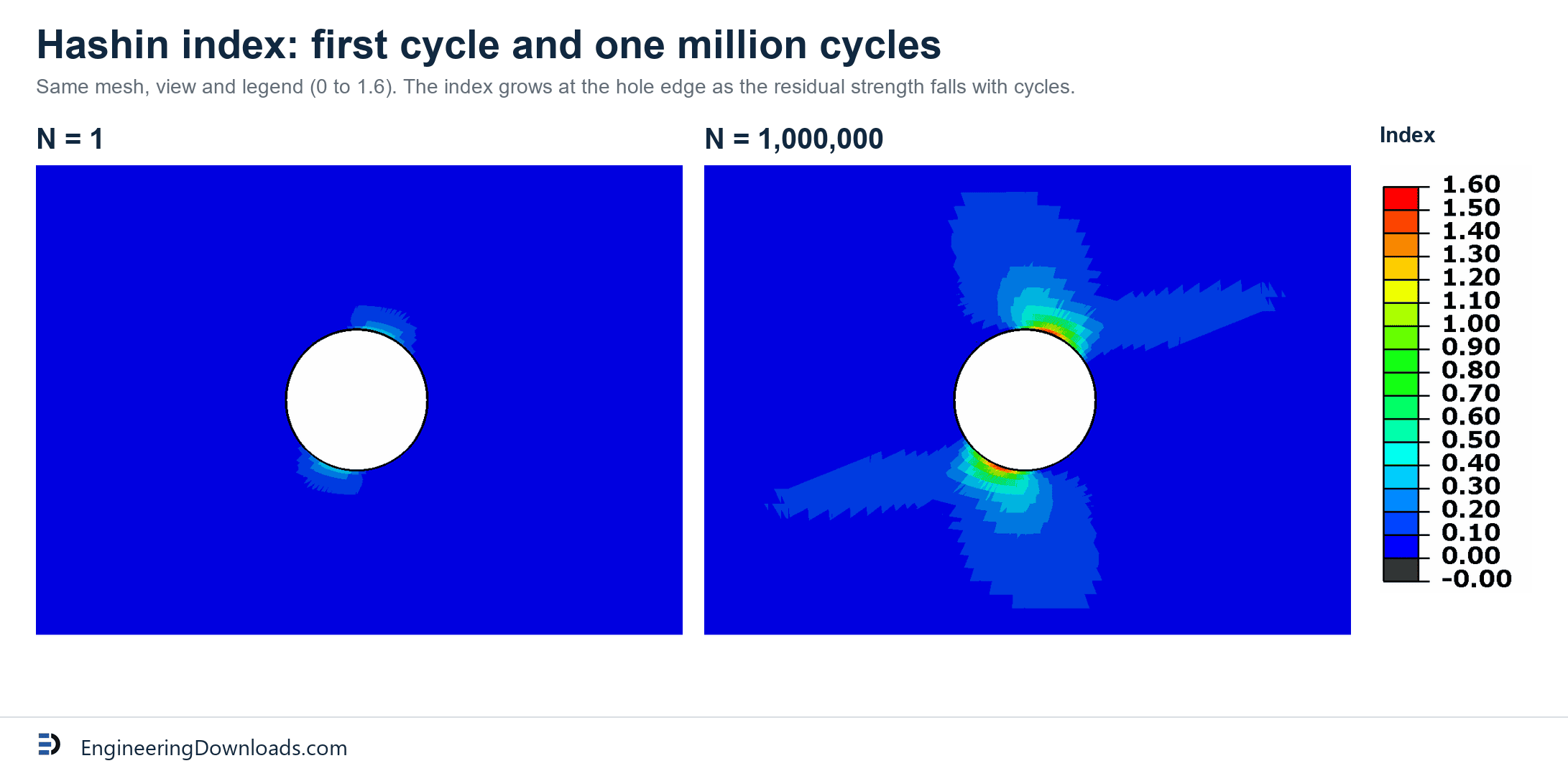
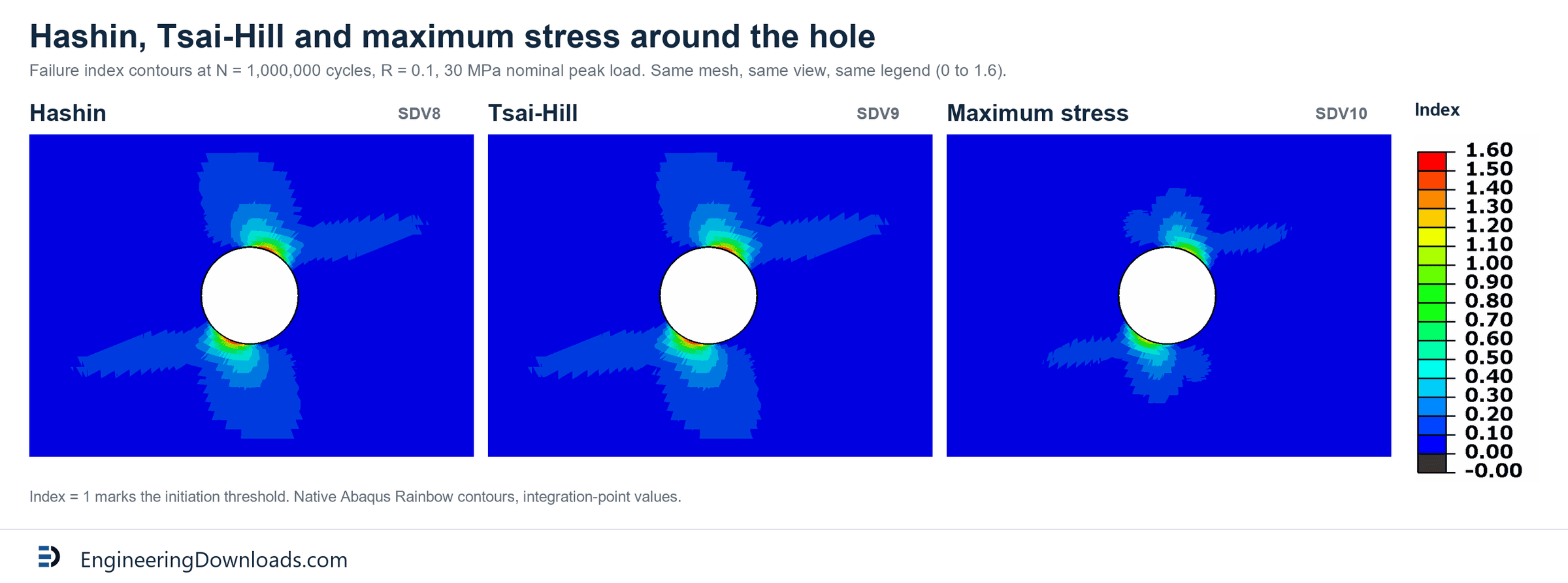
This package implements the constant-life-diagram (CLD) fatigue damage model of Elkin et al. (Polymers 2022, 14, 4985) as an editable Fortran user subroutine (UMAT) for Abaqus. The model predicts the fatigue strength of unidirectional carbon/epoxy plies under tension-tension, compression-compression and tension-compression loading. S-N fits at several stress ratios are combined in a CLD, which updates the residual strength of the ply at each cycle level. Three failure criteria, Hashin, Tsai-Hill and maximum stress, are evaluated in one UMAT and written to state variables, so you can compare them on the same model.
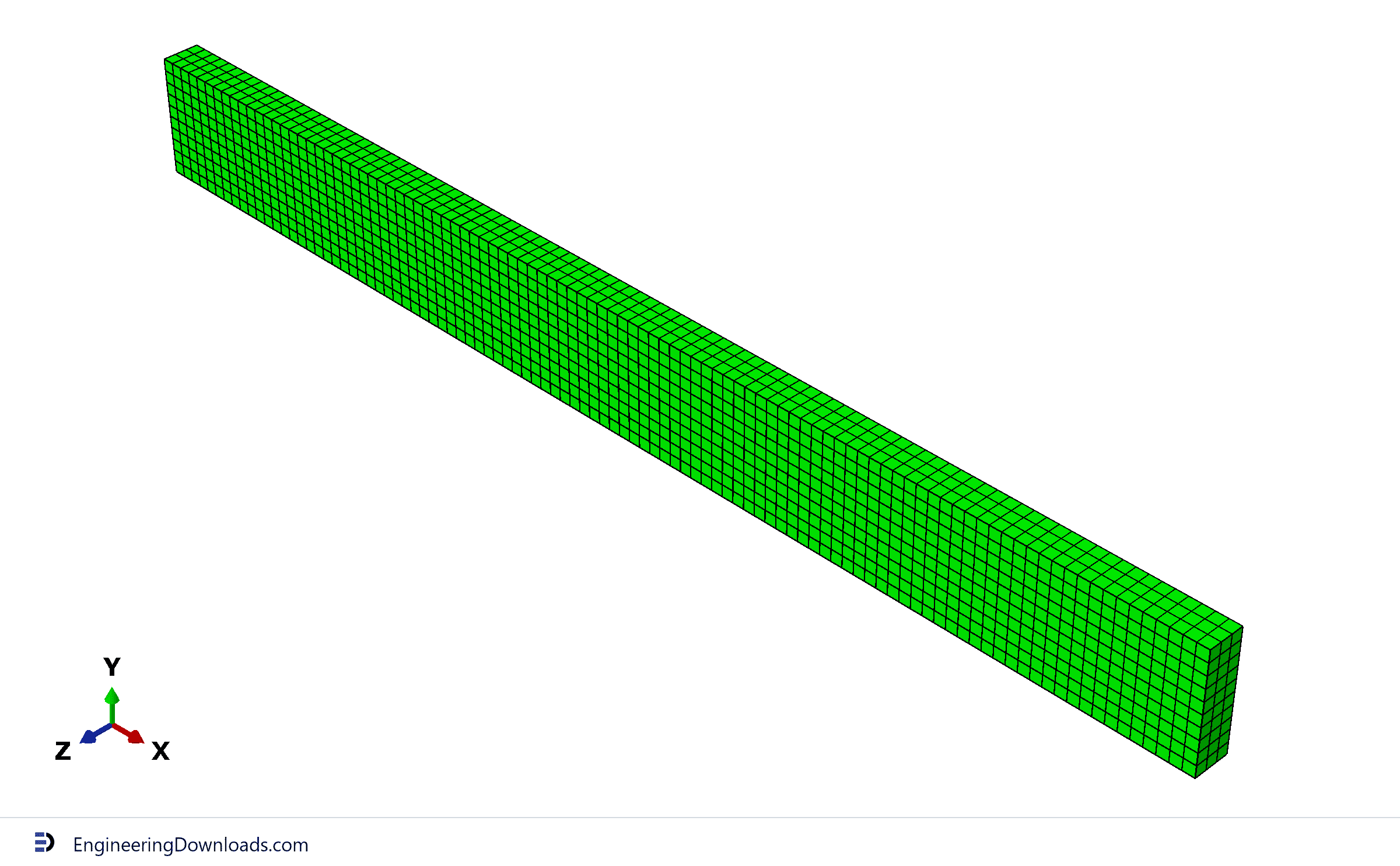
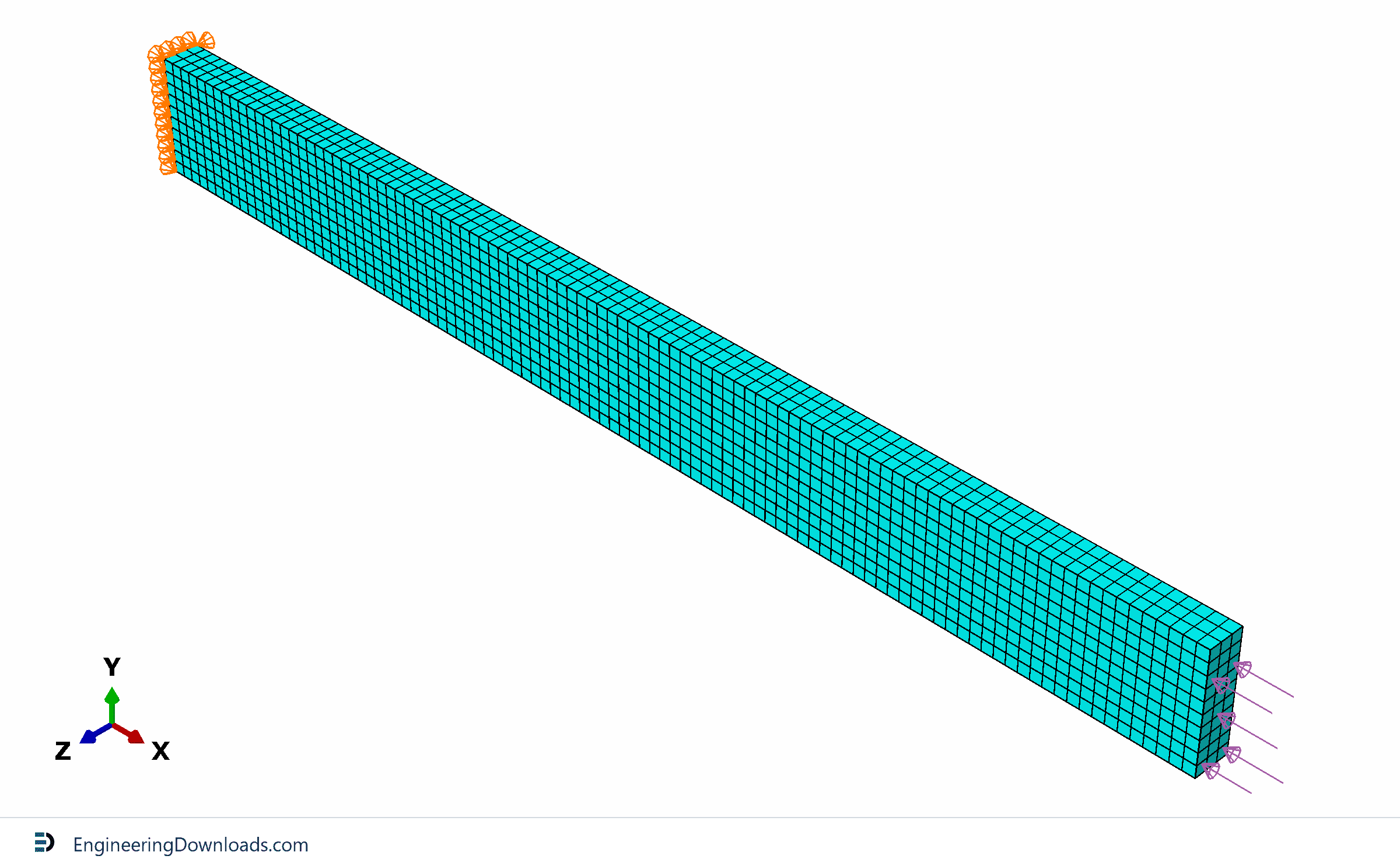
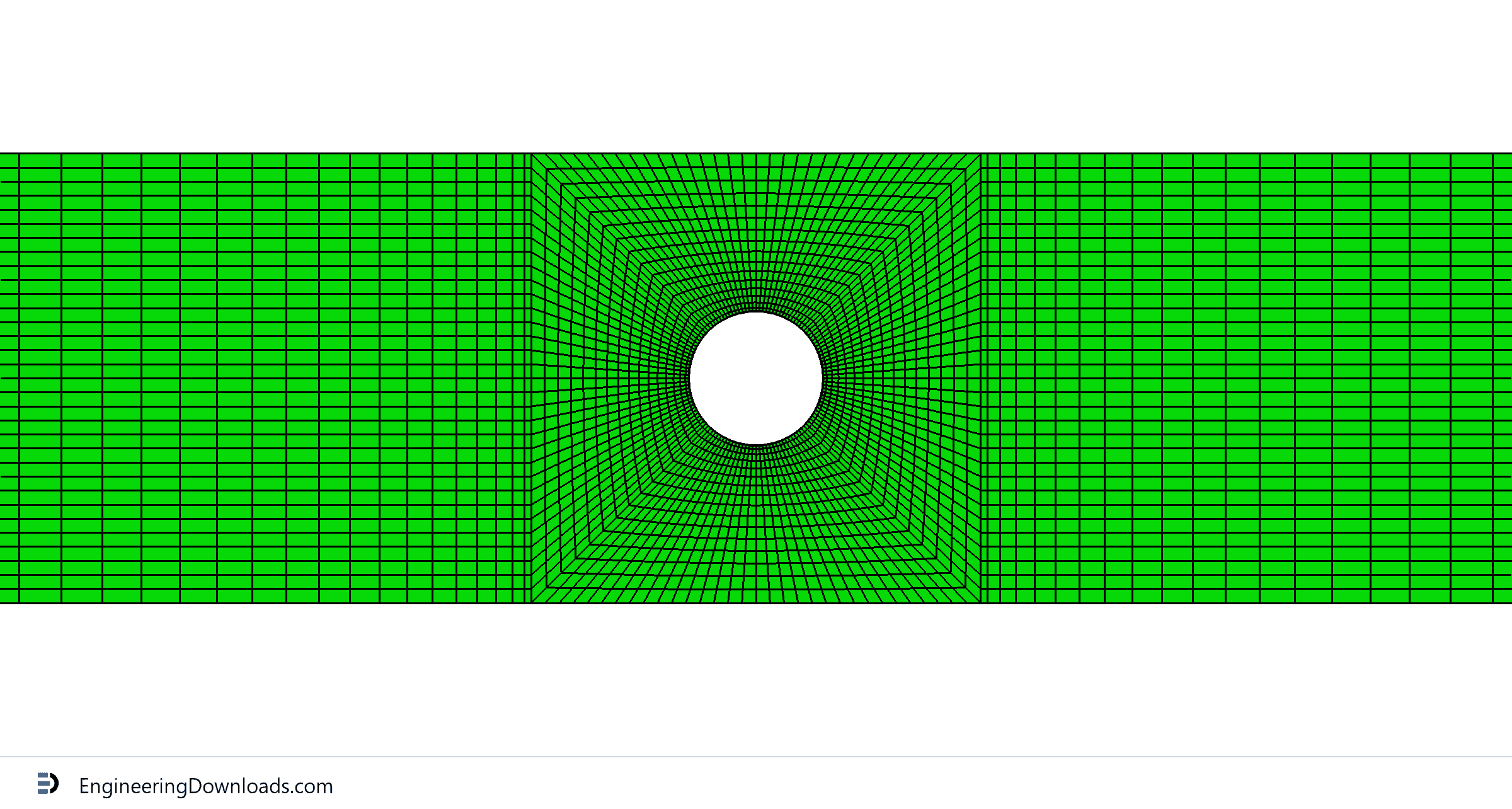
The straight-coupon model is an off-axis unidirectional carbon/epoxy coupon loaded cyclically. The pictures below show the mesh and the loads and boundary conditions exactly as they are set up in the delivered CAE and INP files.
Mean absolute difference of allowable stress, paper versus Abaqus, for the three validated loading scenarios:
| Loading scenario | Hashin | Tsai-Hill | Maximum stress |
|---|---|---|---|
| Tension-tension, 10 degree off-axis, R = 0.1 | 2.4 % | 2.3 % | 2.1 % |
| Compression-compression, 15 degree off-axis, R = 10 | 0.6 % | 0.3 % | 0.65 % |
| Tension-compression, 10 degree off-axis, R = -0.91 | 2.2 % | 2.4 % | 1.3 % |
Over all 41 compared points the mean absolute difference is 1.7 %. Against the experimental fit, the maximum-stress criterion lies within 1 % for the tension-tension 10 degree case, and Hashin and Tsai-Hill lie within about 2 % for the compression-compression 15 degree case.
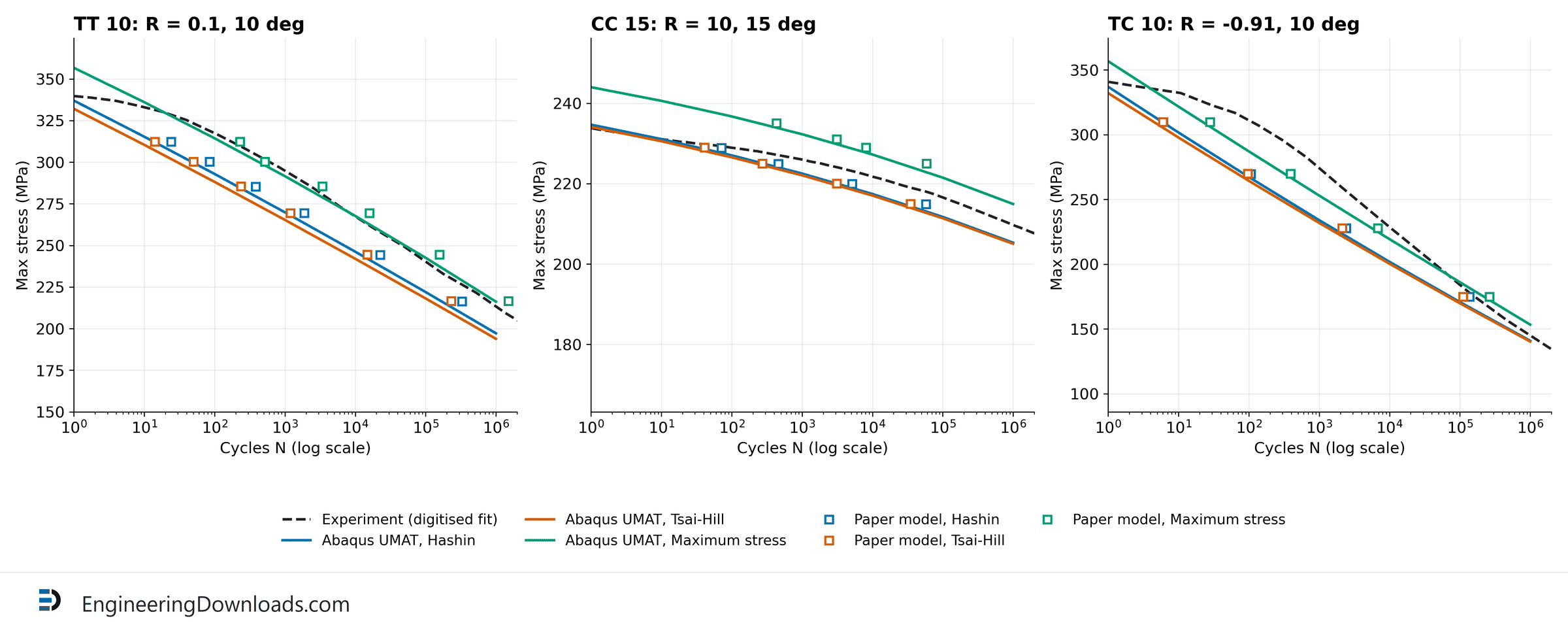
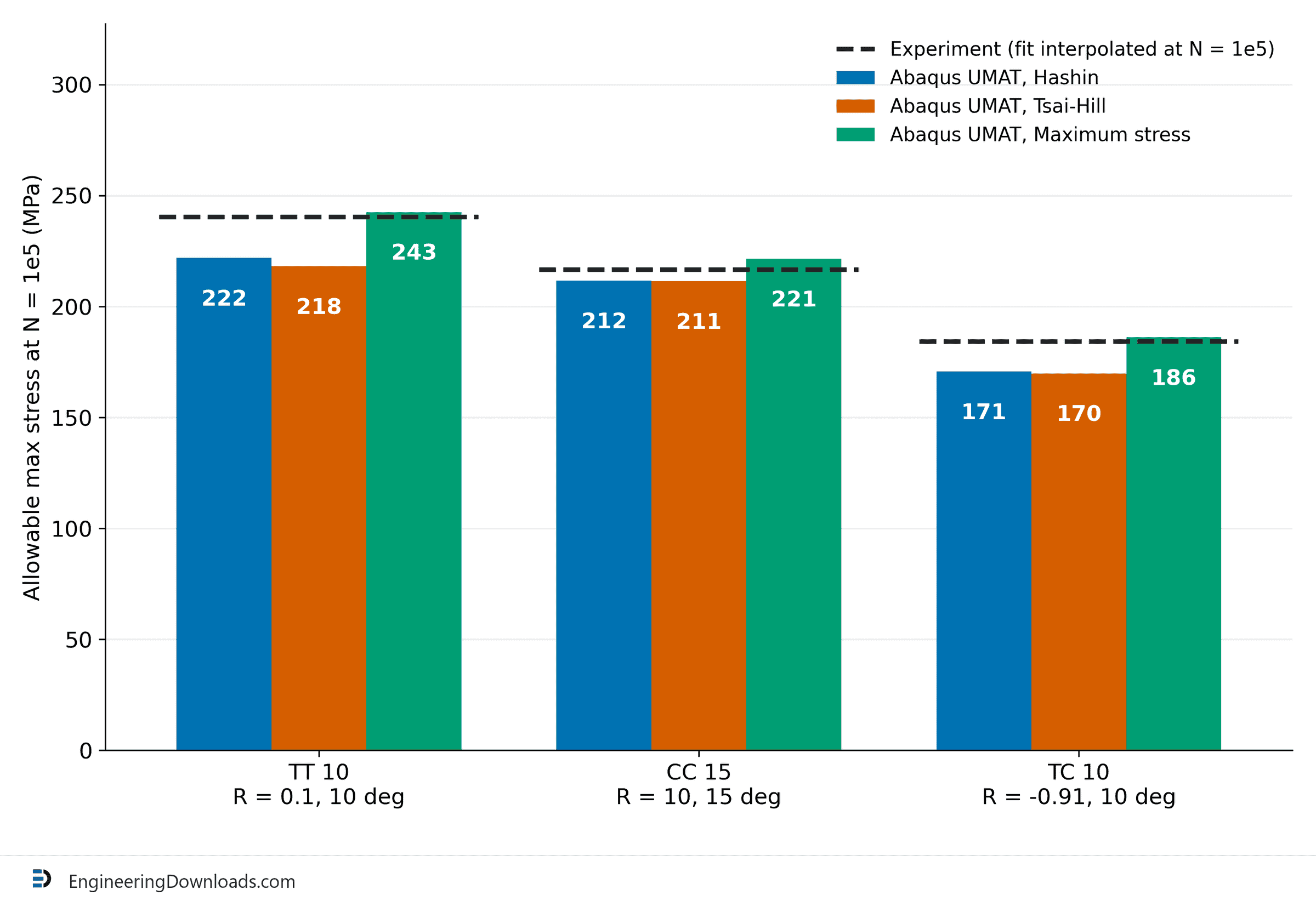
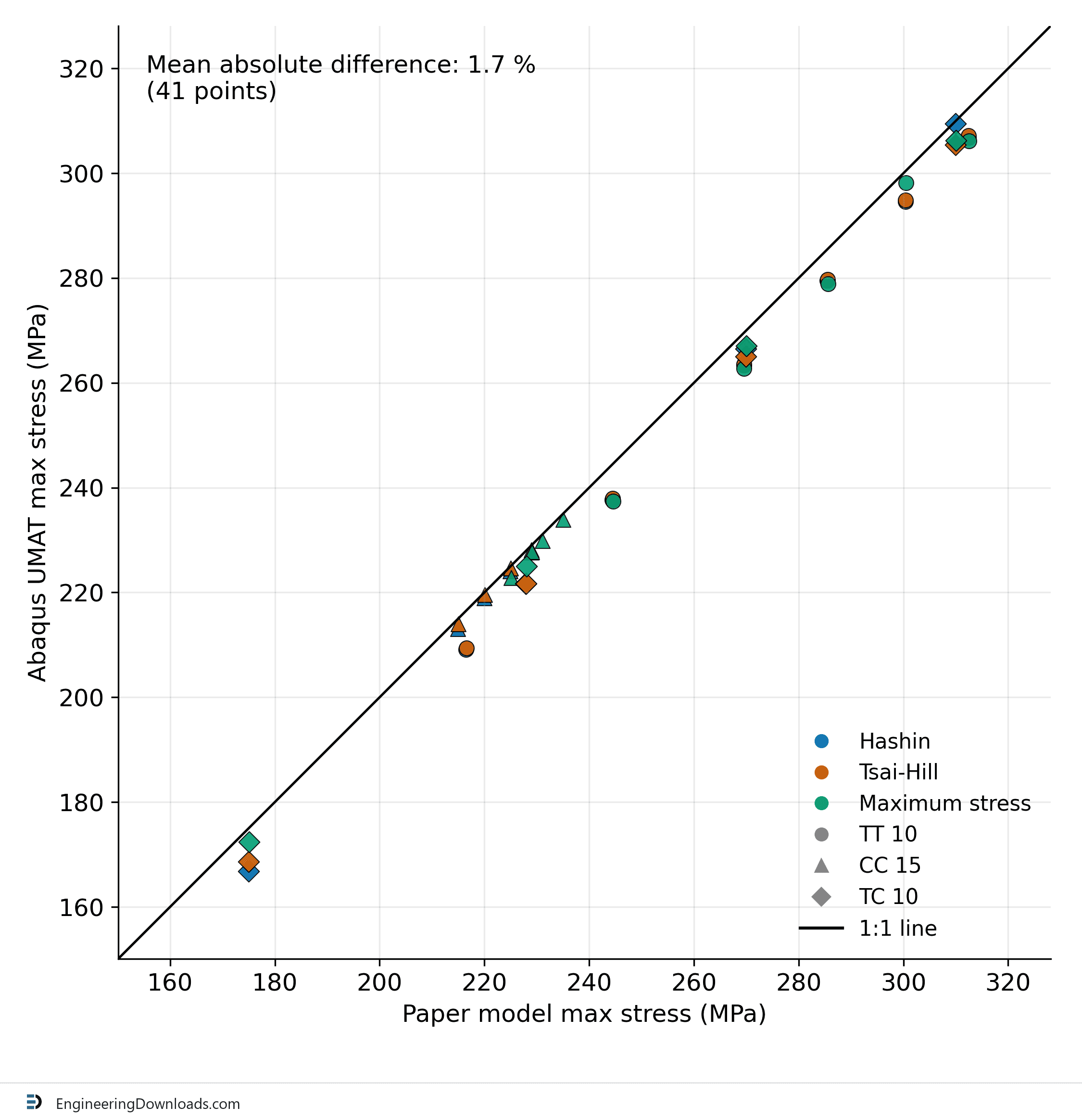
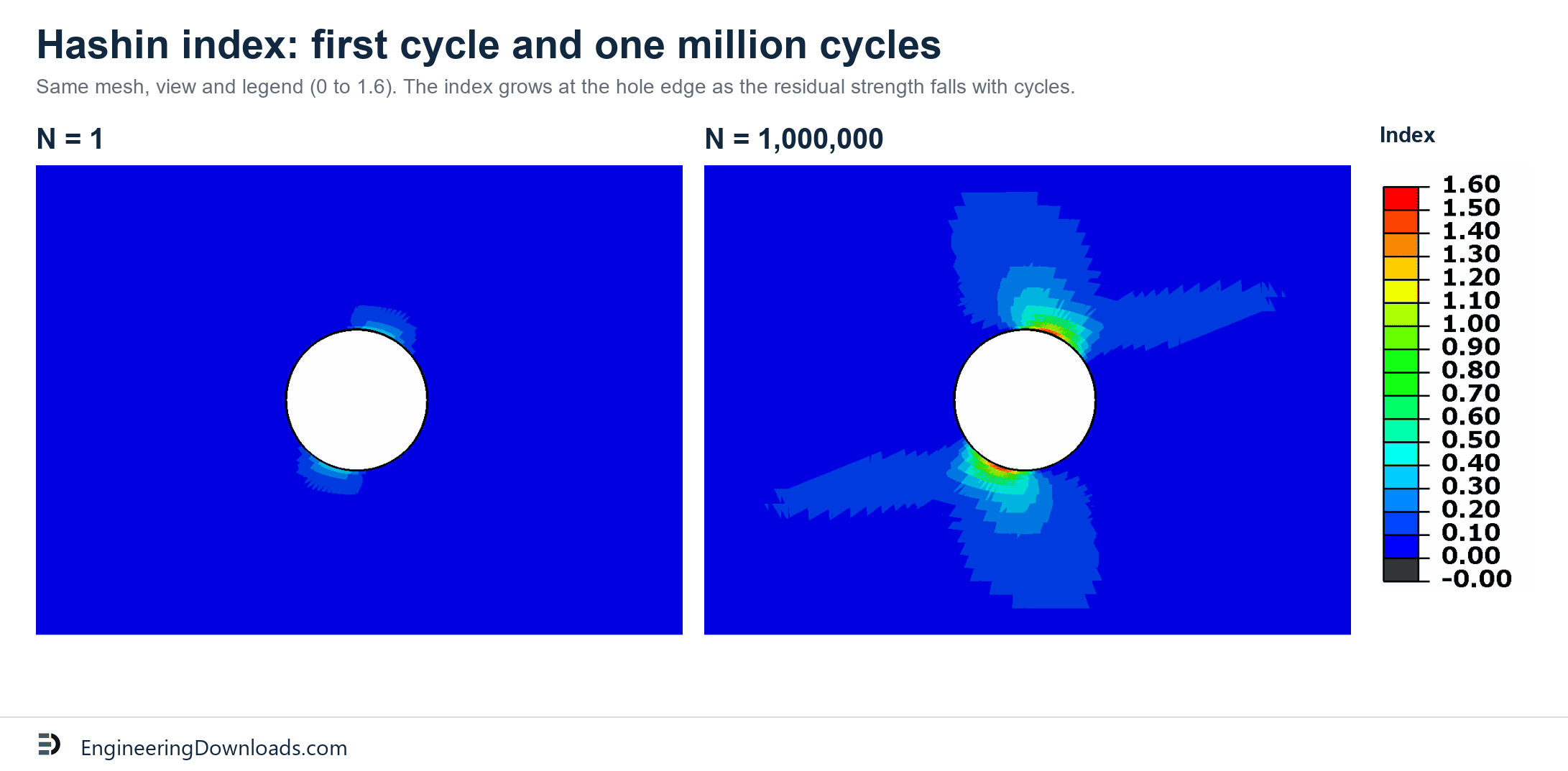
The model files (.inp/.cae) and the full UMAT source are included, so everything runs in your own Abaqus installation and can be adapted to your own material data.
The model follows A Multiaxial Fatigue Damage Model Based on Constant Life Diagrams for Polymer Fiber-Reinforced Laminates by Elkin, Gaibel, Dzhurinskiy and Sergeichev (Polymers 2022, 14, 4985). Many recent fatigue models for fiber-reinforced polymer composites rely on a fracture-energy equivalence assumption. They can estimate the fatigue life of laminates, but identifying them takes many off-axis tests at different stress ratios. The authors propose a stress-ratio-dependent model that follows experimental constant life diagrams to reduce the stiffness and residual strength of a single ply. Hashin, Tsai-Hill and maximum-stress criteria are used to detect damage initiation against the residual ply strength. According to the authors, S-N curves of the 0, 45 and 90 degree unidirectional plies are enough to identify the model. It was checked against S-N curves of 10, 15 and 30 degree unidirectional specimens and applied to laminates with arbitrary lay-up. The model was implemented in Abaqus as a user subroutine.
Paraphrase by EngineeringDownloads.com; refer to the original article for the authors full text. Source: Elkin, A.; Gaibel, V.; Dzhurinskiy, D.; Sergeichev, I., Polymers 2022, 14, 4985, https://doi.org/10.3390/polym14224985. This product is an independent implementation and is not affiliated with the authors or the journal.
What is included in the package? Abaqus model files for the straight-coupon benchmarks (CLD_UMAT.inp and CLD_UMAT.cae) and for a 15 degree open-hole plate (CLD_Open_Hole.inp and CLD_Open_Hole.cae), the editable Fortran UMAT source fatigue_umat.f90, a PDF tutorial, a short README and the one-click Python script run_model.py.
How do I run the model? Start run_model.py with the Python that ships with Abaqus. It runs the job with the user subroutine in your own Abaqus, collects the cycle-level results and writes the S-N curve data to CSV, with no manual steps in the Abaqus interface. You can also open the CAE files or submit the INP files yourself.
What do I need to run it? Abaqus with a compatible Fortran compiler configured for user subroutines. The model files (.inp/.cae) and the full UMAT source are included, so everything runs in your own Abaqus installation.
What are the three failure criteria? Hashin, Tsai-Hill and maximum stress. They are three failure criteria evaluated in one UMAT against the residual ply strength from the constant life diagram and stored as SDV8, SDV9 and SDV10. A value of 1 marks initiation.
How well does it match the paper? For tension-tension 10 degree R = 0.1, compression-compression 15 degree R = 10 and tension-compression 10 degree R = -0.91 the mean absolute difference of allowable stress is 1.7 % over 41 compared points.
Which paper does the model follow? Elkin, Gaibel, Dzhurinskiy and Sergeichev, Polymers 2022, 14, 4985, https://doi.org/10.3390/polym14224985. This product is an independent implementation and is not affiliated with the authors or the journal.
Need more than the files?
There are two ways we can help. Book a one hour online consultation if you want to talk a problem through with a CAE engineer, using the checkbox in the order box. Order a project if you need a full simulation built for you, delivered to an agreed scope, price and deadline under a written contract.
We work on FEA and CFD for engineers, researchers and companies. Order your project, or message us on WhatsApp for a quick reply.
Other packages engineers working on this topic also download.
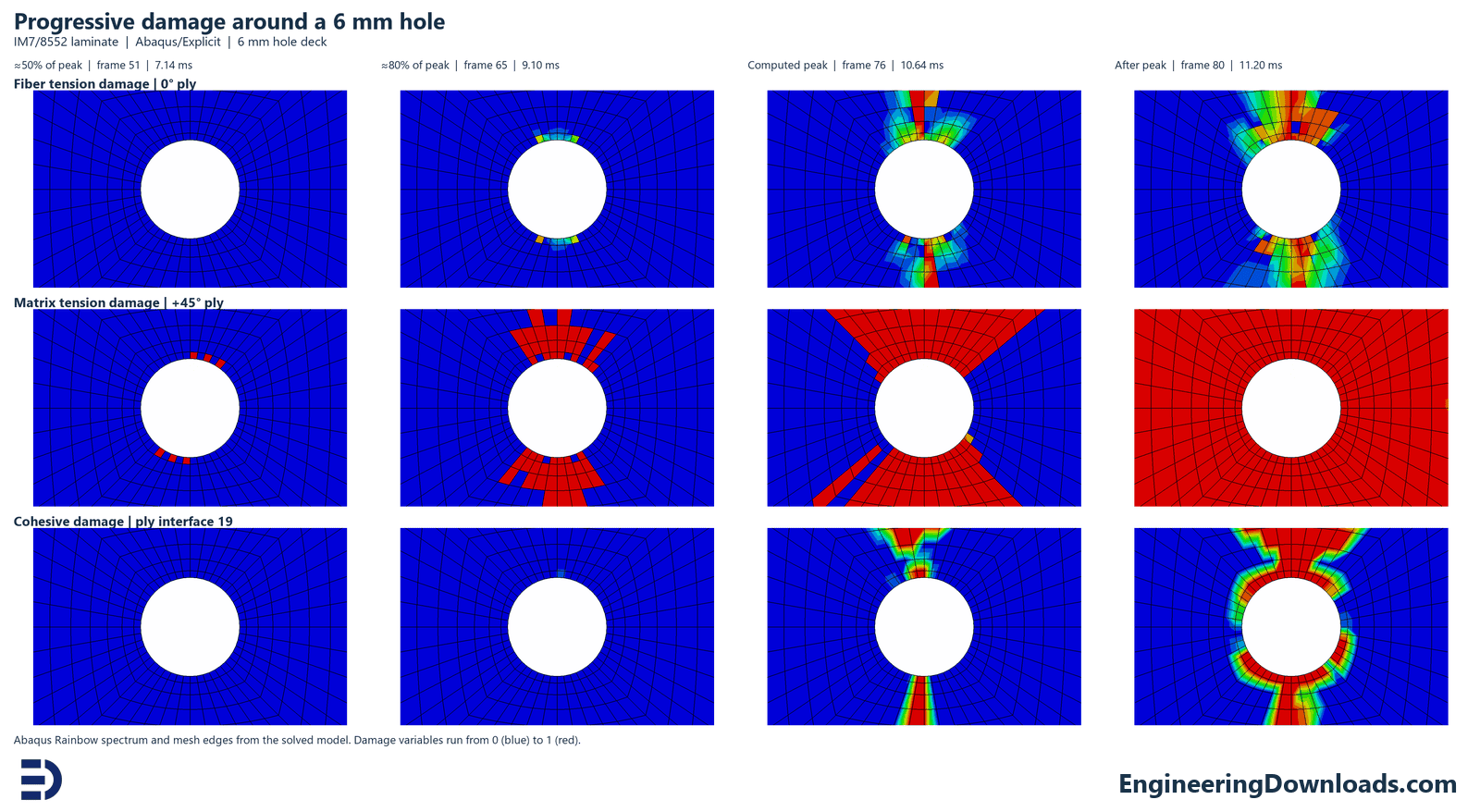 3D Hashin Progressive Damage VUMAT for Abaqus: Open-Hole Laminate with Cohesive Delamination€159,00
 LPBF 316L Residual Stress and Cantilever Distortion in Abaqus: Sequentially Coupled Thermal-Stress Model with DFLUX and USDFLD Subroutines€159,00
 Phase Field Fracture in Abaqus: AT1/AT2 UMAT, Crack Initiation and Edge-Cracked Tension Benchmark (Kristensen et al. 2021)€169,00
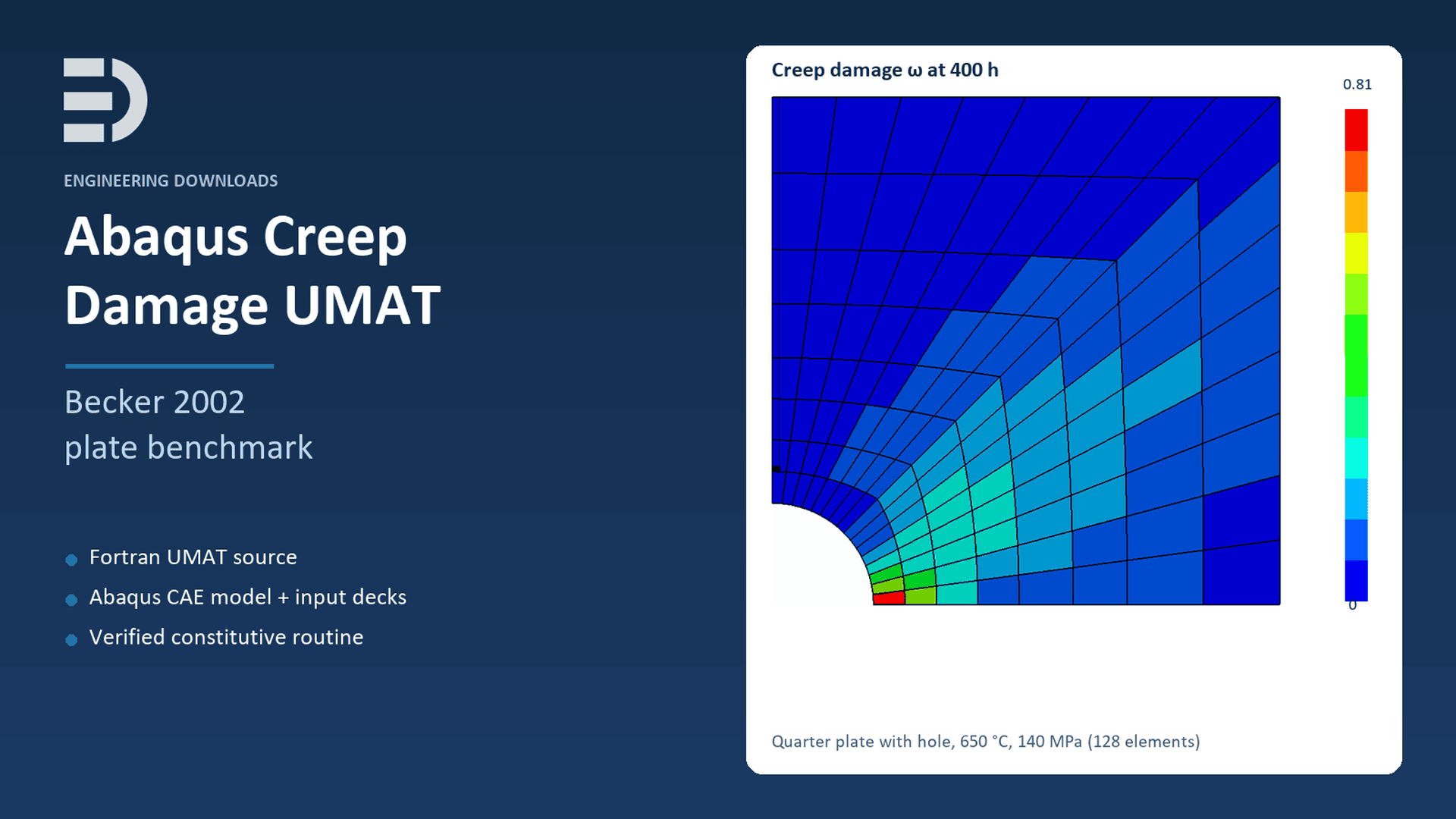 Creep Continuum Damage UMAT in Abaqus: Becker 2002 Perforated Plate Benchmark€49,00
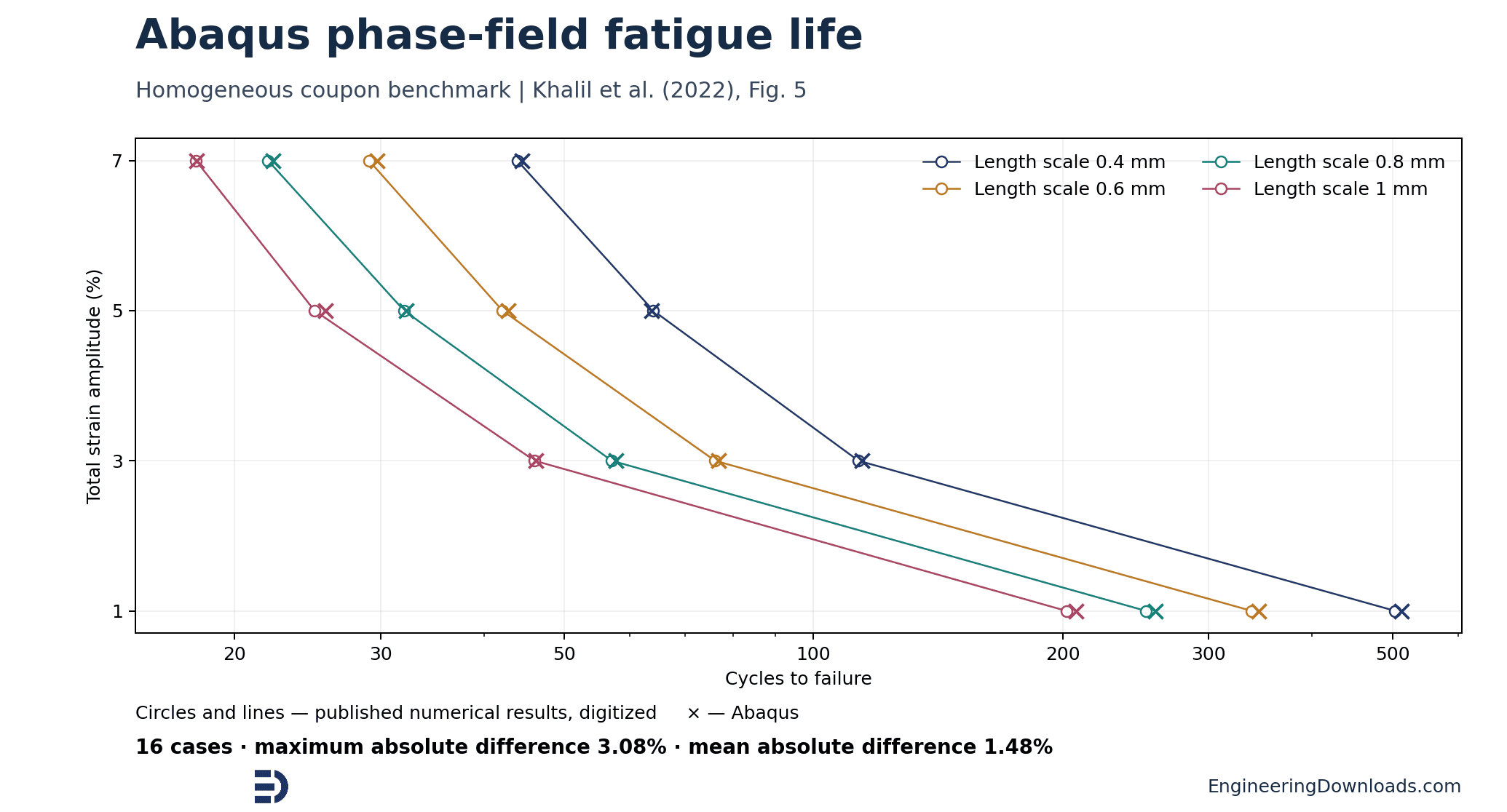 Abaqus Phase-Field Fatigue Life: Validated Coupon Benchmark€169,00
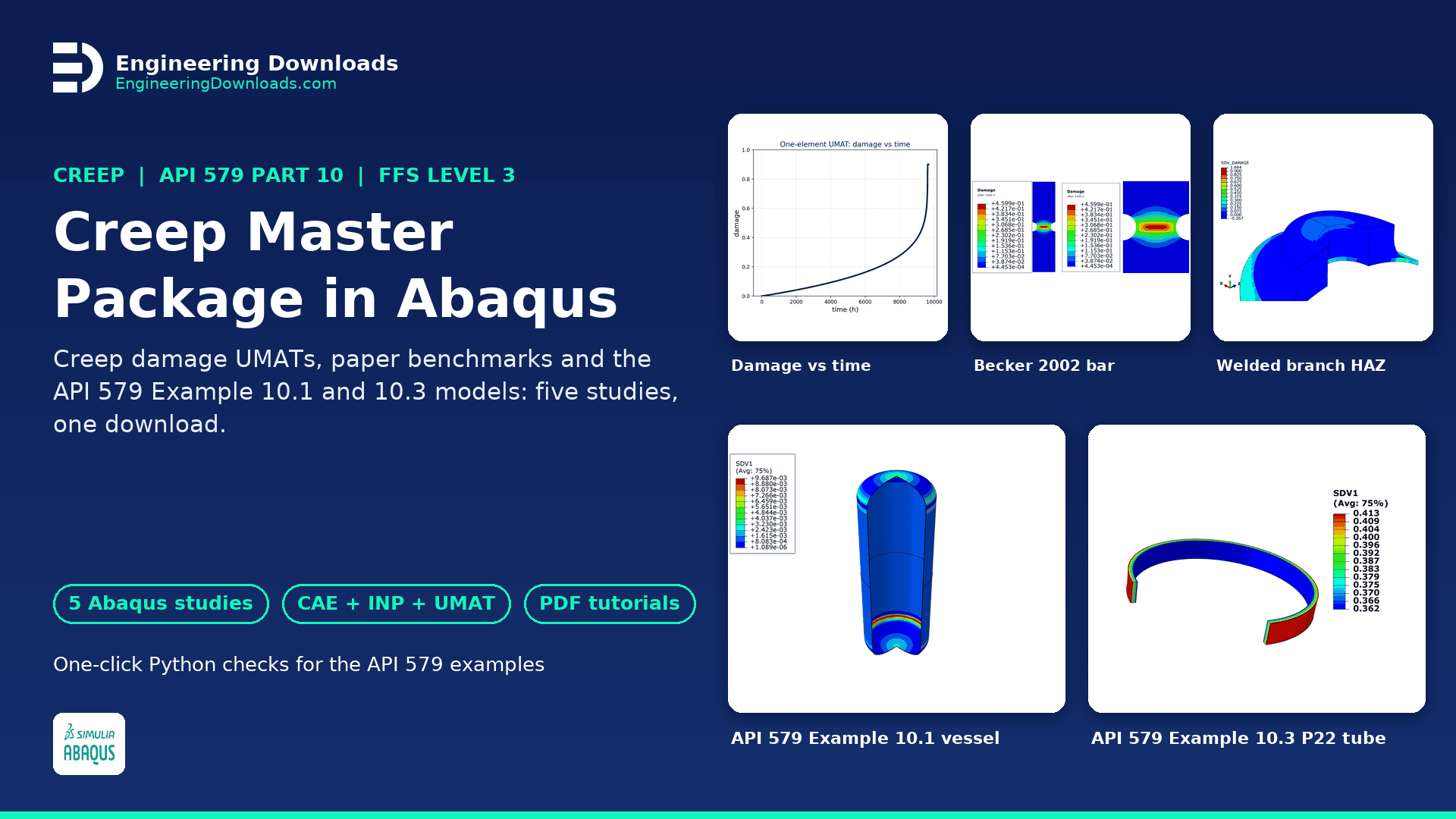 Creep Master Package in Abaqus: API 579 Part 10 Examples 10.1 and 10.3, Creep Damage UMAT and Paper Benchmarks€299,00
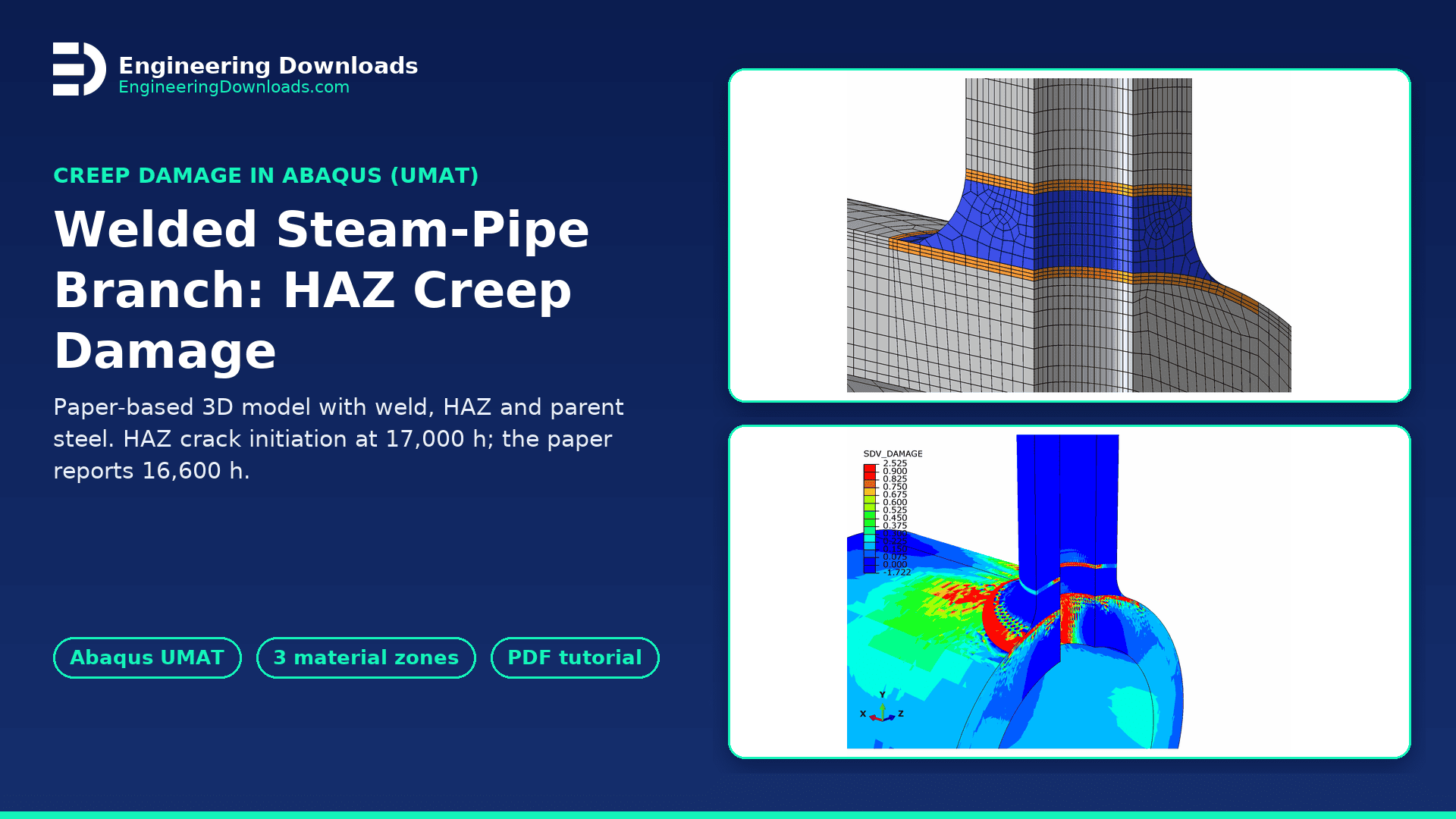 Creep Damage Analysis of a Welded Steam Pipe Branch in Abaqus: UMAT, HAZ Hex Mesh and Paper Comparison€149,00
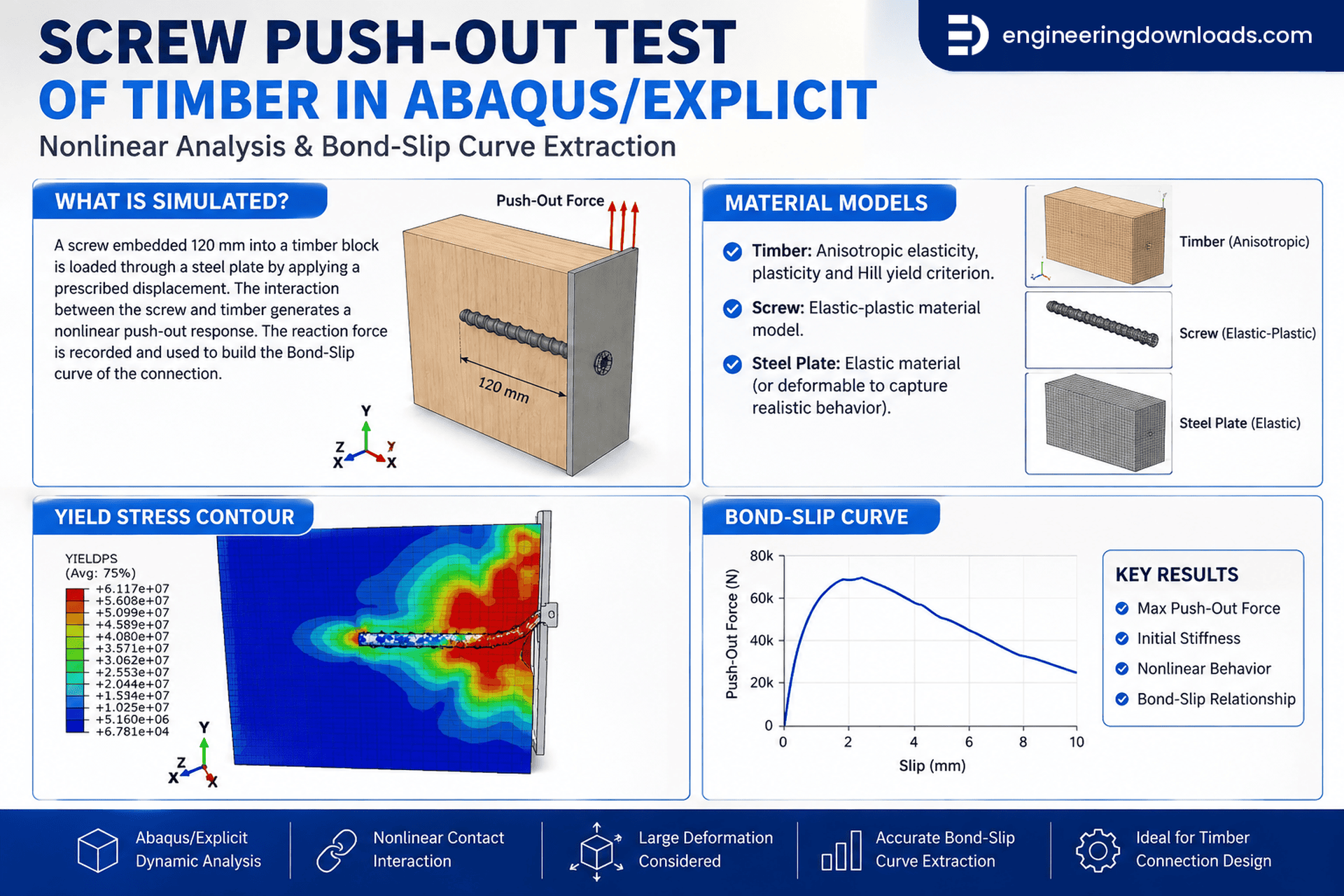 Screw Push-Out Test of Timber in Abaqus/Explicit: Bond-Slip Curve Simulation

Need a full custom project? See the options below.

€129,00

€179,00

€149,00

€119,00

€129,00

€149,00
See more
Want to receive push notifications for all major on-site activities?



