

Generative design is rapidly transforming how engineers approach product development, moving beyond traditional CAD modeling to an era of AI-powered exploration. Instead of manually creating designs, engineers define their problem statement, performance objectives, and constraints, then let intelligent algorithms generate a multitude of optimal solutions. This paradigm shift enables the creation of lighter, stronger, and more efficient components that were previously unimaginable, pushing the boundaries of innovation across diverse sectors.

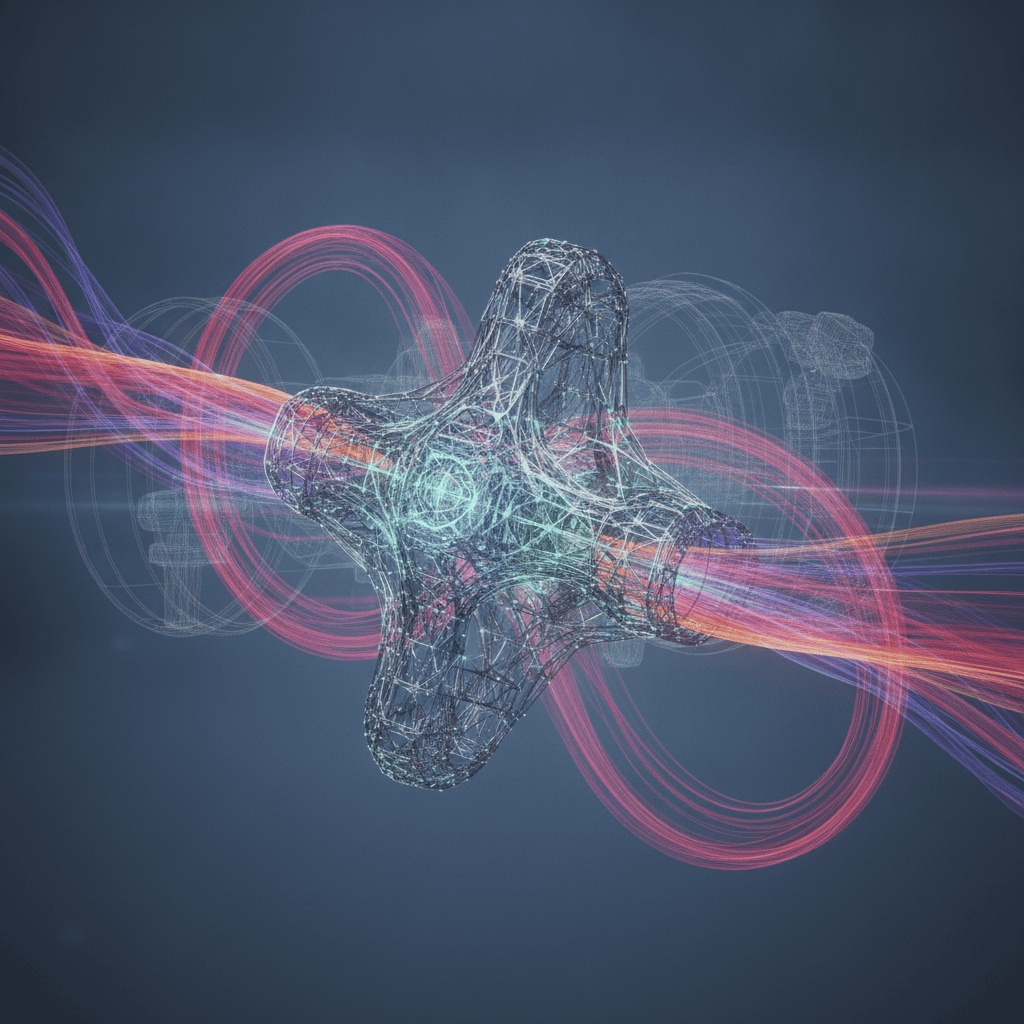
Image: A lightweight, structurally optimized component designed using generative design principles.
What is Generative Design?
At its core, generative design is a design exploration process that uses artificial intelligence and machine learning algorithms to rapidly generate numerous design alternatives. Unlike optimization methods that refine a pre-existing design, generative design creates designs from scratch based on engineer-defined inputs. Think of it as a super-powered design assistant that brainstorms thousands of possibilities, presenting you with a range of innovative solutions that meet your specified criteria.
The process is inherently iterative and goal-driven. You, the engineer, set the rules:
- Design Space: The permissible volume for the design.
- Loads and Boundary Conditions: Forces, pressures, and fixed points (similar to FEA inputs).
- Materials: The material properties to consider.
- Manufacturing Processes: Constraints based on how the part will be made (e.g., additive manufacturing, CNC machining, casting).
- Performance Objectives: Goals like minimizing mass, maximizing stiffness, or optimizing natural frequency.
The software then autonomously explores thousands or even millions of design permutations, evaluating each against your objectives and constraints. The result is a family of high-performing designs, often featuring organic, biomimetic shapes that are impossible to achieve with conventional design methods.
Generative Design vs. Topology Optimization
While often used interchangeably, it’s important to differentiate generative design from topology optimization:
- Topology Optimization: Typically starts with an existing solid volume and removes material from non-essential areas to meet performance goals. It refines an existing concept.
- Generative Design: Starts with design intent (requirements, constraints) and generates novel geometries. It’s about exploration and discovering new forms, often integrating topology optimization as one of its underlying algorithms.
How Generative Design Works: The Core Process
The generative design workflow can be broken down into several key stages:
Define Design Space & Constraints
This initial step involves defining the functional requirements of the part. You’ll specify ‘preserve regions’ (areas that must remain solid, like mounting points) and ‘obstacle regions’ (areas the design must avoid, like clearance for other components). Crucially, you’ll also define the loads, fixtures, and boundary conditions, much like setting up a Finite Element Analysis (FEA) study. For example, in an aerospace bracket, you’d specify bolt holes as preserve regions, adjacent component envelopes as obstacle regions, and flight loads as force inputs.
Set Performance Objectives & Manufacturing Methods
Here, you articulate what you want the design to achieve. Common objectives include:
- Minimize mass while meeting a target stiffness.
- Maximize stiffness given a maximum allowable mass.
- Optimize for specific vibration frequencies.
- Achieve a desired factor of safety.
You also inform the algorithm about the intended manufacturing process. This is critical as it dictates the geometric possibilities. Options might include additive manufacturing (3D printing), 3-axis milling, 5-axis milling, or casting. Each method introduces specific geometric constraints (e.g., overhang angles for 3D printing, tool access for milling).
Algorithm Exploration & Solution Generation
With the problem defined, the generative algorithm takes over. It uses computational power to iterate through countless design possibilities, evaluating each against the set objectives and constraints. This phase leverages techniques like topology optimization, lattice generation, and shape optimization. Modern generative design tools often run these simulations in the cloud, allowing for rapid exploration of a vast design space.
Result Interpretation & Refinement
Once the algorithms complete their run, you’ll be presented with a diverse set of design options. These are typically ranked based on your objectives (e.g., lightest-stiffest, cheapest-stiffest). You then analyze these results, considering factors like material usage, performance metrics, and aesthetic appeal. The selected design can then be further refined in traditional CAD software (e.g., CATIA, SolidWorks) or directly prepared for manufacturing.
Key Benefits for Engineers
Generative design offers a compelling array of advantages across various engineering disciplines:
- Innovation & Performance: Uncovers non-intuitive designs that often outperform human-designed counterparts in terms of strength-to-weight ratio or efficiency. Ideal for high-performance applications in aerospace or F1 racing.
- Material Efficiency & Weight Reduction: By optimizing material placement, generative designs can significantly reduce part mass, leading to fuel savings in aerospace and automotive sectors, or lower material costs in manufacturing.
- Speed & Iteration: Dramatically accelerates the design exploration phase. Engineers can evaluate hundreds or thousands of design concepts in the time it would take to manually create a handful.
- Cost Savings: Reduced material consumption, optimized manufacturing processes, and faster time-to-market contribute to overall cost reduction.
- Customization & Personalization: Particularly relevant in biomechanics (e.g., custom prosthetics, surgical implants) where designs can be tailored to individual patient anatomy.
Practical Workflow for Generative Design
Implementing generative design effectively requires a structured approach. Here’s a practical workflow:
1. Problem Definition & Requirements Gathering
- Identify the component: What part needs optimization or redesign?
- Define functional requirements: What does the part need to do? (e.g., support X load, dissipate Y heat).
- Collect operational data: Where will the part be used? What are the environmental conditions?
- Establish key performance indicators (KPIs): What defines success? (e.g., 20% weight reduction, 15% stiffness increase).
2. Software Setup & Pre-processing
- Choose your tool: Select generative design software (e.g., Autodesk Fusion 360, Altair Inspire, nTopology, ANSYS Discovery).
- Import existing CAD: Bring in any ‘keep-out’ regions, existing components, or reference geometry.
- Define the design space: Create a bounding box or envelope representing the maximum allowable volume for your new design.
3. Defining Loads, Boundary Conditions, & Materials
- Apply Loads: Specify forces, pressures, moments. Ensure these are realistic and represent peak operating conditions. For example, in an Oil & Gas context, apply pressures and thermal loads for a piping component.
- Apply Boundary Conditions (BCs): Fix degrees of freedom at mounting points or interfaces. Consider the real-world constraints; over-constraining can lead to unrealistic results.
- Select Materials: Choose from the material library or input custom properties (Young’s Modulus, Poisson’s Ratio, Yield Strength). Remember that generative design is highly sensitive to material properties.
4. Setting Objectives & Manufacturing Constraints
- Primary Objective: Is it weight reduction, stiffness maximization, or a multi-objective goal?
- Secondary Objectives/Constraints: Set limits (e.g., maximum deflection, minimum factor of safety, maximum stress).
- Manufacturing Process: Select the intended fabrication method (e.g., ‘additive manufacturing with 45-degree overhang limit’, ‘5-axis milling’, ‘die casting’). This is crucial for producing manufacturable geometries.
5. Running the Generative Algorithm
- Review parameters: Double-check all inputs before starting the generation process.
- Run studies: Initiate the generative study. Many tools leverage cloud computing for this, allowing you to explore more options quickly.
- Monitor progress: Some software provides real-time feedback on solution convergence and exploration.
6. Post-Processing & Refinement
- Filter results: Analyze the generated designs based on your objectives. Many tools provide interactive charts (e.g., mass vs. stiffness) to help select the optimal candidate.
- Smooth geometry: Generatively designed parts often have organic, faceted surfaces. Use CAD tools (e.g., CATIA, Siemens NX) to smooth and regularize the mesh for better manufacturability and aesthetics.
- Prepare for detailed FEA/CFD: Export the chosen design to your preferred CAE software (e.g., Abaqus, ANSYS Mechanical, Fluent, OpenFOAM) for detailed re-analysis and validation. This is a critical step to ensure the generated geometry truly meets all performance requirements under rigorous conditions.
7. Fabrication Consideration & Validation
- Design for Manufacturing (DFM): Even with manufacturing constraints applied in generative design, a DFM review is essential.
- Prototyping & Testing: If feasible, prototype the design (e.g., via 3D printing) and conduct physical testing to validate its performance against the design goals.
For complex projects or when navigating advanced simulation and generative design workflows, consider leveraging downloadable templates, scripts, or online consultancy from EngineeringDownloads.com. Our resources can help streamline your process and optimize your results.
Generative Design in Specific Engineering Disciplines
Generative design finds compelling applications across a wide spectrum of engineering fields:
Aerospace
- Lightweighting: Critical for fuel efficiency and performance. Generative design produces optimized structures (e.g., brackets, ribs, spars) that significantly reduce mass while maintaining structural integrity.
- Structural Integrity: Designs are inherently optimized for stress distribution, crucial for high-load environments. Often validated with tools like Abaqus or ANSYS Mechanical.
Automotive
- Component Optimization: From chassis components to engine brackets, generative design helps reduce vehicle weight, improving fuel economy and electric vehicle range.
- Performance Parts: Design of racing components, optimizing airflow for CFD analysis in Fluent/CFX, or suspension arms (analyzed in ADAMS).
Medical & Biomechanics
- Implants & Prosthetics: Custom-fit, lattice-filled designs for bone ingrowth, optimized for biocompatibility and load-bearing. This involves careful consideration of material properties and patient-specific data.
- Surgical Tools: Lightweight, ergonomic, and sterile-friendly instrument designs.
Oil & Gas
- Component Reinforcement: Optimizing the geometry of pipes, valves, or pressure vessel components to withstand extreme pressures and temperatures.
- Fitness-for-Service (FFS) Level 3: While not directly performing FFS, generative design can inform the optimal repair or reinforcement geometry for compromised components, which would then be rigorously analyzed using FEA (e.g., Abaqus, ANSYS) for FFS Level 3 assessment. This could involve generating lightweight, yet strong, stiffeners.
- Material Optimization: Reducing material usage in large structures or offshore platforms while meeting load requirements.
CAD-CAE Workflows & Automation
Generative design thrives on seamless integration within the broader CAD-CAE ecosystem.
- Integrated Platforms: Tools like Fusion 360, ANSYS Discovery, and Altair Inspire provide integrated environments where design, generative exploration, and basic simulation can occur within the same interface.
- Data Exchange: Designs generated often need to be exported as mesh or NURBS surfaces to high-fidelity FEA tools like MSC Patran/Nastran, Abaqus, or ANSYS Mechanical for detailed validation.
- Scripting & Automation: Python and MATLAB are invaluable for automating pre-processing tasks, batch-running generative studies, post-processing large datasets of generated designs, or setting up parametric studies. For example, a Python script could parse simulation results from an OpenFOAM CFD run and use that data as an input for a generative thermal design problem.
Verification & Sanity Checks for Generative Designs
Even though generative algorithms are sophisticated, human oversight and rigorous validation are non-negotiable. Always perform these checks:
1. FEA Re-analysis
- Independent Verification: Export the generated geometry and perform a full FEA using established tools like Abaqus, ANSYS Mechanical, or MSC Nastran. Apply the exact loads, BCs, and material properties used in the generative study.
- Compare Results: Validate stresses, strains, deflections, and natural frequencies against the generative solver’s predictions. Look for significant discrepancies.
2. Mesh Sensitivity & Convergence
- Mesh Quality: Ensure the exported geometry is suitable for meshing in your FEA software. Remesh with different element sizes to confirm that your results are converging and not overly dependent on mesh density.
- Solver Convergence: Verify that your FEA solver has converged to an accurate solution.
3. Boundary Condition Impact
- Realism Check: Review your applied loads and boundary conditions. Do they accurately represent the real-world operating environment? Are any constraints overly rigid or too flexible?
- Sensitivity Analysis: If possible, perform a sensitivity study by slightly varying key loads or BCs to understand their impact on the design’s performance.
4. Material Property Checks
- Correctness: Confirm that the material properties used in the generative study and the subsequent FEA are accurate and consistent.
- Temperature Effects: For applications like Oil & Gas or aerospace, ensure temperature-dependent material properties are considered if relevant.
5. Manufacturability Assessment
- Tool Access: For subtractive manufacturing, can the tools reach all surfaces? Are internal features manufacturable?
- Overhangs: For additive manufacturing, are overhang angles within acceptable limits for the chosen printer and material?
- Cost Implications: Does the complexity of the generated part significantly increase manufacturing cost or lead time?
6. Validation Against Benchmarks
- Theoretical Solutions: For simpler load cases, compare results against theoretical hand calculations.
- Existing Designs: If a traditional design exists, compare the performance of the generatively designed part to it.
These checks ensure that the innovative forms produced by generative design are not just theoretically optimal, but also robust, reliable, and manufacturable in the real world.
Common Pitfalls and How to Avoid Them
While powerful, generative design isn’t a magic bullet. Engineers must be aware of potential pitfalls:
| Pitfall | Description | How to Avoid |
|---|---|---|
| Over-constraining the Design | Too many preserve regions or overly restrictive manufacturing constraints limit the algorithm’s exploration, leading to sub-optimal or trivial results. | Start with minimal constraints; gradually add complexity. Focus on functional necessities. |
| Ignoring Manufacturing Realities | Generating a theoretically perfect design that’s impossible or prohibitively expensive to manufacture with available processes. | Always apply appropriate manufacturing constraints (e.g., min wall thickness, overhang angles, draft angles) during the setup phase. Consult with manufacturing specialists early. |
| Poorly Defined Loads & BCs | Inaccurate or incomplete load cases and boundary conditions lead to flawed designs that fail in service. | Invest significant time in defining accurate loads and BCs. Leverage insights from existing FEA/CFD models and physical testing data. |
| Insufficient Post-processing | Failing to smooth, refine, or re-analyze the generated geometry, leading to models that are hard to use in downstream processes or prone to simulation errors. | Always export, smooth, and perform an independent, high-fidelity FEA of the final generated design. |
| Neglecting Validation | Assuming the generative output is automatically ‘correct’ without rigorous verification. | Always perform the full suite of verification & sanity checks, including independent FEA, mesh sensitivity, and (if possible) physical prototyping. |
Getting Started with Generative Design
Ready to integrate generative design into your workflow? Here are practical tips:
- Start Small: Begin with non-critical components or sub-assemblies to get comfortable with the process.
- Learn the Software: Invest time in understanding your chosen generative design software’s interface, capabilities, and limitations. Most vendors offer extensive tutorials.
- Understand Your Materials: Generative design outputs are highly dependent on accurate material properties.
- Collaborate: Work with colleagues in manufacturing, materials science, and simulation to ensure a holistic approach.
- Stay Updated: The field is evolving rapidly. Keep an eye on new algorithms, software features, and industry best practices.
Future Trends in Generative Design
The future of generative design is exciting, with ongoing advancements in several key areas:
- AI and Machine Learning Integration: Deeper integration of AI for smarter design exploration, automated parameter tuning, and predictive performance analysis.
- Multi-Physics Optimization: Beyond structural optimization, expect generative design to increasingly tackle combined thermal, fluid dynamics (CFD), and electromagnetic problems. Imagine a component optimized simultaneously for lightweighting, heat dissipation, and fluid flow efficiency.
- Bio-Inspired Design: Further leveraging nature’s design principles for even more efficient and sustainable solutions.
- Real-time Generative Feedback: Tools offering instantaneous visual feedback as constraints or objectives are adjusted.
Generative design is not just a tool; it’s a new mindset for engineering. By embracing this technology, engineers can unlock unprecedented levels of creativity, efficiency, and performance, delivering innovative solutions that shape the future.









