New Blogs

Abaqus Integration Point vs Nodal Stress: Why Peaks Differ
Compare integration-point, element-nodal and unique-nodal stress in Abaqus, and check whether a contour peak depends on extrapolation, averaging or mesh size.
Abaqus Linear Perturbation vs General Step: What Actually Changes

You run a frequency extraction after a static step and the frequencies come out the same whether or not the part had yielded. You run a static linear perturbation step and the reaction force is a fraction of what you

Harmonic Response Analysis in ANSYS Workbench: A Practical Guide
How to set up harmonic response analysis in ANSYS Workbench: modal link, frequency range, solution method, damping, loads and results, plus the common mistakes.
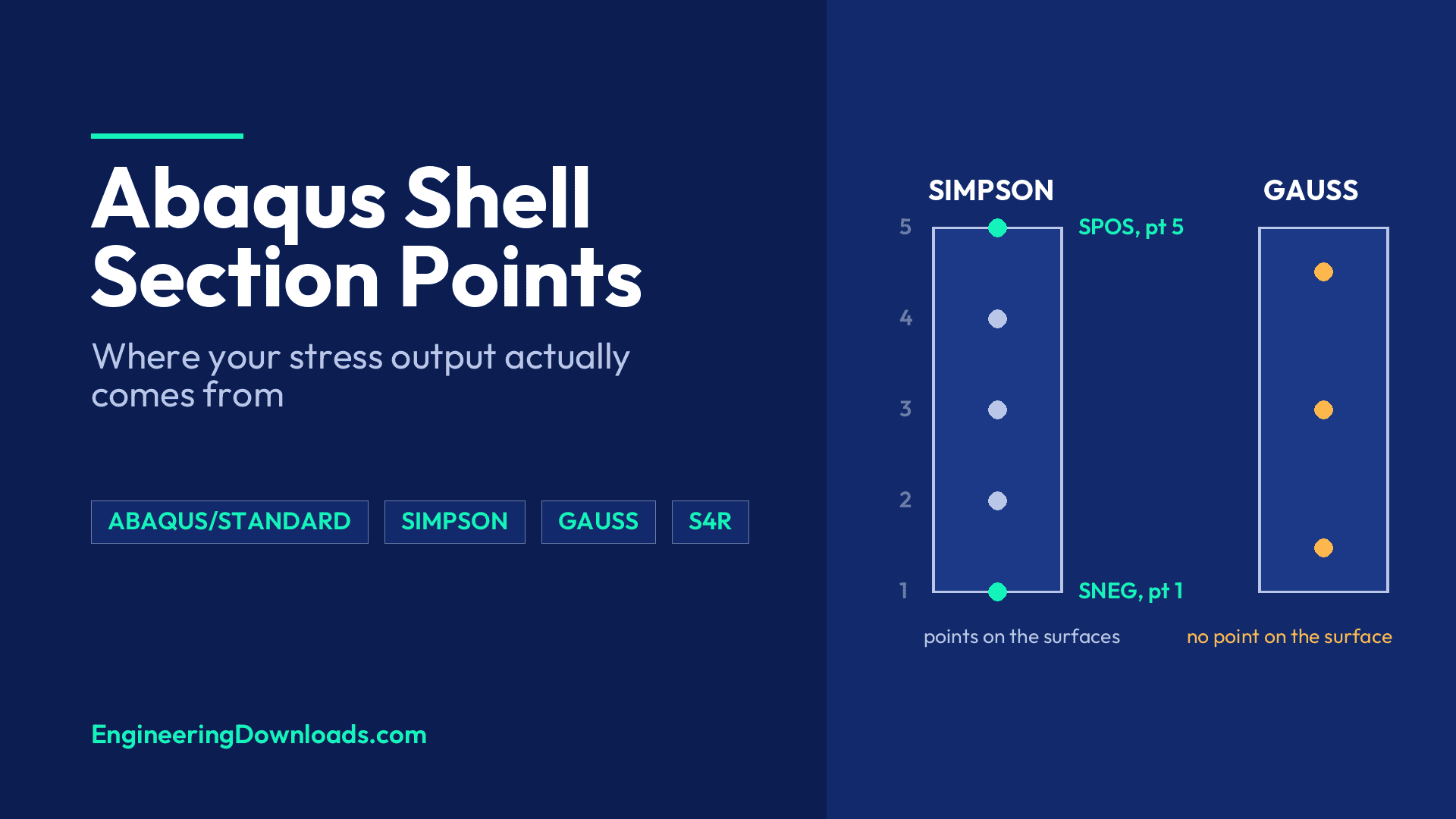
Abaqus Shell Section Points: Where Your Stress Output Comes From
What Abaqus shell section points are, the defaults you never chose, Simpson vs Gauss, SNEG and SPOS, and how to request the output location you actually need.
Abaqus NLGEOM On or Off: When Geometric Nonlinearity Changes Your Answer
What the Abaqus NLGEOM switch really does, why Standard and Explicit have opposite defaults, and how to decide which of your two answers to trust.

Featured Blogs

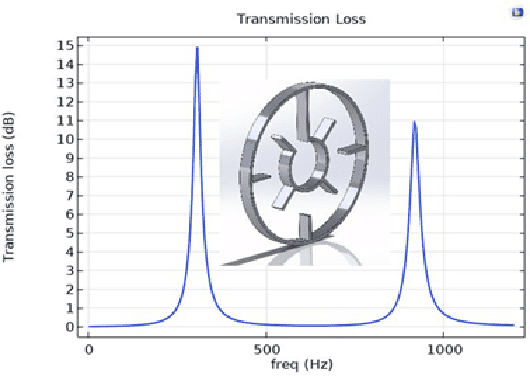
Acoustic metamaterials for advanced sound control and noise reduction
Acoustic Metamaterials and Metasurfaces: Shaping the Future of Sound Control

Intro Acoustic metamaterials and acoustic meta surfaces are changing how we control sound waves. These specially designed structures go beyond the limits of traditional soundproofing. They offer new ways to control sound, such as reducing noise over a wide frequency

OpenSees software simulation of nonlinear seismic response in a reinforced concrete frame
OpenSees for Structural Analysis

OpenSees (Open System for Earthquake Engineering Simulation) is an open-source software framework developed primarily for nonlinear structural and geotechnical analysis, with a strong emphasis on earthquake engineering. Developed at UC Berkeley’s Pacific Earthquake Engineering Research Center (PEER), it provides a
Abaqus or ANSYS : Which one is better?
Which one is better? Abaqus or ANSYS?

As an engineer, we need to build a model to simulate a process so we can save many and reduce processing time. For this aim, we need to use conventional solvers such as Abaqus, ANSYS, Solidwork (I know, Solidwork solver

See more

Latest Blogs

Abaqus Integration Point vs Nodal Stress: Why Peaks Differ
Compare integration-point, element-nodal and unique-nodal stress in Abaqus, and check whether a contour peak depends on extrapolation, averaging or mesh size.
Abaqus Linear Perturbation vs General Step: What Actually Changes

You run a frequency extraction after a static step and the frequencies come out the same whether or not the part had yielded. You run a static linear perturbation step and the reaction force is a fraction of what you

Harmonic Response Analysis in ANSYS Workbench: A Practical Guide
How to set up harmonic response analysis in ANSYS Workbench: modal link, frequency range, solution method, damping, loads and results, plus the common mistakes.

See more

All articles

y Plus in CFD: Target Values and How to Hit Them
y plus in CFD explained: target ranges for wall functions and wall-resolved meshes, how to size the first cell, and fix a y+ that comes out wrong.
ANSYS Chaboche Model: Nonlinear Kinematic Hardening Guide
Set up the ANSYS Chaboche model correctly: how many backstress terms you need, what each C and gamma does, and how to fit them from a hysteresis loop.
Abaqus Ratcheting Analysis: Combined Hardening Setup and Fixes
Abaqus ratcheting analysis done right: combined hardening setup, Chaboche parameters, and the fix for a model that over-predicts ratchet strain.
Abaqus Direct Cyclic Analysis: A Practical Guide to Low-Cycle Fatigue
Abaqus direct cyclic analysis explained step by step: set up the step, choose Fourier terms, run low-cycle fatigue damage and fix convergence.
Abaqus VCCT Crack Growth: A Practical Setup Guide for Delamination
Set up Abaqus VCCT crack growth for delamination step by step: bonded node sets, BK vs Reeder laws, and the fixes that get a stalled job to converge.
Abaqus MSG File: How to Read .msg, .sta and .dat to Fix a Failed Job
Learn how to read the Abaqus MSG file, plus the .sta and .dat files, to find exactly why your job failed and which node is breaking convergence.
Damping in Abaqus: How to Choose Alpha, Beta and Rayleigh Damping
Damping in Abaqus explained: where to define alpha and beta, how to fit Rayleigh factors to a target damping ratio, and the Explicit runtime trap.
Abaqus USDFLD Subroutine: Practical Guide with Working Examples
How the Abaqus USDFLD subroutine works, the three keywords you must define, reading stress with GETVRM, two working Fortran examples, and the common mistakes.
WAAM Simulation in Abaqus: Distortion and Residual Stress

You have a WAAM model running in Abaqus. The temperature field looks convincing and the melt pool sits where it should. Then you compare the predicted distortion of the substrate with what the lab measured, and you are out by

APDL Commands in ANSYS Workbench: A Practical Guide
Learn how to use APDL commands in ANSYS Workbench: where to insert snippets, matid and cid parameters, ready snippets, and mistakes to avoid.
ASME VIII Division 2 Part 5 FEA: Design by Analysis in Practice

You have a vessel or nozzle that will not pass by the Part 4 design rules — the geometry is outside the formulas, the wall is thick, or there are external nozzle loads the charts never covered. So you move

Hex vs Tet Elements in Abaqus: How to Choose the Right Mesh
A practical guide to choosing between hexahedral and tetrahedral elements in Abaqus, with the element codes that matter and a hex-dominant partitioning workflow.

See more