New Blogs

Abaqus Integration Point vs Nodal Stress: Why Peaks Differ
Compare integration-point, element-nodal and unique-nodal stress in Abaqus, and check whether a contour peak depends on extrapolation, averaging or mesh size.
Abaqus Linear Perturbation vs General Step: What Actually Changes

You run a frequency extraction after a static step and the frequencies come out the same whether or not the part had yielded. You run a static linear perturbation step and the reaction force is a fraction of what you

Harmonic Response Analysis in ANSYS Workbench: A Practical Guide
How to set up harmonic response analysis in ANSYS Workbench: modal link, frequency range, solution method, damping, loads and results, plus the common mistakes.
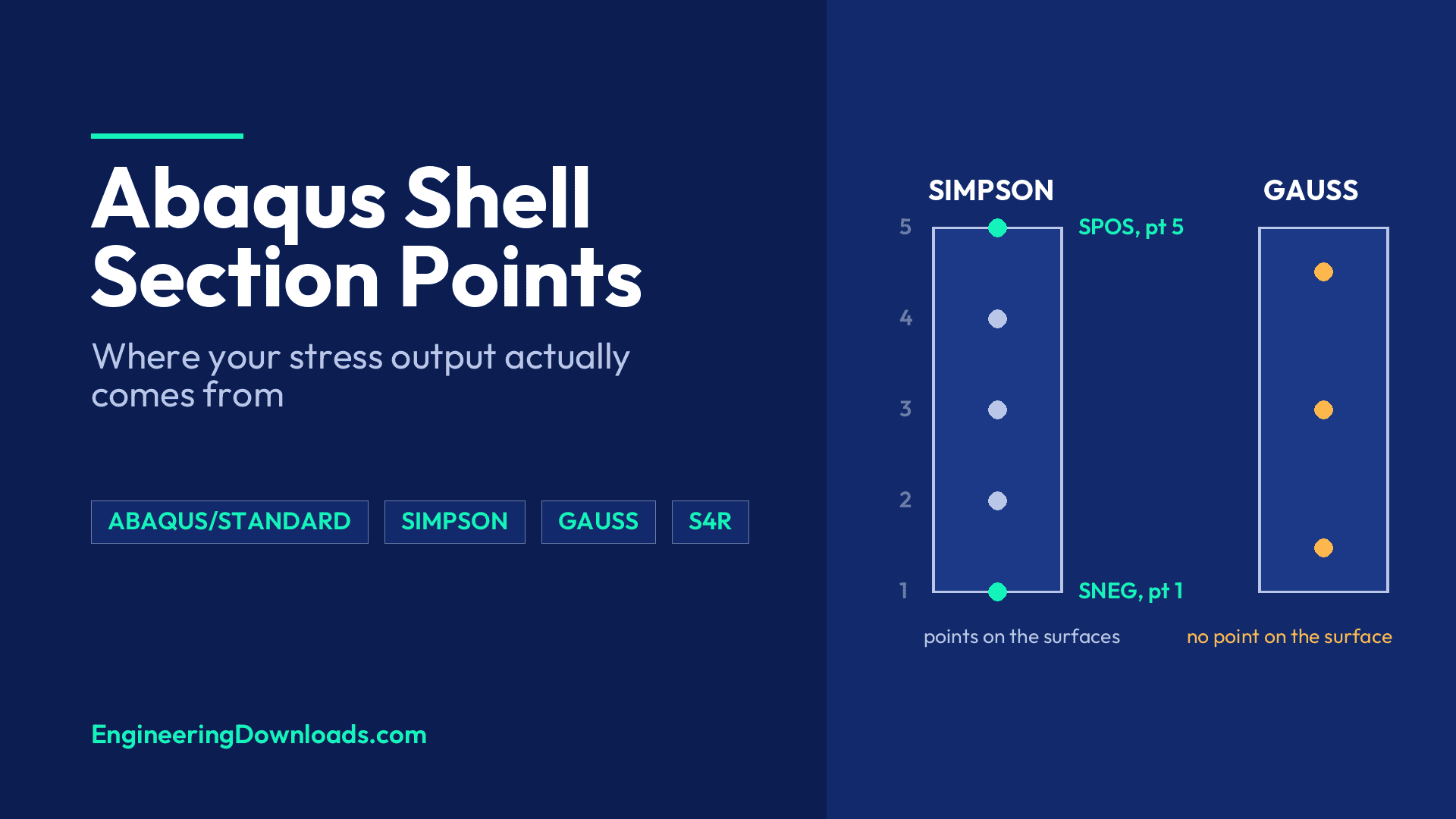
Abaqus Shell Section Points: Where Your Stress Output Comes From
What Abaqus shell section points are, the defaults you never chose, Simpson vs Gauss, SNEG and SPOS, and how to request the output location you actually need.
Abaqus NLGEOM On or Off: When Geometric Nonlinearity Changes Your Answer
What the Abaqus NLGEOM switch really does, why Standard and Explicit have opposite defaults, and how to decide which of your two answers to trust.

Featured Blogs

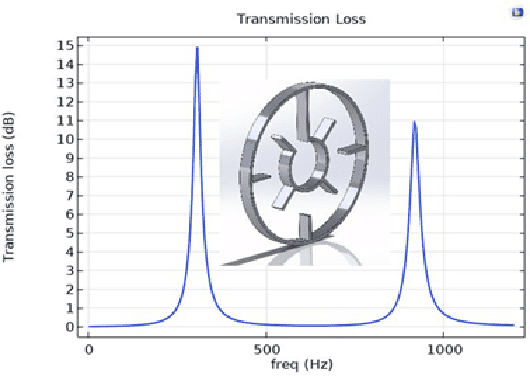
Acoustic metamaterials for advanced sound control and noise reduction
Acoustic Metamaterials and Metasurfaces: Shaping the Future of Sound Control

Intro Acoustic metamaterials and acoustic meta surfaces are changing how we control sound waves. These specially designed structures go beyond the limits of traditional soundproofing. They offer new ways to control sound, such as reducing noise over a wide frequency

OpenSees software simulation of nonlinear seismic response in a reinforced concrete frame
OpenSees for Structural Analysis

OpenSees (Open System for Earthquake Engineering Simulation) is an open-source software framework developed primarily for nonlinear structural and geotechnical analysis, with a strong emphasis on earthquake engineering. Developed at UC Berkeley’s Pacific Earthquake Engineering Research Center (PEER), it provides a
Abaqus or ANSYS : Which one is better?
Which one is better? Abaqus or ANSYS?

As an engineer, we need to build a model to simulate a process so we can save many and reduce processing time. For this aim, we need to use conventional solvers such as Abaqus, ANSYS, Solidwork (I know, Solidwork solver

See more

Latest Blogs

Abaqus Integration Point vs Nodal Stress: Why Peaks Differ
Compare integration-point, element-nodal and unique-nodal stress in Abaqus, and check whether a contour peak depends on extrapolation, averaging or mesh size.
Abaqus Linear Perturbation vs General Step: What Actually Changes

You run a frequency extraction after a static step and the frequencies come out the same whether or not the part had yielded. You run a static linear perturbation step and the reaction force is a fraction of what you

Harmonic Response Analysis in ANSYS Workbench: A Practical Guide
How to set up harmonic response analysis in ANSYS Workbench: modal link, frequency range, solution method, damping, loads and results, plus the common mistakes.

See more

All articles

API 579 Level 3 Assessment: What Assessors Expect

You have a vessel, a pipe or a nozzle with a flaw. The inspection report gives you a depth, a length and a lot of uncertainty. The Level 1 screening curve fails it. Level 2 fails it too, or the

Abaqus Units: How to Set Up a Consistent Unit System
Abaqus units explained: consistent unit tables for SI and mm models, correct density, gravity and thermal values, plus 3 fast checks to catch errors.
Abaqus Model Change: Birth and Death Elements Guide
How to use *MODEL CHANGE in Abaqus to deactivate and reactivate elements for welding, additive manufacturing, excavation and staged construction.
Abaqus UMATHT Subroutine: Define Custom Thermal Material Behavior
A practical guide to the Abaqus UMATHT subroutine: what it controls, the variables you must define, a working Fortran example, and how to verify it.
How to Edit the Abaqus INP File: Keywords Editor and Practical Workflow
A practical guide to editing the Abaqus INP file: the Keywords Editor, direct text editing, the keyword blocks you actually need, and the mistakes to avoid.
Abaqus ODB Python Script: Extract Results Without the GUI
How to read an Abaqus ODB with Python: the object tree, abaqus python vs abaqus cae -noGUI, working field and history output scripts, and the usual mistakes.
ANSYS Force Convergence Not Achieved: How to Fix It
Why ANSYS Mechanical reports force convergence not achieved, how to read the Force Convergence plot and Newton-Raphson residuals, and the fixes that actually work.
Abaqus Negative Eigenvalue Warning: What It Means and How to Fix It

You start a static job, open the message file, and find a line like this: ***WARNING: THE SYSTEM MATRIX HAS 3 NEGATIVE EIGENVALUES. Sometimes the job finishes anyway and the results look fine. Other times it cuts back again and

Modal Analysis in Abaqus: Natural Frequencies and Mode Shapes
A practical guide to modal analysis in Abaqus: frequency step setup, eigensolver choice, effective mass, preloaded modal analysis and the mistakes to avoid.
Concrete Damaged Plasticity in Abaqus: A Practical Setup Guide
How to fill in the Abaqus concrete damaged plasticity card correctly: the five plasticity parameters, inelastic strain conversion, tension softening, damage variables and convergence fixes.
Kinematic vs Distributing Coupling in Abaqus: How to Choose
Kinematic vs distributing coupling in Abaqus: what each does to your model stiffness, when to use which, setup steps, and the mistakes that cause overconstraint.
Abaqus DFLUX Subroutine: Practical Guide to Moving Heat Sources
How to use the Abaqus DFLUX subroutine to drive a moving Goldak heat source: interface, working Fortran code, mesh and increment rules, verification and common mistakes.

See more