New Blogs

Abaqus Integration Point vs Nodal Stress: Why Peaks Differ
Compare integration-point, element-nodal and unique-nodal stress in Abaqus, and check whether a contour peak depends on extrapolation, averaging or mesh size.
Abaqus Linear Perturbation vs General Step: What Actually Changes

You run a frequency extraction after a static step and the frequencies come out the same whether or not the part had yielded. You run a static linear perturbation step and the reaction force is a fraction of what you

Harmonic Response Analysis in ANSYS Workbench: A Practical Guide
How to set up harmonic response analysis in ANSYS Workbench: modal link, frequency range, solution method, damping, loads and results, plus the common mistakes.
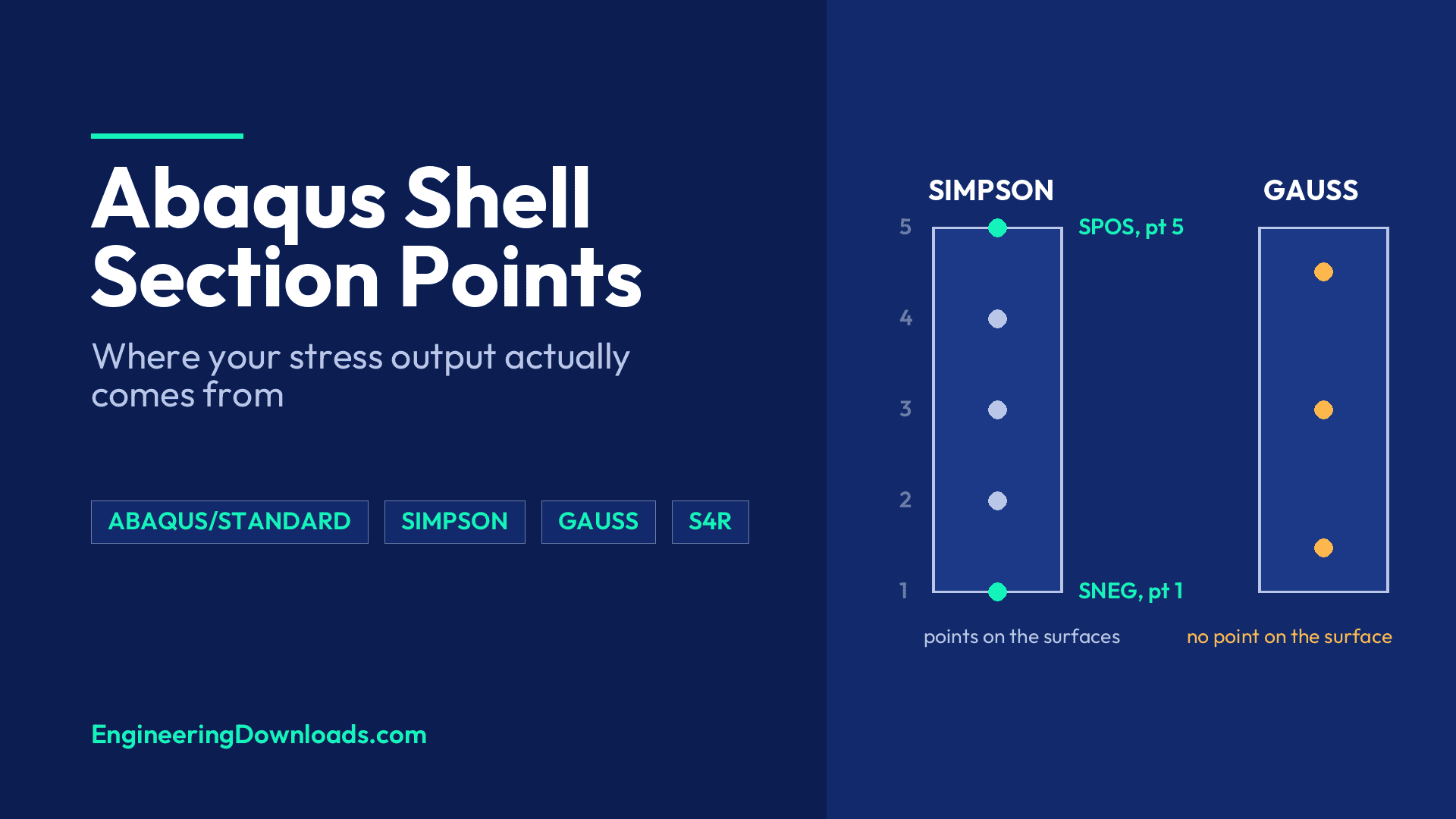
Abaqus Shell Section Points: Where Your Stress Output Comes From
What Abaqus shell section points are, the defaults you never chose, Simpson vs Gauss, SNEG and SPOS, and how to request the output location you actually need.
Abaqus NLGEOM On or Off: When Geometric Nonlinearity Changes Your Answer
What the Abaqus NLGEOM switch really does, why Standard and Explicit have opposite defaults, and how to decide which of your two answers to trust.

Featured Blogs

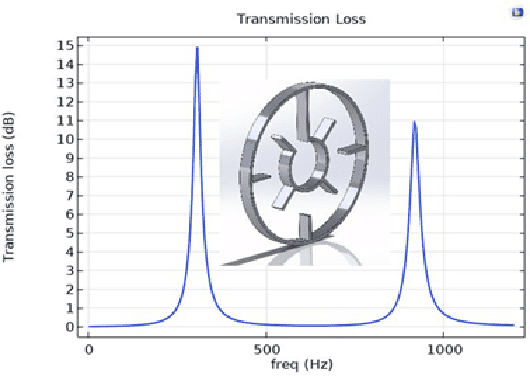
Acoustic metamaterials for advanced sound control and noise reduction
Acoustic Metamaterials and Metasurfaces: Shaping the Future of Sound Control

Intro Acoustic metamaterials and acoustic meta surfaces are changing how we control sound waves. These specially designed structures go beyond the limits of traditional soundproofing. They offer new ways to control sound, such as reducing noise over a wide frequency

OpenSees software simulation of nonlinear seismic response in a reinforced concrete frame
OpenSees for Structural Analysis

OpenSees (Open System for Earthquake Engineering Simulation) is an open-source software framework developed primarily for nonlinear structural and geotechnical analysis, with a strong emphasis on earthquake engineering. Developed at UC Berkeley’s Pacific Earthquake Engineering Research Center (PEER), it provides a
Abaqus or ANSYS : Which one is better?
Which one is better? Abaqus or ANSYS?

As an engineer, we need to build a model to simulate a process so we can save many and reduce processing time. For this aim, we need to use conventional solvers such as Abaqus, ANSYS, Solidwork (I know, Solidwork solver

See more

Latest Blogs

Abaqus Integration Point vs Nodal Stress: Why Peaks Differ
Compare integration-point, element-nodal and unique-nodal stress in Abaqus, and check whether a contour peak depends on extrapolation, averaging or mesh size.
Abaqus Linear Perturbation vs General Step: What Actually Changes

You run a frequency extraction after a static step and the frequencies come out the same whether or not the part had yielded. You run a static linear perturbation step and the reaction force is a fraction of what you

Harmonic Response Analysis in ANSYS Workbench: A Practical Guide
How to set up harmonic response analysis in ANSYS Workbench: modal link, frequency range, solution method, damping, loads and results, plus the common mistakes.

See more

All articles

abaqus ceramic silicon carbide simulation
Ceramic and Silicon Carbide Simulation in Abaqus: A Practical Guide
Learn how to simulate ceramics and silicon carbide in Abaqus: material models, JH-2 damage, meshing, impact loading and the mistakes that ruin results.
beam-column joint analysis
Beam-Column Joint Analysis in Abaqus: Methods, Tips and Models
How to model beam-column joints in Abaqus: concrete damage, rebar, steel connections, cyclic loading, boundary conditions and validation tips.
rock and stone simulation abaqus
Rock and Stone Simulation in Abaqus: A Practical Guide
A practical guide to rock and stone simulation in Abaqus: Drucker-Prager and damage models, blasting, excavation, meshing and common mistakes to avoid.
AI in composite structure analysis
AI in Composite Structure Analysis: A Practical Approach
See how machine learning speeds up composite structure analysis: surrogate models, failure prediction, training data from FEA runs and how to start.
metal forming simulation abaqus
Metal Forming Simulation in Abaqus: A Practical Guide
Learn metal forming simulation in Abaqus: plasticity, contact, friction, Explicit vs Standard, springback, mesh distortion and ready-to-use models.
LS-DYNA common errors
LS-DYNA Common Errors and How to Fix Them
Negative volume, hourglassing, contact penetration, error terminations: the most common LS-DYNA errors, why they happen and how to fix them fast.
P91 steel welding residual stress
P91 Steel Welding Simulation: Residual Stress and Martensitic Transformation
How to simulate P91 steel welding: thermal analysis, martensitic transformation, volume change, residual stress and PWHT, with an Abaqus workflow.
asphalt fracture low temperatures
Asphalt Fracture at Low Temperatures: Cohesive Zone Modeling Guide
Model low-temperature asphalt cracking with cohesive zone elements: SCB and DCT tests, fracture energy, viscoelasticity and Abaqus setup tips.
underwater underground explosions simulation
Underwater and Underground Explosion Simulation: A Practical Guide
How to simulate underwater (UNDEX) and underground explosions: CEL, JWL equation of state, fluid-structure coupling, soil models and validation.
earthquake and seismic analysis
Earthquake and Seismic Analysis for Engineers: FEA Guide
Learn seismic analysis step by step: response spectrum, time history, damping, soil-structure interaction and how to model them in Abaqus or OpenSees.
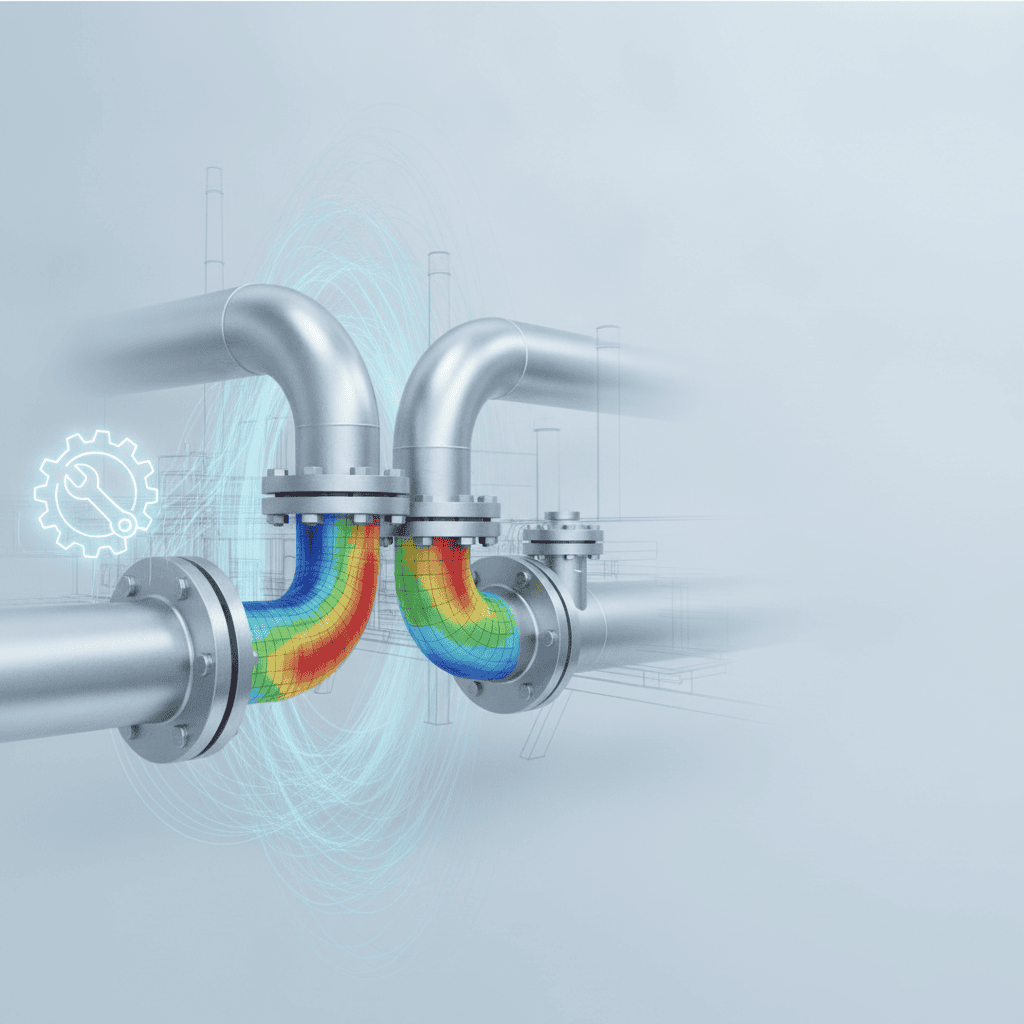
Piping Stress Analysis
Piping Stress Analysis: A Practical Guide for Engineers
A practical guide to piping stress analysis: sustained, thermal and occasional loads, ASME B31.3 checks, supports, flexibility and when to use FEA.
FEA Contact Convergence
FEA Contact Convergence: How to Fix Contact Problems
Contact not converging? Learn why FEA contact fails and how to fix it: stabilization, penalty stiffness, mesh, initial overclosure and step settings.

See more