New Blogs

Abaqus Integration Point vs Nodal Stress: Why Peaks Differ
Compare integration-point, element-nodal and unique-nodal stress in Abaqus, and check whether a contour peak depends on extrapolation, averaging or mesh size.
Abaqus Linear Perturbation vs General Step: What Actually Changes

You run a frequency extraction after a static step and the frequencies come out the same whether or not the part had yielded. You run a static linear perturbation step and the reaction force is a fraction of what you

Harmonic Response Analysis in ANSYS Workbench: A Practical Guide
How to set up harmonic response analysis in ANSYS Workbench: modal link, frequency range, solution method, damping, loads and results, plus the common mistakes.
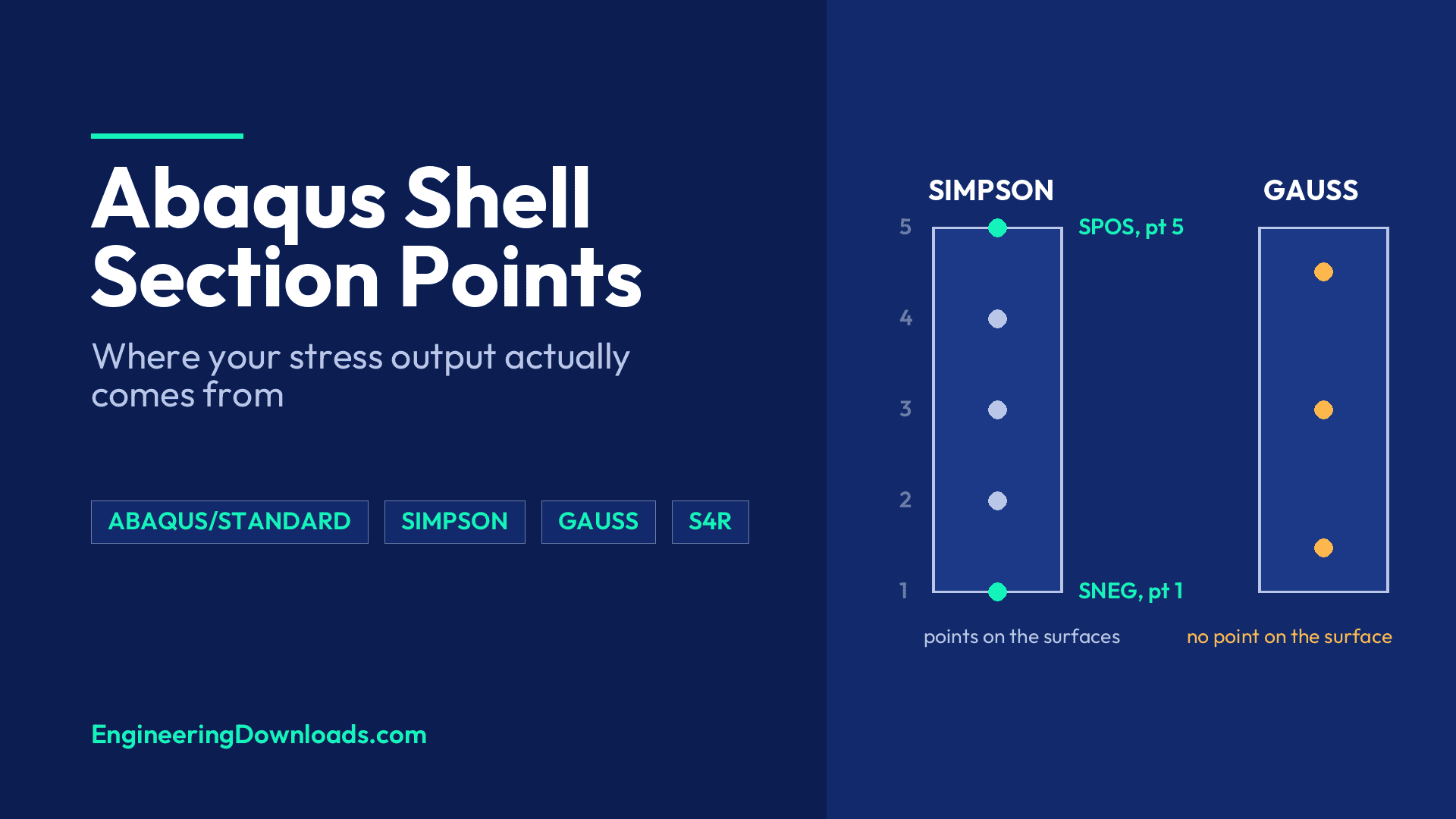
Abaqus Shell Section Points: Where Your Stress Output Comes From
What Abaqus shell section points are, the defaults you never chose, Simpson vs Gauss, SNEG and SPOS, and how to request the output location you actually need.
Abaqus NLGEOM On or Off: When Geometric Nonlinearity Changes Your Answer
What the Abaqus NLGEOM switch really does, why Standard and Explicit have opposite defaults, and how to decide which of your two answers to trust.

Featured Blogs

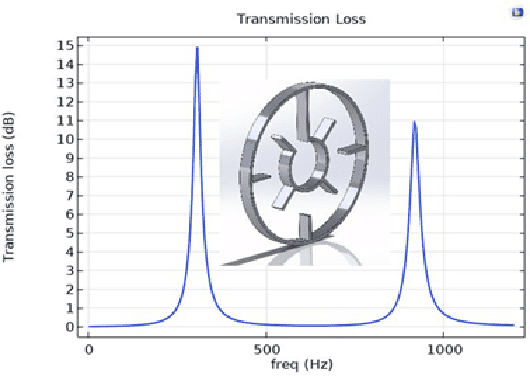
Acoustic metamaterials for advanced sound control and noise reduction
Acoustic Metamaterials and Metasurfaces: Shaping the Future of Sound Control

Intro Acoustic metamaterials and acoustic meta surfaces are changing how we control sound waves. These specially designed structures go beyond the limits of traditional soundproofing. They offer new ways to control sound, such as reducing noise over a wide frequency

OpenSees software simulation of nonlinear seismic response in a reinforced concrete frame
OpenSees for Structural Analysis

OpenSees (Open System for Earthquake Engineering Simulation) is an open-source software framework developed primarily for nonlinear structural and geotechnical analysis, with a strong emphasis on earthquake engineering. Developed at UC Berkeley’s Pacific Earthquake Engineering Research Center (PEER), it provides a
Abaqus or ANSYS : Which one is better?
Which one is better? Abaqus or ANSYS?

As an engineer, we need to build a model to simulate a process so we can save many and reduce processing time. For this aim, we need to use conventional solvers such as Abaqus, ANSYS, Solidwork (I know, Solidwork solver

See more

Latest Blogs

Abaqus Integration Point vs Nodal Stress: Why Peaks Differ
Compare integration-point, element-nodal and unique-nodal stress in Abaqus, and check whether a contour peak depends on extrapolation, averaging or mesh size.
Abaqus Linear Perturbation vs General Step: What Actually Changes

You run a frequency extraction after a static step and the frequencies come out the same whether or not the part had yielded. You run a static linear perturbation step and the reaction force is a fraction of what you

Harmonic Response Analysis in ANSYS Workbench: A Practical Guide
How to set up harmonic response analysis in ANSYS Workbench: modal link, frequency range, solution method, damping, loads and results, plus the common mistakes.

See more

All articles

learning CAE software
Learning CAE Software: A Practical Roadmap for Engineers
Which CAE software should you learn first and how? A clear roadmap for Abaqus, ANSYS and CFD tools, with learning steps, projects and common traps.
aspect ratio engineering
Element Aspect Ratio in FEA and CFD: What It Is and Why It Matters
What is element aspect ratio, what values are acceptable in FEA and CFD, and how bad aspect ratios hurt accuracy and convergence. Practical fixes.
Abaqus Meshing
Abaqus Meshing: A Practical Guide for Engineers
Learn Abaqus meshing: element types, structured vs sweep vs free mesh, partitioning, mesh controls, quality checks and mesh convergence studies.
PhD vs industry engineering
PhD vs Industry for Engineers: How to Choose Your Path
PhD or industry job? Compare salary, skills, career growth and lifestyle for engineers, with a simple way to decide which path fits you best.
Residual Stress Estimation
Residual Stress Estimation: Methods, Tools and FEA Workflow
How to estimate residual stress: hole drilling, XRD, neutron diffraction and FEA welding simulation. When to use each method and how to validate.
AI in FEA
AI in FEA: How Machine Learning Is Changing Simulation
Where AI really helps in FEA today: surrogate models, faster design loops, material calibration, and how to start with Python and Abaqus.
element distortion error
Excessive Element Distortion in FEA: Causes and Fixes
Getting excessive distortion errors in Abaqus or ANSYS? Learn the real causes and fixes: mesh, material, contact, ALE, element choice and step size.
Abaqus Troubleshooting
Abaqus Troubleshooting: How to Solve Common FEA Errors
A practical Abaqus troubleshooting guide: read the .msg and .dat files, fix convergence, zero pivot, distortion and contact errors step by step.
CAE Workflows
CAE Workflows: From Geometry to Validated Results
Build a reliable CAE workflow: geometry, meshing, solving, post-processing and validation, plus how Python automation saves hours on repeat jobs.
Mechanical Engineer Freelancer
How to Become a Freelance Mechanical Engineer
Want to work as a freelance mechanical engineer? Learn which skills sell, how to find clients, set your rates and earn more from simulation work.
Physics-Informed Neural Networks (PINNs)
Physics-Informed Neural Networks (PINNs): A Practical Guide for Engineers
What PINNs are, how they combine physics with neural networks, where they beat classic FEA and CFD, their limits, and how to start with Python.
mechanical engineering career
Mechanical Engineering Career Path: Roles, Skills and Growth
Explore the mechanical engineering career path: main roles, in-demand skills like FEA and CFD, and practical steps to grow your career faster.

See more