New Blogs

Abaqus Integration Point vs Nodal Stress: Why Peaks Differ
Compare integration-point, element-nodal and unique-nodal stress in Abaqus, and check whether a contour peak depends on extrapolation, averaging or mesh size.
Abaqus Linear Perturbation vs General Step: What Actually Changes

You run a frequency extraction after a static step and the frequencies come out the same whether or not the part had yielded. You run a static linear perturbation step and the reaction force is a fraction of what you

Harmonic Response Analysis in ANSYS Workbench: A Practical Guide
How to set up harmonic response analysis in ANSYS Workbench: modal link, frequency range, solution method, damping, loads and results, plus the common mistakes.
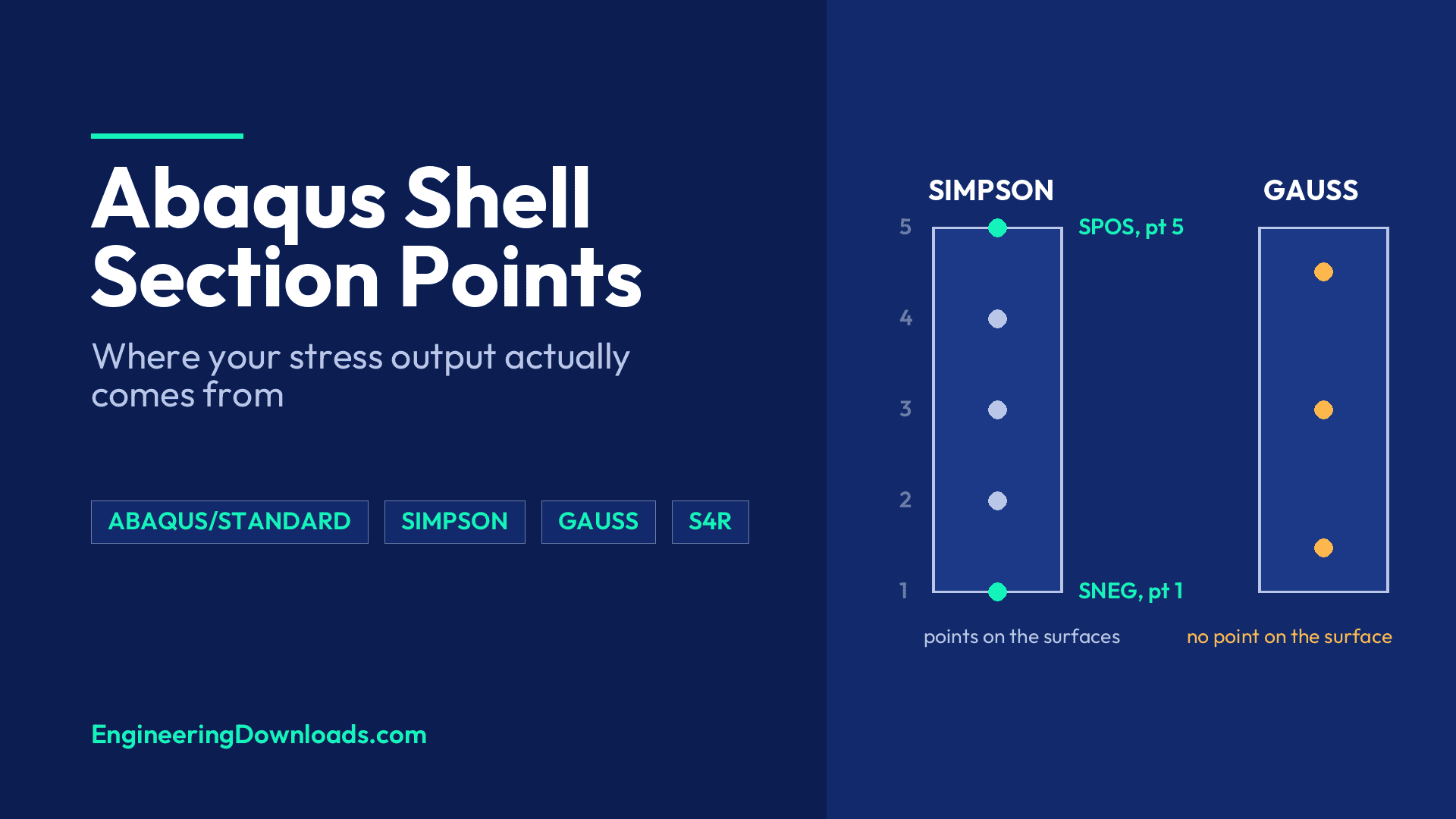
Abaqus Shell Section Points: Where Your Stress Output Comes From
What Abaqus shell section points are, the defaults you never chose, Simpson vs Gauss, SNEG and SPOS, and how to request the output location you actually need.
Abaqus NLGEOM On or Off: When Geometric Nonlinearity Changes Your Answer
What the Abaqus NLGEOM switch really does, why Standard and Explicit have opposite defaults, and how to decide which of your two answers to trust.

Featured Blogs

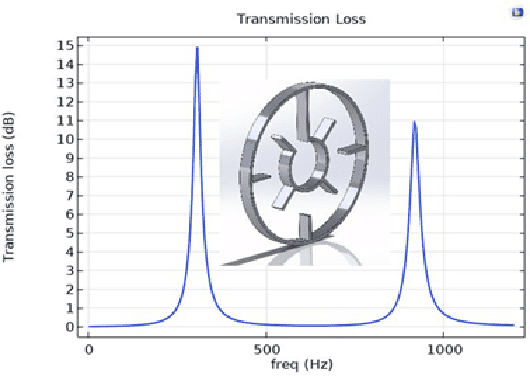
Acoustic metamaterials for advanced sound control and noise reduction
Acoustic Metamaterials and Metasurfaces: Shaping the Future of Sound Control

Intro Acoustic metamaterials and acoustic meta surfaces are changing how we control sound waves. These specially designed structures go beyond the limits of traditional soundproofing. They offer new ways to control sound, such as reducing noise over a wide frequency

OpenSees software simulation of nonlinear seismic response in a reinforced concrete frame
OpenSees for Structural Analysis

OpenSees (Open System for Earthquake Engineering Simulation) is an open-source software framework developed primarily for nonlinear structural and geotechnical analysis, with a strong emphasis on earthquake engineering. Developed at UC Berkeley’s Pacific Earthquake Engineering Research Center (PEER), it provides a
Abaqus or ANSYS : Which one is better?
Which one is better? Abaqus or ANSYS?

As an engineer, we need to build a model to simulate a process so we can save many and reduce processing time. For this aim, we need to use conventional solvers such as Abaqus, ANSYS, Solidwork (I know, Solidwork solver

See more

Latest Blogs

Abaqus Integration Point vs Nodal Stress: Why Peaks Differ
Compare integration-point, element-nodal and unique-nodal stress in Abaqus, and check whether a contour peak depends on extrapolation, averaging or mesh size.
Abaqus Linear Perturbation vs General Step: What Actually Changes

You run a frequency extraction after a static step and the frequencies come out the same whether or not the part had yielded. You run a static linear perturbation step and the reaction force is a fraction of what you

Harmonic Response Analysis in ANSYS Workbench: A Practical Guide
How to set up harmonic response analysis in ANSYS Workbench: modal link, frequency range, solution method, damping, loads and results, plus the common mistakes.

See more

All articles

Abaqus Training & Consultancy: Mastering FEA from Basics to Advanced Worldwide

Introduction Picture a young engineer facing a complex Finite Element Analysis (FEA) problem in Abaqus – unsure how to proceed, deadlines looming. Now imagine that same engineer after expert training and mentoring: confidently simulating, interpreting results, and delivering innovations ahead

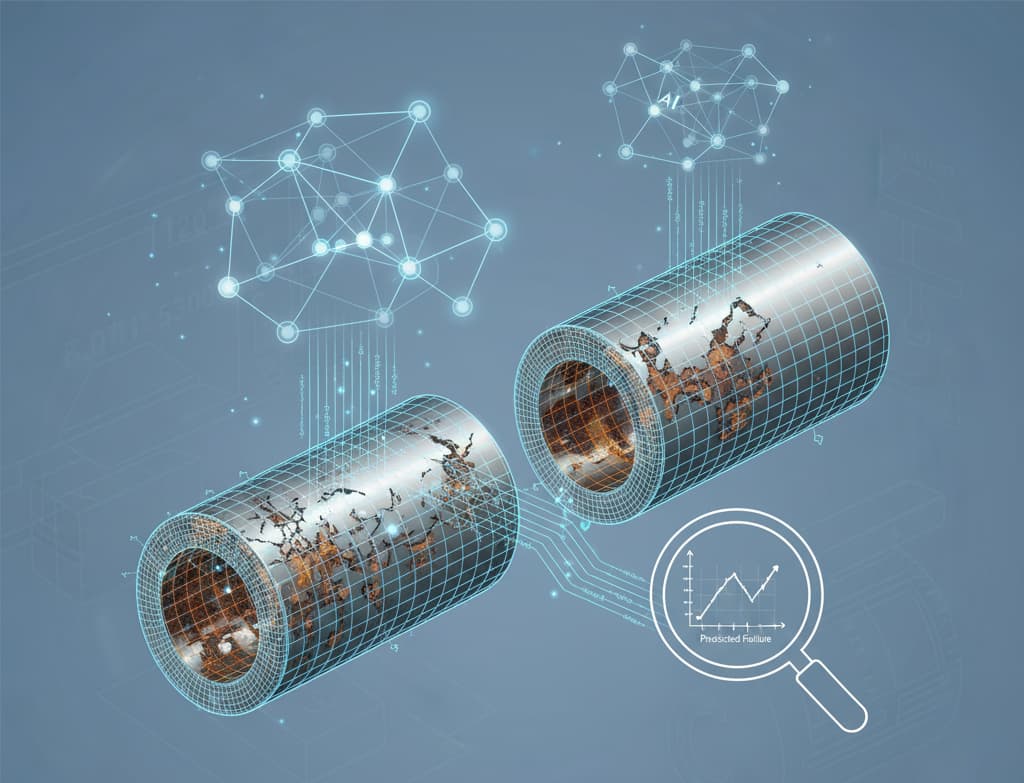
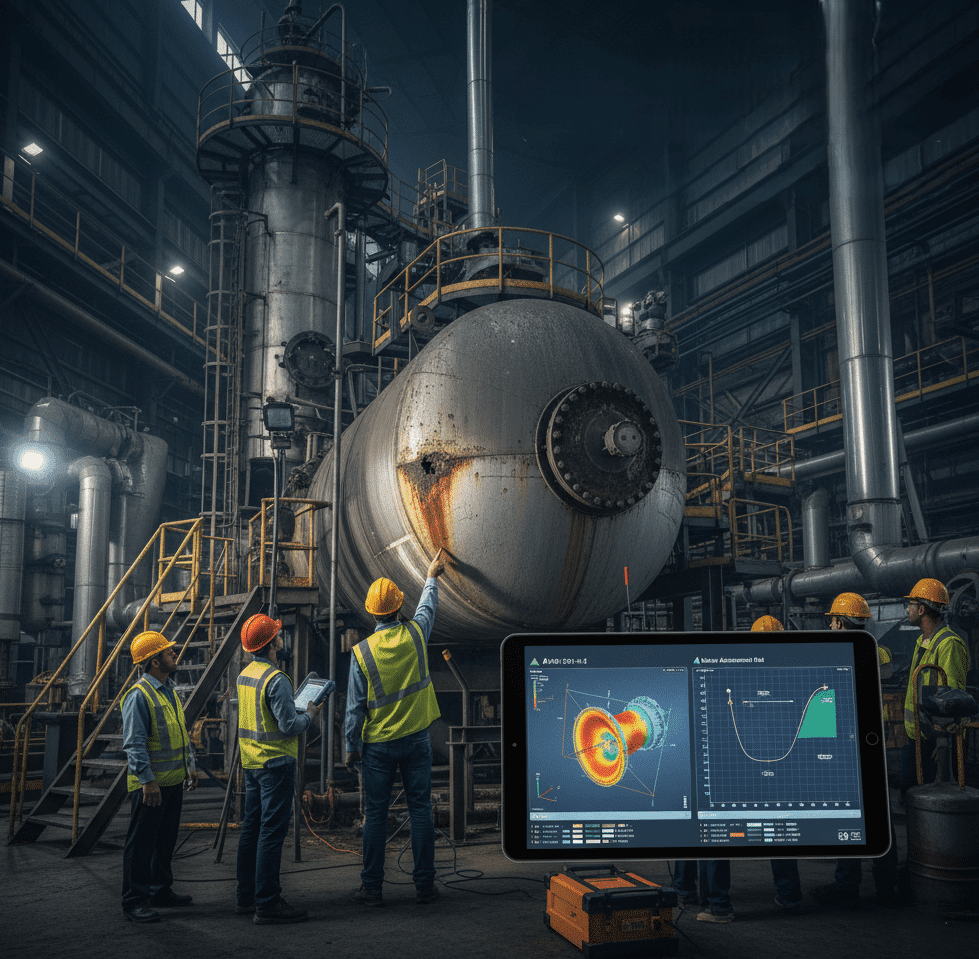
Revolutionizing Corrosion Simulation in Pipes and Vessels: Leveraging AI and FEM Software for Accurate Predictive Maintenance
Predictive Corrosion Modeling in Pipes and Vessels Using AI and Finite Element Methods

Revolutionizing Corrosion Simulation in Pipes and Vessels: Leveraging AI and FEM Software for Accurate Predictive Maintenance Corrosion is one of the most challenging issues in engineering, especially when considering its long-term impact on the integrity of critical infrastructure, such as

Hydrogen Embrittlement in Metals
Hydrogen Embrittlement in Metals: Causes, Simulation, and Prevention

Hydrogen embrittlement (HE) is a phenomenon where metals become unexpectedly brittle and crack due to the absorption and diffusion of hydrogen atoms into the material. Essentially, hydrogen infiltrating the metal reduces its ductility and fracture toughness, so that even below

API 579 vs BS 7910
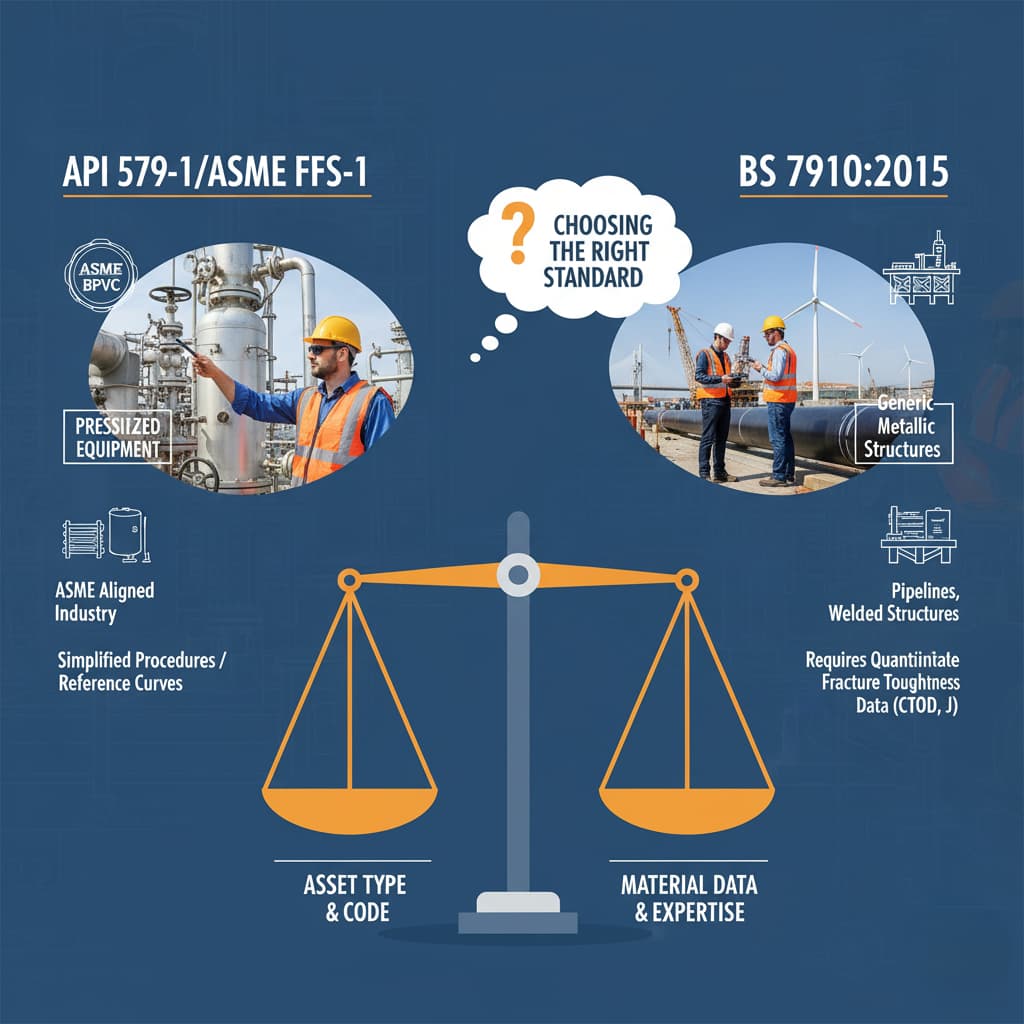
API 579 vs BS 7910: When to Use Each Standard in Fitness for Service Assessments

API 579 vs BS 7910 Fitness for Service (FFS) assessments help engineers decide whether a component with defects can continue operating safely. Different standards exist for performing these evaluations, and two of the most widely used are API 579‑1/ASME FFS‑1

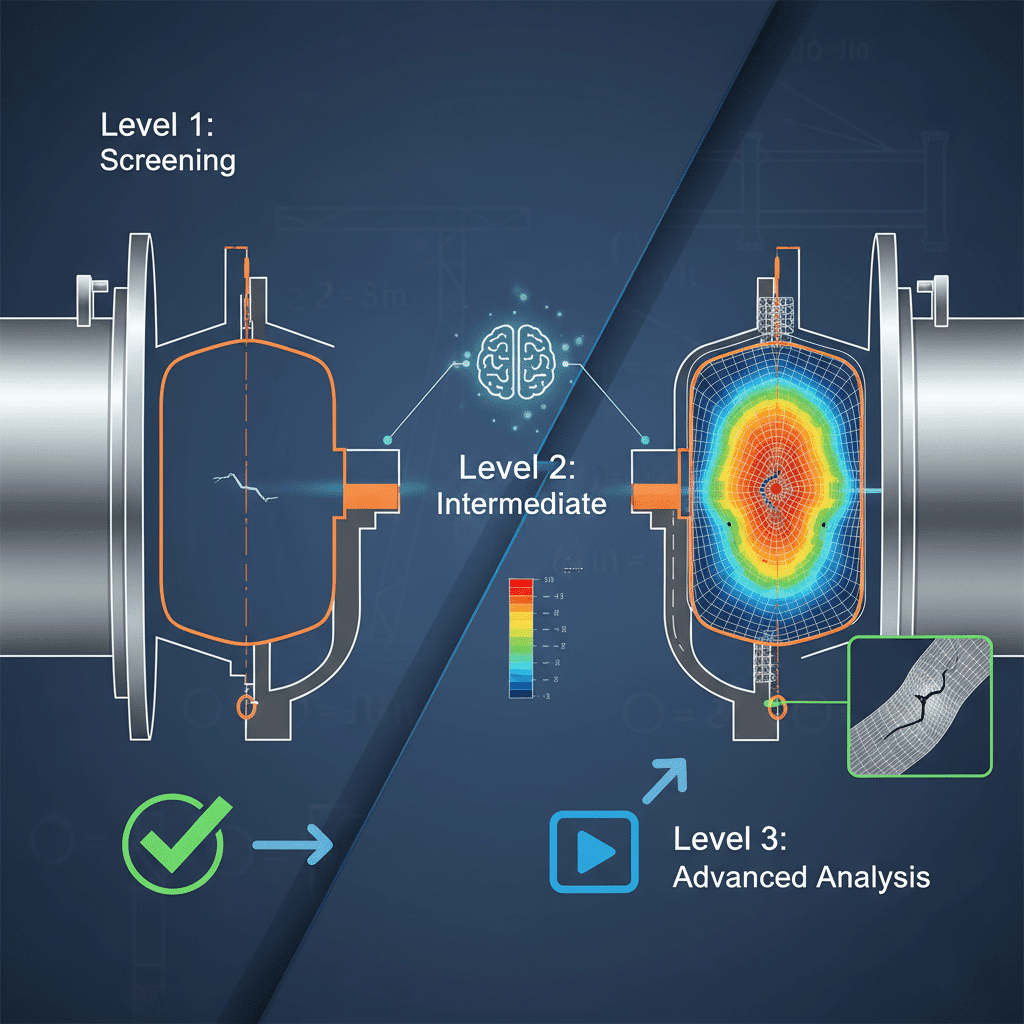
Understanding API 579 and FFS Assessment Levels

Understanding API 579 and FFS Assessment Levels: From Screening to Advanced Analysis Industrial equipment doesn’t last forever. Corrosion, fatigue and accidental damage gradually erode the strength of pipelines, pressure vessels and other critical assets. Fitness for Service (FFS) assessments give

Fitness for Service (FFS) Analysis
Fitness for Service (FFS) in Asset Integrity

The Role of Fitness-for-Service (FFS) in Asset Integrity Fitness-for-Service (FFS) analysis is a structured engineering approach to determine if equipment with flaws or damage can continue to operate safely and reliably. It is a crucial part of asset integrity management,

FEA Software
What is the Best FEA Software in 2025

What is the Best FEA Software in 2025 Finite Element Analysis (FEA) software has become a cornerstone of modern engineering, allowing designers to virtually test how products and structures behave under various forces and conditions. By breaking complex structures into

Abaqus vs ANSYS
Abaqus vs ANSYS: Which Simulation Software Is Better in 2025?

Introduction In modern engineering workflows, simulation tools are indispensable. They enable engineers to virtually test designs under various conditions, reducing the need for costly physical prototypes and accelerating innovation. Two of the leading finite element analysis (FEA) platforms are Abaqus

How FEM is changing biomechanics

Intro Finite-element modeling (FEM) gives engineers and clinicians a virtual lab for the body. Instead of cutting bone or running many costly experiments, we build digital bones, discs and implants, apply realistic loads, and watch how the parts behave. This

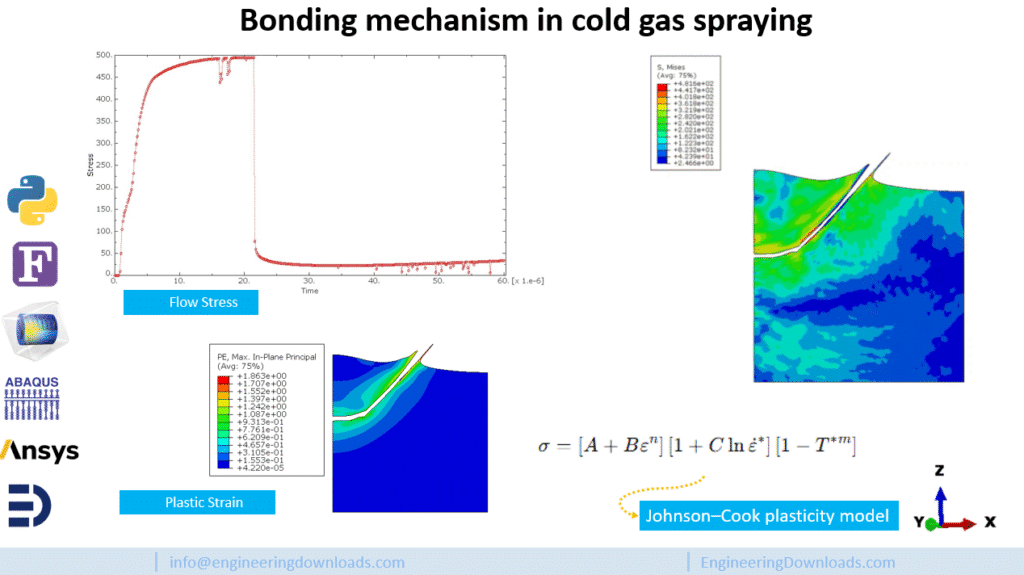
Abaqus simulation of bonding mechanism in cold gas spraying with particle impact and critical velocity results
Cold Gas Spraying & Shot Peening: A clear, practical guide to simulating high-velocity impacts

Cold gas spraying and shot peening may look different at first glance — one deposits material, the other changes the surface — but both are driven by the same physics: high-velocity impacts that create intense, highly localized plastic deformation. That

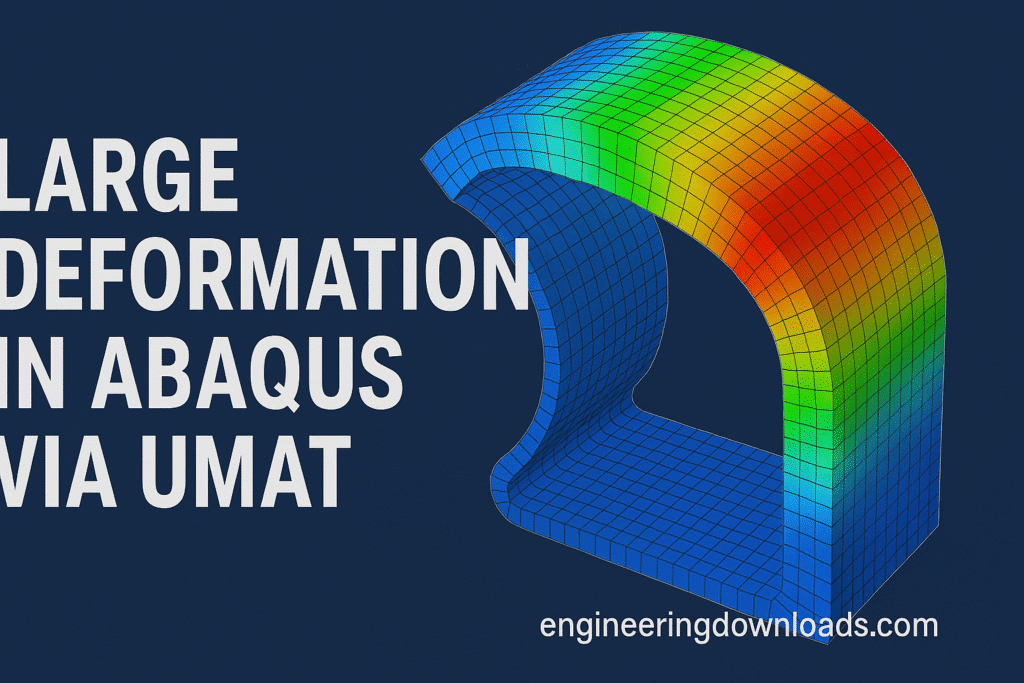
large deformation via user material
Large Deformation in ABAQUS via UMAT

1. An Introduction to Non-Linear Continuum Mechanics Finite deformation (also called large deformation or finite strain theory) is a framework in continuum mechanics that describes the behavior of materials undergoing significant volume changes, where strains and rotations are not small.

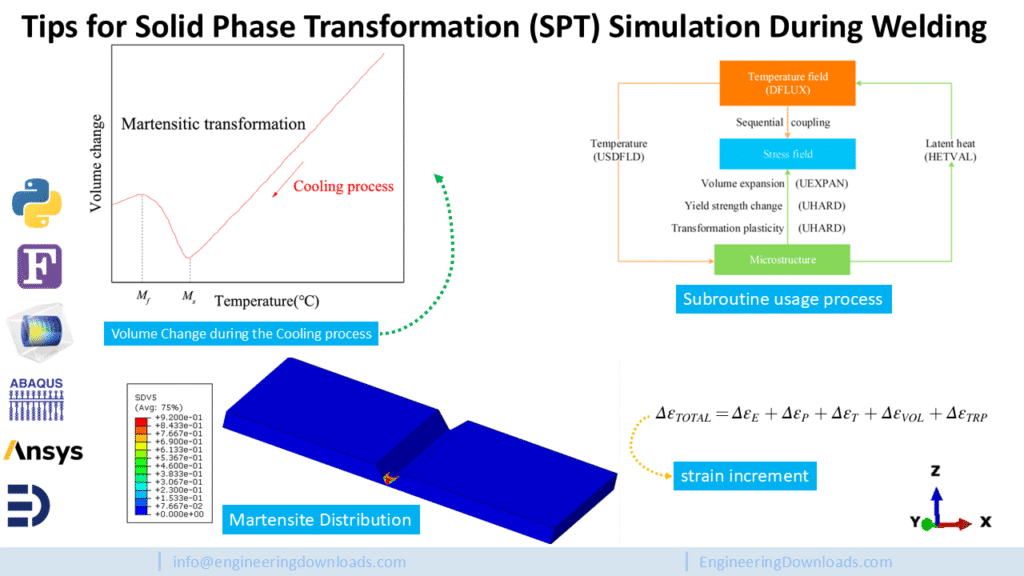
FEM simulation of martensitic transformation during welding Solid phase transformation welding
Tips for FEM Analysis of Solid Phase Transformation During Welding

Welding is one of the most critical processes in mechanical and structural engineering. Beyond simply joining metals, it introduces complex thermal cycles, stress fields, and microstructural transformations that can significantly affect the performance of the welded joint. For high-temperature steels

See more